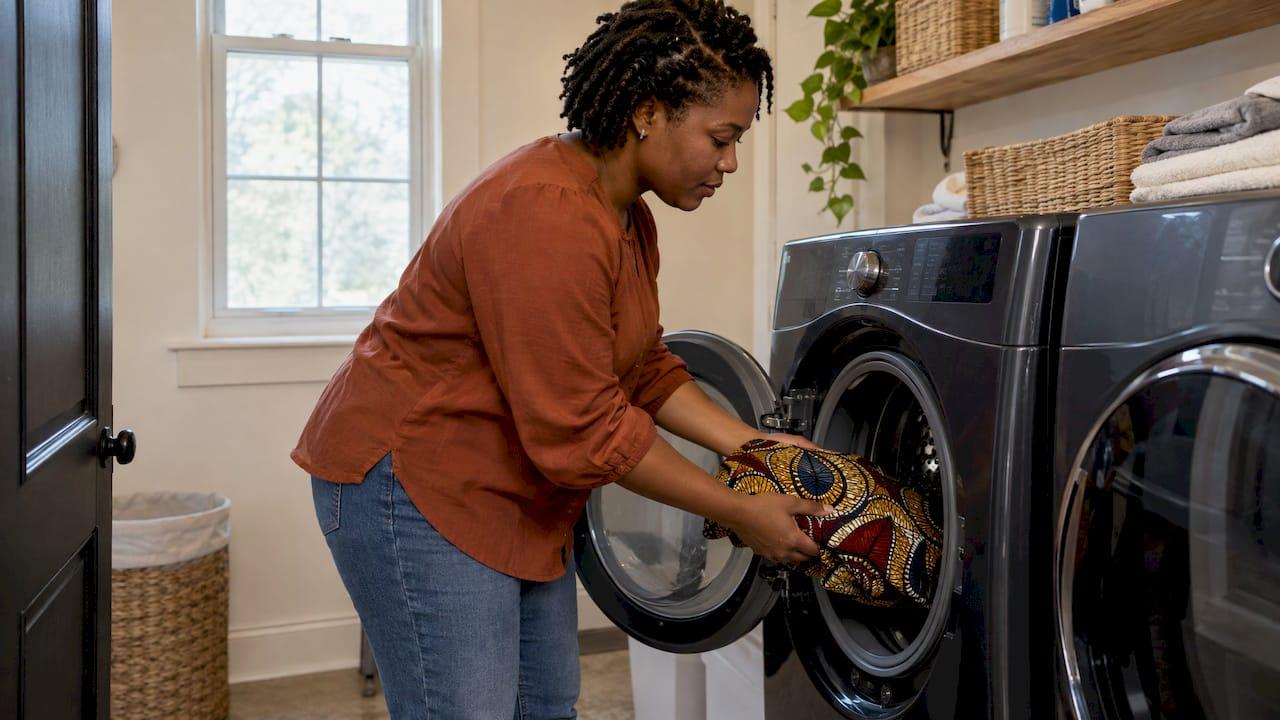
Yes, Ankara can shrink. Authentic wax print is made of cotton, and cotton relaxes and tightens when it meets water, heat and tumbling. Most of the change happens in the first wash or two, and it is largely in your control: cool water, a gentle cycle and air drying keep a garment close to the size you bought. If you are sewing with yardage, wash it before you cut. If you are wearing a finished piece, care for it from the very first wash the way you would any cherished garment.
This guide explains how much shrinkage is realistic, why it happens, and the exact routine we recommend to protect the fit, the color and the cloth.
TL;DR
- Ankara is cotton, and cotton can shrink. Preshrunk cotton typically shrinks about 2% to 5%, while untreated cotton can shrink up to 20%.
- Heat and mechanical agitation drive most of it, so cool water, a gentle cycle and air drying are your best protection.
- Fabric yardage should be washed before cutting and sewing, so the shrinking happens before the garment exists.
- Finished garments are best treated gently from the first wash: cold or lukewarm water, mild detergent, no hot dryer.
- Check the care label on any piece, and when in doubt, choose the gentlest method.
Table of Contents
- Why Ankara shrinks
- How much can Ankara shrink?
- If you are sewing with Ankara: wash before you cut
- If you are wearing a finished piece: the first wash matters most
- Does cold water alone prevent shrinking?
- Special cases: lined, embellished and structured pieces
- Fixing a garment that already shrank
- Quick care checklist
- Our perspective
- Wear West African heritage with confidence
- FAQ
- Sources
Why Ankara shrinks
Ankara, also sold as African wax print, is a cotton cloth. To see why cotton shrinks, it helps to know how it is made. Cotton fibers are spun into yarn, and yarn is woven into cloth, and both steps stretch the fibers under tension. Research on cotton dimensional stability explains that shrinkage from stress relaxation comes from the longitudinal and torsional stresses placed on fibers during spinning, and on yarn during weaving. In plain words, the cloth is held in a slightly stretched state, and it wants to settle back.
Water gives it the chance. Cotton is a cellulose fiber, and cellulose fibers absorb water, swell, and pull the yarns into a tighter crimp. The same 1997 study found that when cotton fibers are fully soaked, fiber diameter can grow by as much as 20% while length changes by only about 1%. The fiber gets fatter, not longer, so the woven cloth draws in. That is why the first wash does the most work.
Heat then makes it worse. The same fiber research notes that heat worsens these effects, which is why temperature is the first thing to control.
It is not only about temperature
A testing guide for fabric shrinkage lists the factors that matter: fiber type, fabric construction and finishing, heat and moisture, and mechanical agitation. Agitation means the churning of a wash cycle and the tumbling and high-speed spinning of a machine. So a garment washed in cool water can still shrink if it is thrown around on a long, hot-drying cycle. You want to manage all of it together: water temperature, movement and drying.
How much can Ankara shrink?
There is no single number, because it depends on how the cloth was finished and how you treat it. Here is the range that is useful to know.
| Cloth condition | Typical shrinkage | What it means |
|---|---|---|
| Preshrunk cotton | About 2% to 5% | A small change, noticeable mostly in fitted sleeves and hems |
| Untreated cotton | Up to 20% | A major change in length and width |
| Some woven cotton fabrics in laboratory study | As much as 16% | Shows why unwashed yardage should never be cut to final size |
Cotton Inc., the research and promotion organization for U.S. cotton, describes shrinkage as a dimensional change that happens when force, energy or a change in environment lets the cloth relax, and notes that cotton fabrics are often predisposed to dimensional instability. That sounds technical, but the lesson is simple: cotton is a natural, living-feeling cloth, and it responds to its environment.
A worked example
Say you are making a dress that needs 40 inches of finished length from a piece of yardage. If that cloth shrinks 5% lengthwise, you lose 2 inches. If it shrinks 10%, you lose 4 inches, enough to turn a midi into a knee-length skirt. Cut from unwashed cloth, you would only find out after the first wash. Wash first, and you cut to the size the cloth will stay.

The same math applies to width. A bodice cut to fit snugly can become uncomfortably tight across the bust or shoulders if the cloth draws in 5% to 10% sideways. Wedding and celebration sewers feel this most, because a tailored fit on a special day leaves no room for surprises.
If you are sewing with Ankara: wash before you cut
Washing yardage before you sew is the single most effective way to prevent shrinkage in the finished garment. One sewing guide to Ankara says pre-washing before sewing is always a good idea, using a normal 30 or 40°C wash cycle. In Fahrenheit, that is roughly 86°F to 104°F, which is cold to warm on most American machines.
The same guide adds two benefits worth knowing. Washing makes the cloth softer to the touch, and because of the way the print is made, the color does not fade easily. Fresh wax print can feel stiff, almost papery, and a wash relaxes it into something you will want to wear.
Here is the routine, step by step:
- Measure before washing. Note the length and width of your yardage so you can see exactly how much it shrank.
- Finish the raw edges. Zigzag stitch or pink the cut ends, because cotton frays in the wash and you can lose usable length.
- Wash it the way the finished garment will be washed. If you plan to wash the dress cool and air dry it, pre-wash cool and air dry. Pre-washing hot and then washing cool later teaches you nothing about how it behaves in real life.
- Wash like colors together. Bold wax print dyes can release a little color in early washes. Washing the cloth alone, or with similar dark colors, keeps your other laundry safe. Our guide to stain care for wax print covers what to do if a mark appears.
- Dry gently, then press. Air dry flat or on a line, or use low heat and pull it out while slightly damp. Press with a warm iron on the wrong side.
- Measure again. Now you know your real shrinkage, and you can cut with the exact size you need.
If you want to understand the cloth itself before you buy yardage, start with what Ankara fabric is and how to judge its quality, and use our five checks for authentic wax print to confirm you are buying the real thing. Our broader guide to buying, caring for and sewing wax print ties the whole process together.
If you are wearing a finished piece: the first wash matters most
A finished kaftan, dress or agbada set is not the same as raw yardage, but the same cotton science applies. Most of the relaxing and settling takes place at the first wash, so that is where good habits count the most. Start gently and keep the routine consistent.
Wash: cool, gentle and inside out
- Use cold or lukewarm water. Hot water is the most common cause of shrinking and fading in the care advice for Ankara, and cool water protects both the fit and the pattern.
- Choose the gentle or delicate cycle. Less agitation means less stress on the yarn, which matches the testing guide's point that mechanical agitation is a separate cause of shrinkage.
- Turn the garment inside out. This protects the print surface and any embellishment from rubbing.
- Use a mild detergent. Harsh detergents and bleach are hard on both dye and fiber.
- Wash with similar colors. Vivid prints can bleed in early washes, so keep them away from whites and pastels.
- Close zippers and fasteners, and fasten any hooks, so they do not snag the cloth.
Dry: this is where the fit is kept or lost
The dryer is where most accidental shrinking happens. The combination of high heat and tumbling is exactly what the research flags. Ankara care advice consistently says to avoid high heat in the dryer, because it can make the cloth shrink and lose its shape.
So the best habit is to air dry. Lay the garment flat on a clean towel, or hang it in the shade, away from long, direct sun, which can fade the prints. Reshape the shoulders, hem and sleeves with your hands while the cloth is damp, and it will dry in the shape you want. If you must use a dryer, choose the lowest heat and take the garment out while it is still slightly damp.

Iron: low and from the wrong side
Press with a low to medium iron on the reverse side of the cloth. Heavily embroidered or beaded pieces should be pressed over a pressing cloth, never directly on the decoration. A little steam helps relax creases and can even ease the garment back to its intended drape.
Does cold water alone prevent shrinking?
Not entirely, and this is a common misunderstanding. Cold water is kinder to color and reduces one cause of shrinkage, but it is only one of several. Soaking and agitation also move the yarns, and a hot dryer afterward can undo your good work. Think of it as a chain: gentle water, gentle movement and gentle drying. If one link is hot and rough, the whole routine loses its value.
That is also why the instructions on a garment's care label matter more than a general rule. Different constructions, linings, trims and finishes behave differently, so follow the label first and use this guide to understand the reasons behind it.
Special cases: lined, embellished and structured pieces
Not every Ankara piece is a simple unlined cotton garment. Statement outfits such as agbada sets, structured jackets and lined dresses can combine several materials, and each material shrinks at its own rate. A lining that relaxes more than the outer cloth can pull the hem into an uneven line, and trim or beading can distort if it is agitated or dried hot.
For these pieces, the safest approach is to wash less often, spot clean when you can, and choose the gentlest option when you do wash. Our guide on whether you can dry clean Ankara walks through when a professional cleaning fits and what to look for, and our article on caring for African fabrics covers storage and long-term preservation.
Fixing a garment that already shrank
If a piece has come out a little snug, act quickly and gently, and do not apply heat.
- Soak the garment in cool water with a small amount of mild detergent for about ten minutes.
- Press out the water without wringing it. Twisting damages the weave.
- Roll it in a clean towel to remove excess moisture.
- Lay it flat and gently ease the cloth back toward its original dimensions, working from the center to the edges.
- Let it dry flat, reshaping as needed.
This can recover a small amount of length or width, especially if the cloth is still damp, but it works best on modest shrinkage. Cotton can relax back a little because wet fibers are flexible, though a major shrink is hard to undo. That is the strongest argument for preventing it in the first place.
Quick care checklist
| Step | Do this | Why |
|---|---|---|
| Wash temperature | Cold or lukewarm | Heat worsens cotton shrinkage |
| Cycle | Gentle or delicate | Less agitation, less stress on yarns |
| Detergent | Mild, no bleach | Protects dye and fiber |
| Drying | Air dry flat or in shade | Avoids the heat and tumbling that set shrinkage |
| Dryer (if needed) | Lowest heat, remove while slightly damp | Limits shrinkage |
| Ironing | Low to medium, wrong side | Protects print and trim |
| Yardage | Pre-wash before cutting | Shrinks the cloth before the garment exists |
Our perspective
Ankara is cloth with a story, and it deserves to be cared for like one. When someone asks us whether it shrinks, we hear a deeper question: how do I keep this piece looking and fitting the way it did the day I fell in love with it?
The answer is the kind of attention that West African textile traditions have always valued. Cotton responds to how it is treated, so gentle water, gentle movement and patient air drying go a long way. These habits cost almost nothing, and they protect the intricate prints, the drape and the fit that make a statement piece feel regal.
We design Sena Nukunu around authentic West African heritage, ethical production and limited-quantity craftsmanship, so each piece is made with care and purpose. When you look after it well, you honor the artisans behind it, and you carry that legacy for years.
Sena
Wear West African heritage with confidence
If you are ready to wear Ankara-inspired style that is made with ethical production and artisanal craftsmanship, explore our collections. From men's agbada ensembles and heritage pieces to women's collections, we offer ready-to-wear dresses, kaftans, jackets and matching statement sets in limited quantities, so what you wear is truly distinctive. You can browse every line on our collections page.
For wedding and celebration shopping, our services page shows the range of designs available. And if you want ideas for pairing pieces, see our limited run matching sets and our curated men's Ankara outfits.
FAQ
Does Ankara shrink in the first wash?
Yes, the first wash is when most shrinking happens, because water relaxes the tension left in cotton yarns during spinning and weaving. Preshrunk cotton typically changes about 2% to 5%, and untreated cotton can change far more. Washing cool and air drying keeps the change small.
Should I pre-wash Ankara fabric before sewing?
Yes. Wash it using the same method you will use for the finished garment, then dry and press it before cutting. A normal 30 or 40°C cycle is a common recommendation for wax print. Pre-washing also softens the stiff feel that new wax print often has.
Does cold water stop Ankara from shrinking?
It helps, but it does not do the whole job. Agitation and drying heat also cause shrinkage, so pair cold or lukewarm water with a gentle cycle and air drying. Check the care label for the specific piece.
Will Ankara fade when I wash it?
Wax print is made with a process that keeps color from fading easily, but heat and long exposure to direct sun can still dull it. Wash cool, use mild detergent and dry in the shade. If you are worried about a mark or bleeding dye, read our guide to wax print stain care.
Can I put Ankara in the dryer?
Air drying is the best choice. If you need to use a dryer, choose the lowest heat and remove the garment while it is still slightly damp, then lay it flat to finish. High heat and tumbling are the combination most likely to shrink cotton.
Sources
- How to Prevent Clothes from Shrinking, ARM & HAMMER
- Some New Techniques to Predict the Dimensional Stability of Cotton Fabrics, Cotton Beltwide Proceedings, 1997
- A Guide to Improve Shrinkage Performance of Cotton Fabrics, Cotton Incorporated
- Fabric Shrinkage Test: A Complete Guide, Testex
- Fabric shrinkage by fiber: how much to expect
- Ten Tips for Sewing with Ankara Fabric