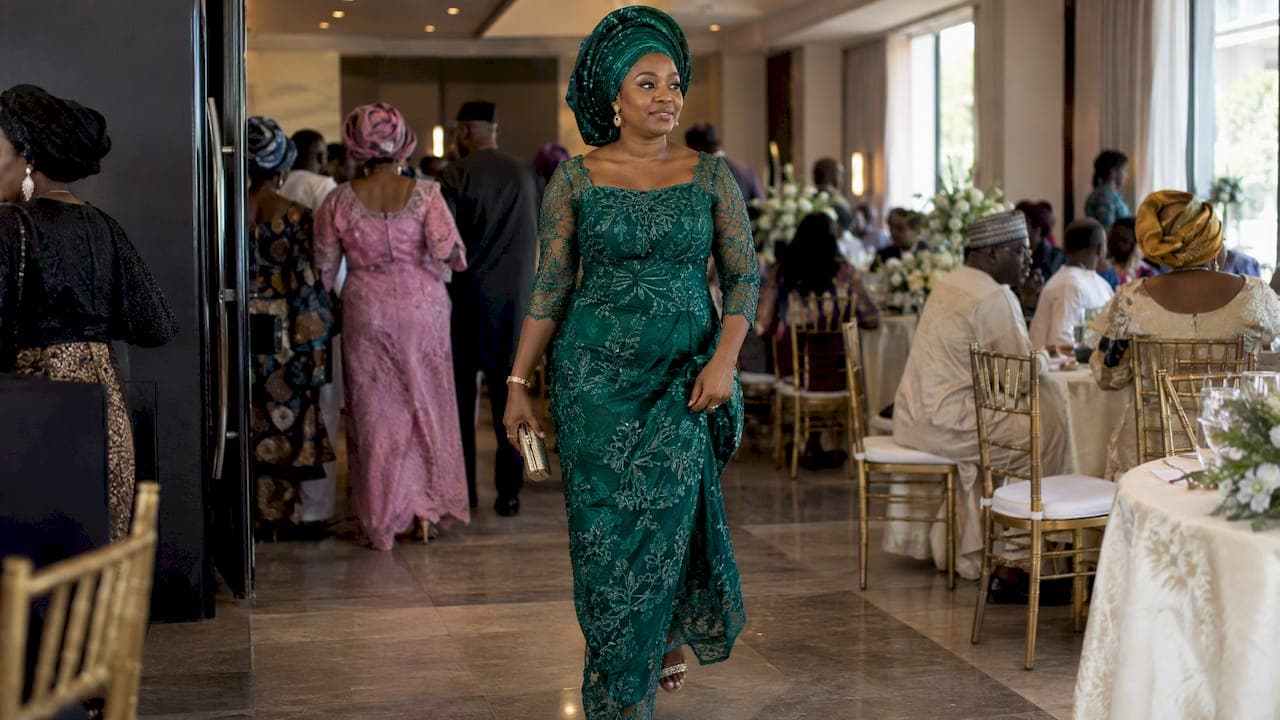
Match your outfit to the ceremony, skip white, and follow any Aso‑ebi instructions you receive. The Guardian Nigeria and The Knot both point to the same formula: quality fabric, professional tailoring, and bold color. As a West African fashion house, we share this guide to help you choose what to wear.
TL;DR:
- If the family gives you Aso ebi, wear it; otherwise avoid its exact color, and ask a family contact about dress guidance early.
- Traditional ceremonies often feature aso oke, George, lace, or Ankara, while white wedding services call for formal suits or evening gowns.
- Book a tailor at least six weeks ahead, schedule a fitting, and allow time for adjustments; rush work usually costs more.
- For hot outdoor events, choose lighter lace, cotton blend Ankara, or organza, and wear block heels or wedges instead of stilettos on grass.
Table of Contents
- Women's outfit ideas for every ceremony
- What men should wear as a guest
- Aso‑ebi and color etiquette explained
- Fabrics and silhouettes that feel right
- Tailoring timeline, budget, and gele services
- Accessories and finishing touches
- Hair and makeup that complement traditional dress
- Where to buy authentic wedding guest attire
- What patterns and embroidery mean
- Seasonal comfort and fabric weight
- Footwear that matches each outfit
- Blending modern and traditional styles respectfully
- A culturally informed approach to shopping and styling
- Where to find wedding‑ready pieces from us
- FAQ
- Sources
Women's outfit ideas for every ceremony
Nigerian weddings are high‑fashion events, and styling experts quoted by StyleItPadi say bold colors, sequins, and metallics are encouraged while avoiding white is the most important etiquette rule. Before you choose a color, confirm any Aso‑ebi instructions with the couple's family.
- Iro and buba with gele: a wrapper and fitted blouse in aso‑oke or lace, with a sculpted headwrap and beaded clutch. Best for the traditional ceremony. Alternative: a long skirt and structured blouse in a rich color.
- Heavy lace gown: a sweeping silhouette with corded lace and statement earrings. Fits both traditional and white wedding events. Alternative: a lace‑trimmed midi dress.
- George fabric ensemble: a wrapper‑style skirt with a puffed‑sleeve top and coral beads. Especially fitting for Igbo celebrations. Alternative: a silk wrap dress in a jewel tone.
- Ankara wrap dress: lighter and playful, with block heels and a woven bag. Great for daytime gatherings. Alternative: a printed midi from your own closet.
- Structured midi for church: shoulders covered, clean lines, rich color. Ideal for the white wedding service. Alternative: a tailored dress with a jacket.
- Evening gown with sequins: a mermaid or A‑line cut with a bold gele. Made for the reception, where guests are encouraged to go all out. Alternative: a metallic cocktail dress.
What men should wear as a guest
Men have several confident options, and the right one depends on the ceremony. The Guardian and The Knot describe agbada and kaftan as staples of traditional celebrations.
- Agbada: a flowing three‑piece robe, usually in embroidered or woven fabric. It suits the traditional ceremony and is worn with a matching cap, often a fila.
- Kaftan or baban riga: a relaxed, elegant tunic, particularly associated with Hausa celebrations, where modesty and embroidery are valued.
- Senator wear: a simple, tailored tunic and trouser set that works for daytime events and receptions.
- Tailored suit or tuxedo: the right call for a white wedding. Choose a bold color or textured fabric if you want to nod to the celebration.
Coordinate your color with your partner's outfit, keep embroidery polished rather than loud, and wear leather loafers or slip‑ons that pair well with long robes. If you are not wearing traditional dress, a smart suit in a deep jewel tone is a respectful choice.
Aso‑ebi and color etiquette explained
Aso‑ebi is a pre‑selected fabric chosen by the couple for their inner circle, and wearing it signals solidarity rather than following a trend. The practice is also documented on Wikipedia as part of Nigerian celebration culture. Here is how to handle it:
- If you receive the fabric, have it tailored and wear it. It is an invitation into the family's circle.
- If you do not receive it, avoid that exact color so no one mistakes you for part of the group.
- Choose a complementary shade, or follow the "color of the day" if the couple has requested one.
- Ask early. Reach out to the couple or a family contact at least six weeks ahead, since tailoring takes time.
A polite message works well: "We are so excited to celebrate with you! Is there an Aso‑ebi or color of the day we should plan around?" Guides such as The Complete Guide to Aso‑Ebi Attire for Wedding Guests stress coordinating with family groups, so a quick question is always welcome.
Fabrics and silhouettes that feel right
The fabrics most associated with Nigerian weddings are aso‑oke, George, lace, Ankara, brocade, and organza. The Guardian notes that traditional ceremonies favor aso‑oke, George, lace, or Ankara in structured traditional wear. Weight matters because it decides whether a garment holds its shape or flows.
- Heavy woven fabrics such as aso‑oke suit structured wrappers and fitted buba.
- George and brocade hold embellishment and sculpted sleeves.
- Light lace and Ankara move well in flowing gowns and wrap styles.
- Organza adds volume and drama to sleeves and overlays at receptions.
Pro Tip: When in doubt, pick a fabric that supports your tailor's design instead of forcing an incompatible silhouette. A good tailor will tell you what the cloth wants to become.
Our collections draw on this same logic: the cloth leads the cut. For yardage and ordering time on woven pieces, our guide on planning aso oke outfits walks through it step by step.
Tailoring timeline, budget, and gele services
Good prep makes the difference between a calm morning and a frantic one. The Knot advises booking tailors at least six weeks ahead, and sewing fees and fabric costs vary widely. Rush work usually costs more.
Book tailoring at least six weeks before the wedding. That window leaves room for fittings and adjustments without rush fees. (The Knot)
Your checklist:
- Measure yourself or get measured by your tailor.
- Choose your fabric and confirm color with any Aso‑ebi instructions.
- Book your tailor and schedule at least one fitting.
- Reserve a gele tier or practice tying at home. Wikipedia notes that professional gele tiers commonly charge roughly $30–$80, depending on market and complexity.
- Pack shoes and accessories and try everything together once.
The Guardian reports mid‑range and high‑society budget ranges, so plan for fabric, sewing, and gele together. Our wedding guest outfit workflow breaks the fittings down further.
Accessories and finishing touches
The right details turn a good outfit into a memorable one. The Knot notes that Igbo celebrations favor George fabric and coral beads, while StyleItPadi encourages statement accessories.
- Coral beads for Igbo traditional ceremonies, worn at the neck and wrists.
- Statement earrings that balance your gele rather than compete with it.
- A beaded clutch that holds essentials without breaking the line of your outfit.
- A hand fan, both practical and photogenic.
- Block heels or wedges for outdoor receptions. Skip stilettos on grass.
A few etiquette notes: spraying money on the dance floor is a joyful tradition, so keep small bills ready. Expect frequent photos and several outfit changes by the couple. For polished hands, a visit to a salon such as Foxy Nails Reno is a lovely finishing step.
Hair and makeup that complement traditional dress
Hair and makeup should frame your outfit, not fight it. If you are wearing a gele, your hair is mostly hidden, so keep it neat, flat, and secure: braids, a low bun, or a sleek wrap underneath give the headwrap a stable base. A tight, comfortable foundation also keeps the gele from slipping during hours of dancing.
Without a gele, you have more freedom. Elegant undos, braided crowns, and polished curls pair well with off‑the‑shoulder gowns and lace. Keep the style graceful rather than overly casual, since these are celebrations that value presentation.
Makeup works best when it echoes your fabric. Rich, warm tones such as bronze, terracotta, and gold look striking against jewel‑colored lace or aso‑oke. Define the eyes if your outfit is heavily embellished, and choose a bold lip if your clothing is simpler. Remember that long days and warm rooms call for setting spray and blotting papers.
Hands count too. Henna designs can add a cultural, artful detail to your look, and an artist such as those at Henna For Fun can show you what suits an event. Book beauty services early, since wedding season fills calendars quickly, and bring a photo of your outfit so your artist can match tones.
Where to buy authentic wedding guest attire
You have a few reliable routes, and the best one depends on your timeline. Local fabric markets and Nigerian or West African shops in your city let you touch the cloth, which matters for aso‑oke and lace. Independent tailors can turn that fabric into a custom design, usually with several fittings.
Online shopping gives you wider choice and faster comparison. Look for sellers who name their fabrics, describe their sizing clearly, and state production or shipping times. Ready‑to‑wear is the practical path when your date is close, while made‑to‑measure suits those planning six weeks or more ahead, in line with The Knot's tailoring advice.
Whichever route you choose, ask about fabric content, return policies, and whether pieces come in limited runs. Authentic pieces usually come with a story: who made them, where, and how. That transparency is a good sign of craftsmanship and ethical production.
We craft our West African ready‑to‑wear and custom pieces in limited quantities, so you can browse our dresses or our collections and find something wedding‑ready. If you plan to start from scratch, our services page explains how custom work begins, and our guide to what to wear as a West African wedding guest covers the next steps.
What patterns and embroidery mean
Patterns and embroidery in Nigerian wedding attire are never just decoration. They carry community identity, status, and celebration. Aso‑oke, the hand‑woven cloth, is traditionally associated with Yoruba ceremonies, where its strips and stripes speak to craft and family pride. Dense embroidery on a man's agbada often signals formality and the importance of the occasion.
George fabric, favored in Igbo celebrations and paired with coral beads, communicates wealth and honor through its richness and sheen. Hausa embroidered caftans, as described by The Knot, emphasize modesty alongside beautiful handwork. Each region has its own visual language, and wearing it respectfully means understanding where it comes from.
As a guest, you do not need to decode every motif. What matters is respect: avoid wearing costume‑style imitations, ask about meaning when a family member offers to explain, and appreciate the work behind each stitch. When we design, we treat every stitch, line, and weave as a piece of a legacy, and our guide to what defines festive African dress explores that cultural meaning in more depth.
If you wear Aso‑ebi, remember that the shared pattern is a statement of unity. Matching it means you are part of the day's story, and that is one of the most meaningful ways to honor the couple.
Seasonal comfort and fabric weight
Nigerian weddings often run for hours, with long ceremonies, photo sessions, and dancing, so comfort shapes how well you enjoy the day. In warm or humid weather, breathable fabrics such as lighter lace, cotton‑blend Ankara, and organza keep you cool. Structured heavy pieces like thick aso‑oke can feel substantial in heat, so reserve them for cooler weather or air‑conditioned venues.
In cooler months, heavier fabrics become an advantage. Brocade, George, and woven aso‑oke hold warmth and give you the structured look many traditional ceremonies call for. Layer with a wrap, shawl, or jacket that matches your color story. For rainy seasons, avoid long hems that drag on wet ground and choose shoes with grip.

Weight also changes how a gele behaves. A stiff fabric holds a sculpted shape, while softer fabric drapes. If you will be outdoors in wind, ask your tying service for a firmer base. Your gown's lining matters too: a breathable lining keeps you comfortable while preserving the line of the dress.
When you are unsure, ask the couple about the venue and time of day. Indoor evening receptions allow more embellishment, while daytime outdoor events reward lighter, easier pieces. Bringing a spare pair of comfortable shoes is always smart.
Footwear that matches each outfit
Shoes should support your look and your stamina. With iro and buba, choose sandals or closed‑toe heels that do not compete with a layered wrapper. A modest heel keeps the hem clean and makes it easier to move through crowds.
For structured gowns and lace, a pointed pump or elegant block heel keeps the silhouette clean. At outdoor receptions, block heels or wedges prevent sinking into grass, which is why stilettos are best saved for indoor venues. If your event spans several hours, carrying a pair of flats in your bag is a thoughtful move.

Men should match leather finishes to the formality of the outfit. Polished loafers or slip‑ons pair well with agbada and kaftan, since long robes need uncomplicated footwear. With a suit, classic oxfords or dress shoes work, and a bold color can echo a pocket square or cap.
Color coordination makes everything look intentional. Metallic gold or silver shoes pair with almost any jewel tone, while neutral nude tones extend the leg line. Before the day, break in new shoes and practice walking in your full outfit. Comfort matters, because a guest who can dance is a happy guest.
Blending modern and traditional styles respectfully
Fusion can be beautiful when it starts from respect. Begin with the traditional foundation: a recognizable fabric such as lace, George, or aso‑oke, then add a modern cut, like an asymmetric hem or a tailored bodice. This keeps the cultural heart of the outfit intact while allowing personal style.
Check the dress code first. Traditional ceremonies call for more classic structure, while receptions allow bolder experiments. A sequined gown with a statement gele, for example, bridges both worlds. Men can wear a modern slim kaftan with embroidered detail, or pair a traditional cap with a sharply tailored jacket.
Avoid mixing symbols without understanding them. Do not wear sacred or ceremonial items, such as specific beads, just for aesthetics. Ask a family member or a trusted tailor if you are unsure, and avoid white, which remains the key etiquette rule across guides like StyleItPadi's.
Quality is the final marker of respect. Well‑made garments in real fabrics show that you took the occasion seriously, while thin costume pieces do not. Our own collections blend heritage and modern cuts, and our party dress code checklist can help you test a fusion idea against the occasion.
A culturally informed approach to shopping and styling
Guests ask us how to dress well without being disrespectful, and we believe the answer is craftsmanship plus context. Our ready‑to‑wear and custom pieces rest on authentic West African heritage and ethical production, from men's agbada ensembles to women's collections. If your date is close, choose ready‑to‑wear; if you have time, plan a custom order for a made‑to‑measure fit. Either way, ask questions and enjoy the story behind the cloth.
— Sena
Where to find wedding‑ready pieces from us
When you want a guest outfit made with care, we are ready to help. Browse our dresses for white weddings and receptions, explore our collections for coordinated looks, or look through men's agbada and heritage sets on our home page. Each piece is produced ethically and in limited runs, so what you wear is as distinctive as the celebration. If you want something made to your measurements, our custom services let you start the conversation early, ideally six weeks or more before the wedding. Pick your piece, confirm your timing, and arrive feeling regal.
FAQ
Are Nigerian weddings arranged?
Most Nigerian weddings today are chosen by the couple, though families play a large role in the celebration and the traditional ceremony. Family involvement shows up in Aso‑ebi and the community feel of the day, as EventDesignByBe explains.
What is a aso ebi?
Aso‑ebi is a pre‑selected fabric chosen by the couple for their inner circle, usually worn to show unity. If you receive it, have it tailored and wear it; if you do not, avoid that exact color, according to EventDesignByBe.
What do Nigerian Muslims wear?
Hausa and Muslim celebrations often emphasize modesty and embroidered kaftans, as The Knot describes. Women usually choose covered, elegant outfits with a headscarf or gele, and men favor kaftans with caps.
What is the dress code for a wedding ceremony?
Match your outfit to the ceremony type. The Guardian reports that traditional ceremonies call for aso‑oke, George, lace, or Ankara, white weddings favor formal suits or evening gowns, and receptions are where guests can go all out.
What should I avoid wearing to a Nigerian wedding?
Avoid white, which is the most important rule according to StyleItPadi. Also avoid the exact Aso‑ebi color if you were not given the fabric.
Sources
- What Do Guests Wear to Nigerian Weddings? | The Guardian Nigeria News - Nigeria and World News
- Eventdesignbybe
- Nigerian Wedding Attire: A Complete Guide for Guests
- Nigerian Wedding Attire Guide for Couples & Guests
- En