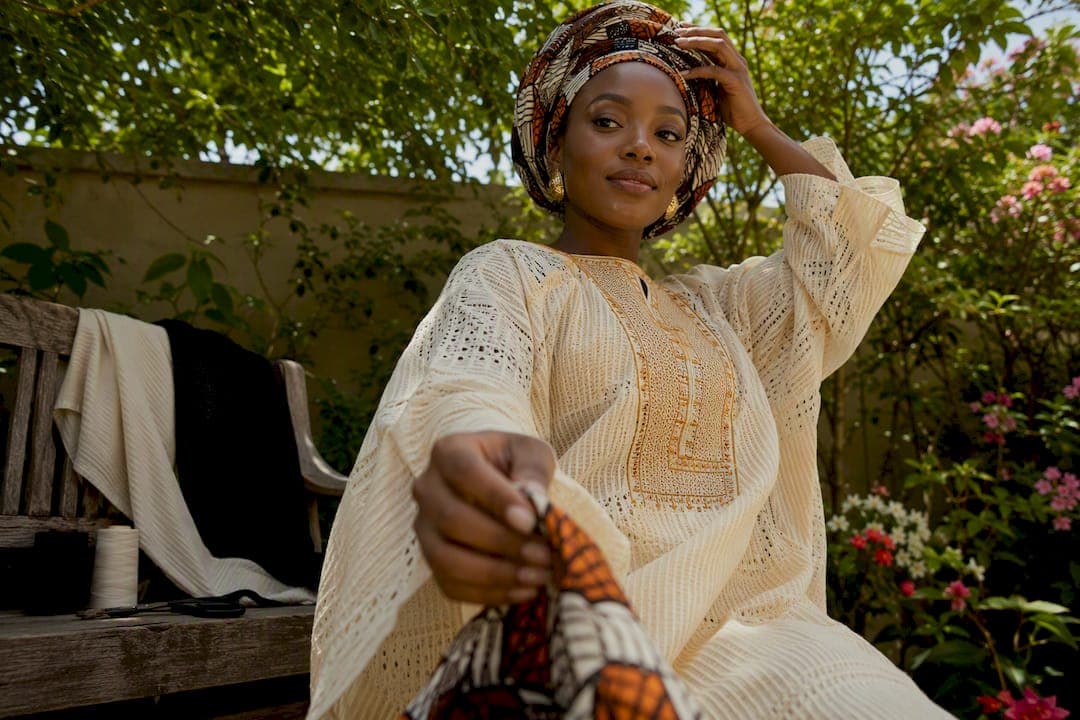
For a West African wedding, dress celebratory and culturally respectful. That means colorful traditional pieces like Ankara, lace, or a kaftan and gele for women, or an agbada, kaftan, or senator suit and cap for men, all favoring bold pattern and structured tailoring over anything muted or casual. Three rules carry the most weight: skip white, follow any Aso-ebi or "color of the day" instruction the couple gives you, and invest in tailoring over a mediocre off-the-rack fit. West African weddings run as celebrations of family and heritage, so guest attire is expected to look intentional, vibrant, and finished.
- Women: Ankara, lace, or George fabric styled as buba and iro, a kaftan, or a fitted gown, paired with a gele.
- Men: agbada, embroidered kaftan, or a senator suit, topped with a matching cap.
- Non-negotiables: no white, respect the Aso-ebi color if one is given, and budget time for a tailor.
Fashion coverage of these celebrations consistently frames guests as part of the show rather than background, so restraint is rarely the safer choice.
Key Takeaways
A West African wedding guest outfit succeeds when it follows the couple's color or Aso-ebi instructions, favors tailored fit over off-the-rack sizing, and skips white entirely.
| Point | Details |
|---|---|
| Avoid white | Reserve white and ivory for the couple unless the invitation says otherwise. |
| Follow Aso-ebi or color cues | Buy the specified fabric or match the stated color of the day when one is given. |
| Prioritize tailoring | Allow two to four weeks for alterations, longer during spring and December. |
| Match fabric to season and venue | Choose lighter Ankara and lace for warm or outdoor events, heavier Bazin and agbada for cooler or indoor ones. |
| Shop U.S.-based for speed | Senanukunu ships ready-to-wear domestically with direct tailoring guidance, avoiding customs delays common with overseas sellers. |
Table of Contents
- Quick West African Wedding Guest Outfit Checklist
- Key Traditional Pieces and Fabrics Explained
- Reading Aso-ebi and Color-of-the-Day Cues
- Styling, Accessories, and Getting Through a Long Reception
- How to Buy With Confidence
- Regional Styles Vary More Than Most Guests Expect
- Choosing Fabric for the Season and the Event Timeline
- What Guests Consistently Get Wrong
- Shop the Look: Senanukunu's Wedding Guest Picks
- Sources
Quick West African Wedding Guest Outfit Checklist
Before you shop, decide whether you're leaning traditional or modern. Both are correct answers, and each has a fast path.
- Pick your lane. Traditional means Ankara buba and iro or an agbada set; modern means a tailored kaftan gown or a structured Ankara midi dress.
- Confirm the color. Check the invitation for Aso-ebi fabric or a stated "color of the day" before you buy anything.
- Buy the essentials. A spare pair of flats for dancing, an auto-gele if you're not confident tying one by hand, your tailor's contact saved and ready, and a photo of your fabric swatch to send for matching accessories.
- Time your tailoring. Allow two to four weeks for a custom fit, longer during peak wedding season (spring and December), and ask any seller directly about turnaround before you commit.
- Ask sellers the right questions. Request fabric composition, finished garment measurements, and whether alterations are included or extra.
Pro Tip: Photograph your Aso-ebi fabric the moment you receive it and text it to your tailor immediately, even before your fitting appointment. Fabric can be scarce once a print sells out, and a tailor working from a photo can plan pattern placement in advance.
Key Traditional Pieces and Fabrics Explained
Knowing the vocabulary makes shopping faster and helps you avoid an outfit that misses the occasion entirely.
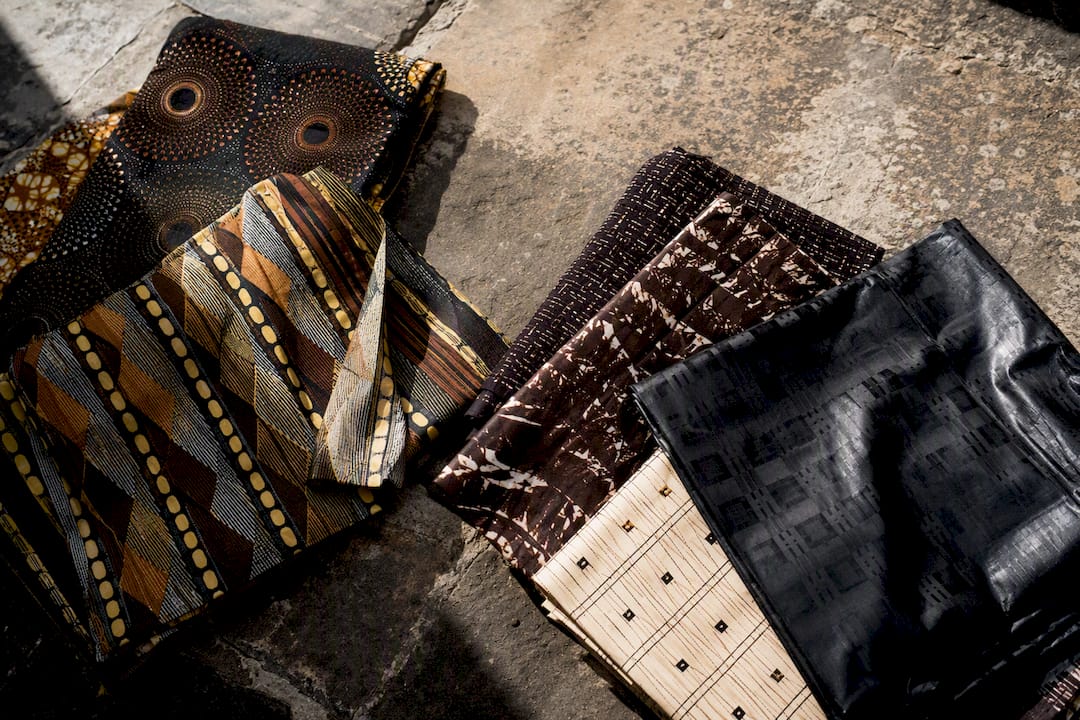
- Ankara (wax print): Bold, wax-resist cotton print used for everything from fitted dresses to agbada sets. Look for a crisp, saturated print with no bleeding on the reverse side, a sign of quality wax.
- Kente: Handwoven strip cloth from Ghana, traditionally reserved for the most significant moments. If you're wearing Kente as a non-family guest, treat it as a statement piece rather than an everyday choice.
- Aso-ebi: Not a fabric type itself but a coordinating fabric the wedding party distributes to family and close friends. It signals unity, and it's typically made-to-order rather than sold ready-to-wear.
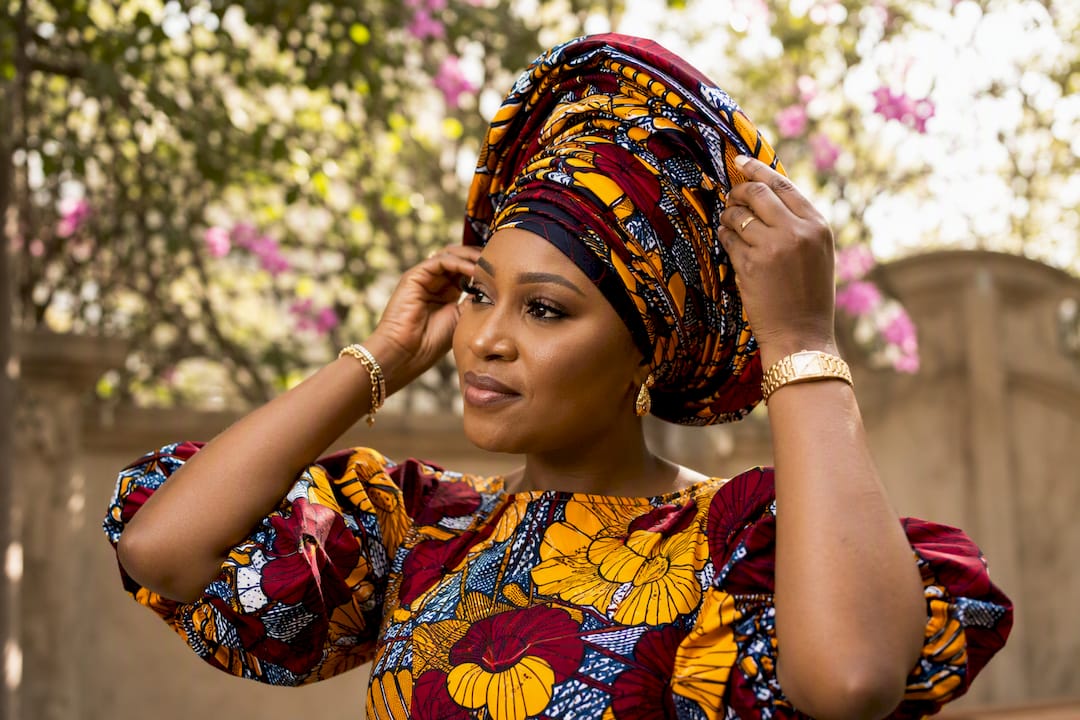
- Gele: The structured headwrap worn by women. Hand-tied versions carry the most prestige, while pre-tied auto-geles offer a convenient, still-polished alternative.
- Agbada: A flowing three-piece robe for men, worn over an inner tunic and trousers. It remains the top formal option for male guests who want to match the occasion's weight.
- George and Bazin: Heavier, often embroidered fabrics used for structured gowns and agbada sets. Check the embroidery for even, tight stitching and a fully finished lining.
- Lace: Frequently layered over a solid underlay for gowns and buba tops. Quality lace holds its shape without stretching or fraying at the cut edges.
For fabrics tied to a group Aso-ebi order, commissioning a tailor is standard. For everything else, well-made ready-to-wear saves time without sacrificing polish, particularly when the silhouette is already tailored to fit close through the body.
Reading Aso-ebi and Color-of-the-Day Cues
Wedding invitations often carry more instruction than they seem to. "Aso-ebi" means the couple has designated a specific fabric for family and close friends to purchase and have tailored into their own style, a practice rooted in showing collective support. A "color of the day" is a looser version of the same idea: no shared fabric, just a palette everyone is asked to wear.
- If Aso-ebi fabric is offered to you, buying and wearing it is a genuine gesture of participation, not just a style choice.
- If you weren't offered fabric but a color is specified, choose that color in whatever fabric you like.
- Avoid white or ivory entirely unless the couple states otherwise; it reads as bridal.
- Skip denim, sneakers, and anything overtly casual unless the invitation specifically calls for casual attire.
Pro Tip: When unsure, a short message works better than guessing: "Is there an Aso-ebi fabric or color you'd like guests to wear?" Couples generally welcome the question, since it shows you're taking the day seriously.
Styling, Accessories, and Getting Through a Long Reception
Your outfit needs to survive hours of standing, dancing, and photos, not just the entrance.
- Gele: Hand-tie if you or a friend has the skill and time; otherwise, a well-fitted auto-gele looks equally sharp and takes seconds to secure.
- Caps: For men, a matching cap (often called a fila) finishes the look. Wearing it tilted slightly, rather than straight, is the traditional style cue.
- Beads and coral: Appropriate for both traditional and modern outfits. Keep sizing proportional to your neckline and avoid layering more than two or three strands so the fabric's pattern stays visible.
- Shoes: Bring a backup pair of flats for later in the night; extended dancing makes heels a short-term commitment at best.
- Packing list: Safety pins, a small sewing kit, blotting sheets, and your tailor's number saved under an easy-to-find contact name.
Layering a modern edge onto traditional fabric, structured shoulders on an Ankara gown, for instance, has become common in current guest styling. For headwrap tutorials and styling reference, StyleMyCrown's catalog is a useful resource before your fitting.
How to Buy With Confidence
A good listing tells you almost everything before the fabric ever arrives. Check the fabric composition, look for multiple close-up photos (not just a styled full-body shot), confirm the brand provides finished garment measurements rather than just "S/M/L," ask about the return policy on custom or tailored pieces, and verify tailoring options are available if the standard fit won't work for your body.
Senanukunu builds around exactly these friction points. Every piece ships ready-to-wear from a U.S.-based operation, which means no customs delay and no guessing at international sizing charts. Fit questions and tailoring guidance are answered directly rather than left to a size chart alone, and U.S. shoppers ordering from abroad often lose weeks to exactly the shipping and returns questions a domestic source resolves upfront.
Before ordering: request a fabric swatch photo if you're coordinating with a group, confirm pickup or alteration timing against your wedding date, and plan your gele or cap color alongside the dress rather than after it arrives.
| Point | Details |
|---|---|
| Check fabric composition | Ask for material details before buying, not after the piece ships. |
| Confirm measurements, not sizes | Request finished garment measurements instead of relying on S/M/L labels. |
| Verify tailoring and returns | Ask whether alterations are included and what the return policy covers. |
| Order from U.S.-based sellers when possible | Senanukunu ships domestically, avoiding customs delays and import sizing guesswork. |
Regional Styles Vary More Than Most Guests Expect
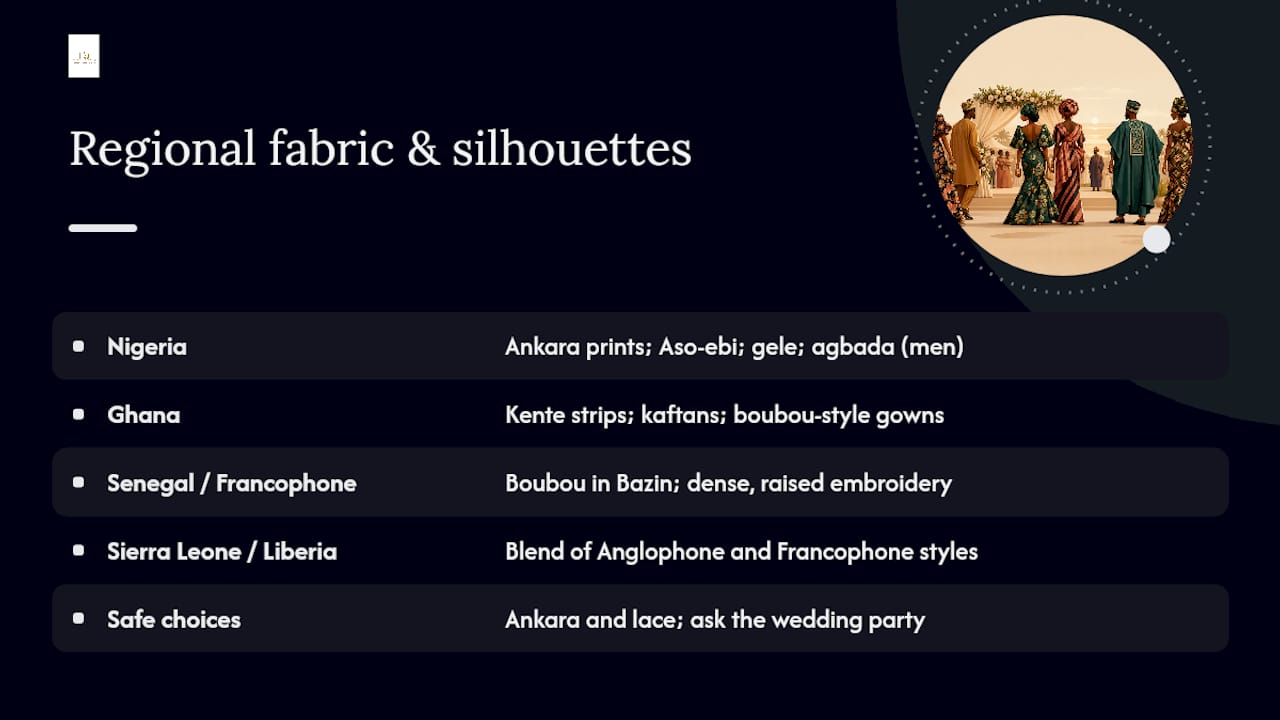
West African wedding attire isn't one uniform look, and treating it that way is how guests end up with a piece that fits the region rather than the wedding. Nigerian celebrations, particularly Yoruba and Igbo weddings, lean toward Aso-ebi coordination, elaborate gele, and agbada for men as the default formal register. Ghanaian weddings draw more heavily on Kente for family members and close guests, often in narrower strip-woven patterns that differ visibly from Nigerian Ankara prints, alongside kaftans and boubou-style gowns for broader guest wear.
Senegalese and other Francophone West African weddings often favor the boubou, a flowing wide-sleeved robe worn by both men and women, frequently in Bazin fabric with dense, raised embroidery rather than the wax-print patterns more common in Nigerian styling. Sierra Leonean and Liberian celebrations tend to blend these influences, drawing on both Anglophone and Francophone traditions depending on family background.
None of this means a guest needs to research the couple's exact ethnic background before shopping. It does mean two things worth checking: if you know the couple's heritage, leaning into that region's signature fabric or silhouette shows genuine attentiveness, and if you're unsure, Ankara and lace remain the safest cross-regional choices since both appear across nearly every West African wedding tradition. When in doubt, ask a member of the wedding party rather than guessing from general West African fashion coverage.
Choosing Fabric for the Season and the Event Timeline
Fabric weight matters more at a five-hour reception than most guests plan for. Heavier Bazin and structured George hold their shape beautifully for photos but trap heat fast in a crowded, dancing reception hall, especially for summer weddings or outdoor ceremonies. Lighter Ankara cotton and lace breathe better and still photograph with strong color saturation, making them a more forgiving choice for warm-weather dates.
Winter and indoor weddings flip that calculus. A structured agbada or a heavier embroidered kaftan reads as more seasonally appropriate and gives you a layer of warmth between the ceremony and the reception without needing a coat over your outfit. If your wedding spans an outdoor ceremony followed by an indoor reception, which is increasingly common for diaspora weddings in the U.S., consider a lighter base layer with a removable outer piece, like an embellished jacket over an Ankara dress, so you can adjust as the venue changes.
Timing your order matters just as much as timing your outfit. Spring and December remain the busiest wedding months, which means tailors and ready-to-wear sellers alike see order backlogs. Ordering six to eight weeks ahead during those windows, rather than the standard two to four, gives you room for alterations without the last-minute scramble that pushes guests toward whatever fits off the rack.
What Guests Consistently Get Wrong
The biggest misstep isn't fabric or color. It's guests treating "wedding guest" as a category that calls for restraint, when West African wedding culture asks for the opposite. Coverage of these events consistently describes guests dressing with the same intention as the wedding party itself, not diluting their look to stay in the background. If you're coming from a wedding culture where guests default to safe and simple, recalibrate that instinct before you shop.
Where conventional advice falls short is in treating Aso-ebi and "color of the day" as optional flourishes rather than genuine participation signals. Skipping a stated color when you had the option to follow it reads as opting out of the family's moment, even if that's not the intention. The reader's real priority order should be: confirm the color or fabric instruction first, choose your silhouette second, and leave fit for last only in the sense that it's the thing worth paying a tailor for rather than compromising on.
What's overrated is chasing an exact ethnic-specific outfit if you're not from that community. Thoughtful, well-tailored pieces in the right color read as respectful. Costume-like attempts at precision usually read as the opposite.
— Sena
Shop the Look: Senanukunu's Wedding Guest Picks
Once you know your lane, traditional or modern, three silhouettes from Senanukunu cover most guest scenarios. A structured Ankara midi dress works for daytime ceremonies and reception dancing alike, holding its shape through hours of movement without needing a slip underneath. An embroidered kaftan gown suits guests who want traditional fabric with a more contemporary, fitted silhouette, especially useful if Bazin or George was specified as the Aso-ebi fabric. A three-piece agbada set remains the strongest formal choice for men attending as family or close friends of the couple.
Every piece ships ready-to-wear from Senanukunu's Florida-based operation, so there's no international customs wait between your order and your closet. Standard pieces typically ship within about a week, and tailoring guidance is available directly if you need adjustments to sleeve length or hem before the big day. If you're coordinating Aso-ebi with a bridal party, reach out with your fabric swatch photo before ordering so accessories and gele color can be matched ahead of time.
Browse the current dress collection to see available Ankara and lace silhouettes, or start with the Solara Tide Midi Dress if you want a ready example of the structured, celebration-ready fit this guide recommends. For a broader look at how to plan the rest of your outfit around a chosen silhouette, Senanukunu's wedding guest outfit workflow walks through the same checklist covered here in more detail.
Sources
- What do guests wear to Nigerian weddings? — The Guardian (Nigeria)
- Nigerian wedding attire guide for couples & guests — The Knot
- Glamour and flamboyance: what it means to be a Nigerian wedding guest — BellaNaija