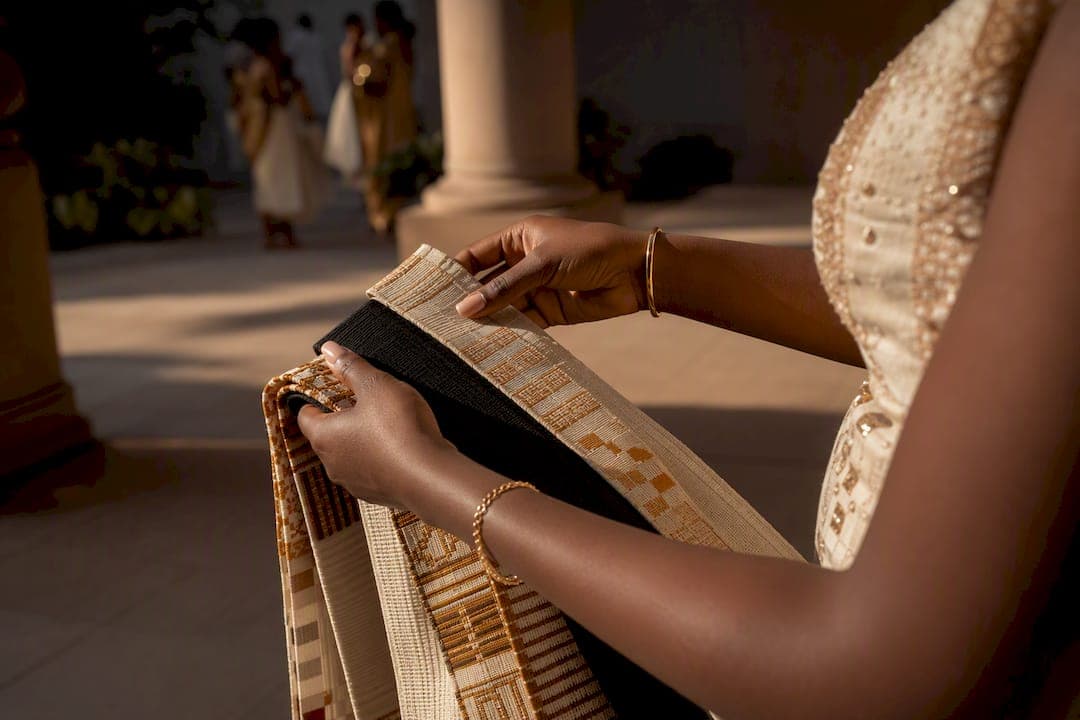
Traditional Ghanaian wedding guest attire calls for Kente, aso-oke, or lace in colors that complement the couple's chosen palette without matching it exactly. Church ceremonies ask for smart formal wear with optional African accents, and receptions welcome bolder lace and statement pieces. If the family hands out aso-ebi, follow their fabric and color guidance. When nothing is specified, ask your host, and lean toward dressing up rather than down.
TL;DR:
- Traditional Ghanaian wedding attire should include Kente or aso-oke fabrics for the customary rites and be reserved for close family or when explicitly requested.
- Church or white wedding guests should opt for tailored suits, knee-length dresses, or gowns with subtle African accents, avoiding full traditional fabrics unless fitting the event.
- Receptions are suitable for bolder lace, sequins, and statement jewelry, with footwear that supports dancing and comfort.
- Always check the invitation or family guidance for specific fabric, color, or dress code requests, especially for aso-ebi or color-of-the-day announcements.
- Comfortable, lightweight fabrics such as cotton or brocade are recommended for outdoor daytime ceremonies to handle Ghana’s warm climate and long celebrations.
Table of Contents
- Ghanaian Wedding Guest Attire by Ceremony Type
- Fabrics, Colors, and Headwear That Respect the Culture
- Men's Outfit Options: Agbada, Kaftan, and Suits
- Women's Attire and Styling That Photographs Well
- Practical Styling and Comfort Checklist for Guests
- Reading the Invitation and Handling Aso-Ebi Requests
- How Senanukunu Helps You Get Wedding-Ready
- A Note on Cultural Respect and Personal Style
- Find Your Wedding Guest Outfit at Senanukunu
- Sources
- FAQ
Ghanaian Wedding Guest Attire by Ceremony Type
Each part of a Ghanaian wedding has its own dress language, and getting it right starts with knowing which event you're actually attending. Traditional ceremonies (often called the "customary rites" or engagement/knocking ceremony) call for the most cultural formality. This is where Kente, aso-oke, and other prestige fabrics belong, worn by family and close guests alike as a sign of respect for the union being blessed by elders.
White or church weddings shift the tone. Smart formal Western wear, tailored suits, cocktail dresses, or a modern gown with African-inspired accents like a beaded clutch or kente sash all read as appropriate here. Dress expectations shift by ceremony, with traditional fabrics reserved for the customary rites and smart formal attire expected at the church service.
Receptions are where you can turn up the glamour. Heavier lace, sequins, and statement jewelry all work once the formal vows are done and the dancing starts.
- Traditional/customary ceremony: Kente, aso-oke, fugu, or embroidered lace in respectful, modest cuts.
- Church/white wedding: Tailored suits, knee-length or maxi dresses, subtle African accents.
- Reception: Bolder lace, sequins, statement earrings, and heels built for dancing.
- Engagement, knocking, or day party: Ankara or lighter cotton prints, relaxed but polished.
Check the invitation and venue first. An outdoor afternoon customary rite under a canopy calls for different fabric weight than an evening reception in a hotel ballroom.
Fabrics, Colors, and Headwear That Respect the Culture
Kente signals prestige and is traditionally reserved for close family, elders, or guests specifically asked to wear it. Aso-oke, a hand-woven fabric often worn by men in flowing gowns, carries similar weight. Lace, whether Swiss, French, or cord lace, is the reception favorite because it photographs beautifully and moves well for dancing. Ankara is the everyday workhorse fabric, versatile enough for a day party or a knocking ceremony. Fugu, the woven smock from northern Ghana, shows up more at cultural or regional celebrations.
Color etiquette matters more than most guests realize. Ghanaian families typically announce a color of the day, and wearing that exact shade head to toe can make you look like part of the bridal party rather than a guest. Build your outfit around a complementary base color and echo the couple's palette through your accessories instead. Avoid white outright unless the invitation says otherwise, and think twice about full black, which reads as somber in many Ghanaian settings.
- Kente and aso-oke: save for customary ceremonies or when specifically invited.
- Lace: your reception go-to, bold and durable for dancing.
- Ankara: flexible for day parties and less formal events.
- Color: complement, don't match, the announced palette exactly.
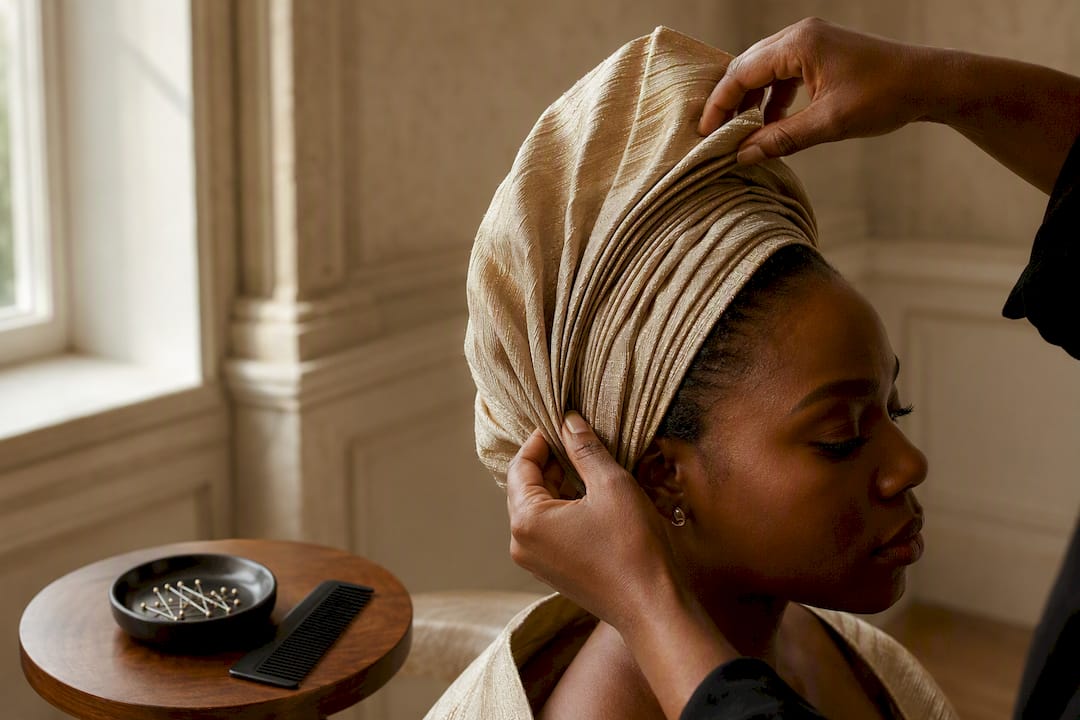
For headwear, a pre-tied or structured gele holds its shape through hours of standing, sitting, and greeting elders, while hand-tied styles look stunning but can slip if you're not experienced. Men often opt for a simple fila cap that matches their outfit's fabric.
Pro Tip: Book a professional gele tie if you want a tall, dramatic shape. A rushed self-tie often looks flat in photos by hour three.
Men's Outfit Options: Agbada, Kaftan, and Suits
Men attending a customary ceremony often reach for an agbada, the flowing three-piece robe that layers over a matching kaftan and trousers. It's formal, breathable, and instantly recognizable as festive wear. A senator-style kaftan, slimmer and more structured, works well for both traditional rites and dressier day events. West African traditional ceremonies typically call for Ankara, Kente, aso-ebi, or boubou for men, paired with a matching cap and simple leather sandals or loafers.
A tailored suit with an African-print pocket square, tie, or lining strikes a good balance for church weddings where full traditional dress might feel out of place but you still want to nod to the culture.
- Agbada or kaftan set: best for traditional ceremonies and outdoor day events.
- Senator wear: sharp, structured, works across multiple ceremony types.
- Suit with African accents: ideal for church services and formal receptions.
- Footwear: leather sandals or loafers for grass venues; closed shoes for indoor receptions.
Ghana's climate runs warm most of the year, so breathable cotton or light brocade beats heavy wool every time.
Women's Attire and Styling That Photographs Well
The kaba and slit, a fitted top paired with a wrapped skirt, remains the classic silhouette for traditional ceremonies and works beautifully in Kente or aso-oke. A wrapper-and-top combination offers more ease of movement for long standing ceremonies, while a modern fitted gown in lace or Ankara suits both church services and receptions depending on the fabric weight you choose.
Gele styling deserves real thought. Structured or professionally tied headwraps hold up better over long ceremonies than intricate hand-tied versions, and elders tend to notice the polish. A pre-tied gele is a smart backup if you're not confident tying your own before sunrise.
- Kaba and slit: traditional, structured, ideal for customary rites.
- Wrapper and top: comfortable for standing ceremonies and greetings.
- Modern gown: flexible across church and reception depending on fabric.
- Gele: pre-tied for reliability, hand-tied for guests skilled at the craft.
Finish with gold or beaded jewelry, a small clutch, and low block heels or embellished sandals you can actually dance in later.
Pro Tip: Pack flat sandals in your clutch for the reception. Nobody regrets swapping heels once the dancing starts.
Practical Styling and Comfort Checklist for Guests
- Carry a compact clutch or handwoven potli instead of a large handbag, so your hands stay free for greeting elders and receiving blessings.
- Choose block heels, wedges, or flat sandals over stilettos if the ceremony happens on grass or a dirt courtyard.
- Keep spraying money discreet and only when it's customary at that specific event; tuck a small stack of bills in your clutch rather than flashing a large amount.
- Test your full outfit before the day, sit, stand, walk, and dance in it, to catch tight seams or a headwrap that slips.
- Pack a mini emergency kit: safety pins, fashion tape, blotting paper, and a spare bobby pin for your gele.
Small details like these are what separate a guest who looks effortless from one who's visibly fighting their outfit by the third hour.
Reading the Invitation and Handling Aso-Ebi Requests
- Read the invitation twice. Look for mentions of a color, fabric, or dress code section before assuming anything.
- Check the family or friend group chat. Aso-ebi coordination usually happens there, separate from the printed invite.
- Ask the couple's wedding contact directly if you're still unsure. It's a normal, expected question, not an awkward one.
- Confirm the exact fabric, color, and tailor deadline immediately if you're asked to participate in aso-ebi, since fabric and tailoring require lead time that sneaks up fast.
- Default to respectful traditional wear or smart formal attire if no dress code is given at all.
Following an aso-ebi request means budgeting for fabric, tailoring, and possibly a gele fee, so start early rather than scrambling the week before. A step-by-step outfit workflow can help you map out timing from fabric purchase to final fitting.
How Senanukunu Helps You Get Wedding-Ready
There are ready-to-wear West African pieces available that suit this kind of decision-making. Dresses, agbada sets, and kaftans are available ready to style without a long wait for custom orders, which matters when a wedding invitation arrives on short notice.
- Browse collections to find fabric weight and formality suitable for your ceremony type.
- Confirm sizing early because limited-quantity pieces may sell out and might not restock.
- Consider pairing your outfit with accessories like a headwrap or clutch for a polished look.
- Check the brand's styling guide for West African wedding guests for outfit pairing ideas before you buy.
If your event calls for lighter, breathable fabric because of an outdoor daytime setting, this seasonal day-party outfit guide offers useful comfort tips that apply just as well to an afternoon knocking ceremony.
A Note on Cultural Respect and Personal Style
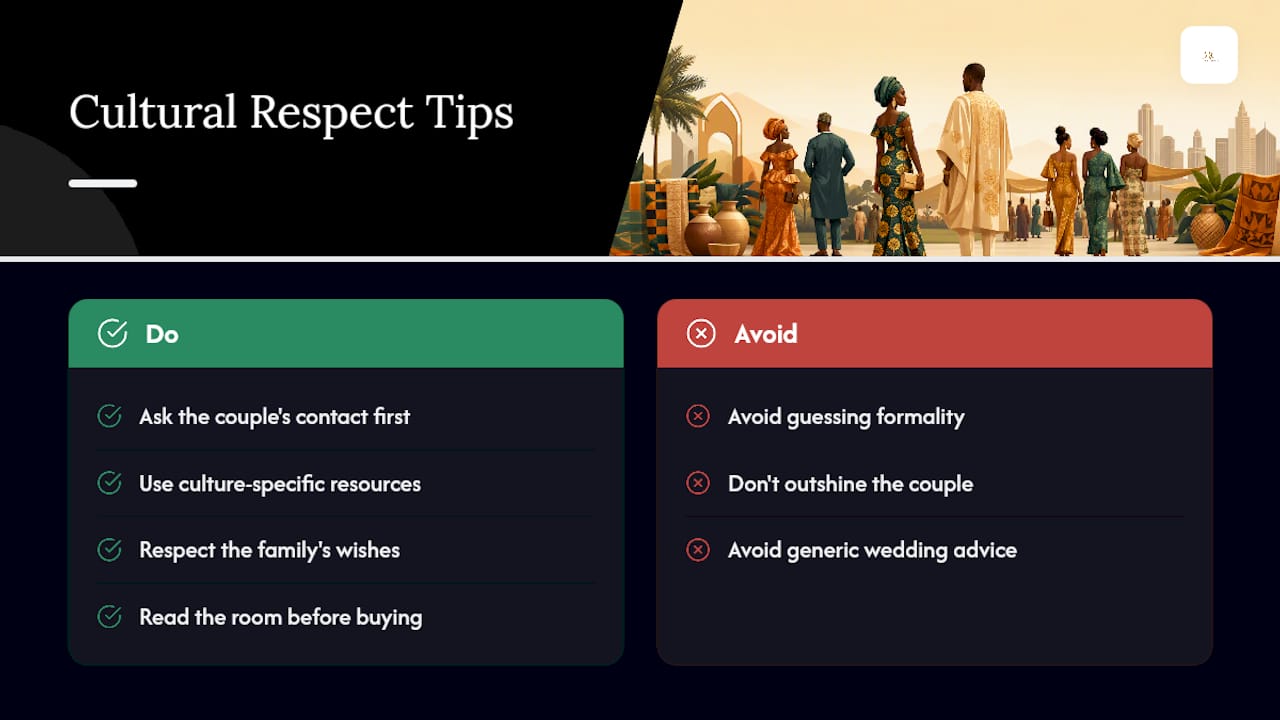
Dressing well for a Ghanaian wedding isn't about owning the most elaborate outfit in the room. It's about reading the room, honoring the family's wishes, and showing up in something that reflects genuine respect for the occasion. The biggest styling mistakes we see aren't about fabric choice at all. They're about guests who never asked a simple question and guessed wrong on formality.
When you're not sure what a specific ceremony calls for, ask the couple's contact before you buy anything. It takes one text message and saves real embarrassment. And when you do land on your outfit, lean on resources built specifically for this culture rather than generic wedding-guest advice that ignores what Kente, aso-oke, and gele actually mean to the people wearing them.
— Sena
Find Your Wedding Guest Outfit at Senanukunu
Senanukunu gives you a faster, more personal alternative to hunting through generic formal-wear racks for something that actually fits Ghanaian wedding etiquette. Every piece is ready-to-wear, ethically made in limited quantities, and rooted in authentic West African craftsmanship, so you're not guessing whether a mass-produced print will read as respectful or off-key.
Men can browse the Men's Agbada Ensembles and Men's Heritage lines for traditional-ceremony-ready sets, while women can explore the Women's Collections for kaba, gowns, and statement pieces suited to church services and receptions alike. If you want a specific example, the midnight prestige kaftan set shows how a modern three-piece kaftan can work across multiple wedding events. Pick your ceremony, match your fabric to the formality, and place your order with enough lead time for sizing and any last-minute tailoring.
Sources
For deeper cultural context, see the ceremony-by-ceremony wear guide, color-of-the-day etiquette, and Senanukunu's party dress code checklist.
- What to Wear to a Traditional Ghanaian Wedding
- Colours Of The Day: What To Wear To A Ghanaian Traditional Wedding - Velma's Millinery & Accessories
- Wedding Guest Style in Ghana (The Ultimate Guide) - Kente Knots
- What to Wear to an African Wedding: A Guest's Style Guide
FAQ
What should I wear to a Ghanaian wedding as a guest?
Wear traditional fabrics like Kente, aso-oke, or lace for the customary ceremony, smart formal wear for the church service, and bolder lace or statement pieces for the reception. If you're given aso-ebi instructions, follow the family's fabric and color guidance closely.
Can male guests wear white to a wedding in Ghana?
White is generally best avoided for male guests unless the invitation specifically calls for it, since it can read as bridal or overly formal in the wrong context. A tailored suit, agbada, or senator kaftan in another color is a safer, equally polished choice.
What should I wear to an African traditional wedding as a guest?
Traditional ceremonies call for prestige fabrics such as Kente, aso-oke, Ankara, or boubou for men and lace or embroidered outfits for women, according to guidance on African wedding guest style. Senanukunu's ready-to-wear agbada sets and dresses cover this exact need without a months-long custom order.
What's not appropriate to wear as a wedding guest?
Avoid wearing the exact announced color of the day head to toe, since it can make you look like part of the bridal party rather than a guest. Steer clear of casual fabrics like plain cotton tees or jeans, and skip all-white or all-black outfits unless the couple specifically requests them.