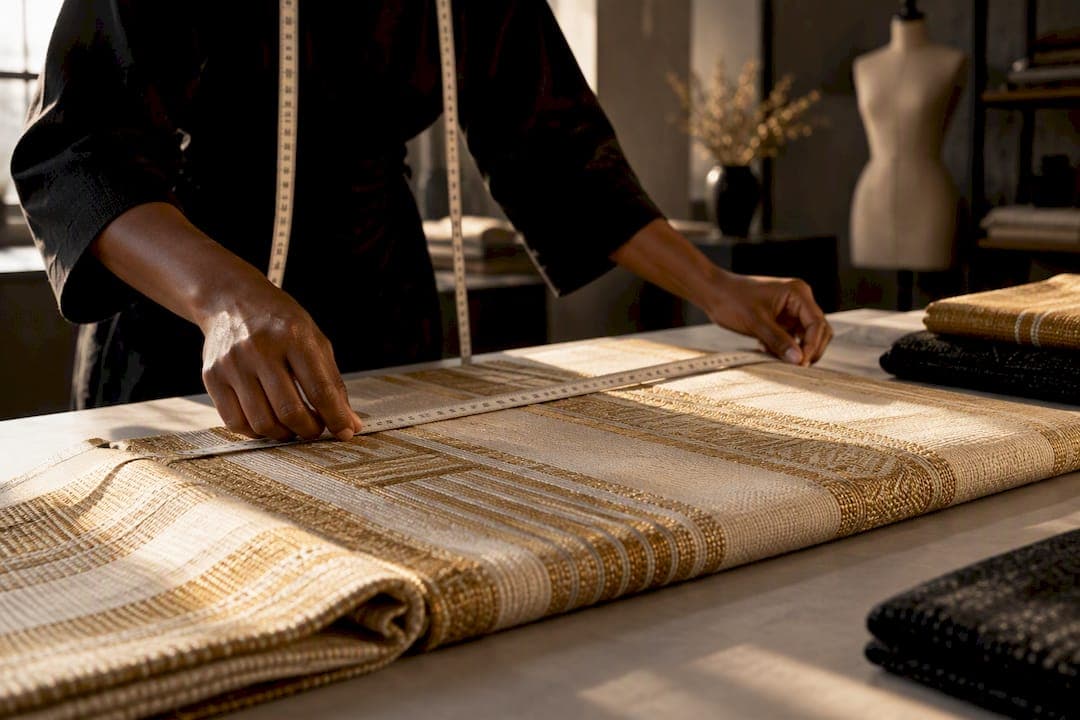
Aso Oke outfits are garments made from Yoruba handwoven prestige cloth, traditionally assembled as iro, buba and gele for women and agbada sets for men, now reinterpreted into gowns, kaftans, and statement pieces. If you are planning a wedding, naming ceremony, or milestone celebration, the right approach is to choose a style that honors the fabric's roots, then plan your sourcing and timeline early. This guide walks through styles, styling, buying options, and the logistics that make an order come together smoothly.
TL;DR:
- Matching dye lots are critical for large orders because Aso Oke is woven in narrow strips and sewn together, affecting color consistency across garments.
- A typical ensemble requires around 4 to 7 yards of fabric depending on the style, with longer lead times for custom orders from Nigeria due to weaving and shipping.
- Buying ready-to-wear domestically offers quicker delivery and easier returns but at a higher cost, while imported custom pieces provide authentic cloth with longer timelines.
- Aso Oke's textured weave makes tailoring and accessories delicate, so practitioners recommend precise measurements, careful handling, and matching swatches during purchase.
- Modern styles like structured gowns, kaftans, and hybrid designs blend traditional fabric types with contemporary silhouettes, suited for formal celebrations and photo shoots.
Table of Contents
- What makes up a traditional Aso Oke ensemble
- Aso Oke styles that inspire modern celebrations
- Styling your Aso Oke outfit from head to toe
- Where to buy Aso Oke outfits and what to expect
- Yardage, cost, and timeline planning
- A note on wearing Aso Oke with intention
- Bring Sena Nukunu's craftsmanship into your own celebration
- Sources
- FAQ
What makes up a traditional Aso Oke ensemble
A woman's Aso Oke ensemble is built from four pieces. The iro is a wrapper skirt, the buba is a loose blouse, the gele is the elaborate head tie that crowns the look, and the ipele, sometimes called iborun, drapes over the shoulder as a finishing sash. Men's ensembles typically center on the agbada, a flowing wide-sleeved robe worn over an inner shirt and trousers, often paired with a fila cap. This traditional structure of iro, buba, gele, and ipele for women and agbada for men has been documented as core to Yoruba dress for generations, according to background on Aso Oke's construction.

What sets Aso Oke apart from other fabrics is how it is made. It is woven on a narrow loom in strips, then hand sewn together into full panels, which is why the same cloth can feel stiffer or more textured than commercial yardage and why tailoring it takes a practiced hand. This strip construction also explains why matching dye lots across a large order matters so much, a point we return to below.
Common variations you will see today include:
- Wrapper-only looks, where the iro is worn with a modern top instead of a traditional buba.
- Pre-tied gele, a time-saving option that skips hand tying without sacrificing the visual impact.
- Partial-aso-oke accents, where the woven fabric trims a sleeve, bodice, or sash on an otherwise contemporary dress.
Aso Oke styles that inspire modern celebrations
Aso Oke's identity starts with its classic fabric types. Etu is a deep indigo cloth historically tied to nobility and quiet elegance, alaari carries a rich red associated with celebration and status, and sanyan is prized for its warm, undyed beige tone woven from wild silk. Museum documentation on Aso Oke's prestige cloth identifies these three as the fabric's elemental types, and modern weavers now also work metallic lurex and synthetic threads into the mix to make pieces catch light for photographs.
From that foundation, several silhouettes have become favorites for weddings and formal events:
- Structured gowns, which take the woven cloth and shape it into a fitted bodice and dramatic skirt, often with boning for a corseted line.
- Modernized iro and buba, where the traditional two-piece gets a tailored, body-conscious cut instead of a loose fit.
- Kaftans, a relaxed, floor-length option that lets the fabric's texture stand on its own without heavy tailoring.
- Mixed-fabric hybrids, combining Aso Oke panels with lace, ankara prints, or metallic inserts for a lighter, more versatile garment.
Choose a mixed-fabric hybrid when you want the cultural weight of the cloth without the full formality, and reserve a structured gown or full agbada for the ceremony itself, where the fabric's presence should lead.
Styling your Aso Oke outfit from head to toe
Gele tying is where many outfits succeed or fall short. A skilled gele artist can shape the head tie into height and drama that a pre-tied version cannot fully replicate, though pre-tied styles remain a practical choice when time is short or you are new to wearing one. For guest attire and coordination ideas at West African celebrations, see this guest styling guide.
Because the woven texture already carries visual weight, accessories should support rather than compete with it.
- Coral beads pair naturally with alaari and other richly colored cloths for a traditional finish.
- Gold jewelry complements sanyan's warm undyed tone without overwhelming it.
- Understated pieces, like a single statement earring or slim bangle, work best with heavily patterned mixed-fabric looks.
Color pairing depends on both skin tone and the event's palette. Deeper indigo etu flatters richer skin tones with warm gold accents, while lighter sanyan tones sit beautifully against cooler jewelry and pastel accompaniments in a wedding party's color scheme. Footwear should be low enough to allow movement through dancing and greetings, and any tailoring should leave room to sit and move comfortably, since Aso Oke's woven structure holds its shape more rigidly than soft cotton or silk.
Pro Tip: Bring a swatch or photo of your outfit's exact fabric when shopping for accessories, since Aso Oke's colors can shift subtly under different lighting.

Where to buy Aso Oke outfits and what to expect
Shoppers generally choose one of three routes, each with a different balance of convenience, cost, and authenticity.
- Buy ready-to-wear from domestic marketplaces. Sites like Etsy list Aso Oke dresses and sets that ship quickly and offer easier returns, though prices run higher than sourcing fabric directly.
- Work with a local tailor or broker who specializes in Nigerian textiles. This route adds coordination and fitting support but comes at a premium and still depends on the tailor's own sourcing timeline.
- Order custom pieces directly from Nigerian weavers, often centered in weaving hubs like Iseyin. This offers the most authentic cloth and pricing but requires the longest lead time and adds shipping and customs steps, according to a guide on ordering Aso Oke from abroad.
Whichever route you choose, request clear photos of the actual fabric before paying, confirm the dye lot matches across every piece you need, verify yardage against your measurements, and build in extra lead time for fittings and adjustments.
Yardage, cost, and timeline planning
Aso Oke's narrow strip weaving means yardage needs vary by garment, and planning ahead saves both money and stress. As a starting estimate, an iro and buba set typically needs about 4 yards, a long gown around 5 yards, a full gown with a train closer to 6 yards, and a men's agbada set 5 to 7 yards, though your tailor should confirm exact amounts.
Academic field research on production in Iseyin notes that loom maintenance and rising material costs shape both price and availability, which is part of why handwoven Aso Oke can carry a premium over machine-made alternatives and why lead times stretch during busy wedding seasons.
- Raw fabric alone costs less than a fully tailored outfit, since tailoring adds labor and finishing.
- Domestic ready-to-wear pieces cost more upfront but arrive faster than imported custom orders.
- Because Aso Oke is woven in narrow strips, order every set you need in one batch. Mixing dye lots later can make matching nearly impossible, a caution echoed in museum documentation on the fabric's construction.
For care, professional dry cleaning protects the weave and any metallic threads far better than home washing, and heirloom pieces should be stored wrapped in acid-free tissue away from direct light.
A note on wearing Aso Oke with intention
Every strip of Aso Oke carries generations of skill, and wearing it well means honoring that history, not just the trend. The brand approaches each piece with respect: authentic sourcing, ethical production, and craftsmanship that supports the artisans who keep this weaving tradition alive. When you dress for a ceremony, choose pieces and stylists who treat the fabric as heritage worth preserving, not just an accessory for the season.
— Sena
Bring Sena Nukunu's craftsmanship into your own celebration
The platform curates ready-to-wear pieces and custom ensembles that carry the same spirit as traditional Aso Oke, made with ethical production and limited-quantity craftsmanship that honors the artisans behind every stitch.
If you love the coordinated elegance of an agbada set, our Spirit of Ancestry ensemble shows how a three-piece set can bring ceremonial presence to a modern wardrobe, and the Ivory Covenant ensemble offers a bridal-ready option for formal occasions.
- Browse our Men's Agbada Ensembles, Men's Heritage, and Women's Collections to see ready-to-ship pieces.
- Visit the Woven Nobility, Woven Stride, and Woven Shields collections for curated statement sets.
- Reach out for styling guidance before committing to a full ceremonial outfit.
Ready-to-wear pieces typically ship faster than fully custom orders, and made-to-order ensembles generally require lead time for fitting and finishing, so planning purchases ahead of event dates is advisable.
Sources
- Aso Oke: prestige cloth from Nigeria - Saint Louis Art Museum
- How to Order Aso Oke for a Nigerian Wedding from the US | EventAtlas
- Aso oke - Wikipedia
- Aso Òkè weaving techniques and perception in Iseyin, Oyo State (conference paper)
FAQ
What are the different styles of Aso Oke?
Aso Oke spans classic fabric types like etu, sanyan, and alaari, plus silhouettes ranging from traditional iro and buba sets to structured gowns, kaftans, and mixed-fabric hybrids with lace or ankara insets. Men's styles center on the agbada robe, often paired with a fila cap.
Is Aso Oke expensive?
Cost varies widely depending on whether you buy raw fabric, a domestic ready-to-wear piece, or a fully custom tailored ensemble from Nigeria. Handwoven Aso Oke tends to cost more than machine-made alternatives partly because of rising material and loom maintenance costs documented in field research on Iseyin weaving.
What is Aso Oke fabric used for?
Aso Oke is traditionally used for ceremonial attire like weddings, naming ceremonies, and chieftaincy events, woven into garments such as iro, buba, gele, and agbada. It remains a prestige cloth today, now also shaped into modern gowns and kaftans for the same kinds of celebrations.
How many bundles of Aso Oke are needed for agbada styles?
A men's agbada set typically calls for about 5 to 7 yards of fabric, though your tailor should confirm the exact amount based on the wearer's size and the agbada's intended fullness. Because Aso Oke is woven in narrow strips, it helps to order the full amount in one batch to keep the color and weave consistent.