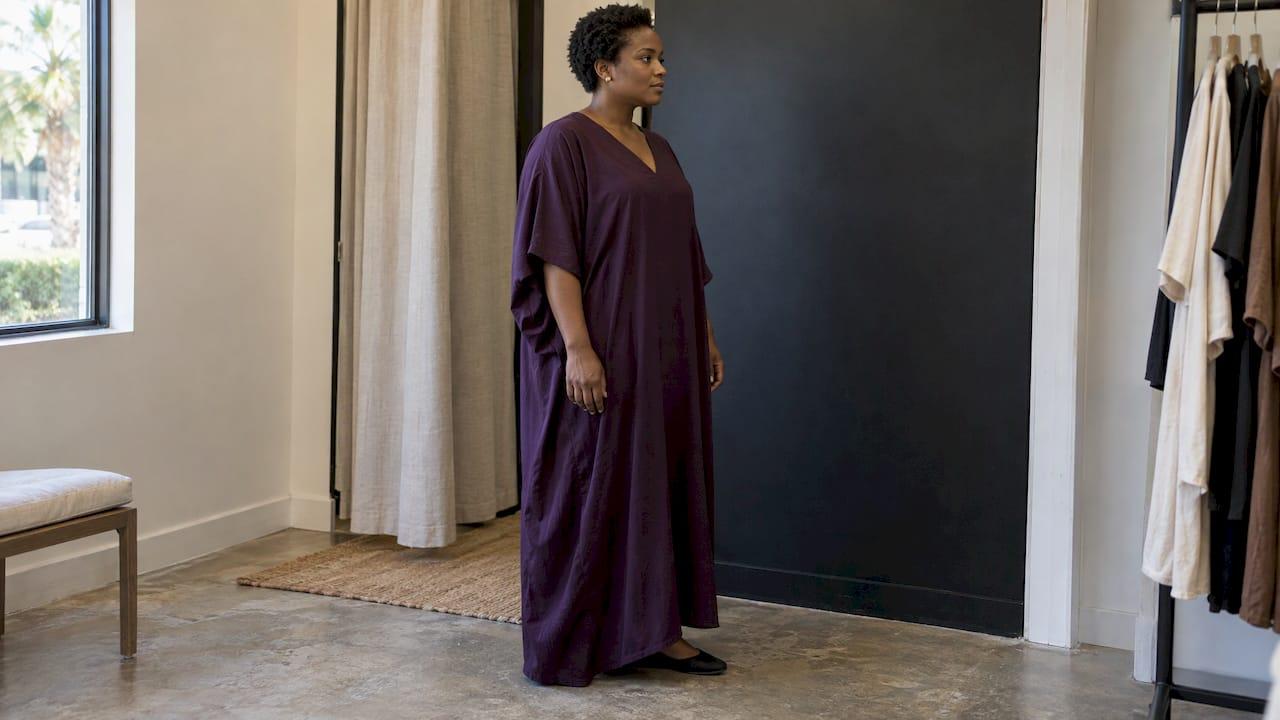
The right kaftan length comes down to one measurement and one decision. The measurement is your shoulder-to-floor distance. The decision is where you want the hem to land: mid-thigh, knee, mid-calf, ankle or floor. Once you know both, you can read any product page with confidence, and you can compare a kaftan's garment length to your own body instead of guessing from a size letter. At Sena Nukunu, we make West African ready-to-wear and custom pieces for men and women, including kaftans, agbada sets and dresses, and we want every piece to fall exactly where you imagined it.
TL;DR
- Measure from the highest point of your shoulder straight down to where you want the hem, then compare that number with the garment length listed for the piece.
- Mini and knee lengths read casual, midi reads polished and easy, and ankle or floor length reads ceremonial and dramatic.
- Your height, your shoes and the width of the kaftan change how a hem looks, so test the length with the shoes you plan to wear.
- Loose kaftans are best compared by garment measurements, not by body measurements alone.
- A tailor can usually shorten a plain hem, but embroidered or bordered hems are harder to alter, so choose the length before you buy.
Table of Contents
- The five lengths, in plain words
- How to measure shoulder-to-hem length
- Body measurements and garment measurements are not the same
- Match the length to your height
- Footwear changes the hem
- Choose the length by occasion
- Fit changes how length looks
- If the length is not right
- Length, price and craftsmanship
- Our perspective
- Find your length with Sena Nukunu
- FAQ
- Sources
The five lengths, in plain words
A kaftan is a loose, flowing garment, and its length does most of the work in deciding how it feels on the body. Most kaftans fall into five groups. The names vary a little from brand to brand, so treat the descriptions below as a working vocabulary rather than a rule.
Mini or short. The hem sits between the hip and mid-thigh. This length is usually worn as a tunic over leggings or trousers, or as a cover-up on vacation.
Knee length. The hem skims the knee. It moves easily, suits warm weather, and is the most forgiving length if you walk a lot or spend the day outdoors.
Midi. The hem lands between the knee and the ankle, often at the widest part of the calf. It works for the office, a daytime celebration or an evening out, and it shows off shoes without feeling short.
Ankle length. The hem skims the ankle bone. It is graceful and covered, and it keeps a clean line when you walk.
Floor length or maxi. The hem reaches the floor or brushes the top of your shoes. This is the length most people picture for weddings, naming ceremonies, church celebrations and formal evenings, and it is the natural length for a men's kaftan or agbada set meant for a ceremony.

A fashion feature on how to wear a caftan shows how far one silhouette can travel, from a Sunday-morning lounge to a dinner at home to a Friday-night cocktail hour, and the Town & Country caftan styling piece is a good place to see that range. In our experience of what this garment means, the story is the same: the shape stays, and the hem tells the room how formal the moment is.
How to measure shoulder-to-hem length
This is the number that matters most, and it takes two minutes. You need a soft measuring tape, a mirror or a friend, and the shoes you plan to wear.
- Stand naturally. Relax your shoulders and keep your feet flat and slightly apart. Do not stretch up or slouch.
- Find the highest point of your shoulder. This is where a seam would sit on a fitted top, halfway between your neck and the edge of your shoulder.
- Run the tape straight down the front of your body. Let it hang over the fullest part of the chest, and keep it vertical instead of following the curve of your body.
- Stop where you want the hem. Mark the spot on your thigh, knee, calf, ankle or floor.
- Write the number down in inches. Then repeat the measurement for the other hem points you like. Having a knee number, a midi number and a floor number gives you a personal length chart.
- Measure the back too. Many people prefer the back hem a little longer than the front, especially in a flowing floor-length piece, because the fabric lifts slightly when you walk.
Here is a worked example. Suppose your shoulder-to-floor measurement is 58 inches in bare feet. You would like a midi that lands mid-calf, which on your tape is 44 inches. When you shop, look for a garment length close to 44 inches. If you want a floor-length look with heels, you might want a garment length of about 56 to 57 inches, so the hem clears the ground. The numbers here are an example of the method, not a standard: your own tape is always the reference.
Where the measuring goes wrong
The most common mistake is measuring from the neck instead of the shoulder, which makes you choose a hem that sits higher than you meant. The second is measuring in bare feet and then wearing heels or platform sandals, which lifts you and raises the hem. The third is measuring along the body's curve and not straight down, which adds length that a loose garment will not use.
We built our approach to size around garment measurements, and our guide to using garment measurements instead of guessing your kaftan size shows how to line your tape numbers up against a piece.
Body measurements and garment measurements are not the same
A size chart can list your body or the finished garment. For a fitted dress, body measurements are enough. For a loose kaftan, the garment measurements tell you more, because the width, sleeve drop and hem length are all part of the design and none of them are tied to your waist.
When you read a chart, check three things:
- Is the length measured from the shoulder or from the neckline? Shoulder is the standard for kaftans. A neckline measurement will read shorter.
- Is it a front length, a back length or a side length? Some kaftans have a curved or high-low hem, so the front, back and sides can differ by several inches.
- Is the chart for the body or the finished garment? If the chart does not say, compare it to a garment you already own and love, laid flat.
If you wear sizes that differ between brands, our guide to six body measurements that convert African clothing sizes helps you translate between systems.
Match the length to your height
Height changes what a length looks like, even when the garment is identical.
If you are petite. A floor-length kaftan can pool at your feet, and a midi may land closer to the ankle than the model's photo suggests. Look for a hem that touches your shoes lightly. A knee or just-below-knee length is easy to wear and keeps the pattern in proportion. Embroidery and borders sit better when they are not swallowed by extra fabric.
If you are average height. You have the most freedom. Mid-calf midi lengths and ankle lengths both work, and a floor-length piece works well with a low or flat shoe.
If you are tall. A standard floor length can turn into an ankle length, and a midi can turn into a mid-shin. Always check the garment length against your own shoulder-to-floor number. Our guide to Ankara dresses for tall women goes deeper on how to handle length and fit when you are taller than most size charts expect.
If you are choosing for a man. Kaftans and agbada sets are typically worn long, with the hem falling between the shin and the ankle, and the layers underneath are chosen so the outer robe moves freely. For a ceremony, the sleeve and robe length matter as much as the trousers. See our guide to the three measurements that decide agbada size before you order a set.
Footwear changes the hem
Shoes are the quiet variable. A kaftan that brushes your toes in flats will hover an inch above the floor in two-inch heels, and it will drag if you wear flat sandals when you measured in heels.
- Flats and sandals: measure the floor length in the shoes you plan to wear, and leave the hem about half an inch off the floor so it does not catch.
- Heels: a floor-length hem should skim the top of the shoe. Otherwise it will tangle on stairs.
- Sneakers: a midi or ankle length lets the shoe be seen, which is the look most people want. Our piece on styling sneakers with a kaftan walks through the proportions.
- Barefoot or on the beach: knee length keeps the hem out of the sand and water.
Choose the length by occasion
Here is how we think about it for the occasions our customers shop for most.
| Occasion | Length that works | Why |
|---|---|---|
| Everyday wear, errands, a casual lunch | Knee or midi | Easy to move in, light to wear |
| Office, a work event, a professional dinner | Midi or ankle | Polished without feeling formal |
| Church, a family gathering, a milestone birthday | Ankle or floor | Covered, graceful, celebratory |
| Wedding guest, naming ceremony, engagement | Floor length | Reads as ceremony dress |
| Travel, vacation, a cover-up | Mini, knee or midi | Light and quick to pack |
| Men's ceremony wear | Long kaftan or full agbada set | Traditional drape, layered presence |
These are guidelines, not rules. A floor-length kaftan in a printed cotton can be a Sunday outfit, and a midi in a rich embroidered fabric can carry a wedding reception. Fabric weight, embroidery and color change the formality as much as the hem does.
Fit changes how length looks
The width of a kaftan and its length are linked. A kaftan cut too narrow pulls across the hips or bust, and the hem rides up in front. One cut far too wide can overwhelm a smaller frame, and the extra fabric can hide the line of the hem. Belts and ties help shape a loose piece, but starting with the right width gives the best drape. Check the garment's width at the bust and hip, the sleeve length and the shoulder drop together with the length, because they work as a set.
If the length is not right
A tailor can usually shorten a plain hem, take in the sides or add a tie at the waist. Lengthening is much harder, because a hem allowance rarely has extra fabric to give. Embroidery, woven borders and hand-finished edges are the most delicate: if the design runs along the hem, shortening can cut through it or break the pattern.
That is why we suggest choosing the length first and the size second. If you are between two lengths, the longer one is the safer choice, because a hem can be shortened but not extended. For a piece with a decorative border at the bottom, decide where you want the border to land before you buy.
For something made around your numbers from the start, our services page describes our custom work. Our guide to the four measurements every custom dress starts with shows what to have ready.

Length, price and craftsmanship
Longer pieces use more fabric, and pieces with embroidery or woven detail along the hem take more hand work. If you are comparing, it helps to know what a given budget buys. Our article on U.S. kaftan prices and when to pay for craftsmanship explains where the cost comes from.
Our perspective
We have always believed a kaftan should be chosen the way it is worn: with your whole self in mind. Your height, your shoes, the room you are walking into and the story you want your clothes to tell all belong in the decision, and a size letter on its own cannot hold any of that.
The West African garments we make are rooted in heritage and artisan craft, and they are made in limited quantities with care. A hem is part of that craft. When it lands where you intended, the embroidery sits where the maker placed it, the fabric moves the way it was designed to move, and you feel the confidence of a piece that was made with purpose.
So we encourage you to measure first, picture the moment you will wear the piece, and let the length follow. Our designs are meant to be worn for years, to weddings, to the office, to Sunday gatherings and to the quiet days in between.
Sena
Find your length with Sena Nukunu
If you already know your numbers, you can browse our women's collection of dresses, kaftans and statement pieces, or our dresses, and read the garment details before you choose. For men, our agbada ensembles and heritage pieces are in the main Sena Nukunu shop. Each piece is ready-to-wear and made in limited quantities by artisans, with ethical manufacturing behind it.
If you want a length made around you, our services page is the place to start, and our full collections show every line, from the Woven Nobility robes to the Woven Radiance dresses.
FAQ
How long should a kaftan be?
It depends on where you want the hem to fall. For everyday wear, knee to midi is the easiest. For ceremonies, weddings and formal evenings, ankle to floor length is the most common choice. Measure your own shoulder-to-hem distance and compare it with the garment length on the product page.
How do I measure the length of a kaftan?
Measure from the highest point of the shoulder straight down the front to the hem, with the garment laid flat or on a hanger. Then compare it with your own shoulder-to-hem number, taken while wearing the shoes you plan to wear. If a chart lists front, back and side lengths, use the one that matches how you want it to hang.
Can a kaftan be shortened?
A plain hem can usually be shortened by a tailor, and the sides can be taken in. Hems with embroidery, woven borders or hand finishing are harder to alter, so it is better to choose the right length before you buy. A hem cannot be lengthened without extra fabric, so when in doubt, go longer.
Is a kaftan the same as an abaya?
They are related but not identical in cut, history or use. A kaftan is typically a loose, often decorated garment, and an abaya is a long, open or closed robe with its own traditions. Our guide to kaftan vs abaya explains the differences and how to wear each.
Where is it appropriate to wear a kaftan?
Almost anywhere, depending on the fabric and length. A shorter cotton kaftan suits a casual day or a vacation, and a floor-length embroidered piece suits a wedding or celebration. Fashion coverage shows kaftans worn for lounging, video calls, dinners and cocktail evenings alike.