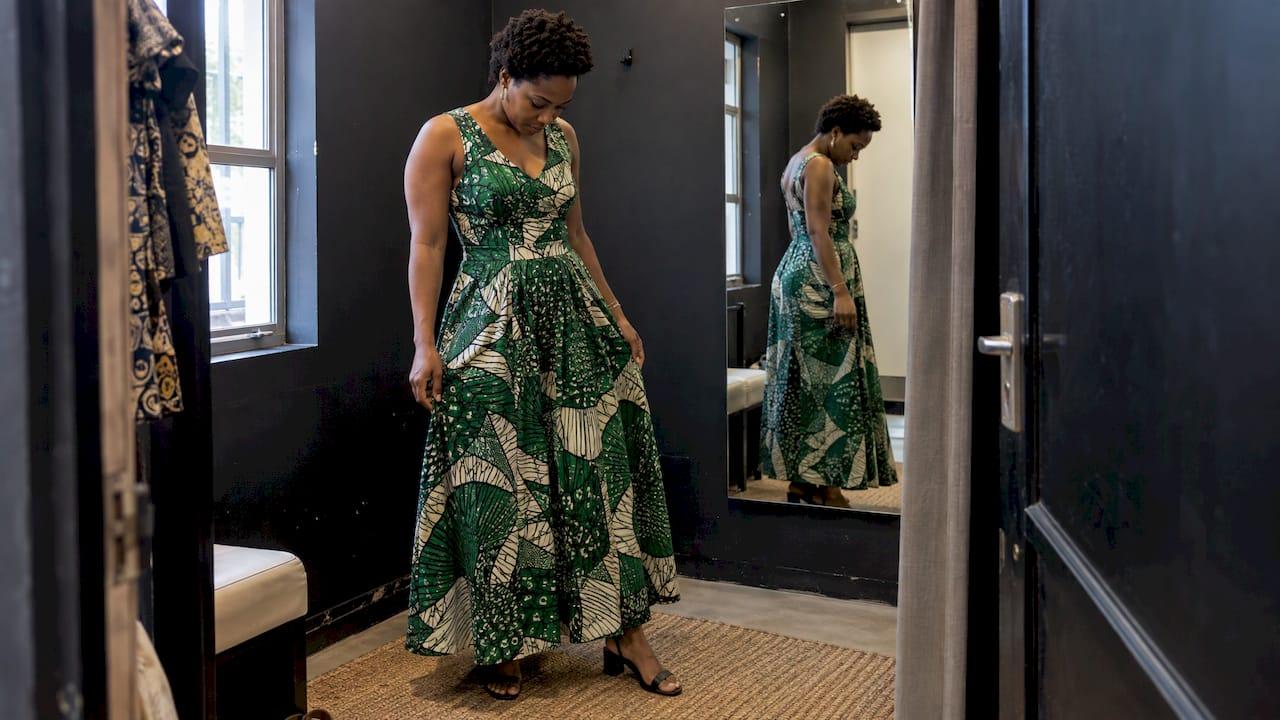
The best Ankara dresses for tall women are long, structured and generous in the places that matter: a full maxi or gown length, a waist that lands where your waist actually is, sleeves that reach the wrist, and a skirt with enough sweep to carry a bold print. Height is a gift when it comes to African print. Long lines let the pattern breathe, and a dress cut with room to spare can look regal. Finding one that fits is the real work, so this guide walks you through the silhouettes, the measurements and the small checks that turn a beautiful photo into a dress that feels made for you.
TL;DR
- Maxi dresses, column gowns, fit-and-flare shapes and full skirts show off height and give the print room to move.
- Check torso length, skirt length, sleeve length and the way the garment is measured, not just the size label.
- Measure from the top of the shoulder to the floor in the shoes you plan to wear, and choose the longer length if you land between two.
- Ask for measurements in inches rather than relying on how long a dress looks in a photo, and plan for tailoring on custom pieces.
- For work, weddings and everyday wear, keep the dress as the statement and let accessories stay simple.
Table of Contents
- Why Ankara and tall frames work so well together
- Silhouettes that suit tall women
- Print, sleeves, necklines and waist placement
- How to check length and fit before you buy
- When tailoring and custom pieces help
- What to wear Ankara dresses to
- Our perspective
- Shop West African dresses made to be worn with pride
- A simple checklist for tall shoppers
- Common mistakes to avoid
- FAQ
- Sources
Why Ankara and tall frames work so well together
Ankara is a wax-print cotton, known for saturated color and graphic pattern. On a petite frame, a large motif can overwhelm. On a tall frame, the same motif has room to unfold from shoulder to hem, and a long skirt gives the design a stage. Style writers consistently point tall women toward maxi dresses and wide-leg jumpsuits, noting that the length reads as sophisticated and that Ankara dresses up or down easily.
There is a practical side too. Ankara is a sturdy, slightly stiff cotton, so it holds a shape. One designer's guide to Ankara and body shape notes that medium-weight cloth suits structured garments, while a softer finish suits flowing dresses. For a tall woman, that means you can choose between a sculpted column and a fluid, floor-skimming gown, depending on the mood you want.
The challenge is that most ready-to-wear patterns are drafted for average height. Tall shoppers run into the same handful of problems again and again:
- The waist seam lands at the ribs because the torso is cut short.
- The hem stops at the ankle when you wanted it to graze the floor.
- Sleeves finish an inch or two above the wrist.
- Border or print placement lands in the wrong spot on the body.
Every section below is built to help you avoid one of these.
Silhouettes that suit tall women
Maxi dresses and full-length gowns
The maxi is the natural starting point. A true floor-length hem lets you wear flats or heels without the dress looking cropped, and the length gives a clean vertical line. Look for a hem allowance in the design, or plan on a small tailoring adjustment so it falls where you want.
Full-skirt and ball gown shapes
Tall women can carry volume that would swallow a shorter frame. One style guide on big Ankara gown styles notes that tall wearers can handle a wider skirt and a deeper hem. That is good news if you love drama, since a full skirt in a large-scale print is one of the most striking looks in African fashion.
Column, mermaid and fit-and-flare
For formal events, column gowns and mermaid cuts give the print a long, uninterrupted canvas. Fit-and-flare dresses define the waist and then release into movement, which suits weddings and celebrations where you will be dancing. If you choose a close-fitting long skirt, a high slit or a vented hem helps you walk comfortably, and A-line or empire-waist cuts flow over the lower body without restricting it.
Wrap gowns
Wrap styles are forgiving because the closure adjusts at the waist, which helps when your torso is longer than average. You can see this kind of shape in our Peacock wrap gown, an African-inspired wrap design that shows how a tie waist and long drape work together.
Print, sleeves, necklines and waist placement
Some of the oldest tailoring principles still apply to Ankara. A university extension publication on dress and figure, New Mexico State University's Fashion Feasibility course, explains that long vertical lines, high necklines, long narrow V or U necklines, long straight sleeves and sleeveless garments are the choices that emphasize height, while bulky textures suit tall, slender figures. Those rules are about creating a look of added height, so a tall woman who already has it can use them selectively rather than as a must-follow formula.
Here is how that translates into choices you can make today:
- Print scale. Large motifs suit tall frames well. If you prefer a quieter look, choose a smaller repeat and let the cut do the talking.
- Direction of the print. Vertical stripes and long, stacked motifs stretch the line. Horizontal bands or color blocking can break up a very long dress, which some tall women enjoy as a way to balance proportion.
- Necklines. A V or U neckline echoes the length of the torso. A high neckline looks elegant with a sweeping skirt.
- Sleeves. Long straight sleeves are a classic, but only if they truly reach the wrist on you. A bracelet-length or three-quarter sleeve can look intentional when the cut is designed that way, while a sleeve that is simply too short does not.
- Waist placement. An empire waist sits higher and can feel comfortable on a long torso. A natural waist needs a bodice with enough length, so check the shoulder-to-waist measurement.
If you want more ideas on how current looks translate to daily life, our guide to how U.S. shoppers wear Ankara, with placement and tailoring notes is a good companion, and our overview of modern Ankara dress styles and how to choose covers the wider range of cuts.
How to check length and fit before you buy
Height alone does not tell you where a hem will fall. Two women who are both 5'11" can have very different torso, leg and arm proportions. A dress that fits your bust and hips can still leave you short in the torso. That is why a careful buyer reads the garment measurements first and the size label second.
The measurements that matter most
When a size chart or product page gives garment measurements, look for:
- Full dress length and how it is measured. Shoulder to hem, or waist to hem, are very different numbers.
- Shoulder-to-waist length, which tells you where the waist seam will sit on you.
- Sleeve length, ideally from shoulder seam to cuff.
- Bust, waist and hip, plus any stated ease.
- Slit height and skirt sweep for gowns and fitted skirts.
A made-to-measure guide from a tailoring platform, Silai's gown measurement guide, recommends measuring gown length from the highest point of the shoulder to the floor while wearing the heels you intend to wear. It gives a typical range of 132 to 145 cm (roughly 52 to 57 inches), depending on height and heel. It also suggests recording shoulder-to-waist, waist-to-hip, sleeve, armhole and flare-start measurements, since those help place the waistline and the start of the flare correctly.
Measure yourself the right way
Grab a soft tape and a friend if you can.
- Put on the shoes you will wear with the dress, because heel height changes the hem.
- Stand straight with your feet together.
- Measure from the top of your shoulder, beside the neck, straight down to the floor.
- Measure from the top of your shoulder to your natural waist, then from waist to floor.
- Measure from the shoulder point to your wrist with your arm slightly bent.
- Write each number down in inches, and note the shoes.
If you are between two lengths, go for the longer one. A hem that grazes the floor looks graceful, while a hem that stops short looks like a mistake. Our guides on the four measurements every custom dress starts with and six body measurements for converting African clothing sizes walk through the process in more detail.
A quick try-on test
When the dress arrives, test it the way you will live in it. For a skirt worn for hours at an event, a fitting guide recommends sitting on a hard chair for a full minute, climbing a step, raising both arms and turning around at a mirror to check print placement on the back and seat. Wear the event shoes when you check the hem. If the waist seam lands at your ribs, the torso is likely cut shorter than yours, a very common tall fit issue that is better solved with a different cut or a tailored piece than with a bigger size.

When tailoring and custom pieces help
For many tall women, the smartest route to a perfect fit is a ready-to-wear dress with a generous cut, followed by a small adjustment, or a custom piece made to your numbers. Tailoring is not a sign that a dress failed. It is how a good dress becomes yours.
Tailoring can help with:
- Hem length. Lengthening is limited by the hem allowance, so ask whether the dress has a deep hem before you commit. Shortening is easy, which is another reason to choose the longer option when in doubt.
- Sleeve length. Check whether the cuff has extra fabric inside.
- Waist placement. A tailor can sometimes take in or adjust the waist, but moving a seam up or down a long distance is harder, so the cut matters most.
- Lining and structure. A lining adds body and a neat inside finish to a maxi, which helps a long skirt hang cleanly.
If you are ordering custom, give the hem, sleeve and slit lengths as measurements rather than relying on the length you see in a photograph, as designers who adapt patterns for tall, petite and plus sizes advise. They also note that tall women may need more length, longer sleeves and careful border placement, and that a long, flared design can use more fabric. Our post on adding 10 to 20 percent fabric and yardage for curvy Ankara styles explains how yardage grows with a fuller design, and the same logic applies to a long, flared gown.
If you are sewing or commissioning from fabric you bought yourself, measure a fabric sample before and after it goes through the washing and drying process you plan to use, so you know whether it changes size. This yardage guide from a fabric retailer recommends exactly that before you cut.
What to wear Ankara dresses to
Weddings and celebrations
A waist-defined maxi gown or a fit-and-flare dress makes a lovely guest outfit, and column or mermaid silhouettes suit the most formal receptions. Long hems, fitted bodices and sweeping skirt lines let bold prints breathe. Keep accessories focused, perhaps one statement earring or a head wrap, so the print and the silhouette remain the main event.
Work
In a U.S. office, structured shirt dresses, column shapes and controlled two-piece sets read as polished. Choose a print with a calm color story, a sleeve that reaches the wrist, and a hem that stays at or below mid-calf if you want a more conservative line. Restrained accessories finish the look.
Everyday wear
Jackets, skirts, simple dresses and two-piece sets translate most easily into everyday American wardrobes. A long Ankara skirt with a plain knit top, or a shirt-style maxi with sneakers or sandals, brings the print into daily life without feeling like a costume. For more on putting an outfit together, see our tips for styling Ankara outfits with confidence.
Our perspective
We design and curate West African fashion with one belief: clothing should honor the person wearing it and the hands that made it. Tall women have told us for years that they love African prints but are tired of dresses that stop short, sleeves that ride up and waists that never land in the right place.
That is why we pay attention to cut, proportion and measurements. A long garment is not simply a longer piece of cloth. It is a design that needs room in the torso, length in the skirt and a silhouette that lets the print travel from shoulder to hem.
Our pieces are made in limited quantities with ethical production and artisan craftsmanship in mind, so each one is treated as a statement, not a mass-produced afterthought. We encourage you to read our garment measurements, compare them with your own, and wear what makes you feel regal. Your height is part of your presence. A dress should celebrate it.
Sena
Shop West African dresses made to be worn with pride
If you are ready to find your next statement piece, we invite you to explore our women's dresses, where every design blends traditional artistry with a modern eye. Our collections, from Woven Radiance: Queens in Bloom to Woven Stride: Queen In Comfort, are crafted in limited quantities, so each piece carries a sense of purpose.
Browse the full women's shop or the collections page, then compare the garment measurements on each product page with the numbers you took earlier. Our gowns, wraps and matching sets are designed to make you feel confident, comfortable and seen.
A simple checklist for tall shoppers
Before you add any Ankara dress to your cart, run through this list:
- Do I have my shoulder-to-floor measurement, taken in the shoes I will wear?
- Does the listed dress length use a measuring method I understand?
- Is the torso or shoulder-to-waist length stated, and does it match mine?
- Do the sleeves reach my wrist, or is the cuff designed to stop earlier?
- Is there a hem allowance, a lining or a slit that affects how it moves?
- Am I comfortable with a small tailoring adjustment if needed?
A yes to most of these means you are shopping like a pro. Do not rely on the size label alone. Compare bust, waist, hips, shoulders, upper arms, sleeves and the stated length measurement against your own numbers, since two garments with the same size tag can fit quite differently.
Common mistakes to avoid
Buying by height range. A listing that says it suits women up to a certain height tells you little. Use the garment's length measurement instead.
Forgetting shoes. A dress that grazes the floor in flats may drag in heels, and the reverse is also true. Decide on the shoes first.
Skipping the back view. Large prints can land awkwardly across the seat or the back. Turn around at the mirror and check.
Choosing a skirt that restricts you. A narrow long skirt without a slit or vent is beautiful standing still and tiring at a wedding. Look for a slit, a flare or a gather that allows a full stride.
Ignoring the fabric. A stiffer cloth holds structure, a softer one drapes. Match the cloth to the silhouette you want.

FAQ
What length Ankara dress should a tall woman choose?
Choose the dress length that suits the shoes you will wear, and measure from the top of your shoulder straight down to the floor. If you fall between two lengths, pick the longer one so the hem grazes the floor gracefully. Always compare your number with the garment's stated length, not just the size label.
Do tall women need a different size in Ankara dresses?
Not always a different size, but often a different cut. A dress can fit your bust and hips and still be short in the torso or sleeves. Check the shoulder-to-waist length, sleeve length and full dress length against your own measurements before deciding.
Which Ankara dress styles look best on tall women?
Maxi dresses, column gowns, fit-and-flare shapes and full-skirt gowns all work well, because the length and sweep give the print room. Wrap gowns are also comfortable on longer torsos. Choose the one that suits the occasion and the way you want to move.
Can a tailor lengthen an Ankara dress?
Often a hem or sleeve can be let down if there is extra fabric inside, so look for a generous hem allowance before you buy. If you want a custom piece, give the tailor hem, sleeve and slit lengths as measurements in inches. Shortening is simpler than lengthening, so err toward longer.
How do I wear a long Ankara dress to work?
Go for a structured shirt dress or column shape in a calm print, with sleeves to the wrist and a hem at mid-calf or longer. Keep jewelry and bags simple so the dress remains the statement.
Sources
- Best Ankara Styles for Ladies
- 25 Big Ankara Gown Styles
- The Best Ankara Styles to Flatter Different Body Shapes
- Fashion Feasibility, New Mexico State University
- Gown and anarkali measurements: the complete guide, Silai
- 50 Ankara Top and Skirt Outfits for Effortless Event Style
- Adapting a custom design for tall, petite and plus sizes
- How Much Ankara Fabric Do I Need? Fabrics USA