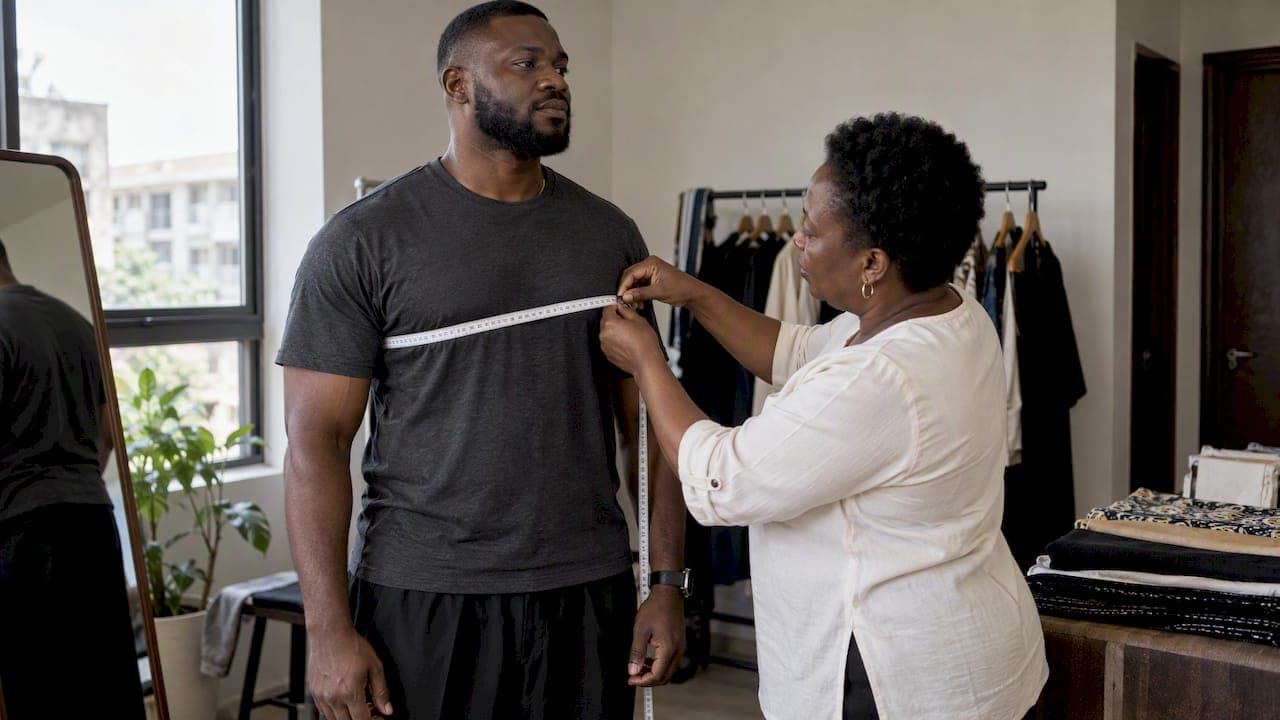
Your agbada size comes down to three numbers: chest at its fullest point, neck-to-hand for sleeve width, and shoulder-to-knee for robe length. Add 6 to 10 inches of ease to those measurements for the traditional flowing drape, or just 2 to 4 inches for a modern, tailored silhouette. Take these measurements now and compare them against the chart below before you order.
TL;DR:
- Measure the neck-to-hand and shoulder-to-knee accurately using relaxed posture and proper tools to ensure proper fit and avoid size discrepancies.
- Add 6 to 10 inches of ease for traditional flowing styles or 2 to 4 inches for modern, tailored fits on top of your chest measurement.
- Fabric choice, weight, and design details like embroidery significantly impact yardage, so confirm exact needs with your tailor after selecting fabric.
- For tall or broad-bodied men, adjust shoulder-to-knee and shoulder width measurements separately and consider custom sizing to accommodate body proportions.
- Always double-measure on different days, and send your precise measurements to your tailor for a better-fitting agbada rather than relying on generic size labels or guesses.
Table of Contents
- How to take the measurements your tailor actually needs
- Agbada size chart and how much fabric you will need
- What happens at the fitting and the adjustments that follow
- How fabric choice changes your measurements and yardage
- Sena Nukunu's sizing checklist for buyers
- How long it takes and what it costs to get an agbada made
- Sizing agbada for men versus children
- Fitting broad shoulders, tall frames, and other body shapes
- How to confirm the fit when you try on an agbada
- Why measurement-first ordering is worth the extra five minutes
- Get your fit right with Sena Nukunu
- Sources
- FAQ
How to take the measurements your tailor actually needs
An agbada is a flowing, wide-sleeved robe rooted in Yoruba tradition, typically worn as part of a three-piece set with an inner shirt and trousers. Because the outer robe is so voluminous, a tailor cannot rely on the kind of measurements used for a suit jacket. The pattern rules behind agbada construction use neck-to-hand for garment width and shoulder-to-knee for length, so those are the terms to use when you talk to a tailor or fill out a size chart.
Wear a fitted t-shirt or thin undershirt while measuring. Bulky layers add false inches and throw off every number that follows. Stand naturally, shoulders relaxed, feet shoulder-width apart, and have someone else hold the tape for you since reaching around your own body tends to pull measurements tight.
- Chest: Wrap the tape around the fullest part of your chest, under the arms and across the shoulder blades, keeping the tape level and snug but not tight.
- Neck circumference: Measure around the base of your neck where a collar would sit, adding a finger's width of slack.
- Neck-to-hand: Starting at the center back of the neck, measure across the shoulder and down the arm to the wrist bone with the arm slightly bent, since this becomes your sleeve width.
- Neck-to-elbow: Same starting point, measured to the elbow, useful if you want a three-quarter sleeve option.
- Shoulder width: Measure straight across the back from one shoulder seam point to the other.
- Shoulder-to-knee: Measure from the top of the shoulder straight down to where you want the hem to fall, usually at or just below the knee.
- Waist and hip: Needed only if the sokoto trousers are being made to order alongside the robe.
The most common mistakes are measuring over a jacket or hoodie, slouching so the shoulder-to-knee number comes up short, and measuring only one side of the body when shoulders are rarely perfectly symmetrical. Round to the nearest quarter inch, and write down whether you used inches or centimeters since mixing the two is a frequent source of sizing errors. Taller readers should pay extra attention to shoulder-to-knee, since a few inches of error disappears fast on a six-foot frame. Our guide for tall men ordering agbada walks through the adjustments that matter most for height.
Pro Tip: Measure twice, on two different days, and use the average. Posture and breathing can shift a chest measurement by half an inch or more.
Agbada size chart and how much fabric you will need
Chest measurement is the anchor for almost every size chart you will encounter, with ready-to-wear sizing typically following a pattern like this:
- Chest 36 to 38 inches generally corresponds to a Small.
- Chest 39 to 42 inches generally corresponds to a Medium.
- Chest 43 to 46 inches generally corresponds to a Large.
- Chest 47 to 50 inches generally corresponds to an XL.
- Chest 51 inches and above generally corresponds to a 2XL or custom order.
These ranges shift slightly by brand, so always check the specific chart against your own chest number rather than guessing from a shirt size you already own. If your measurement lands right between two sizes, size up for a traditional flowing cut and consider a custom order for a slimmer, modern fit.
Fabric yardage is the other number that catches first-time buyers off guard. Pattern guides for agbada construction commonly point to 7 to 8 yards as a typical starting range for a three-piece set made from standard-width fabric, with four-piece sets that include a matching cap needing a bit more. That range moves depending on fabric width and how full you want the robe to sit, so treat it as a planning number and confirm the exact yardage with your tailor once fabric is chosen.
For numeric ready-to-wear sizing (30 to 44 and similar runs), translate by adding roughly 4 inches to the number to estimate chest circumference, then match that figure to the chart above. When in doubt between two sizes, sizing up almost always produces a better result than sizing down on a flowing garment.
What happens at the fitting and the adjustments that follow
Robe ease is the single biggest variable separating one agbada from another built from the same chest measurement. Add 6 to 10 inches of ease for the traditional silhouette that billows and moves, or 2 to 4 inches if you want something closer to a modern, structured drape. That ease gets added on top of your chest number, not folded into it.
Once the base garment is cut, a handful of adjustments cover almost every fitting issue:
- Shortening sleeves is quick and inexpensive, usually resolved in a single visit.
- Raising or lowering the shoulder seam takes more time since it affects how the whole robe hangs.
- Slimming the robe width is the most involved fix and sometimes requires re-cutting fabric, so it carries the highest cost and longest wait.
Bring a checklist to your fitting: confirm the shoulder seam sits right at the edge of your shoulder, check that sleeves fall where you want them without bunching, make sure the inner shirt sits comfortably under the robe without feeling tight, and walk around in the robe to see how the hem moves at your intended length. Our guide to shoulder seam alignment covers this check in more detail for first-time wearers.
Pro Tip: If you are between two ease options, choose the smaller amount. Taking in a robe that is slightly loose is far easier than letting out one that is too narrow.
How fabric choice changes your measurements and yardage
Heavy woven fabrics like Aso-Oke or brocade hold their shape and drape stiffly, so they generally need less ease to achieve the same visual fullness that a lighter cotton-silk blend would need more fabric to produce. A light, fluid fabric moves more and can look thin without extra width, while a heavier weave can look boxy if you over-add ease.

Chest panels, embroidery, and large collar detailing can also shift where seams need to sit, which means the chest measurement itself sometimes needs a slight adjustment to keep heavy embroidery from pulling the fabric tight across the body.
The most reliable ordering sequence avoids guesswork entirely:
- Choose your fabric first, since weight and width both affect the final numbers.
- Confirm yardage with your tailor once the fabric and style are set, rather than relying on a general estimate.
- Finalize your measurements last, adjusting ease based on how the chosen fabric actually drapes.
Sena Nukunu's sizing checklist for buyers
Sena Nukunu focuses on authentic, ready-to-ship West African fashion alongside custom requests, and our size charts and blog posts are built around the same measurement vocabulary tailors use worldwide. Before ordering, buyers can send a short set of details to get the fit right the first time:
- Chest, neck-to-hand, and shoulder-to-knee measurements, recorded in inches.
- A posture photo or two, standing naturally in fitted clothing.
- Desired robe length and ease preference, traditional flowing or modern tailored.
- Fabric choice, since that affects final yardage and drape.
- Any known fit issues from past garments, like broad shoulders or a longer torso.
Our tall-fit measurement guide and the size details on the Ivory Covenant ensemble page walk through how these numbers map onto an actual product.
How long it takes and what it costs to get an agbada made
Ready-to-wear agbada sets are the fastest route, often ready to ship immediately since sizing follows a standard chart rather than individual measurements. Custom sewing takes longer because the tailor is cutting fabric specifically to your numbers, and tailoring timelines for custom native wear commonly run one to four weeks depending on fabric availability and how intricate the embroidery or panel work is.
Cost follows a similar logic. Pricing for custom-made native wear varies widely based on fabric and complexity, with simpler sets costing far less than heavily embroidered, premium bespoke pieces. Fabric is usually the largest line item, followed by labor for embroidery and finishing work, so a plain cotton set will always cost less than one built from heavy brocade with dense stitching.
If timing matters, for a wedding or a specific celebration date, ready-to-wear removes the risk entirely since the garment already exists in your size range. Custom orders reward patience with a closer, more personal fit, but they need to be started well ahead of the event, not the week before.
Sizing agbada for men versus children
Men's agbada sizing is built almost entirely around the three core measurements already covered: chest, neck-to-hand, and shoulder-to-knee, scaled to adult proportions where chest and shoulder width tend to move together predictably.
Children's agbada sizing works differently because growth is uneven. A child's chest and shoulder measurements can stay relatively narrow while shoulder-to-knee length changes quickly from one year to the next, so length tends to be the number that needs the most frequent rechecking. Many families order children's sets with slightly more ease than a chart would suggest, anticipating a growth spurt rather than measuring for an exact seasonal fit. Sleeve length also matters more for children, since a sleeve that is cut precisely to the current neck-to-hand measurement can feel short within a matter of months.

Fitting broad shoulders, tall frames, and other body shapes
Standard size charts assume an average relationship between chest, shoulder width, and height, and plenty of real bodies do not follow that pattern. Broad shoulders often mean the chest measurement alone will undersize the shoulder seam, so measuring shoulder width separately and mentioning it to your tailor prevents a robe that pulls across the back.
Tall frames need particular attention to shoulder-to-knee length, since a chart built around average height will consistently come up short. Add the extra inches directly to your shoulder-to-knee number rather than assuming a size label like Large automatically accounts for height.
Fuller or plus-size figures benefit from the same measurement-first approach, with slightly more ease built into the chest and robe width to maintain the flowing drape the garment is known for rather than a fit that feels restrictive. A general plus-size measurement guide covers techniques that translate well to agbada fittings, particularly around measuring comfortably without pulling the tape too tight.
How to confirm the fit when you try on an agbada
Put the full ensemble on together, inner shirt, trousers, and outer robe, rather than judging the robe alone. The robe's drape depends on what is underneath it, and an inner shirt that is too tight will show through the outer layer no matter how well the robe itself fits.
Raise both arms fully to check that the sleeves move with you instead of pulling at the shoulder seam, and walk a few steps to see how the hem swings at your chosen length. A general apparel sizing guide offers a useful reminder here: always check fit in motion, not just standing still in front of a mirror.
Pay attention to the neckline too, since a keyhole opening positioned too high or too low changes how the whole garment sits on the chest. Pattern guidance places the keyhole roughly 8 inches down from the shoulder as a common starting point, so use that as a reference if something feels off.
Why measurement-first ordering is worth the extra five minutes
Agbada carries generations of craftsmanship in every seam, and a size that fits properly honors that work rather than fighting it. Two mistakes come up again and again: men measuring over a thick sweater, which shrinks every number, and skipping shoulder-to-knee entirely in favor of a generic size label. Send your real numbers, not a guess, and reach out if you want a second opinion before you order.
— Sena
Get your fit right with Sena Nukunu
The company offers both ready-to-ship agbada sets and custom sizing support, built around the exact measurements covered above rather than guesswork.
- Browse ready-to-ship options and size charts across Men's Agbada Ensembles and Men's Heritage.
- Explore ensemble details, including fabric and sizing notes, on the Woven Nobility collection page.
- Send your chest, neck-to-hand, and shoulder-to-knee measurements to request a custom fit.
Measure once, measure well, and let the fit carry the craftsmanship the way it was always meant to.
Sources
- HOW TO CUT AND SEW MALE & FEMALE AGBADA
- Agbada — Wikipedia
- Native Wear & Gown Prices Nigeria 2026: TrustAm
FAQ
How many yards does it take to sew an agbada?
Most three-piece agbada sets use 7 to 8 yards of fabric as a starting range, depending on fabric width and how full the design is. A four-piece set with a matching cap typically needs a bit more, so confirm the exact amount with your tailor once fabric is chosen.
Is a size 40 the same as a large or extra large?
Chest measurements generally fall into size ranges such as Medium or Large depending on the specific brand's chart, so always check the chest measurement against the actual size chart rather than assuming a universal match. Charts vary enough between brands that the same number can land differently from one to the next.
How much does it cost to have an agbada custom sewn?
Custom agbada pricing varies widely based on fabric and design complexity, with simpler cotton sets costing far less than heavily embroidered, premium pieces. Fabric and detailed stitching are usually the biggest factors driving the price up.
Is a 32-inch chest a small or medium size?
Chest measurements below the typical starting range for adult agbada sizes often require a youth or custom-fitted option rather than a standard adult size label. Standard adult charts usually start in the Small category.
What is the standard robe ease for a traditional agbada fit?
Traditional flowing agbada typically adds 6 to 10 inches of ease beyond the chest measurement, while a modern, more tailored cut uses closer to 2 to 4 inches. The right amount depends on both personal preference and the drape of the fabric chosen.