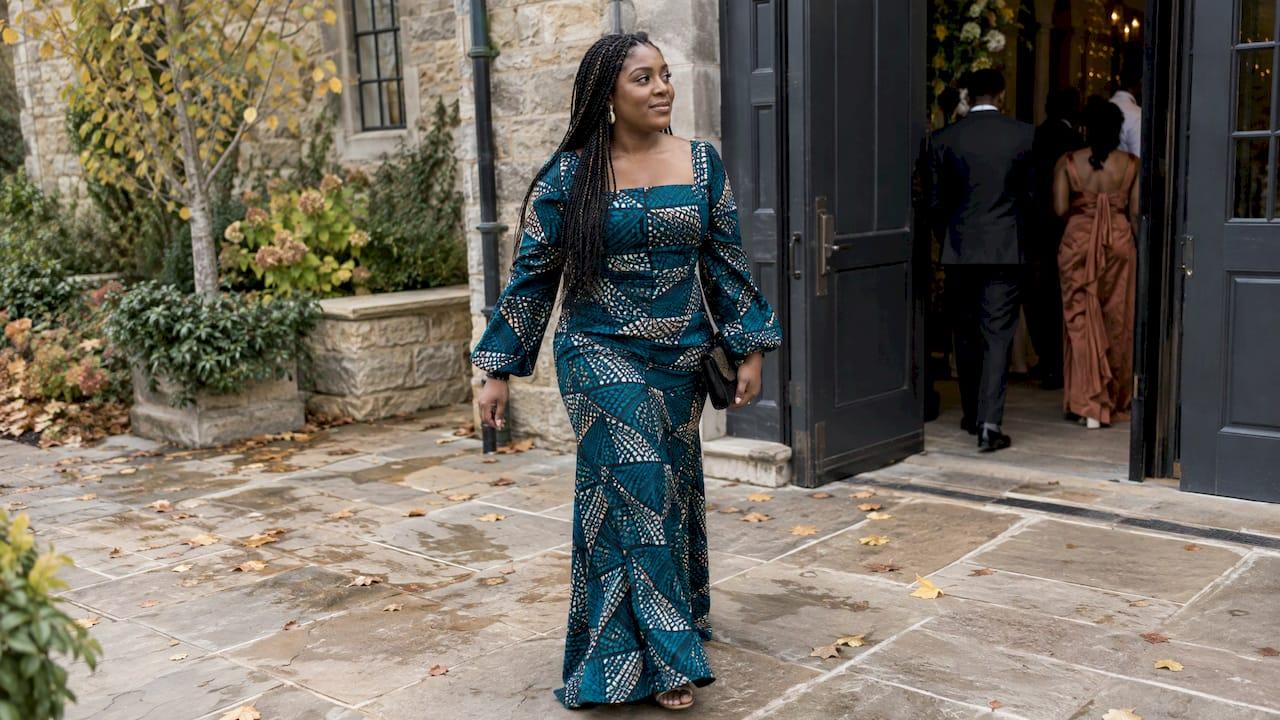
The best African outfit for a fall wedding pairs a rich, season-true color (emerald, burgundy, plum, gold, deep earth tones) with a fabric that has body and warmth, then adds one layer you can wear with confidence. For women, that often means a structured dress, a matching set or a kaftan. For men, it means an agbada, a kaftan set or a tailored jacket with heritage detail. Below you will find how to choose color, fabric and layers, how to respect the couple's dress code, how to coordinate with family without matching exactly, and how to finish the look.
TL;DR
- Read the invitation first. The dress code and the culture of the ceremony decide how formal and how traditional your outfit should be.
- Choose jewel tones, earth tones and deep darks over summer brights and pastels, and look for fabrics with weight, such as brocade, jacquard, heavy lace and aso-oke.
- Plan your layers: a tailored jacket, a wrap or shawl, or an agbada gives you warmth without hiding the outfit.
- If there is aso-ebi, ask the family how it will work: same fabric, same color or one shared detail.
- Pick an investment piece you will want to wear again long after the wedding.
Table of Contents
- Start with the invitation, not the closet
- The fall color palette that honors the season
- Fabrics with weight: what feels right in cool weather
- Fall wedding African outfits for women
- Fall wedding African outfits for men
- Layers that keep the outfit in view
- Coordinating with family and the wedding party
- Finishing the look: accessories and shoes
- Etiquette that shows respect
- Our perspective: wear the story, not just the color
- Shop West African fall wedding looks
- Quick planning timeline
- FAQ
- Sources
Start with the invitation, not the closet
Before you think about color, look at the invitation. A Vogue guide to fall wedding guest outfits advises checking the dress code and matching your formality to it: cocktail dresses or blazers for informal and civil ceremonies, and long dresses for formal weddings. That advice holds for African attire too. A black-tie evening wedding calls for a floor-length gown or a full agbada set. A daytime garden ceremony can carry a midi dress, a jumpsuit or a kaftan.
Then look at the culture of the ceremony. At a Nigerian traditional wedding, guests are almost always expected to wear traditional attire, and women are encouraged to lean toward overdressing rather than underdressing. If the couple is Ghanaian, Yoruba, Igbo or mixed, the details change. Our guides to what to wear as a West African wedding guest, Nigerian wedding guest attire and Ghanaian wedding guest attire go deeper into each tradition.
When you are unsure, ask someone close to the couple. A short message such as "Is the family wearing traditional attire, and is there a color?" saves you from a costly mistake and shows care.
The fall color palette that honors the season
Fall asks for depth. The same Vogue guide steers guests away from light and pastel tones and toward jewel tones and rich fabrics. A style director at Rent the Runway quoted by The Knot puts it simply: say goodbye to summer brights and move toward warm but cheerful tones. The same Knot guide names jewel tones, earth tones and classic darks as the top fall colors.
Here is how that translates into African-inspired dressing.
Jewel tones
Emerald, sapphire, amethyst, ruby and deep teal feel regal against the changing leaves, and they photograph beautifully indoors. These are the colors that give West African textiles their drama: a bold geometric weave or a rich embroidered panel looks even more striking when the ground color is deep.
Earth tones
Rust, terracotta, cognac, camel, chocolate and burnt orange echo the season. They also pair well with gold embroidery and warm metals. If you love a traditional pattern with many colors, look for one where the dominant tone is earthy and the accents are bright.
Classic darks
Burgundy, plum, forest green, navy and black are dependable for evening ceremonies. A dark base is also the easiest way to build a polished look when you need to be formal but do not want to blend into a crowd of guests in conventional suits and gowns.
A note on white and ivory
Leave white, ivory and cream to the couple unless they ask otherwise. The one exception is a custom: in some traditions white attire is a respectful choice for men, so follow the couple's lead and the culture of the day rather than a general rule.
Fabrics with weight: what feels right in cool weather
Fabric does as much as color to say "fall." The Knot's fall guide recommends velvet, satin and silk, jacquard and brocade, and wool blends. Many of these have African counterparts or sit comfortably beside them:
- Brocade and jacquard: Woven patterns with texture are at home in West African fashion and give agbadas and gowns their structure.
- Heavy lace: A thick lace carries embroidery and warmth, and it is a favorite for celebration wear.
- Aso-oke: This hand-woven cloth is substantial and ceremonial. The Guardian Nigeria notes that in the dry Harmattan season, from November to March, heavier aso-oke and thick lace are appropriate.
- Satin and crepe: These give a fluid line for wrap dresses and gowns, and they layer well under a jacket.
- Printed cotton and wax-print cloth: Ankara, kente and similar prints work in fall when they are cut into structured silhouettes: a blazer, a long-sleeved maxi or a tailored set.
Think about the month, too. Early fall can still be warm, so a mid-weight fabric keeps you comfortable at an outdoor ceremony. By November, with cold evenings, heavier cloth and full sleeves earn their place.
Fall wedding African outfits for women
There is no single right silhouette. Choose by the formality of the day and how you want to move.
The long gown
For formal evening weddings, a floor-length gown in a deep jewel tone with embroidery or a structured bodice is the clear choice. Long sleeves or a sleeve detail keep you warm, and a train or a flowing skirt gives that sense of arrival. Our guide to African evening gowns explains styles and fabrics in detail.
The kaftan or flowing set
A kaftan in rich fabric is forgiving, graceful and easy to wear through a long reception. It also layers well, since you can add a tailored jacket on top when the evening cools.
The matching skirt and top set
A two-piece set lets you wear the pieces separately afterward. A maxi skirt gives generous coverage against the chill, and a structured top adds shape. You can browse our dresses and women's collections for ready-to-ship options in limited quantities.
The jacket over a simple dress
An African print or embroidered jacket over a plain dress in a deep tone is the easiest way to bring heritage into a semi-formal wedding. It works at a courthouse ceremony, a church wedding or a cocktail-style reception, and it travels well to other occasions.
The jumpsuit
For a daytime or cocktail wedding, a tailored jumpsuit in a printed or textured fabric offers movement and warmth with wide legs and long sleeves. Add a gele or a statement earring and the look reads as celebratory.
Fall wedding African outfits for men
Men's fall wedding attire moves from linen and bright pastels to richer colors and warmer cloth. The Knot's men's guide describes the shift toward wool, flannel and tweed suiting, plus layering pieces. West African menswear already has the vocabulary for this.
- The agbada: A three-piece agbada set with a wide-sleeved outer robe, an inner tunic and trousers is warm, ceremonial and commanding. It is the right pick for a traditional or formal wedding. Browse men's agbada ensembles and the Woven Nobility: Kings' Robe collection.
- The kaftan set: A matching top and trousers in a deep color suits a semi-formal day or a reception. Dark, embroidered fabric looks formal without the volume of an agbada.
- The heritage jacket: A tailored jacket with West African fabric details over a crisp shirt and dark trousers is a good bridge for a mixed-culture guest list.
If you are attending a Nigerian wedding, white native attire is a traditional safe choice in some settings, according to one Lagos wedding style guide for men, though for a fall wedding in the US you may prefer deeper tones that suit the season. Our guide to African wedding guest attire for men covers fit, color and cultural context.
Layers that keep the outfit in view
The problem with fall is the coat that hides everything. Plan your layers as part of the outfit.
The Knot's fall guide suggests tailored blazers, pashmina shawls, faux-fur stoles and classic trench coats. Here is how to make that work with African attire:
- Choose a wrap in a solid deep tone. A shawl in burgundy, forest green or black frames a patterned gown without competing with it.
- Use a tailored jacket for patterned dresses. A plain black or camel blazer over a bold print keeps the print as the star.
- Let the outfit be the layer. An agbada or a kaftan with full sleeves is already a layer. Add a lightweight scarf if the venue is outdoors.
- Bring a coat for the walk, not the room. A long coat in a neutral tone handles the parking lot and the ceremony entrance, then comes off for photographs.
- Think about the head. A gele or a fila adds height and warmth and finishes a traditional look.
Coordinating with family and the wedding party
Many African weddings include aso-ebi, a custom of family and friends wearing coordinated fabric. If the couple has asked for it, you have a few common models. Asemble's planning guide describes three approaches: the same fabric in different styles, the same colors in different fabrics, or one shared detail such as a gele, fila, sash, embroidery color or pocket detail.

The Knot's aso-ebi guide explains that guests can order the fabric and work with a local tailor to create their own design, which lets everyone coordinate while keeping individuality. That is a good reason to start early: tailoring takes time, and fall is a busy season.
A newer approach in US weddings is the color palette. EventAtlas reports that couples name a color, such as burgundy, emerald or champagne gold, and invite guests to wear any outfit in that shade, avoiding the logistics of distributing fabric. It also reports typical US aso-ebi costs of $40 to $80 per guest for Ankara and $50 to $150 for lace. Treat those as rough guides, and confirm the actual figure with the organizer.
If you are coordinating with a partner, you do not have to match exactly. A shared color family, a shared fabric in two silhouettes or a shared accent works well. Our coordinated couples outfits guide shows how. If you are the mother of the bride or groom, see our guide to African dresses for the mother of the bride.
Finishing the look: accessories and shoes
Accessories are where an African-inspired outfit becomes yours. These are our styling suggestions, based on how we dress pieces for celebrations.
- Let one element lead. If your outfit has intricate embroidery or a bold print, keep jewelry simple. If the outfit is a solid deep color, a statement necklace or earrings can carry the look.
- Match metals to the palette. Gold tends to warm emerald, burgundy and earth tones, while silver is cooler against navy and deep purple.
- Choose a gele with intention. At traditional weddings women commonly wear one, and the fabric should complement the outfit, not copy it exactly.
- Think about the venue floor. Grass, gravel and cobblestones are common at fall venues. Block heels, wedges or elegant flats keep you steady, and a closed-toe shoe in a dark tone suits cooler evenings.
- Carry a small bag in a solid tone. A clutch in gold, black or a deep jewel shade keeps the focus on the garment.
For finishing touches, you can explore wedding jewelry, from earrings to necklaces, to complement a gown or a kaftan.
Etiquette that shows respect
Wearing African attire to a wedding is a way to honor the couple, and the best practice is to learn what each piece means. Ask the couple or family about colors reserved for the wedding party, whether a gele is expected, and whether specific cloth carries meaning. Ask rather than guess, and buy from makers who share the story of the cloth.

Also respect the day's focus. Avoid an outfit that outshines the couple, and do not wear white or ivory unless asked. Choose pieces made with care so that your outfit supports the artisans behind it.
Our perspective: wear the story, not just the color
We believe a wedding outfit should carry more than a season's color. The best fall pieces feel special enough for the occasion and versatile enough to return to your wardrobe for years, and that is how we design.
Every Sena Nukunu piece is made in limited quantities, with ethical manufacturing and artisanal craftsmanship at the heart of it. When you wear an agbada, a kaftan, a dress or a matching set from us, you are wearing the work of hands that have inherited a legacy of intricate, timeless design.
For fall, we encourage you to choose depth: rich tones, structured silhouettes and fabrics with presence. Let the garment tell the story, and let the story be one you are proud to share. A wedding is a celebration of community, and what you wear can be part of that gift.
Sena
Shop West African fall wedding looks
If you are ready to find your outfit, we have ready-to-ship dresses, kaftans, agbada sets, jackets and matching statement sets for women and men, made in limited quantities with ethical production. Our collections include Woven Crowns, Woven Radiance, Woven Shields and Woven Stride for women, and Woven Nobility for men.
Start with our dresses or women's shop, and for men, explore the agbada and heritage collections. If you want something made around your wedding, see our services. Allow time for any custom work, since fall is a busy wedding season.
Quick planning timeline
A little structure keeps you calm. Use this as a rough guide, and adjust to the wedding date.
- As soon as you get the invitation: Confirm the dress code, the culture of the ceremony and whether there is aso-ebi or a color request.
- Several weeks ahead: Choose your outfit and decide whether you need alterations. Custom work and tailoring need the longest lead time.
- One to two weeks ahead: Try the full look with shoes, jewelry, head wrap and layers. Check how it feels sitting, dancing and walking outdoors.
- The day before: Steam or press the garment, prepare a wrap or coat, and pack a small kit with pins and tissues.
FAQ
Can I wear African attire to a fall wedding if I am not African?
Yes, if you approach it with respect. Ask the couple or family whether traditional attire is welcome, learn what the cloth and style mean, and choose well-made pieces from makers who credit their heritage. When the couple has asked guests for a specific color or fabric, follow that request.
What colors should I avoid at a fall wedding?
Avoid white, ivory and cream unless the couple asks for them. Most fall guides also steer guests away from summer brights and pastels, and toward jewel tones, earth tones and classic darks, as Vogue's fall wedding guide recommends.
How do I stay warm without covering my outfit?
Choose weightier fabrics such as brocade, jacquard, heavy lace or aso-oke, and add a wrap, a tailored jacket or an agbada-style outer layer. Keep a long coat for arrivals and departures, and take it off for photos.
Do I have to match the aso-ebi exactly?
Not always. Families use the same fabric in different styles, the same colors in different fabrics, or a single shared detail, as Asemble's guide explains. Ask the organizer which approach the couple prefers.
Sources
- Vogue: fall wedding guest outfits
- The Knot: what to wear to a fall wedding
- The Knot: men's fall wedding attire
- The Knot: aso-ebi styles for weddings
- The Guardian Nigeria: what guests wear to Nigerian weddings
- Asemble: aso-ebi ideas and planning guide
- EventAtlas: the aso-ebi tradition
- The September Standard: men's style guide for Lagos weddings