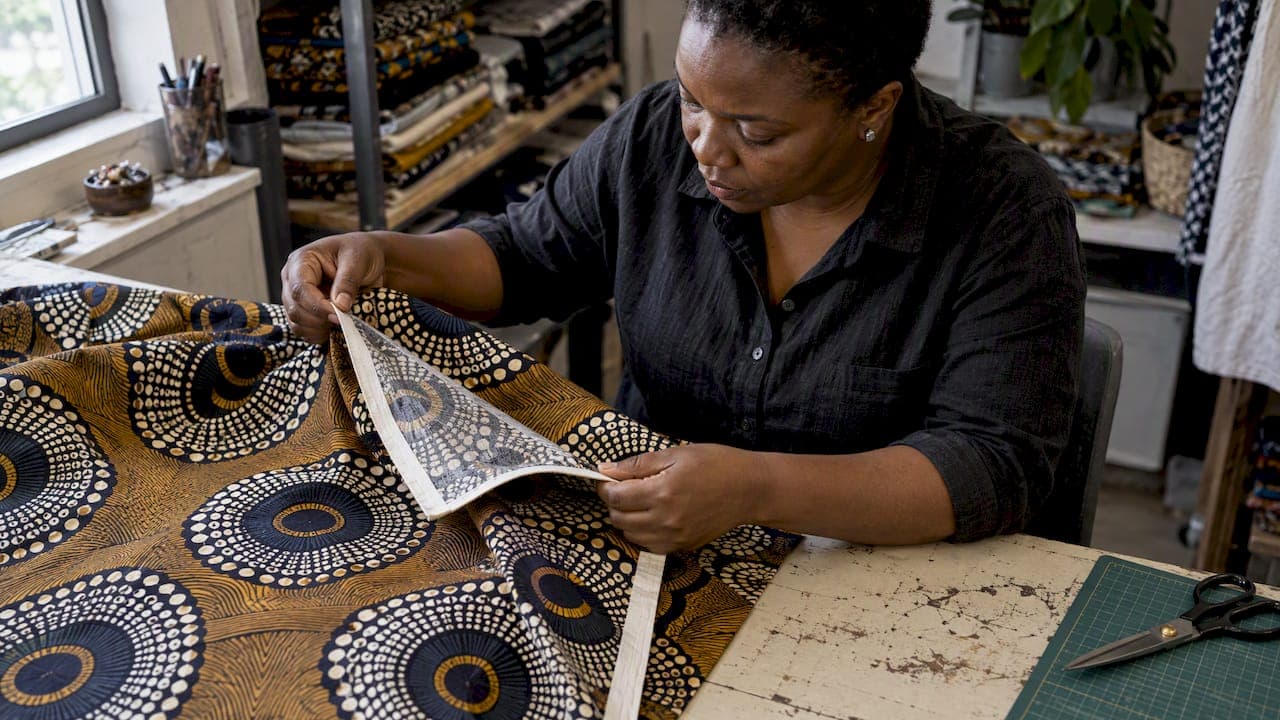
Authentic wax print, also called Dutch wax or Ankara, is cotton cloth whose production method and seller markings confirm its provenance. The fastest way to protect your purchase is simple: buy only from sellers who show you the selvage, confirm 100% cotton content, and prove the print carries through clearly on both sides of the fabric, or choose a transparent brand that documents its sourcing from the start.
TL;DR:
- Verify selvage markings, dual-sided print clarity, and 100% cotton content before purchasing to ensure fabric authenticity.
- Authentic wax print typically measures 44 to 46 inches wide, sold in six-yard bolts, and features traditional resin or wax-resist dyeing techniques.
- Prices vary based on production method, design complexity, and origin, with genuine resin-resist cloth costing more than roller-printed imitations.
- Reputable sellers provide clear disclosures, provenance details, and respond confidently to inquiries about origin, selvage, and fabric specs.
- Authenticity can be confirmed through specific markers like selvage registration numbers, double-sided color uniformity, and resistance to fading after washing.
Table of Contents
- Where to find reputable wax print sellers
- How to spot authentic wax print versus imitation
- What fabric specs and design details tell you about quality
- Where wax print came from and how it is made
- Caring for wax print to keep its color and shape
- What authentic wax print typically costs
- Verifying a seller before you buy
- Our approach to authenticity and transparency
- Ready to wear fabric you can trust
- FAQ
- Sources
Where to find reputable wax print sellers
Finding genuine cloth comes down to who you buy from as much as what you inspect once it arrives. Reputable sources generally fall into a few categories: specialist African-fabric retailers who have built relationships with mills over years, boutique heritage brands that source and document their own fabric, producer-direct sellers connected to established manufacturers, and curated e-commerce platforms that vet their vendors before listing anything.
Before you commit to a purchase, request a short list of disclosures. Any seller confident in what they are selling should hand these over without hesitation.
- A clear, well-lit photo of the selvage edge showing printed text or registration numbers.
- A material specification confirming 100% cotton and approximate weight.
- A statement of origin naming the producer or production region.
- A written return policy in case the fabric does not match what was described.
Watch for warning signs too. A seller who only shows one side of the fabric, prices that seem too low for genuine cotton cloth, no return policy, or vague language about where the fabric came from are all reasons to pause. If you are shopping from within the United States, factor in shipping times and customs handling when ordering from overseas mills, since reputable international sellers typically quote delivery windows upfront rather than leaving you guessing. A practical buying guide can walk you through what provenance, branding, and quality signals to expect before you check out.
How to spot authentic wax print versus imitation
Verifying authenticity is a process, not a single glance, and doing it in order saves you time.
- Check the selvage first. Genuine cloth from established producers carries printed text and a registration number along the edge, and established manufacturers like Vlisco print selvedge text that typically reads "VERITABLE WAX HOLLANDAIS VLISCO" along with a design number you can cross-reference against the maker's catalog.
- Compare both sides of the print. Authentic wax-resist cloth shows color and pattern with nearly equal clarity front and back, while cheaper roller-printed imitations usually show a crisp front and a faded or incomplete pattern on the reverse.
- Feel the fabric. Combed 100% cotton has a dry, slightly stiff hand that softens with washing, while polyester blends feel slicker and lighter in a way that is easy to notice once you know what to compare it against.
- Test colorfastness expectations. Genuine wax print is formulated to hold its color through repeated washing without major bleeding, a durability trait rooted in the resin-resist process itself.
- Look for verification tools where available. Some manufacturers now include QR codes or holospots printed alongside the selvage, letting you confirm authenticity through the maker's own system rather than guesswork.
Pro Tip: When buying online, always ask for a selvage close-up, photos of both fabric sides, and a short video showing how the cloth drapes, since stiffness and movement are hard to fake in photos alone.
What fabric specs and design details tell you about quality
Authentic wax print has a fairly consistent profile once you know what to look for. Most bolts measure roughly 44 to 46 inches wide and are sold in six-yard lengths, a convention that has held for decades across West African markets. The cloth should be listed as 100% cotton, never a blend, since the resin-resist dyeing process depends on cotton's absorbency to hold color evenly through both layers.
Production method matters as much as the spec sheet. Traditional resin or wax-resist printing produces deep, saturated color that penetrates the fiber, while roller-printed "fancy" imitations apply color to the surface only, which is why they fade and crack faster with wear. That durability difference is one reason genuine wax print often costs more and lasts longer through repeated washing and wear.
- Width typically runs 44 to 46 inches, sold in standard six-yard pieces.
- Material should be listed plainly as 100% cotton, with no blend disclosed.
- Resin or wax-resist printing produces color that shows through both fabric faces.
- Roller-printed imitations fade faster and show weaker color on the reverse side.
Design names carry meaning too. Many patterns carry names tied to proverbs, social status, or community events, and that naming tradition often appears directly on the selvage or in the product listing itself, a detail our guide to iconic West African patterns explores in more depth.
Where wax print came from and how it is made
Understanding the history behind wax print explains why selvage markings and double-sided clarity became the trust signals they are today. The fabric traces back to 19th-century Dutch attempts to mechanize and mass-produce an imitation of Indonesian batik for colonial Southeast Asian markets. The Javanese market largely rejected the machine-made cloth, but traders found a receptive audience along the West African coast starting in the 1880s, and the fabric was adopted and redefined by West African consumers who gave it new names, new meanings, and a permanent place in regional fashion by the mid-20th century.
Production methods evolved alongside that adoption:
- Early cloth used a genuine resin or wax-resist process, where wax is applied to both sides of the fabric before dyeing, creating the characteristic "crackle" effect collectors still look for in historical pieces.
- Roller printing later allowed faster, cheaper production, though it typically prints clearly on one side only.
- Manufacturing today spans Europe, West Africa, and Asia, meaning geography alone no longer guarantees authenticity the way it once did.
Textile scholarship on the subject, including research on cloth, gender, and materiality in West Africa, makes an important point: authenticity is not only about where the cloth was manufactured. West African consumers have spent more than a century giving the fabric its social meaning through naming, gifting, and wear, which means cultural adoption is part of what "authentic" means, alongside the manufacturing markers themselves. Our provenance guide to Ankara fabric traces these origins further for readers who want the fuller story.
Caring for wax print to keep its color and shape
Wax print rewards simple, consistent care. Wash it in cold water with a gentle detergent and skip the bleach entirely, since bleach breaks down the resin-set color faster than ordinary wear ever will.
- Wash in cold water with a mild detergent, never bleach.
- Dry in shade rather than direct sun to prevent fading.
- Iron the fabric inside out, ideally with a pressing cloth between the iron and the cloth.
- Store folded in a cool, dry place away from direct light to prevent distortion and color loss.
Small snags or seam issues are usually a quick fix for a tailor familiar with cotton weaves, and catching them early keeps the fabric wearable for years.
Pro Tip: Fold rather than hang your wax print pieces for long-term storage, since hanging can stretch the cotton weave over time and distort the print alignment.
What authentic wax print typically costs
Prices for genuine wax print vary widely based on producer, design complexity, and where you buy. Cloth from established manufacturers using true resin-resist methods generally costs more than roller-printed alternatives, since the process itself takes longer and uses more material in the wax application stage. Limited or commemorative designs, often tied to a specific event or anniversary print run, also tend to carry a premium over standard patterns.
A few factors consistently drive cost up or down: the printing method used, whether the design is a limited release or a standard catalog pattern, the reputation and verification systems of the producer, and whether you are buying directly from a mill versus through several layers of resale. Imported imitation prints made quickly and cheaply, often from Asian manufacturers producing visually similar patterns, undercut genuine cloth on price precisely because they skip the slower resin-resist process and the licensing or branding that established producers maintain.
The tactile and visual checks covered earlier, feel, double-sided clarity, and selvage text, remain your best defense regardless of price point, since photos alone can make an imitation look convincing online.

Verifying a seller before you buy
A fabric can be genuine and still land in your hands disappointing if the seller handling it is not transparent. Start by checking how long the seller has operated and whether they specialize in African textiles specifically rather than carrying wax print as one item among unrelated general merchandise.
Ask direct questions before paying: where the fabric was produced, whether they can provide a selvage photo on request, and what their return policy covers if the cloth does not match the listing. A seller who answers these without hesitation is behaving the way reputable fabric retailers typically do, and most retail guidance on the subject points to the same checklist, touch, double-sided print, fiber content, and selvage verification, as the core defenses against counterfeit sellers.

Be cautious of listings that recycle the same stock photo across multiple "different" fabric designs, sellers with no verifiable return address, and prices that shift dramatically between near-identical listings on the same platform. Cross-referencing a design number against a producer's own catalog, where one exists, is one of the more reliable forensic checks available to everyday buyers, and it takes only a few minutes once you know what number to look for on the selvage.
Our approach to authenticity and transparency
We believe authenticity is proven, not promised. Every piece we offer traces back to artisans and ethical production practices, and we document provenance the way a buyer should always be able to request it: material specs, origin notes, and craftsmanship details made visible rather than buried. Transparency on a product page means showing the fabric honestly, not just photographing it attractively. For anyone curious about the artisan story behind a particular piece, our guide to identifying authentic African craftsmanship offers a deeper look at what documentation should look like.
— Sena
Ready to wear fabric you can trust
We built our brand around a simple idea: you should never have to guess where your fabric came from. Our collections include ready-to-wear pieces alongside custom garments built from ethically sourced cloth, each crafted in limited quantities by artisans we work with directly.
- Browse ready-to-wear collections including men's ensembles and women's statement pieces.
- Request additional provenance details or artisan background on any piece before you order.
- Reach out directly for custom garment orders built to your measurements.
If you are ready to own a piece with its story intact, view our full collections or start browsing at Sena Nukunu today.
FAQ
Where can I buy authentic African print fabric?
Look for specialist African-fabric retailers, boutique heritage brands, or producer-direct sellers who willingly share selvage photos, material specs, and origin details before you buy. Platforms that document provenance upfront, rather than requiring you to ask twice, are generally the safer choice.
Is it okay to wear African prints if you are not African?
Textile scholars note that wax print's meaning has always been shaped by cultural adoption and local practice rather than by a single origin story, and the fabric has circulated globally for over a century. Wearing it respectfully, and understanding the designs and history behind it, is generally viewed as appreciation rather than appropriation, though buying from African and diaspora-owned makers helps ensure the value of that purchase reaches the communities tied to the craft.
What is the origin of African wax print fabric?
The cloth originated from 19th-century Dutch attempts to mechanize Indonesian batik for colonial Southeast Asian markets, a venture the Javanese market largely rejected. Traders found demand along the West African coast instead, where the fabric was adopted, renamed, and woven into local fashion and social custom from the 1880s onward.
How are wax prints made?
Traditional wax prints use a resin or wax-resist dyeing process, where wax is applied to cotton cloth before dyeing so the printed pattern penetrates and shows clearly on both fabric sides. Many prints sold today are made through faster roller-printing methods instead, which typically show a clear pattern on one side only.
How can I tell if a seller is selling counterfeit wax print?
Ask for a selvage close-up, photos of both fabric sides, and the producer's name before paying, since a transparent seller answers these without hesitation. Watch for recycled stock photos, no return policy, and prices well below comparable genuine cotton listings, all common signs tied to counterfeit sellers.
Sources
- Identifying an original Vlisco wax hollandais
- Patterns in Circulation: Cloth, Gender, and Materiality in West Africa (Nina Sylvanus)