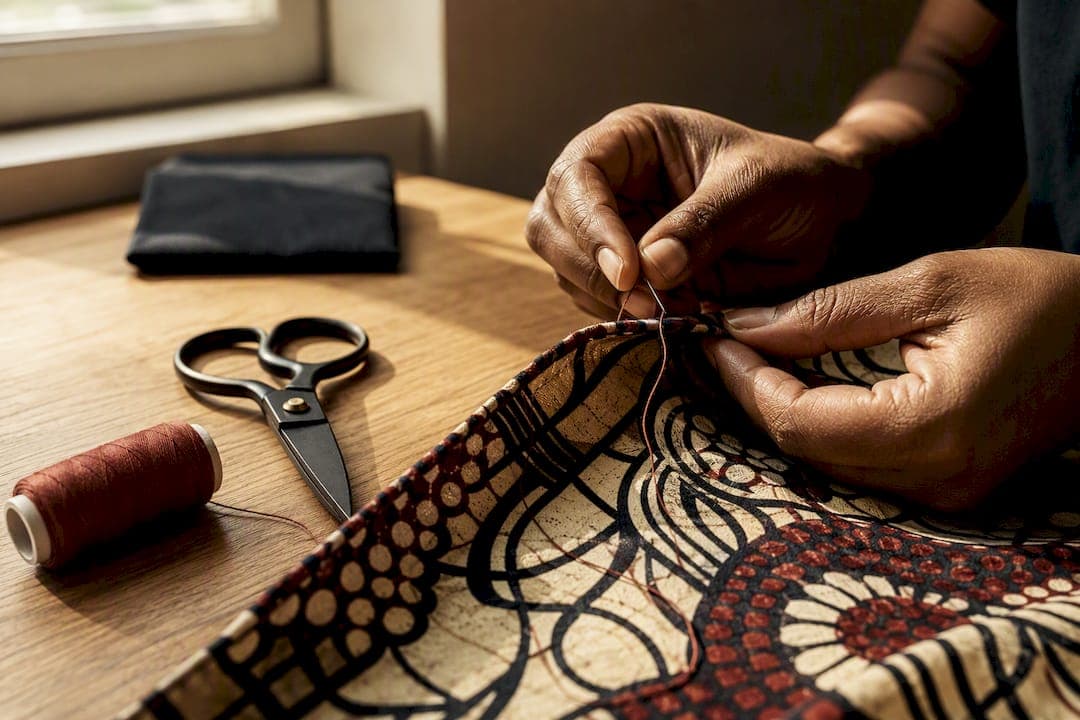
Wax print fabric, often called Ankara or Dutch wax, is a cotton textile printed with bold, layered patterns using a wax-resist process that began as an industrial take on Indonesian batik. The single detail worth remembering: authentic pieces show the same color intensity on both sides of the cloth, along with a fine crackle effect where the wax resist cracked during dyeing. This guide walks through where the fabric comes from, how it is made, how to spot the real thing, and how to wear, care for, and buy it with confidence.
TL;DR:
- Authentic wax print fabric shows equal color saturation on both sides and has a fine crackle pattern where the wax has cracked during dyeing.
- The fabric should have a printed producer name and registration number on the selvage to verify authenticity, and feel dense with a slightly waxy texture.
- Genuine wax prints are made with a mechanized wax-resist process that produces mirrored color and crackle effects, unlike one-sided or digital prints.
- Heavier cotton wax prints are best for structured garments, while lighter weights suit flowing designs and headwraps; choose material based on project needs.
- Proper care involves cold, inside-out washing without bleach, line-drying in shade, and pre-washing to prevent shrinkage before sewing.
Table of Contents
- The history and origin of wax print fabric
- How wax print fabric is made
- How to tell authentic wax prints from imitations
- Signature patterns and what they mean
- Fabric characteristics and where wax prints work best
- Caring for and sewing wax print cotton
- What to check before buying wax print fabric
- Why sourcing and provenance matter as much as pattern
- Wear the heritage, not just the print
- Sources
- FAQ
The history and origin of wax print fabric
Wax prints trace back to Javanese batik, a hand-drawn wax-resist tradition from Indonesia. In the 19th century, Dutch merchants tried to mechanize batik for the Indonesian market, but the imitation never took hold there. Instead, West African traders and consumers embraced the cloth, and companies like Vlisco grew into central suppliers, shaping designs around West African taste long before local factories took up production themselves.
What followed was a genuine back-and-forth: manufacturers listened to what sold, and West African buyers turned printed cotton into something closer to a shared vocabulary. Museum research from the V&A documents how this consumer feedback shaped pattern choices, and how prints came to carry names tied to personalities, proverbs, and events.
- Batik-inspired mechanization began in the Netherlands in the 1800s, aimed at the Indonesian market.
- West African traders adopted the misfired imitation and made it their own.
- Named patterns became a way to mark identity, status, and social commentary.
How wax print fabric is made
Traditional wax print production applies hot wax or a resin and duplex mixture to both sides of cotton cloth before dyeing, and it is this mechanized wax-resist process that produces the signature crackle and matching color on the front and back of the fabric, as technical accounts of Dutch-wax manufacturing explain. Roller printing and digital printing, by contrast, apply pattern to one side only, which is why so-called fancy prints look sharp and clean but lack that mirrored intensity.
Quality tends to fall into three rough tiers:
- Super-wax and premium Dutch wax: fully mechanized wax-resist, dense cotton, visible crackle, identical color both sides.
- Standard wax prints: same resist process, slightly lighter cotton or simpler pattern work.
- Fancy or roller prints: one-sided color, often blended with polyester, priced for volume rather than heirloom wear.
Pro Tip: Hold the fabric up to a light source. If the pattern glows through with equal strength from both sides, you are likely holding true wax-resist cloth.
How to tell authentic wax prints from imitations
A few checks separate the real thing from a convincing copy. Selvage stamps are the first place to look, since producer names and registration numbers printed along the fabric edge are a long-standing signal of provenance, as noted in the Wikipedia entry on African wax prints.
- Check the selvage for a printed producer name, registration number, or country of origin.
- Compare color saturation on both faces of the fabric under natural light.
- Feel the hand of the cloth: authentic wax prints have body and a slightly waxy, dense texture, not a thin, slippery drape.
- Look closely for the fine crackle pattern that appears where the wax resist naturally cracked during dyeing.
- Ask online sellers for close-up photos of the selvage and a swatch before committing to a full length.
Curators have pointed out that the term "wax print" is now used loosely, and that many modern prints sold under that name are actually roller-printed or digitally produced fancy fabrics rather than true wax-resist cloth.
Pro Tip: A seller who can't answer a simple question about fiber content or selvage marking usually can't tell you where the fabric came from either.

Signature patterns and what they mean
Wax prints rarely stay nameless for long. Traders, tailors, and communities assign names based on proverbs, current events, or public figures, turning the cloth into something closer to a conversation than a background pattern, a practice well documented by the V&A's research on African textiles. Our guide to why West African patterns are iconic goes deeper into specific naming traditions.
Common motif families include:
- Geometric repeats built from interlocking shapes, often tied to unity or community themes.
- Botanical motifs, such as leaves or seed pods, associated with fertility or abundance.
- Object-based designs, like keys, bags, or wheels, that reference proverbs about opportunity or movement.
- Abstract line work that traders have nicknamed after political moments or popular sayings.
The same motif can carry different names depending on the country or even the market where it is sold, since naming is a local, living practice rather than a fixed catalog. Contemporary designers continue this tradition, reinterpreting classic motifs into new colorways while the underlying storytelling stays intact.
Fabric characteristics and where wax prints work best
That last point matters more than it sounds, since cotton at this weight can lose a noticeable amount of length if it isn't pre-treated before cutting.
- Heavier cotton wax prints suit structured garments like tailored dresses, blazers, and agbada sets that need body to hold their shape.
- Lighter weights drape better for flowing tops, wrap skirts, and headwraps.
- Fancy or roller prints with polyester blends can be reasonable for budget projects, home décor, or accessories where color intensity and shrinkage matter less than price.
- Pure cotton wax prints are worth the extra care for garments meant to last, from special occasion pieces to everyday statement wear.
Choosing the right weight upfront saves a lot of frustration later, since a lightweight cotton meant for a headwrap will not hold the structure a fitted jacket needs.
Caring for and sewing wax print cotton
Wax print cotton rewards a little patience before the first wash and before the first cut. Our guide to caring for African fabrics covers this in more depth, but the essentials are simple.
- Turn the fabric inside out before washing to protect the printed surface.
- Wash in cold water, around 30°C or 86°F, using a mild detergent.
- Handwash or use a delicate machine cycle, and skip bleach entirely.
- Line-dry in the shade rather than direct sun to protect color depth.
Before cutting for a garment, pre-wash the fabric so natural cotton shrinkage happens before tailoring, not after. Leave generous seam allowances, use a sharp universal or denim needle depending on fabric weight, and press with a moderate iron setting, testing on a scrap first.
Pro Tip: Sew a small test seam and wash the swatch once before committing scissors to your good yardage.
- Use cotton-wrapped polyester or all-purpose thread for durability through repeated washing.
- Finish raw edges with a zigzag stitch or serger to prevent fraying over time.
What to check before buying wax print fabric
A confident purchase starts with the right questions. Ask for fiber content, the exact length being sold, and a clear photo of the selvage before paying for anything shipped sight unseen.
- Confirm the fabric is 100% cotton if that's what the listing claims, not a cotton-polyester blend sold as pure wax print.
- Ask about the producer name or registration number printed on the selvage.
- Check the seller's return policy in case the fabric doesn't match the photos.
- Favor sellers who disclose where and how the fabric was produced rather than vague country-of-origin claims.
Red flags include listings with no fiber content at all, only wide shots with no selvage visible, or prices that seem too low for cotton at that width and weight. Specialist textile retailers and heritage-focused sellers who talk openly about sourcing tend to be safer bets than marketplace listings with generic stock photos.
Why sourcing and provenance matter as much as pattern
At Sena Nukunu, we think about wax print fabric the same way we think about the garments we build from it: as a craft with a lineage, not just a look. Ethical sourcing means knowing which hands touched the cloth, from mill to needle, and it means keeping runs limited so quality and fair labor stay intact rather than getting lost to volume.
If you want to support that model as a shopper, ask sellers directly about artisan partnerships, production scale, and where the fabric actually came from. Explore our ready-to-wear collections to see how that philosophy translates into finished pieces built on West African textile heritage.
— Sena
Wear the heritage, not just the print
Choosing wax print fabric is one part history lesson, one part practical decision, and Sena Nukunu exists to make that decision easier once you're ready to wear it, rather than just study it. Instead of sourcing yardage and finding a tailor yourself, our Women's Collections and Men's Agbada Ensembles are cut and finished in limited runs, so the craftsmanship and the fabric provenance are handled before the piece ever reaches you.

Dresses, sets, and agbada are designed with attention to quality, ethical production, and cultural storytelling consistent with the standards described in this guide. Browse our dresses or the Solara Tide Midi Dress to find a piece ready to ship rather than a bolt of fabric waiting for a plan.
Sources
FAQ
What is wax print fabric?
Wax print fabric is a cotton textile printed using a wax-resist process that originated as a mechanized take on Indonesian batik. It became culturally significant in West Africa, where named patterns and social meanings turned the cloth into a form of visual language.
Is it okay for a white person to wear African prints?
Wax prints have a history rooted in exchange between European manufacturers and West African consumers, and the fabric itself was never exclusive to one group of wearers. Approaching it with curiosity about its origin and meaning, rather than treating it as costume, is the respectful way in for anyone new to the tradition.
What is the wax fabric technique used for?
The wax-resist technique is used to create bold, high-contrast patterns on cotton cloth by applying wax or resin before dyeing, which blocks color from certain areas and produces the fabric's signature crackle effect. This same technique is what gives authentic wax prints identical color intensity on both sides of the cloth.
How should I wash African wax print fabric?
Wash wax print cotton inside out in cold water, around 30°C or 86°F, with a mild detergent, and avoid bleach entirely. Handwashing or a delicate machine cycle followed by shade drying helps keep the colors from fading over repeated washes.