TL;DR:
- Afrofuturism in fashion merges African heritage with futuristic innovation to envision empowered Black futures. It challenges Eurocentric norms by emphasizing cultural storytelling, sustainability, and a deep research-driven approach.
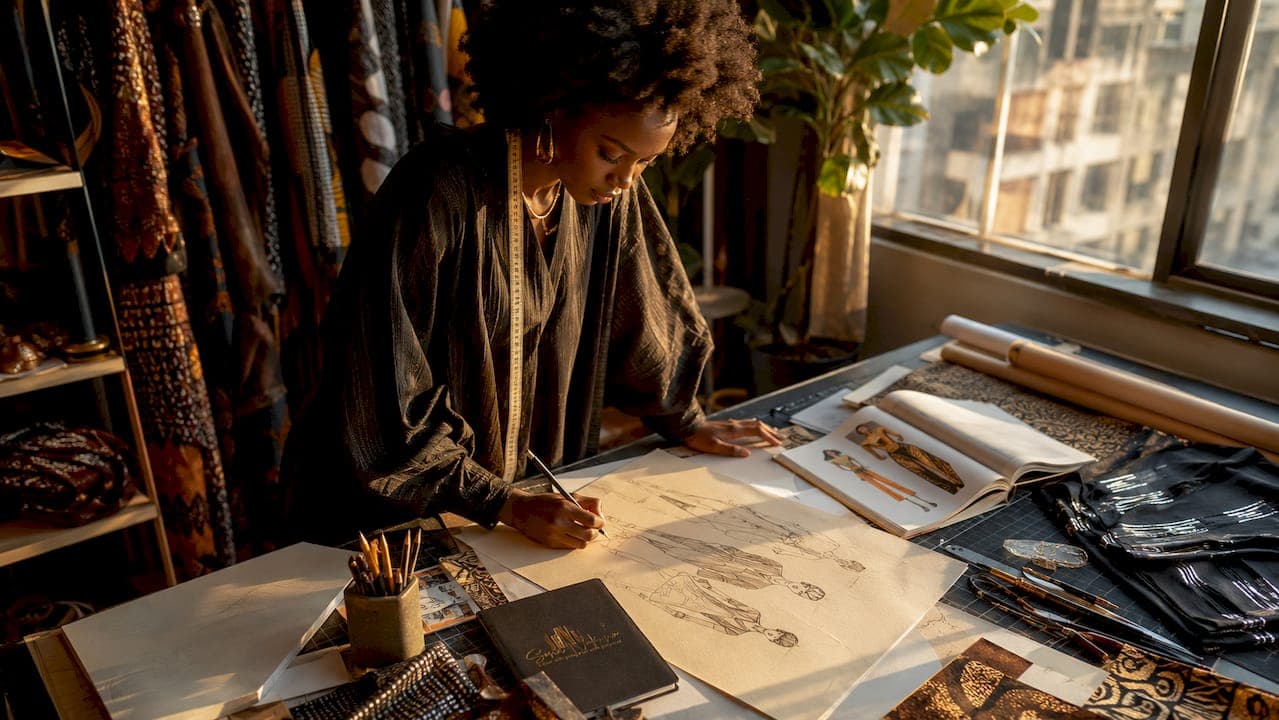
Afrofuturism in fashion is defined as a design framework that merges African ancestral heritage with futuristic innovation to envision empowered, alternative Black futures through style. Cultural critic Mark Dery coined the term in 1993, but the movement's roots run deeper, spanning over 60 years in music, literature, and visual arts before fashion fully embraced it. Think of Sun Ra's cosmic performances or Octavia Butler's speculative fiction. Each stitch and silhouette in this tradition carries the spirit of a legacy that refuses to be erased. Today, Afrofuturism shapes some of the most culturally rich and intellectually grounded collections in contemporary fashion.
What is Afrofuturism in fashion, and what defines its aesthetic?
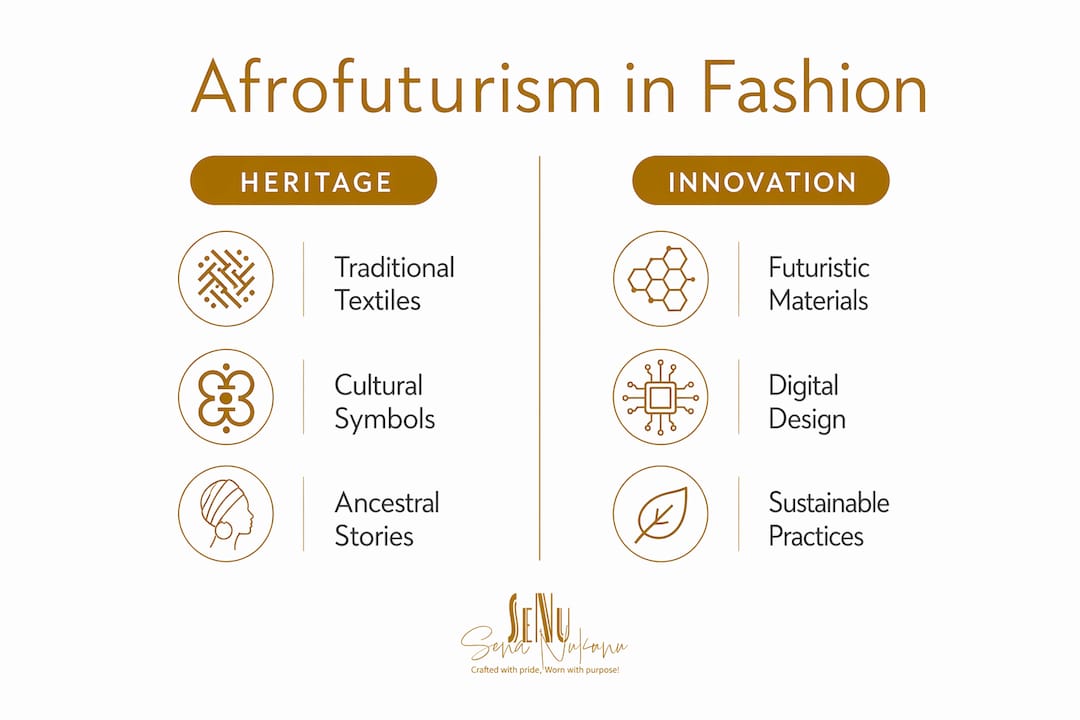
Afrofuturism in fashion blends traditional African motifs with futuristic materials to create a visual language that is both ancestral and forward-looking. The aesthetic combines raffia, kente, adire, and batik with recycled fibers, holographic treatments, and metallics. The result is a palette of metallic silvers, neon blues, and holographic greens layered over tribal patterns and oversized silhouettes. No other design framework holds that tension between deep history and radical futurity so deliberately.
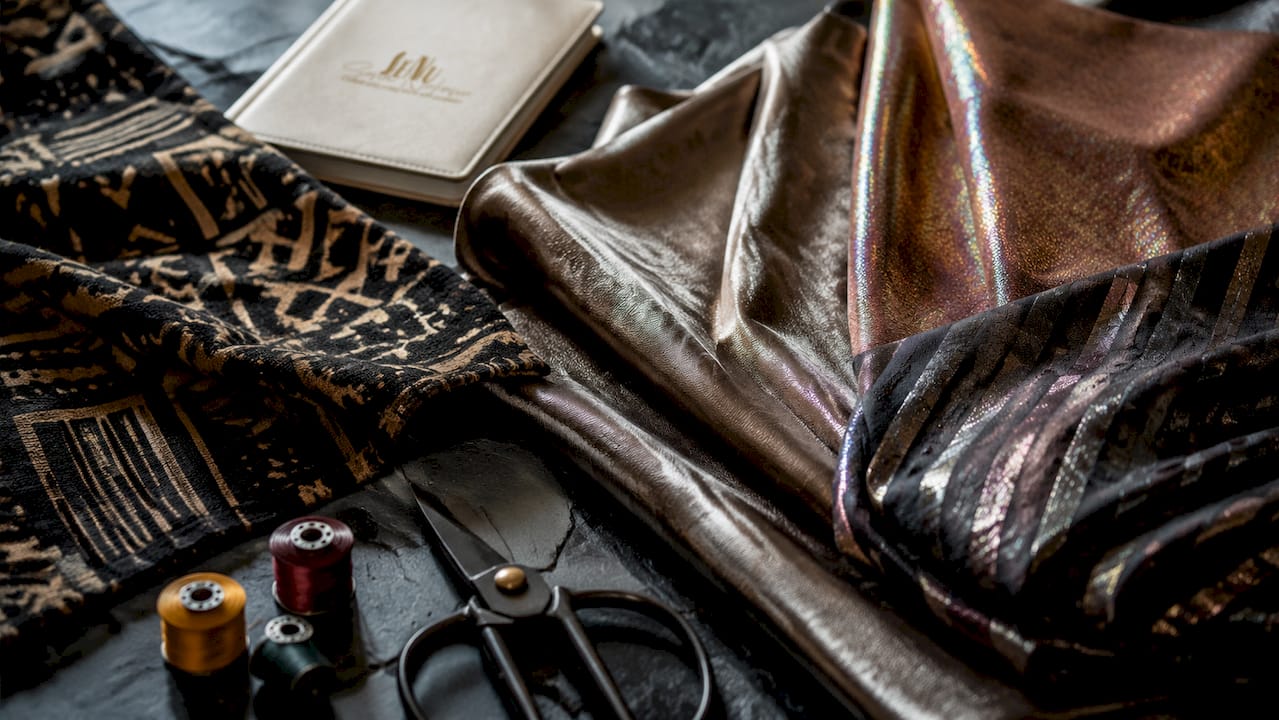
The materials carry meaning. Metallic finishes reference celestial bodies and cosmic possibility, a recurring symbol in African diasporic spiritual traditions. Sculptural forms echo the architectural grandeur of pre-colonial African kingdoms. Smart fabrics and high-tech textile treatments add a layer of technological aspiration that says: the future belongs to us, too.
Key aesthetic elements you will recognize in Afrofuturist fashion include:
- Traditional textiles reimagined: Kente, adire, and raffia appear alongside holographic and reflective surfaces.
- Neon and metallic color palettes: Silvers, electric blues, and iridescent greens dominate, often paired with earth tones.
- Oversized and sculptural silhouettes: Volume signals power and presence, drawing from both West African ceremonial dress and sci-fi imagery.
- Layered accessories: Tribal-inspired jewelry, cybernetic headpieces, and statement adornments merge ancestral symbolism with futuristic form.
- Eco-conscious materials: Recycled fibers, organic cotton, and plant-based textiles appear alongside high-tech treatments.
Pro Tip: When building an Afrofuturist look, start with one traditional textile as your anchor, then introduce a single futuristic element, such as a metallic belt or holographic layer. Restraint makes the cultural reference land with more power.
How does Afrofuturism challenge Eurocentric fashion norms?
Afrofuturism challenges Eurocentric fashion norms by placing narrative depth, cultural imagination, and sustainable innovation at the center of what makes clothing valuable. Traditional luxury fashion has long defined prestige through European heritage, archival lineage, and exclusivity. Afrofuturism redefines luxury as the power of imagination and the depth of cultural story.
This shift matters because it changes who gets to define beauty, craft, and aspiration in global fashion. The movement amplifies African and diasporic voices in an industry that has historically centered Western aesthetics. Every collection built on Afrofuturist principles is an act of cultural reclamation.
The cultural value Afrofuturism creates operates on several levels:
- Reclaiming identity through design: Garments become vehicles for telling stories of resilience, migration, and transformation that mainstream fashion rarely holds space for.
- Redefining luxury: Prestige shifts from archival European heritage to the richness of African cultural knowledge and the vision of Black futures.
- Centering sustainability as a value: Afrofuturism ties environmental responsibility to cultural integrity, making eco-conscious production an expression of respect for the land and its people.
- Creating new design vocabularies: Designers build visual languages rooted in African cosmology, spirituality, and history rather than borrowing from Western canon.
- Expanding who fashion speaks to: Collections speak directly to African and diasporic communities, offering representation that goes beyond tokenism into genuine cultural depth.
The social dimension of this movement is inseparable from the aesthetic one. When you wear a piece grounded in Afrofuturist principles, you participate in a larger story about who gets to imagine the future and what that future looks like.
How do designers apply Afrofuturism in contemporary collections?
Serious Afrofuturist designers treat the framework as a design philosophy integrating deep research on migration, history, and craftsmanship. Ikiré Jones is the clearest example of this approach in practice. The brand builds collections by combining West African textiles with precise tailoring traditions, creating garments that transcend trend cycles entirely. Their work is durable because it is grounded in intellectual depth, not surface aesthetics.
The practical process often starts with a mood board. Designers use what practitioners call Ancestral Anchors and Future Signals to structure their creative research. Ancestral Anchors include family photographs, African symbols, traditional textile samples, and historical references. Future Signals include space imagery, cybernetic forms, digital renders, and speculative architecture. Placing these two categories in dialogue produces the visual tension that defines Afrofuturist collections.
Digital storytelling has expanded what is possible. AR filters, virtual runways, and AI-driven design make Afrofuturist fashion accessible to global audiences who may never attend a physical show. This matters because it removes the gatekeeping that has historically limited African fashion's reach. A designer in Lagos or Accra can now present a collection to audiences in New York, London, and Tokyo simultaneously.
| Design approach | What it involves | Cultural function |
|---|---|---|
| Heritage textile integration | Kente, adire, raffia in contemporary cuts | Grounds the work in ancestral identity |
| Mood board methodology | Ancestral Anchors paired with Future Signals | Creates coherent narrative from abstract concept |
| Digital-first presentation | AR, virtual runways, AI-assisted design | Reaches global audiences without physical barriers |
| 3D printing and smart textiles | High-tech construction methods | Expresses technological aspiration and futurity |
Pro Tip: If you are a creative exploring Afrofuturist design, spend at least as much time on cultural research as you do on sketching. The intellectual foundation is what separates a meaningful collection from a costume.
How is Afrofuturism shaping sustainable fashion trends?
Afrofuturism and sustainability share a core conviction: that the future must be built with care for both people and the planet. Sustainable Afrofuturist fashion uses recycled fibers, organic cotton, hemp, and eco-friendly treatments alongside traditional crafts. This is not a marketing strategy. It is a design ethic rooted in the understanding that honoring ancestral land means protecting it.
The movement transforms waste into luxury. Discarded materials become raw inputs for garments that carry cultural meaning and environmental intention. Brands working within this framework often partner with artisans, ensuring that traditional craft knowledge is preserved and that the people who hold it are fairly compensated. Senanukunu reflects this commitment through its ethical artisan partnerships, producing limited-quantity pieces that honor both the maker and the wearer.
Sustainable practices common in Afrofuturist fashion today include:
- Recycled and upcycled fibers: Waste textiles are repurposed into new garments, reducing production footprint.
- Plant-based textiles: Hemp, organic cotton, and natural dyes replace synthetic alternatives.
- Traditional craft preservation: Handwoven and hand-dyed techniques reduce energy consumption and support artisan livelihoods.
- Limited production runs: Small-batch manufacturing reduces overproduction, one of fashion's most damaging habits.
- Waste transformation: Offcuts and remnants become accessories or embellishments, closing the production loop.
Consumer demand is shifting in this direction. Creatives and fashion enthusiasts increasingly seek pieces that carry vision and cultural awareness alongside quality. Afrofuturism meets that demand by making sustainability inseparable from cultural integrity. You are not just buying a garment. You are investing in a story, a community, and a future. Explore how African diaspora style is leading this shift in conscious fashion consumption.
Key Takeaways
Afrofuturism in fashion is a design framework, not a trend, and its power comes from the depth of cultural research, ancestral grounding, and futuristic vision that serious practitioners bring to every collection.
| Point | Details |
|---|---|
| Rooted in 60+ years of culture | Afrofuturism predates fashion adoption, drawing from music, literature, and visual arts. |
| Defined by aesthetic duality | Traditional African textiles meet futuristic materials, metallics, and sculptural silhouettes. |
| Challenges Eurocentric luxury | The movement redefines prestige as cultural imagination and sustainability, not European heritage. |
| Grounded in research and craft | Designers like Ikiré Jones build durable collections through deep cultural and historical inquiry. |
| Tied to ethical production | Sustainable materials and artisan partnerships are core to the Afrofuturist design ethic. |
Why Afrofuturism is the most important design conversation in fashion right now
I have watched fashion cycle through African-inspired aesthetics for years, and most of what I have seen has been surface-level. Brands borrow a print, call it "tribal," and move on. Afrofuturism is the antidote to that, and it is the reason I believe it represents the most important design conversation happening right now.
What makes it different is the intellectual demand it places on the designer. Fashion is late to this conversation that music and visual arts developed over six decades. That lateness is actually an opportunity. Designers who enter this space now with genuine curiosity and cultural respect have room to build something that lasts. The ones who treat it as a trend will be forgotten by next season.
The future of luxury is not about who has the oldest archive. It is about who has the most compelling vision. Afrofuturism offers that vision, and it does so while honoring the people whose stories make it possible. That combination of cultural depth, technological aspiration, and ethical grounding is what I believe will reshape global fashion over the next decade. The creatives who understand this early will define the next era of the industry.
— Sena
Senanukunu: where heritage meets the future
At Senanukunu, every piece is designed with the same conviction that drives Afrofuturist fashion forward: that clothing should carry meaning, honor its makers, and speak to who you are and who you are becoming.
Senanukunu's collections draw from the rich textile traditions of West Africa, crafted in limited quantities with ethical production at every step. Each dress, jacket, and matching set is a statement piece built for everyday confidence and regal presence. If the ideas in this article resonate with you, the next step is to see them expressed in fabric and form. Explore vibrant styles that merge ancestral craft with forward-thinking design, or get a first look at the latest collection before it sells out.
FAQ
What is Afrofuturism in fashion?
Afrofuturism in fashion is a design framework that merges African ancestral heritage with futuristic innovation to envision empowered Black futures through clothing. Cultural critic Mark Dery coined the term in 1993, though the movement's roots span over 60 years in music, literature, and visual arts.
What are the key visual elements of Afrofuturist style?
Afrofuturist style combines traditional African textiles like kente and adire with metallic finishes, holographic materials, neon palettes, and sculptural silhouettes. Oversized forms, layered accessories, and tribal-inspired details paired with futuristic elements define the aesthetic.
How does Afrofuturism differ from general African-inspired fashion?
Afrofuturism goes beyond surface-level African print references by grounding design in deep cultural research, speculative storytelling, and a deliberate vision of Black futures. It is an intellectual framework, not just an aesthetic borrowing.
Which designers are known for Afrofuturist fashion?
Ikiré Jones is one of the clearest examples, building collections that combine West African textiles with precise tailoring and cultural philosophy. The brand's approach treats Afrofuturism as a durable design system rather than a seasonal trend.
How can I incorporate Afrofuturism into my wardrobe?
Start with one traditional African textile as your foundation, then layer in a single futuristic element such as a metallic accessory or holographic detail. Explore West African-inspired statement pieces to build a wardrobe grounded in cultural depth and contemporary vision.