
TL;DR:
- West African fashion features six key palettes, each rooted in cultural symbols and natural dyes. Applying a 60/30/10 proportion rule enhances wearability, with natural fabrics strengthening authenticity. Supporting artisan-crafted garments ensures cultural integrity and ethical sourcing.
West African fashion carries six palettes worth knowing before you shop: Kente Gold, Adire Indigo, Bogolan Earth, Sahel Sunset, Forest Ceremony, and Coastal Harmattan. Each one pairs a warm earth-tone base with a saturated accent and a deep structural dark, and every stitch, brushstroke, and design carries the spirit of a legacy when those proportions are right.
The single styling rule that makes any of these palettes wearable: follow the 60/30/10 proportion rule — 60% dominant base (your dress or main garment), 30% supporting mid-tone (a wide sash, patterned skirt, or second piece), and 10% highlight accent (trim, jewelry, or piping). Cultural authenticity deepens further when the fabric itself tells the story: indigo-dyed cotton, hand-loomed silk, and natural-pigment mudcloth each carry a visual texture that synthetic brights simply cannot replicate.
- Kente Gold: #D4A017 / #2D6A4F / #8B1A1A / #F5E6C8
- Adire Indigo: #1B3A6B / #C8A96E / #F0EAD6 / #4A2C2A
- Bogolan Earth: #3B2A1A / #C97D3A / #E8D5A3 / #6B4C2A
- Sahel Sunset: #C0522A / #E8A030 / #F5DEB3 / #2C1810
- Forest Ceremony: #1A4A2E / #8B6914 / #D4C5A9 / #4A1A2E
- Coastal Harmattan: #7BA7BC / #C8A96E / #F5F0E8 / #2A3A2A
Table of Contents
- What are the best unique African color palettes for apparel?
- What do West African colors mean, and why does it matter for fashion?
- How to use African colors in apparel: layering, proportions, and fabric care
- Where to buy authentic West African–inspired apparel in the U.S.
- Which palette works for your occasion?
- How to build a mood board for each palette
- How to mix traditional West African palettes with modern fashion trends
- Common mistakes to avoid when using African color palettes in apparel
- Key Takeaways
- Color choices carry a legacy worth honoring
- Shop West African–inspired pieces that bring these palettes to life
- Further reading and palette resources
What are the best unique African color palettes for apparel?
The six palettes below are built around the same structural logic that African palette resources consistently surface: terracotta, ochre, sienna, and deep forest green as dominant tones, with cobalt, saffron, and deep red as accents. Each card below gives you the hex codes, a short origin note, and the garment roles where each color earns its place.
| Palette | Hex Codes | Inspiration | Best Garment Use |
|---|---|---|---|
| Kente Gold | #D4A017, #2D6A4F, #8B1A1A, #F5E6C8 | Ghanaian Kente weaving, royal ceremony | Gold sash over forest-green dress; trim on matching set |
| Adire Indigo | #1B3A6B, #C8A96E, #F0EAD6, #4A2C2A | Yoruba Adire resist-dye cloth | Indigo dress base, sand-tone blouse, warm brown trim |
| Bogolan Earth | #3B2A1A, #C97D3A, #E8D5A3, #6B4C2A | Malian mudcloth (bogolan) | Warm black kaftan, ochre accent sash, cream lining |
| Sahel Sunset | #C0522A, #E8A030, #F5DEB3, #2C1810 | Saharan landscape, terracotta pottery | Terracotta dress, amber accessories, deep espresso trim |
| Forest Ceremony | #1A4A2E, #8B6914, #D4C5A9, #4A2C2E | Rainforest ceremonial dress | Deep green agbada, bronze-gold embroidery, warm sand base |
| Coastal Harmattan | #7BA7BC, #C8A96E, #F5F0E8, #2A3A2A | West African coastline, harmattan haze | Dusty blue set, warm sand blouse, deep green piping |
A few quick notes on contrast and pattern pairing:
- Pair a bold Ankara wax-print in Kente Gold tones with a solid forest-green base; the print reads as the 30% mid-tone, not the dominant.
- In Adire Indigo, the resist-dye irregularities are the visual interest — keep the second piece solid to let them breathe.
- Bogolan Earth works beautifully as a statement jacket over a cream dress; the warm black anchors without overwhelming.
- Avoid pairing two high-contrast patterned pieces from different palettes in the same outfit — one pattern, one solid, one accent is the reliable formula.
What do West African colors mean, and why does it matter for fashion?
Color in West African dress has never been purely decorative. Choosing the right palette for the right occasion is a form of cultural fluency, and West African color symbolism runs deep across communities and textile traditions.
Core symbolic meanings, with regional context:
- Red: Life force, spiritual power, and vitality across many West African communities; in some Akan contexts, it also signals mourning — read the occasion carefully.
- White: Peace, purity, and connection to the spirit world; widely worn at naming ceremonies and rites of passage.
- Black: Maturity, ancestral connection, and the earth itself; warm blacks and deep charcoals carry more organic depth than pure black.
- Green: Growth, fertility, and renewal; forest greens from plant dyes carry a quieter, more traditional resonance than synthetic lime.
- Gold/Yellow: Royalty, wealth, and the warmth of the sun; bronze or oxidized metallics often read as more authentic than shiny bright gold because they echo traditional ironwork and cast-metal craft.
- Indigo/Deep Blue: Spirituality, harmony, and the sky; the Yoruba Adire tradition and Malian mud-dye work both draw on indigo as a foundational color.
Meanings shift by community, region, and context. A color that signals celebration in one tradition may carry ceremonial weight in another. Everyday wear calls for different choices than a wedding or a naming ceremony.
Pro Tip: For garments meant to read as traditionally grounded, favor muted natural pigments — oxidized bronze, forest green, warm ochre — over synthetic brights. The slightly irregular, lived-in quality of natural dye is itself a cultural signal.
How to use African colors in apparel: layering, proportions, and fabric care
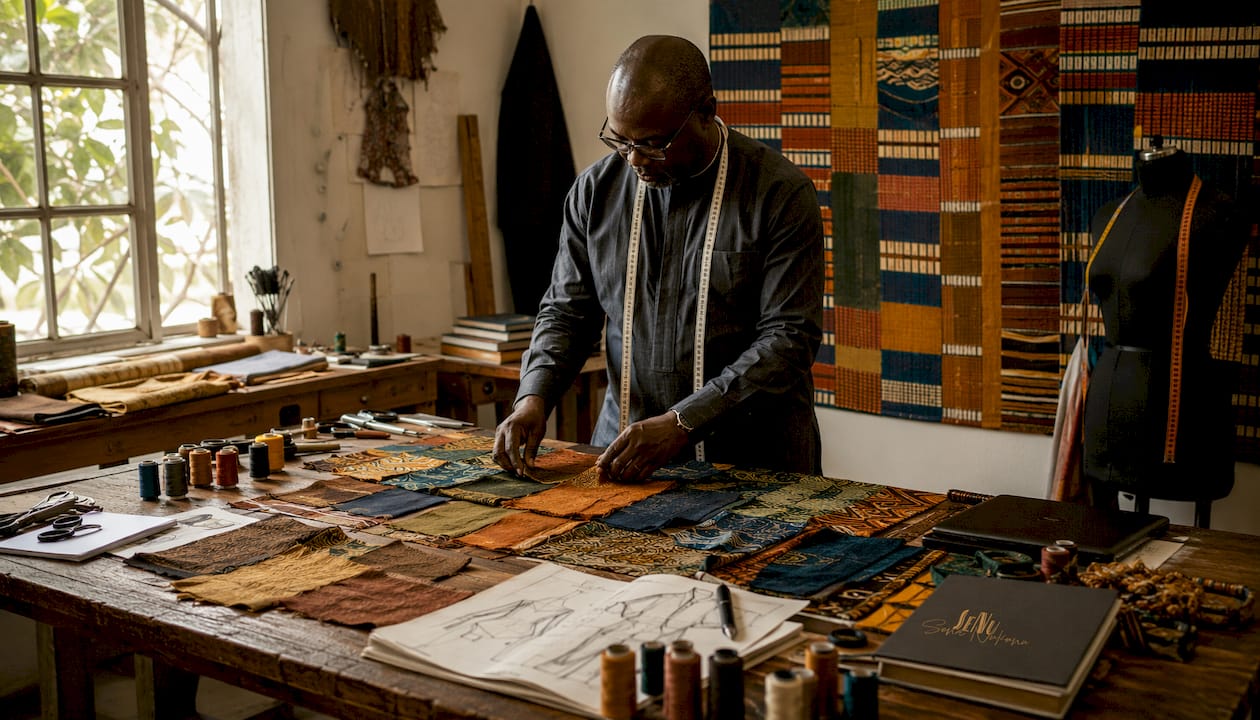
The 60/30/10 rule applied to apparel means thinking in surface area: 60% base (your dress or the largest garment piece), 30% support (a patterned skirt, wide sash, or second garment), and 10% highlights (trim, buttons, piping, or jewelry). Earth tones make the strongest bases because, as design guidance on African palettes notes, warm earth-tone backgrounds let saturated accents do their work without competing.
A practical example: a terracotta Sahel Sunset dress (60%) paired with an amber-print sash or wrap skirt (30%) and deep espresso trim or bronze earrings (10%) reads polished and intentional. Swap the terracotta for a bold wax-print and the whole composition tips into visual noise.
Pattern scale matters just as much as color. Pair a bold wax-print piece with a solid base and a single indigo accent — never two competing prints at the same scale. African prints carry cultural meaning beyond decoration, so letting one print lead respects both the craft and the eye.
Pro Tip: Natural-pigment fabrics — indigo-dyed cotton, mudcloth, hand-loomed silk — require gentle cold-water washing and shade drying. Heat and harsh detergents strip the oxidized depth that makes these colors feel alive.
Where to buy authentic West African–inspired apparel in the U.S.
Knowing what to ask separates a culturally grounded piece from a mass-printed imitation. Before you buy, ask:
- Where was the fabric woven or dyed, and by whom?
- Is this small-batch or mass-produced wax-print?
- Are the dyes natural, synthetic, or a blend?
- Does the brand share artisan stories or production transparency?
- Is fiber content labeled, and does it match the hand-feel?
Authenticity cues to look for in the piece itself: hand-dyed irregularities in the color field, hand-stitched finishes on hems and seams, labeled natural fiber content (cotton, silk, linen), and visible texture variation in the weave. These are the marks of a garment made with intention.
Choosing ethically made West African fashion means your purchase supports the artisans, the traditions, and the communities behind every pattern. A piece made in small batches, with transparent sourcing and real craft involvement, carries a story that mass production simply cannot replicate. Ask the questions. The answers tell you everything.
Senanukunu is built around exactly this standard — ethically made West African pieces in limited quantities, with artisan involvement and cultural storytelling woven into every collection.
Which palette works for your occasion?
- Kente Gold: Wedding (gold sash over forest-green dress); festival (full Kente-inspired matching set); evening event (gold trim on deep red gown).
- Adire Indigo: Casual weekend (indigo wrap dress, sand-tone sandals); work (indigo blouse, warm cream trousers); naming ceremony (full indigo set with bronze jewelry).
- Bogolan Earth: Casual everyday (warm black kaftan, ochre scarf); art gallery or cultural event (mudcloth jacket over cream dress); formal dinner (deep brown agbada, cream lining).
- Sahel Sunset: Festival (terracotta and amber matching set); casual brunch (terracotta dress, simple gold trim); evening (muted sunset tones with deep espresso accessories).
- Forest Ceremony: Wedding guest (deep green dress, bronze-gold embroidery); formal evening (forest green agbada, warm sand base); cultural celebration (full ceremonial palette).
- Coastal Harmattan: Work (dusty blue blouse, warm sand trousers); casual (full Coastal set, minimal accessories); summer event (light palette with deep green piping as the only accent).
Bright accents belong at festivals and weddings, where visual energy is part of the occasion. For work and formal evening settings, muted tones with a single metallic accent carry more authority. One caution: small silhouettes with multiple high-contrast accents read as busy rather than bold — keep the 10% highlight rule firm when the garment is fitted.
How to build a mood board for each palette
A mood board does one thing well: it shows you how a palette feels before you commit to fabric. For each of the six palettes, gather three to five reference images — a textile swatch, a landscape or natural material in the palette's dominant tone, and one styled look. AfroTools' palette generator offers 50+ curated hex palettes with cultural origin notes, and you can export hex codes directly into a digital board on Canva or Adobe Color.
For Adire Indigo, anchor your board with a photograph of actual resist-dyed cloth — the irregular white-on-indigo pattern is the mood. For Bogolan Earth, a piece of genuine mudcloth sets the tone better than any digital swatch. Physical fabric swatches, when you can get them, are always more reliable than screen color.
How to mix traditional West African palettes with modern fashion trends
The most effective approach is to let one traditional palette element lead and bring in a modern silhouette or cut as the contrast. A Kente Gold color story in a contemporary wrap dress reads fresh without losing its roots. An Adire Indigo palette in a tailored blazer-and-trouser set works for a modern professional wardrobe while honoring the textile tradition.
African diaspora style trends increasingly pair earth-tone bases with minimalist modern cuts — the palette stays traditional, the silhouette stays current. Avoid the opposite move: a very modern, maximalist silhouette in a synthetic approximation of traditional colors reads as costume rather than culture. The palette's integrity matters more than the cut.
One practical rule: when mixing a traditional print with a modern trend piece, keep the trend piece in a solid neutral from the same palette. The print carries the heritage; the modern piece carries the shape.
Common mistakes to avoid when using African color palettes in apparel
The most common error is treating African palettes as interchangeable with any bold, saturated color scheme. West African color traditions are specific — the warmth of the earth tones, the depth of the darks, and the restraint of the accents are all intentional. Replacing a warm ochre with a neon yellow, or a forest green with a lime, loses the palette's cultural coherence entirely.
A second mistake: using pure black as a neutral base. Warm blacks and deep charcoals reproduce the depth of natural textiles far better and harmonize with the earth tones that anchor these palettes. Pure black flattens the composition.
Third: over-accessorizing. When a garment already carries a bold wax-print or an intricate embroidery, adding multiple high-contrast accessories competes with the craft. One strong accent piece — a bronze cuff, a beaded necklace in the palette's highlight color — is enough.
Finally, avoid mixing palettes from different regional traditions in a single outfit without a clear visual anchor. Kente Gold and Adire Indigo can coexist, but one must lead and the other must support — never two equals competing for dominance.
Key Takeaways
West African–inspired apparel reads as authentic and polished when you commit to one palette, apply the 60/30/10 proportion rule, and let fabric and dye quality carry the cultural weight.
| Point | Details |
|---|---|
| Use the 60/30/10 rule | Assign 60% to your base garment, 30% to a second piece or sash, and 10% to trim or jewelry. |
| Earth tones anchor every palette | Terracotta, ochre, warm black, and forest green make the strongest garment bases across all six palettes. |
| Ask sourcing questions | Small-batch production, natural dyes, and artisan involvement are the clearest authenticity signals when buying. |
| One palette at a time | Master one palette's proportions before mixing regional traditions — two competing palettes need a clear visual anchor. |
| Senanukunu | Offers limited-quantity, ethically made West African pieces — dresses, kaftans, and sets — curated around these palette principles. |
Color choices carry a legacy worth honoring
What strikes me most, working with West African color traditions, is how little room there is for accident. Every palette decision in this tradition was made for a reason — the ochre came from the earth underfoot, the indigo from a plant tended across generations, the gold from a ceremony that marked a life's turning point. When you choose a color for a garment, you are choosing what story it tells.
The brands and makers worth supporting are the ones who know that story and can tell it back to you. Senanukunu sources pieces with that standard in mind — limited quantities, real craft, transparent origins. For readers who want to go deeper into the cultural background behind these color choices, the Senanukunu blog on color in West African clothing is a good place to start.
Shop West African–inspired pieces that bring these palettes to life
The palettes in this guide are not abstractions. They exist in real garments — in the indigo depth of a hand-dyed dress, the ochre warmth of an embroidered kaftan, the forest-green richness of a matching set made in small batches by artisans who know exactly what they are making.
Senanukunu carries ready-to-wear dresses and statement sets built around these West African color traditions, each piece made with ethical production and cultural intention. If you want something made to your palette and proportions, the custom services page is where to start. Browse the full collection at Senanukunu and find the piece that carries your story.
Further reading and palette resources
| Resource | What It Offers |
|---|---|
| Senanukunu: Color in West African Clothing | In-depth cultural guide to color symbolism in West African dress |
| Senanukunu: Color Symbolism in African Patterns | Pattern-by-pattern breakdown of color meaning and regional context |
| AfroTools Palette Generator | 50+ curated hex palettes with cultural origin notes and export options |
| ColorAccy African Palette | Recurring dominant tones and accent combinations with hex codes |
| The African Geeks: Canva Palettes | Practical palette construction with primary, secondary, neutral, and accent guidance |
| Colorblend Interiors: Afro Bohemian Palettes | Named palette examples with real-material application notes |
When ordering custom pieces, always request fabric swatches before committing to a color. Screen color and physical dye are two different things, and the difference matters most with natural-pigment fabrics.