
TL;DR:
- Inclusive fashion campaigns succeed when they combine authentic representation with real product changes.
- Brands like Fenty Beauty and Aerie demonstrate that structural commitments build consumer trust and credibility.
The most influential examples of inclusive fashion campaigns share one quality: they changed something real, whether a product line, a casting policy, or a creative team, rather than simply swapping in a more diverse face. Here are eight standout campaigns worth studying, organized by type of inclusion, with short analyses of what each brand actually did and why it resonated.
Quick reference: campaigns to know
- Fenty Beauty (2017) — foundation launch that redefined shade inclusion across the beauty and fashion industry
- Dove — "Campaign for Real Beauty" (2004–ongoing) — unretouched photography and real-body casting that set the template for body-positive advertising
- Aerie — #AerieREAL (2014–ongoing) — Photoshop-free imagery and models with visible disabilities and medical devices
- Tommy Hilfiger Adaptive (2017–ongoing) — adaptive clothing line with magnetic closures, paired with representational advertising
- Nike — "Dream Crazier" and women's empowerment campaigns (2019) — diverse athlete casting and messaging that tied product to identity
- Lane Bryant — #ImNoAngel (2015) — direct challenge to Victoria's Secret's narrow beauty standard
- Universal Standard — size-inclusive retail from 00–40, with campaigns that showed the same garment on bodies across the full range
- Chromat — New York Fashion Week runway casting that included plus-size, transgender, and disabled models years before it was industry standard
Each section below unpacks a category of inclusion, names the creative choices that made campaigns credible, and closes with practical lessons you can carry into your own work.
Table of Contents
- 1. Size and body diversity campaigns that actually moved the needle
- 2. Race and representation: campaigns that expanded cultural visibility
- 3. Gender and LGBTQ+-forward campaigns worth studying
- 4. Disability and adaptive-fashion campaigns that normalized diverse bodies
- 5. Other notable moments: age, stretch marks, cultural heritage, and single movements
- 6. What made the best inclusive campaigns succeed
- Key Takeaways
- What inclusive fashion actually demands, and why most brands still miss it
- Useful sources and further reading
1. Size and body diversity campaigns that actually moved the needle
Body-positive advertising has existed for decades, but only a handful of campaigns paired the messaging with structural product changes. Those are the ones worth studying.
Dove — "Campaign for Real Beauty" (2004–ongoing) Dove's campaign is the most cited example in this category for a reason. Launched in 2004, it featured women of varying ages, sizes, and skin tones in unretouched photography, at a time when every major beauty brand was doing the opposite. The creative team commissioned independent research on women's relationship with beauty before writing a single brief, and the campaign's "Evolution" film (2006), directed by Tim Piper, showed a model's transformation through hair, makeup, and digital retouching in a short film that went viral. The campaign demonstrated the impact of unretouched images on consumer awareness and media literacy. Dove's commitment held across years, not just one season.
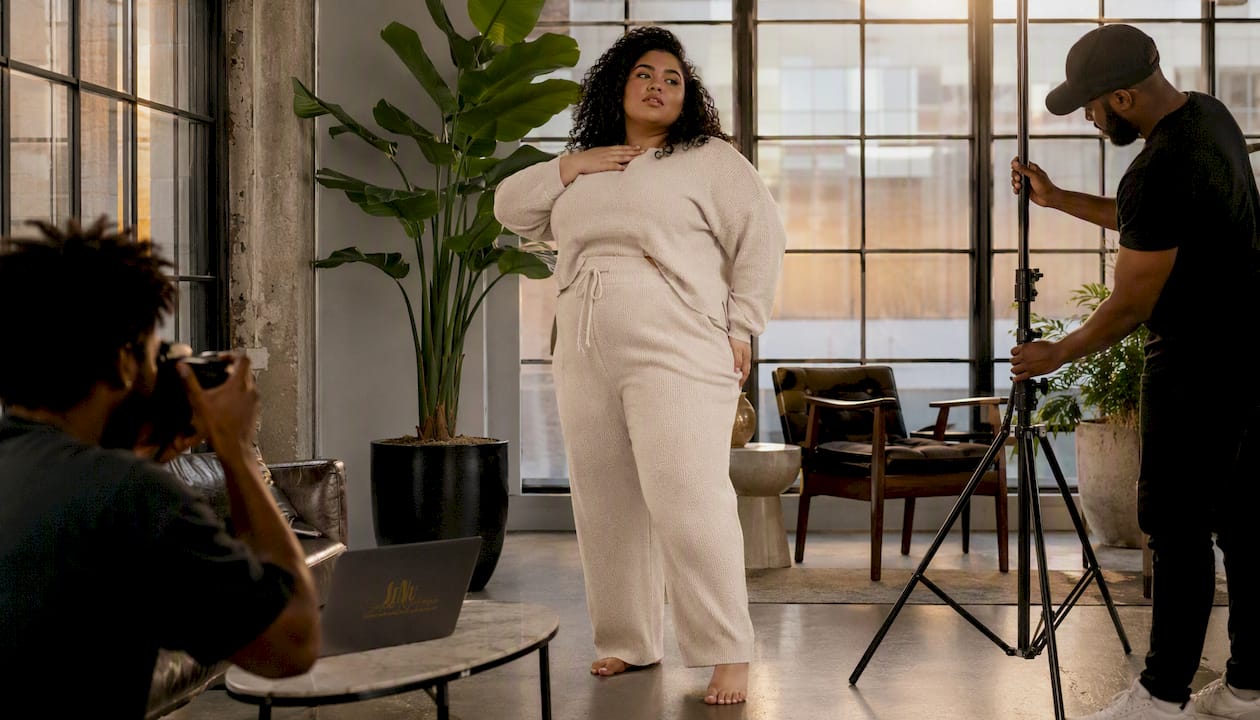
Aerie — #AerieREAL (2014–ongoing) American Eagle's Aerie sub-brand pledged to stop retouching model photos in 2014, and it kept that promise. Aerie's ads have featured models with visible disabilities, including prosthetic limbs, colostomy bags, and insulin pumps, without hiding or cropping those details. The brand reported sales growth in the years following the campaign's launch, and the unretouched commitment became a trust signal that attracted values-driven shoppers who had grown skeptical of digitally altered imagery.
Lane Bryant — #ImNoAngel (2015) Lane Bryant's campaign was a direct, confident response to Victoria's Secret's "Perfect Body" campaign. The brand cast plus-size models in lingerie, used the tagline "I'm No Angel" as a pointed contrast to Victoria's Secret's "Angels," and ran the campaign across national media. The creative choice was clear: name the comparison, own the contrast, and let the models speak for themselves. The campaign generated significant earned media and social conversation without a large paid-media budget.
Universal Standard — size-inclusive retail (ongoing) Universal Standard built its entire brand premise around the claim that a size 6 and a size 36 deserve the same shopping experience. The brand offers clothing from size 00 to 40 and runs campaigns showing the same garment on bodies across that full range, not just a token plus-size model alongside straight-size peers. That product-first approach is what separates Universal Standard from brands that add a "curve" section as an afterthought.
Checklist for body-positive campaign planning:
- Cast models across the full size range your product actually serves
- Credit photographers, stylists, and casting directors by name in campaign materials
- Commit to unretouched imagery in writing, publicly, before launch
- Pair the campaign with a real product change (extended sizing, inclusive fit notes)
- Plan for at least two campaign cycles so the commitment reads as policy, not stunt
2. Race and representation: campaigns that expanded cultural visibility
The most credible racial and cultural representation campaigns did more than cast diverse faces. They hired photographers and consultants from the communities they were representing, and several linked the campaign directly to a product change.
Fenty Beauty — 40-shade foundation launch (2017) Rihanna's Fenty Beauty launched with 40 foundation shades, covering undertones that most brands ignored entirely. The product launch was the campaign. Every piece of advertising showed models with the shades matched to their actual skin, and the brand's social media featured customers across the full range. Fenty's launch prompted what the industry called the "Fenty Effect," pushing competitors to expand their own shade ranges within months. That is the clearest example of a campaign creating industry-wide structural change.
Chromat — NYFW inclusive runway (2014–ongoing) Chromat's New York Fashion Week shows cast plus-size, transgender, and disabled models years before those choices became common. Designer Becca McCharen-Tran built community relationships with models and activists, and the runway became a recurring statement rather than a one-time gesture. The brand's casting choices were credited in press coverage as a direct influence on other designers who began expanding their own runway diversity.
Pinko — REIMAGINE collection Pinko's REIMAGINE collection combined inclusive casting, including plus-size and male models, with sustainable materials, making the campaign a dual statement about both representation and ethical production. The collection's press materials named the materials and sourcing choices alongside the casting decisions, which gave critics and consumers a fuller picture of the brand's commitments.
H&M — diverse casting efforts (ongoing) H&M has run several campaigns featuring models of different races, ages, and sizes, though the brand's record is mixed. Its most credible moments came when casting choices were paired with accessible price points and broad distribution, making the representation feel connected to the brand's actual customer base rather than aspirational imagery.
| Type of inclusion | Brand and campaign | Year | What changed | Notable creative choice | Practical takeaway |
|---|---|---|---|---|---|
| Shade/product | Fenty Beauty launch | 2017 | Expanded foundation shade range | Product IS the campaign | Pair representation with real product access |
| Size and gender | Pinko REIMAGINE | Ongoing | Plus-size and male casting | Sustainability + diversity combined | Credit sourcing alongside casting |
| Runway diversity | Chromat NYFW | 2014–ongoing | Casting policy | Community-built model relationships | Build ongoing relationships, not one-off bookings |
| Racial diversity | H&M diverse campaigns | Ongoing | Casting breadth | Accessible price + broad distribution | Tie representation to actual customer access |
What made these campaigns credible:
- Product changes that matched the campaign's claims (extended shades, inclusive sizing)
- Photographers and creative directors from the communities represented
- Ongoing commitments rather than single-season efforts
- Cultural storytelling that named heritage and craft, not just aesthetics
3. Gender and LGBTQ+-forward campaigns worth studying
Gender-inclusive and LGBTQ+-forward campaigns carry a particular authenticity risk: audiences are quick to identify when a brand's support is limited to Pride Month. The campaigns that held up over time made structural commitments and involved LGBTQ+ creatives in the work itself.
-
Gillette — "First Shave" (2019): Gillette's short film featured Samson Bonkeabantu Brown, a transgender man, shaving for the first time with his father's guidance. The film was directed with care and credited the family's real story. It generated significant press coverage and social conversation, and Gillette's decision to feature a trans man in a product category historically marketed exclusively to cisgender men was a genuine departure from category norms.
-
Nike — "Dream Crazier" (2019): Narrated by Serena Williams and directed by Kim Gehrig, this campaign featured women athletes across disciplines, including athletes who had faced public criticism for emotional displays or physical appearance. The campaign's gender-inclusion angle was tied directly to Nike's athlete roster, making the casting feel earned rather than borrowed. It aired during the Academy Awards and generated wide earned media.
-
Tommy Hilfiger Adaptive — inclusive design campaigns (2017–ongoing): Tommy Hilfiger's Adaptive line was designed for people with disabilities, featuring magnetic closures, adjustable hems, and one-handed fastening options. The campaigns featured models with disabilities wearing the clothes in real-life contexts, not studio settings, which made the representation feel grounded. The line's ongoing presence in the brand's catalog signals a product commitment, not a one-time gesture.
Pro Tip: Involve LGBTQ+ photographers, directors, and stylists in the creative process before casting. The difference between a campaign that earns community trust and one that draws backlash often comes down to who held the camera and who wrote the brief, not just who appeared in front of the lens.
Common backlash patterns and how successful campaigns avoided them:
- Limiting LGBTQ+ visibility to Pride Month only (mitigated by year-round campaigns and product commitments)
- Casting LGBTQ+ talent without crediting or compensating community consultants (mitigated by named credits and transparent partnerships)
- Reverting to traditional casting after one inclusive cycle (mitigated by multi-year commitments and policy statements)
4. Disability and adaptive-fashion campaigns that normalized diverse bodies
Adaptive fashion campaigns work best when the product design and the advertising are developed together, so the representation reflects something the brand actually built, not just borrowed.
Tommy Hilfiger Adaptive (2017–ongoing) The Adaptive line's campaign photography showed models with limb differences, wheelchair users, and people with sensory sensitivities wearing the clothes in everyday settings. The product features, including magnetic buttons and adjustable waistbands, were explained in campaign copy alongside the imagery, connecting the visual representation to a functional reality.
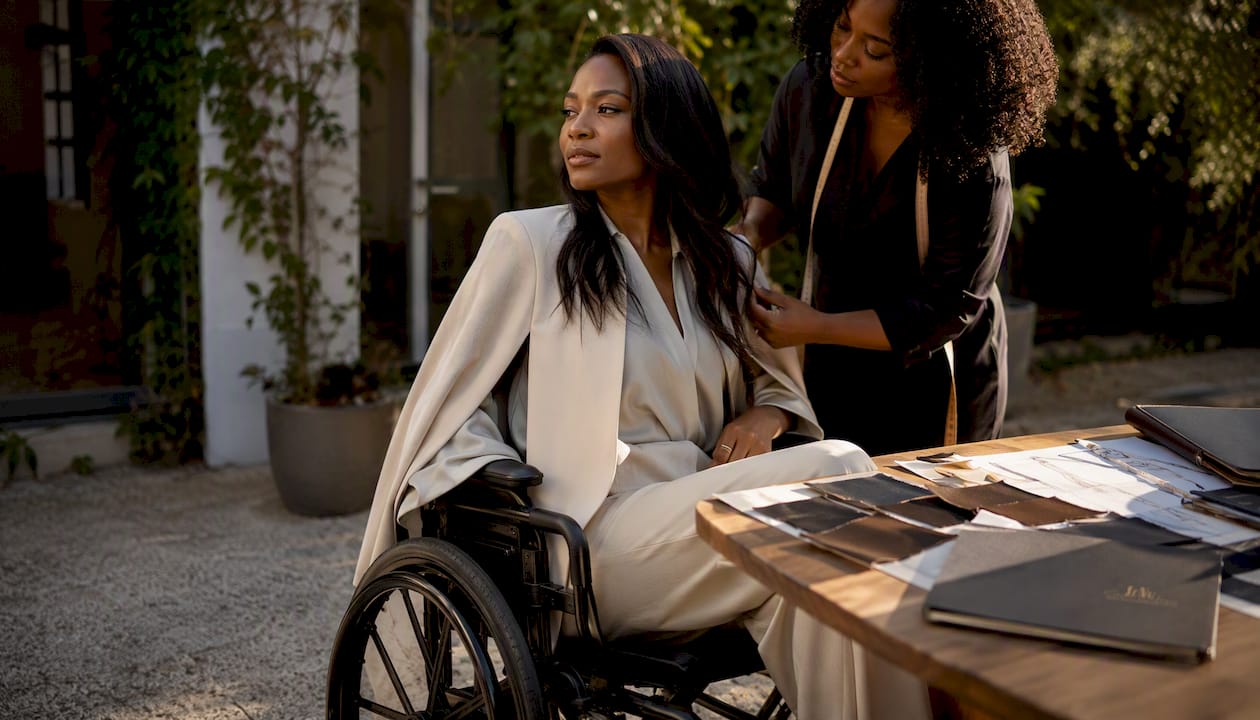
Aerie — #AerieREAL disability inclusion Aerie's ongoing commitment to unretouched imagery featuring models with disabilities extended to visible medical devices, prosthetics, and mobility aids. The brand did not crop or retouch these details, which made the representation feel honest rather than curated. That choice also served a practical function: shoppers with disabilities could see how garments fit on bodies like theirs.
Primark — adaptive lingerie photoshoot Primark's adaptive lingerie campaign hired photographer Esme Moore, who described the shoot as "re-education as much as marketing." Moore's account emphasized that having disabled creatives behind the camera changed how the shoot was directed, what was considered beautiful, and how models were coached. That staffing choice is what marketing scholars on authentic inclusion identify as a key differentiator between performative and credible campaigns.
Burberry — children's campaign with Down syndrome model Burberry featured a child model with Down syndrome in a children's campaign, demonstrating that disability inclusion is reaching the luxury segment. The coverage noted the family's positive experience and the brand's straightforward approach: the child was cast, styled, and photographed like any other model in the campaign.
Accessibility checklist for adaptive campaign planning:
- Recruit talent through disability-led agencies and community organizations
- Book sets that are physically accessible for wheelchair users and mobility aids
- Show assistive devices (prosthetics, hearing aids, insulin pumps) without cropping or retouching
- Include audio descriptions and captions in all video content
- Credit disabled photographers, stylists, and consultants by name in campaign materials
- Write product copy that explains adaptive features clearly, not euphemistically
5. Other notable moments: age, stretch marks, cultural heritage, and single movements
Some of the most influential moments in diversity in fashion advertising did not fit neatly into a product category or a sustained campaign. They were single images, runway moments, or heritage-driven collections that shifted public conversation.
Ashley Graham — Sports Illustrated Swimsuit Issue (2016) Ashley Graham became the first plus-size model to appear on the cover of Sports Illustrated's Swimsuit Issue. The cover generated national press coverage and social conversation about body standards in sports media. Graham's visibility in that specific context, a publication historically associated with a narrow beauty ideal, made the moment symbolically significant beyond fashion.
Dove — "Evolution" film (2006) The 75-second film showing a model's transformation through retouching earned more than 1.7 million views in its first month without paid distribution. It became a reference point in media literacy education and is still cited in academic work on advertising and body image.
Nike — "Dream Crazier" (2019) Serena Williams' narration of this film, which aired during the Academy Awards, connected women's athletic achievement to a broader conversation about gender bias. The campaign's cultural reach extended well beyond Nike's existing audience.
Senanukunu — West African heritage storytelling (ongoing) Celebrating West African heritage through ethical fashion is a form of cultural representation that the mainstream fashion industry has historically underrepresented. Campaigns that center African textile traditions, artisan credits, and ethical sourcing tell a fuller story than those that borrow aesthetics without attribution.
Microsoft — accessibility-focused campaigns Microsoft's advertising for adaptive technology, including the Xbox Adaptive Controller, featured people with disabilities using the products in real contexts. The campaigns credited disabled gamers and advocates by name and tied the advertising directly to product design decisions made in consultation with the disability community.
A note on heritage campaigns and ethical sourcing: When a campaign draws on a specific cultural heritage, naming the artisans, crediting the textile traditions, and publishing ethical sourcing information are not optional extras. They are the difference between cultural celebration and cultural extraction. Culturally inspired fashion earns credibility when the brand can show the supply chain behind the story.
When a single moment becomes sustained change: A cover, a film, or a runway appearance becomes lasting only when the brand follows it with policy evidence: extended sizing that stays in the catalog, adaptive products that remain in production, or casting commitments that hold across multiple seasons. Without that follow-through, a single moment reads as a publicity gesture.
6. What made the best inclusive campaigns succeed
The single most important success factor across every category is authenticity through community involvement and product alignment. Marketing scholars find that inclusion works best when it reflects the brand's actual customer base, not an aspirational image of who the brand wishes it served. Campaigns that cast diverse models while selling products in a narrow size range, or that feature disability representation while running inaccessible websites, create a credibility gap that audiences notice quickly.
Diversity in advertising does sell and supports long-term loyalty, but only when the representation is backed by product access. Fenty Beauty's 40-shade launch worked because the shades existed. Aerie's unretouched imagery worked because the brand committed to it across every product category, not just one seasonal shoot.
Actionable checklist for marketers:
- Audit your product line before writing the brief: does the product actually serve the communities you plan to represent?
- Hire diverse creative teams, including photographers, directors, and stylists with lived experience in the communities featured
- Credit and compensate community consultants named in campaign materials
- Commit to unretouched imagery in writing, and apply it consistently across all channels
- Set measurable goals: engagement rate, earned media reach, sales lift in underserved size or demographic segments
- Plan for at least two campaign cycles so the commitment reads as policy
- Publish product and sourcing information alongside campaign imagery so the representation feels grounded in real practice
Budget and scope note: Inclusive campaigns do not require large budgets. Aerie's early #AerieREAL work relied on the commitment to unretouched photography, not expensive production. Chromat's NYFW casting was a policy decision, not a budget line. The highest-cost element is often the community consultation and relationship-building that makes campaigns credible, and that investment pays back in earned media and long-term loyalty.
A U.S.-based DTC example brief: A small direct-to-consumer apparel brand in the U.S. could launch an inclusive campaign by: partnering with a disability-led casting agency, committing to unretouched photography across its product pages, extending its size range by at least four sizes, and crediting every creative team member by name in campaign materials. The campaign's first metric should be earned media reach, not paid impressions, because credible inclusion generates press coverage that paid advertising cannot replicate.
Fashion activism and inclusive marketing overlap when brands tie their campaigns to real policy changes. That is the standard the best campaigns have set.
Key Takeaways
The most effective inclusive fashion campaigns pair authentic representation with real product changes, making the commitment visible in both the advertising and the catalog.
| Point | Details |
|---|---|
| Product alignment is non-negotiable | Campaigns that represent communities the product does not actually serve lose credibility fast. |
| Diverse creative teams matter most | Hiring photographers and directors with lived experience separates credible campaigns from performative ones. |
| Unretouched imagery builds trust | Committing to Photoshop-free photography signals respect for real bodies and attracts values-driven shoppers. |
| Single moments need follow-through | A cover or runway appearance becomes lasting only when backed by ongoing product and casting policy. |
| Earned media outperforms paid reach | Credible inclusive campaigns generate press coverage and social conversation that paid advertising cannot replicate. |
What inclusive fashion actually demands, and why most brands still miss it
Most brands approach inclusive campaigns as a creative brief problem. They ask: who should we cast, what should the imagery look like, and how do we avoid backlash? Those are the wrong first questions. The right question is: does our product actually serve the people we want to represent?
Fenty Beauty's 40-shade launch was not primarily a marketing decision. It was a product decision that happened to generate the most effective marketing in the beauty industry's recent history. The campaign worked because the product existed. Every brand that tried to replicate Fenty's cultural impact by diversifying its advertising without changing its product line learned that lesson the hard way.
The same pattern holds for adaptive fashion. Tommy Hilfiger Adaptive's campaigns earned credibility because the magnetic closures and adjustable hems were real, tested with disabled users, and available for purchase. Primark's adaptive lingerie shoot earned credibility because a disabled photographer directed it. Those are structural choices, not creative ones.
What I find most instructive about the campaigns in this article is how few of them required a large budget. Aerie's unretouched commitment cost less than a retouching budget. Chromat's casting policy cost less than a traditional model agency fee. The investment that mattered was relational: time spent with communities, honest conversations about what representation actually means, and the willingness to change the product alongside the advertising.
For brands rooted in cultural heritage, like Senanukunu, that relational investment is already built into the work. Every piece carries artisan credits, ethical sourcing information, and a story that belongs to the community that made it. That is the standard inclusive fashion campaigns are still working toward, and it is worth naming clearly.
Useful sources and further reading
-
Diversity Representations in Advertising: Enhancing Variety Perceptions and Brand Outcomes — Academic research showing that diverse model casting creates a perception of greater product variety and improves brand outcomes. Useful for marketers building a business case for inclusive campaigns.
-
Diversity in Fashion Advertising Does Sell (Business of Fashion) — Industry op-ed arguing that authentic representation drives commercial returns and long-term loyalty. Useful as a counterargument to brands that treat inclusion as a risk rather than an opportunity.
-
Marketing Scholars on Authentic Inclusion (Springer) — Academic study arguing that brands must move beyond superficial diversity casting to authentically reflect their customer base. Core reading for the authenticity checklist.
-
12 of the Most Iconic and Inclusive Fashion Campaigns of All Time (Mic) — Roundup of landmark campaigns with context on why each mattered. Useful as a historical reference and for identifying campaigns that generated earned media.
-
Behind the Scenes of Primark's Adaptive Lingerie Photoshoot — First-person account from photographer Esme Moore describing the creative process and the importance of disabled creatives behind the camera. Essential reading for disability campaign planning.
-
Aerie Ads Feature Models with Disabilities (Today) — Press coverage of Aerie's #AerieREAL disability inclusion work, including unretouched imagery and visible medical devices. Useful as a case study in sustained commitment.
-
Bath Child Model with Down's Syndrome Selected by Burberry (BBC) — Coverage of Burberry's children's campaign featuring a model with Down syndrome. Useful as an example of disability inclusion reaching the luxury segment.
-
Pinko REIMAGINE — Collection and Inclusion Notes — Press release describing Pinko's inclusive casting and sustainable materials. Useful as an example of combining diversity and sustainability commitments in a single campaign.
-
Universal Standard — Size-Inclusive Fashion from 00–40 — Brand site demonstrating a product-first approach to size inclusion. Useful as a reference for brands planning to extend their size range alongside inclusive advertising.
-
Why Inclusive Fashion Empowers All Backgrounds and Cultures — Senanukunu — Senanukunu's perspective on inclusive fashion as a cultural and ethical practice. Useful for readers who want a brand example from the publisher.
-
The Role of Identity in Fashion: Express Who You Are — ANARXHY — Commentary on how fashion functions as identity expression, with relevance to campaigns that center cultural and personal representation.
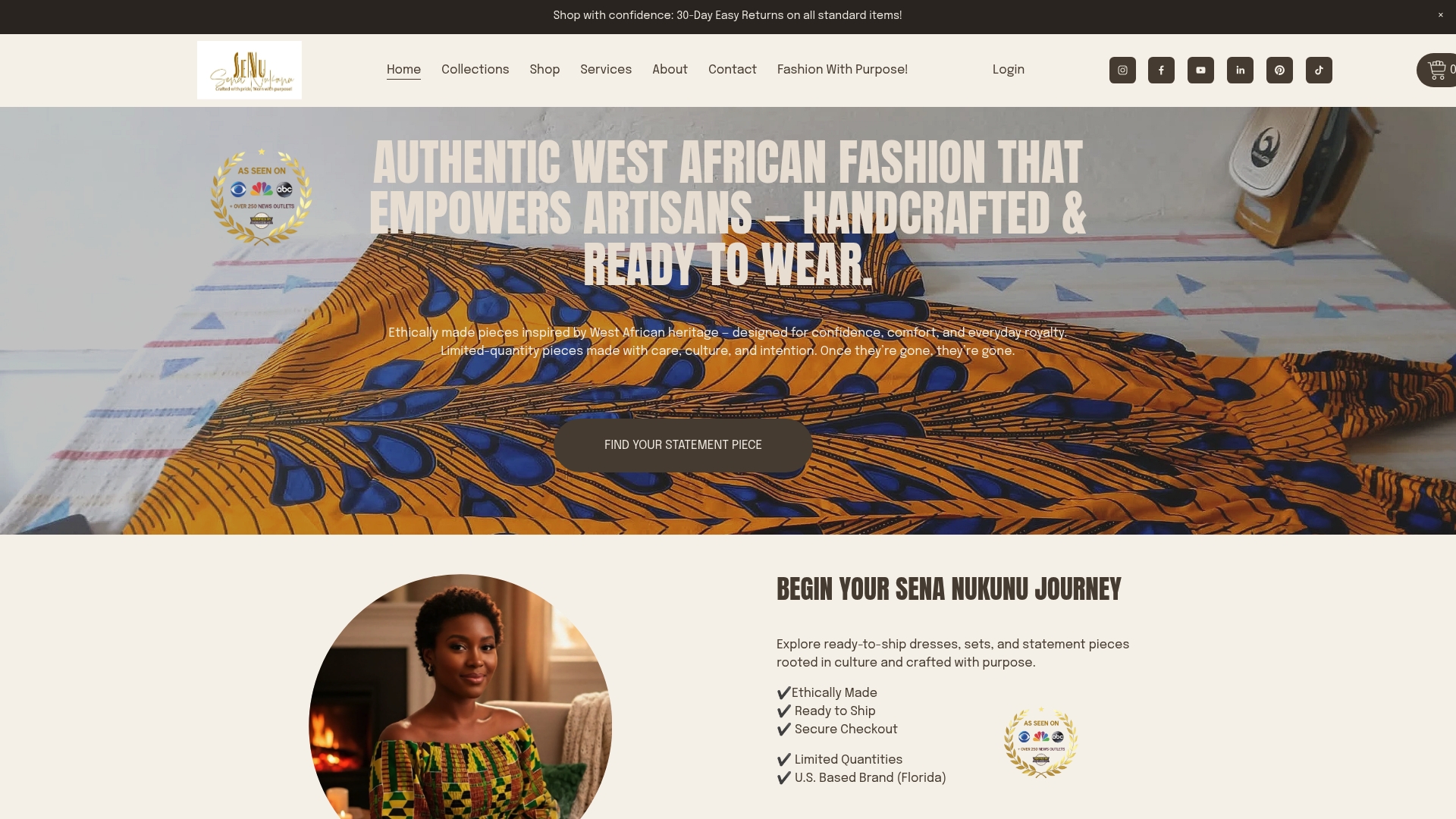
Senanukunu's ready-to-wear collection is built on the same principles the best inclusive campaigns practice: artisan credits, ethical sourcing, and clothing made for real bodies in limited quantities that honor the craft behind every piece. If you are researching what genuine cultural representation looks like in practice, explore Senanukunu's full range and see how West African heritage translates into wearable, purposeful fashion.