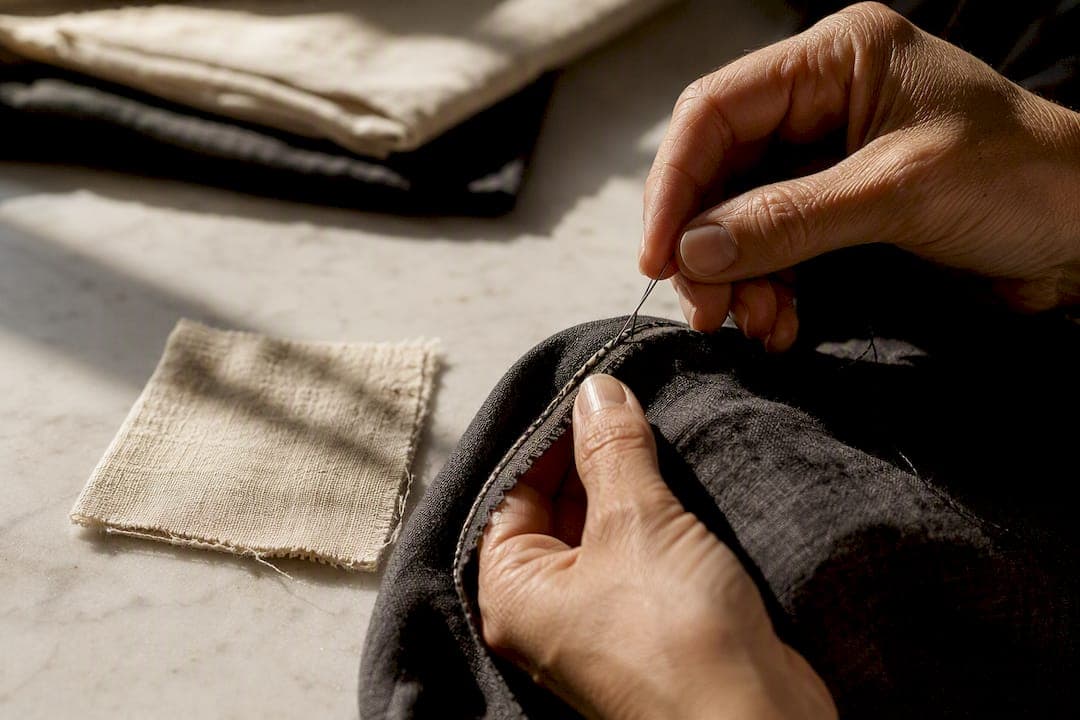
Artisan made clothing is any garment shaped by a skilled maker's hands, in small quantities, using techniques that resist full automation. Some pieces take days, others take months, and the value sits in that time, not in a logo. If you're shopping for something real, watch materials, technique, and maker transparency before you watch price. Brands like Senanukunu, building West African inspired pieces in limited runs, show what that transparency looks like in practice.
TL;DR:
- Genuine artisan clothing involves small batch runs, significant maker involvement, and handmade tools like looms and dye vats, distinguishing it from mass-produced apparel.
- Natural fibers such as cotton, linen, silk, and wool are typical in artisan garments due to their durability and ability to hold dyes, with techniques like handweaving and block printing adding unique character.
- Authentic pieces often feature irregularities in seams, pattern placement, or fabric edges, which can be verified through tactile inspection rather than relying solely on photos.
- Provenance cues include maker stories, limited runs, visible craftsmanship details, and transparent fabrication processes, especially when buying directly from small brands or craft markets.
- Price, lead times, and care instructions reflect the handcrafted process, with higher costs, longer production times, and specific maintenance required to preserve the quality of artisan garments.
Table of Contents
- What "Artisan-Made" Means in Practice
- Materials and Traditional Techniques to Look For
- How to Spot Authentic Artisan-Made Clothing (a Shopper Checklist)
- Where to Buy Artisan-Made Clothing and Ethical Shopping Tips
- Pricing, Lead Times, and How to Care for Artisan Pieces
- Evidence and Brand Proof: Senanukunu's Artisan Credentials
- A Note on Craft, Culture, and Buying Power
- Shop Senanukunu's Artisan-Made Collections
- Sources
What "Artisan-Made" Means in Practice
Factory-made clothing runs through automated cutting, computerized stitching, and assembly lines where no single person touches a whole garment. Artisan-made clothing flips that model entirely. A maker, or a small team of makers, handles most or all of a piece from raw fabric to finished seam, using tools that put skill ahead of speed.
Three markers separate genuine artisan work from marketing dressed up as craft:
- Small batch size. Runs of a few dozen pieces, sometimes fewer, not thousands.
- Visible maker involvement. A traceable hand in cutting, dyeing, weaving, or finishing, not just quality control at the end of a line.
- Non-industrial tools. Foot-pedal looms, hand-dye vats, needle and thread instead of computerized embroidery machines.
Production happens across a few different models. Home-based artisans work from a house or small workshop, often on family-passed techniques. Cooperatives pool several makers' output under one label, splitting profits more evenly across the group. Village ateliers cluster around a shared regional skill, such as a weaving tradition tied to one town. Small studio brands sit closer to retail, curating designs but still relying on individual makers for production.
Materials and Traditional Techniques to Look For
Natural fibers dominate serious artisan work because they take dye and hold shape the way synthetic blends can't. Cotton breathes and softens with wash. Linen wrinkles honestly and lasts decades. Silk holds saturated color from hand-dyeing. Wool takes structure without needing synthetic reinforcement.
The techniques matter as much as the fiber:
- Handweaving produces subtle width and tension variations across a bolt of fabric, something a power loom can't replicate.
- Ikat resist-dyes yarn before weaving, creating blurred, geometric patterns that never line up perfectly, a signature rather than a flaw.
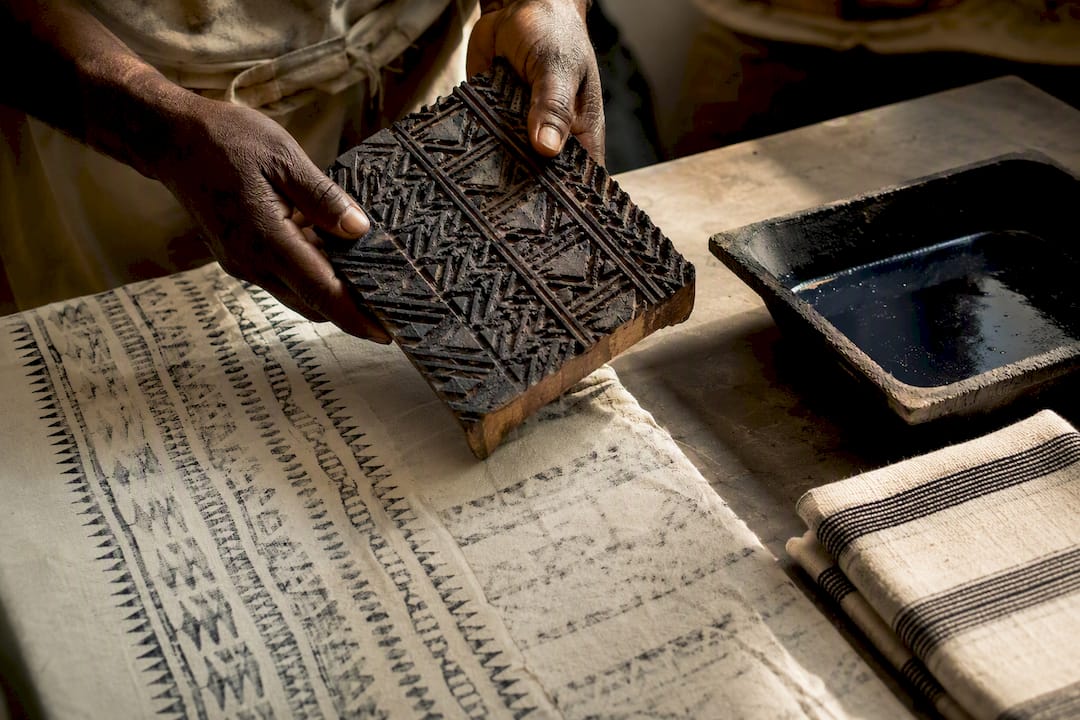
- Block printing presses hand-carved wooden stamps into fabric, leaving faint pressure differences you can feel with a fingertip.
- Hand embroidery shows thread tension that shifts slightly from stitch to stitch, unlike the mechanical uniformity of machine work.
Some artisan textile traditions carry regional names worth learning. Kanga Kabisa Design documents hand-dyed, hand-loomed kikoy and khanga cloth from Zanzibar, where pattern and color choices signal specific cultural meaning, not just decoration. A seller who names the tradition and region behind a fabric is giving you a real provenance cue, not a vague sustainability claim.
Pro Tip: Run your hand across a seam before you look at the tag. Slight texture shifts or uneven pressure marks from block printing are things a photo can hide but your fingers can't.
How to Spot Authentic Artisan-Made Clothing (a Shopper Checklist)
A product page that's actually telling the truth about its origins reads differently than one dressed up with vague buzzwords. Run through this before you check out:
- Look for a maker story. Who made this, where, and how long did it take? Vague "ethically sourced" language without specifics is a red flag.
- Check for limited-run language. Phrases indicating a limited production run or sold-out batch signal real small-batch production, not marketing spin.
- Study the photos. Studio shots showing looms, dye vats, or hands mid-stitch beat polished lifestyle photography every time.
- Inspect seams and pattern placement. Hand-finished seams often show tiny irregularities. A pattern that doesn't perfectly match at a seam usually means a human cut it, not a machine.
- Check the fabric selvedge. A woven edge with slight texture variation points to handweaving rather than industrial mills.
If the listing leaves questions unanswered, ask the seller directly: How many pieces were made in this run? Who made it, and where? Can this be customized? What's the return policy on handmade goods, since fit can vary piece to piece?
Where to Buy Artisan-Made Clothing and Ethical Shopping Tips
Three types of sellers dominate this space, each with different trade-offs. Direct brand sites, run by the maker or a small team close to production, tend to offer the most detail on origin and timeline. Curated ethical marketplaces aggregate multiple small brands and artisans, which is useful for comparison shopping but can dilute transparency if the marketplace doesn't push sellers to disclose production details. Craft fairs and pop-ups let you meet a maker face to face, ask questions on the spot, and sometimes see work in progress.
Whichever route you take, watch for these credibility signals:
- Photos of the actual maker or workshop, not just the finished product on a model.
- A stated production timeline, even a range, rather than instant "ships tomorrow" promises.
- Transparent pricing that explains what you're paying for, not just a discount countdown.
- A clear care and return policy specific to handmade goods.
Expect to pay more than you would for mass-market clothing, and expect to wait longer. Ask about alterations and lead times before you buy, especially for custom sizing. Senanukunu's handcrafted fashion checklist walks through these same evaluation points in more depth if you want a second pass before purchasing.
Pricing, Lead Times, and How to Care for Artisan Pieces
Handcrafted garments cost more for straightforward reasons: skilled labor takes time, small runs mean higher per-unit material costs, and there's no economy of scale spreading that cost across ten thousand identical shirts. A maker spending several full days on one dress is pricing in hours a factory line compresses into minutes.
Lead times vary by technique and complexity. Some handwoven ikat pieces take up to two months to weave, and makers often retire a pattern permanently once that run sells out. Simpler block-printed or embroidered pieces may ship in a few weeks. Custom orders, especially fitted garments, tend to run longer than ready-to-wear.
Caring for these pieces protects that investment:
- Hand wash or use a gentle cycle in cold water to protect natural fibers and hand-dyed color.
- Line dry or use low heat; high heat breaks down natural fiber structure faster than synthetic blends.
- Handle small repairs, a loose thread or popped seam, promptly rather than letting them spread.
Pro Tip: Keep the care instructions that came with a handmade piece. Artisan garments often need different treatment than the synthetic blends you're used to, and generic laundry advice can shorten their life.
Evidence and Brand Proof: Senanukunu's Artisan Credentials
Senanukunu operates out of Florida, producing West African inspired ready-to-wear and custom pieces in limited quantities rather than mass runs. That small-batch approach isn't a marketing line; it's the same production model this guide describes throughout, applied to dresses, kaftans, agbada sets, and matching statement pieces.
The brand backs that approach with resources that map directly to the checklist above:
- A published handcrafted fashion checklist walking shoppers through the same evaluation criteria covered here.
- Blog content on handcrafted apparel, culture, and sustainability explaining production origins and craft techniques.
- Guidance on recognizing artisanal craftsmanship, reinforcing the visual and tactile cues shoppers should look for.
A Note on Craft, Culture, and Buying Power
Every artisan garment carries a place and a hand behind it, and that matters more than fashion cycles let on. When conscious shoppers pay fair prices for handmade work, that money supports real livelihoods, not just a supply chain. The techniques in this guide, ikat, block printing, hand embroidery, survive because someone kept making them, and someone kept buying them.
Buy thoughtfully. Favor sellers who show you the maker, not just the model. Pay what the labor is actually worth. That's how craft traditions stay alive instead of becoming museum pieces.
— Sena
Shop Senanukunu's Artisan-Made Collections
Every piece Senanukunu makes reflects the checklist covered above: small production runs, natural fibers, and maker involvement you can actually trace, not just claim. The current collection runs from statement dresses to kaftans and matching sets, each rooted in West African design traditions and produced in limited quantities rather than restocked indefinitely.
Because these pieces are handcrafted in small batches, popular styles sell out and don't always return in the same run, so production timelines are worth checking before you commit to a size or a date you need it by. Browse the full collection or head straight to the dresses category to see current styles, including pieces like the Elegance Ruched Sleeve design, and check availability before a size or run sells out.
Sources
For more on identifying craftsmanship and caring for handmade pieces, see Senanukunu's guides on recognizing artisanal craftsmanship and qualities of handcrafted dresses. Brands committed to environmental accountability often partner with groups like One Percent for the Planet or One Tree Planted.