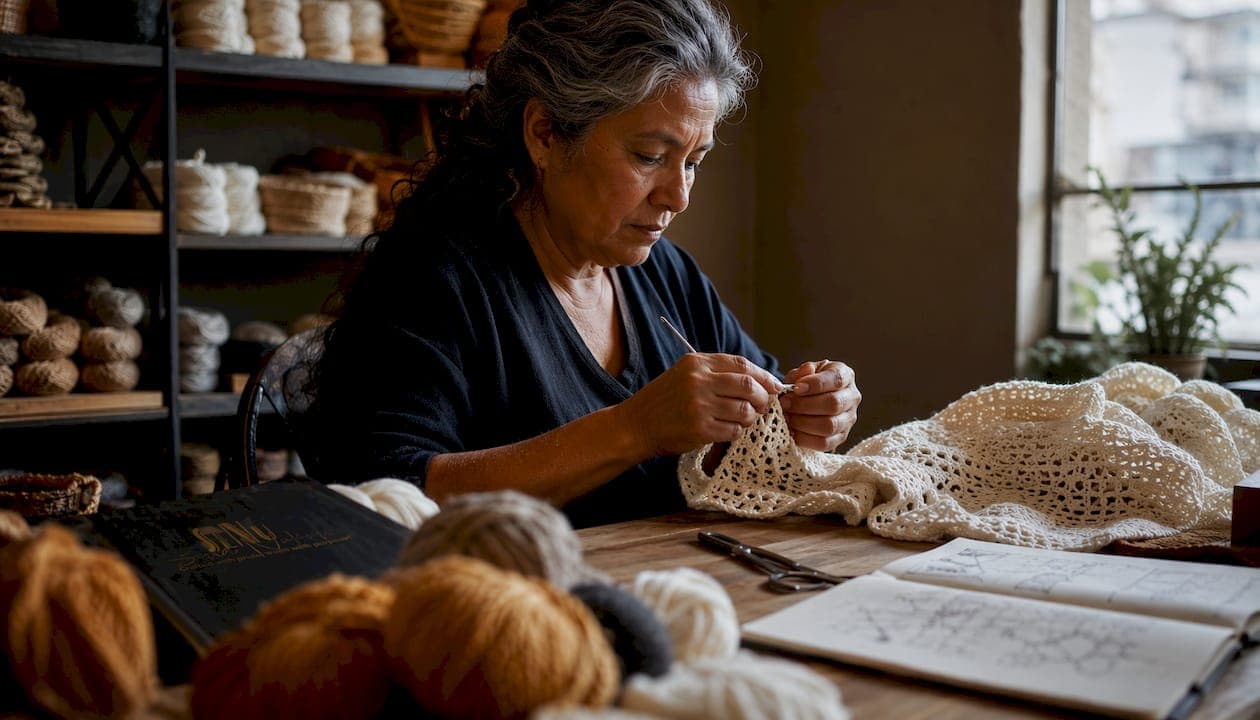
Handmade garments fall into three primary construction categories: woven, knit, and non-woven, each producing a distinct fabric structure, feel, and purpose. Beyond construction, they are also grouped by production scale: readymade finished pieces, tailored custom-fit garments, and hybrid artisan methods that blend hand finishing with modern tools. What unites every category is the human intention behind each thread, the cultural knowledge carried in every technique, and the irreplaceable quality that only a skilled pair of hands can produce.
Here is a quick orientation to the main types you will encounter:
- Woven handmade garments: shirts, blazers, dresses, and jackets built from interlaced threads for structure and longevity
- Knit handmade garments: sweaters, cardigans, and activewear crafted by looping yarn for stretch and breathability
- Non-woven handmade garments: felted coats, artisan face coverings, and specialty textiles bonded without weaving
- Tailored custom garments: made to individual measurements, often incorporating hand embroidery or embellishment
- Heritage artisan garments: rooted in regional traditions such as Zapotec hand-crochet, Indian handloom Jamdani, and West African kente weaving
Eight inspiring types of handmade garments worth knowing
1. Hand-crocheted cotton dress
The Oaxaca Dress by Zapotec designer Victoria Martinez is one of the most vivid examples of what hand-crochet can achieve. Each piece is crocheted and embroidered by artisan weavers in San Juan del Rio, Oaxaca, Mexico, using 100% cotton, making it breathable and perfectly suited for warm weather. The shoulder embroidery varies on every dress, so no two are identical. Because each piece is made to order, production takes 8–10 weeks, a timeline that reflects the depth of skill involved rather than any inefficiency.
Pro Tip: When buying a hand-crocheted garment, ask about the artisan's community. Pieces like the Oaxaca Dress directly support traditional Zapotec livelihoods, and that story is part of what you wear.
2. Handloom Jamdani dress
The Jamdani weaving tradition from the Indian subcontinent produces some of the most intricate woven garments in the world. Karomi Crafts' A-Line Shirt Dress uses the hand-picked warp Jamdani technique, handspun cotton, and natural dyes, with kantha embroidery as a finishing detail. The pattern displays squares of varying sizes along straight lines, inspired by the ancient abacus. Because the motifs are non-repetitive, each dress carries a composition that will never be replicated exactly.
3. Hand-knitted sweater
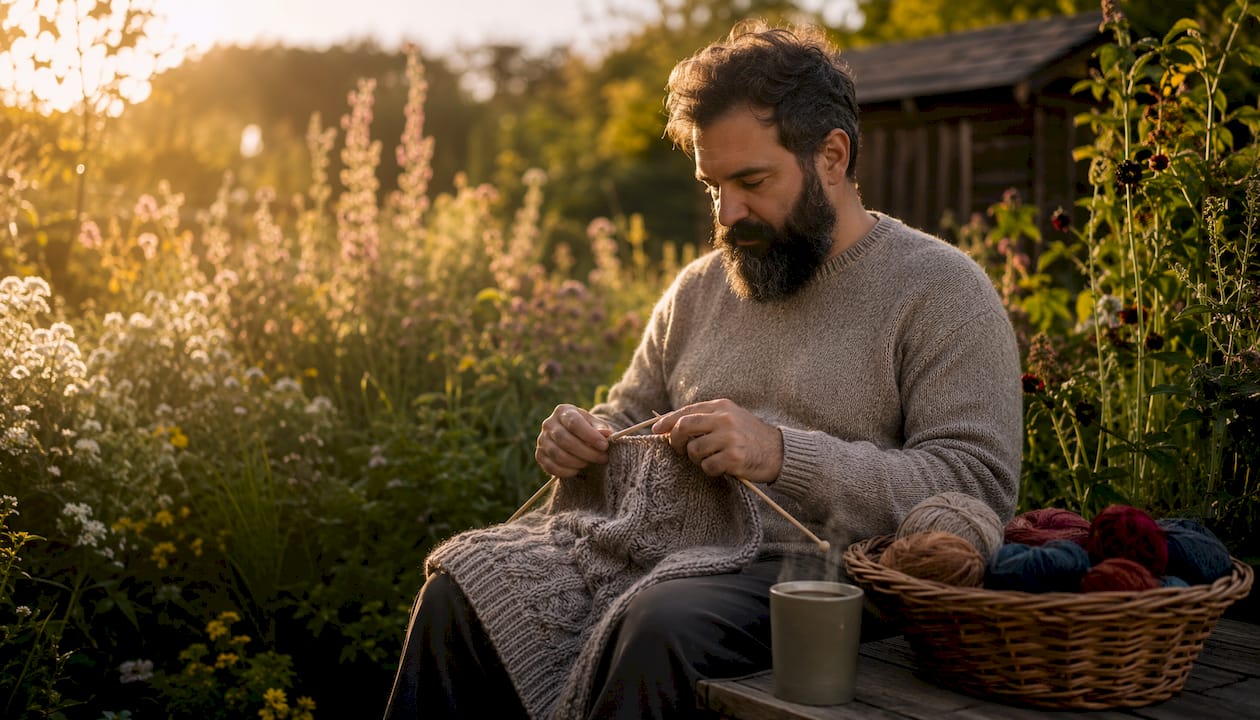
Knitting produces soft, stretchy, and breathable fabric by interlocking yarn loops, making it the ideal construction method for sweaters, cardigans, and activewear. Hand-knitted sweaters stand apart from machine-knitted versions through subtle stitch tension variations and the ability to incorporate custom colorwork, cables, or regional patterns like Aran or Fair Isle. A hand-knitted piece conforms to the body over time in a way no factory garment can replicate.
4. Handwoven blazer or jacket
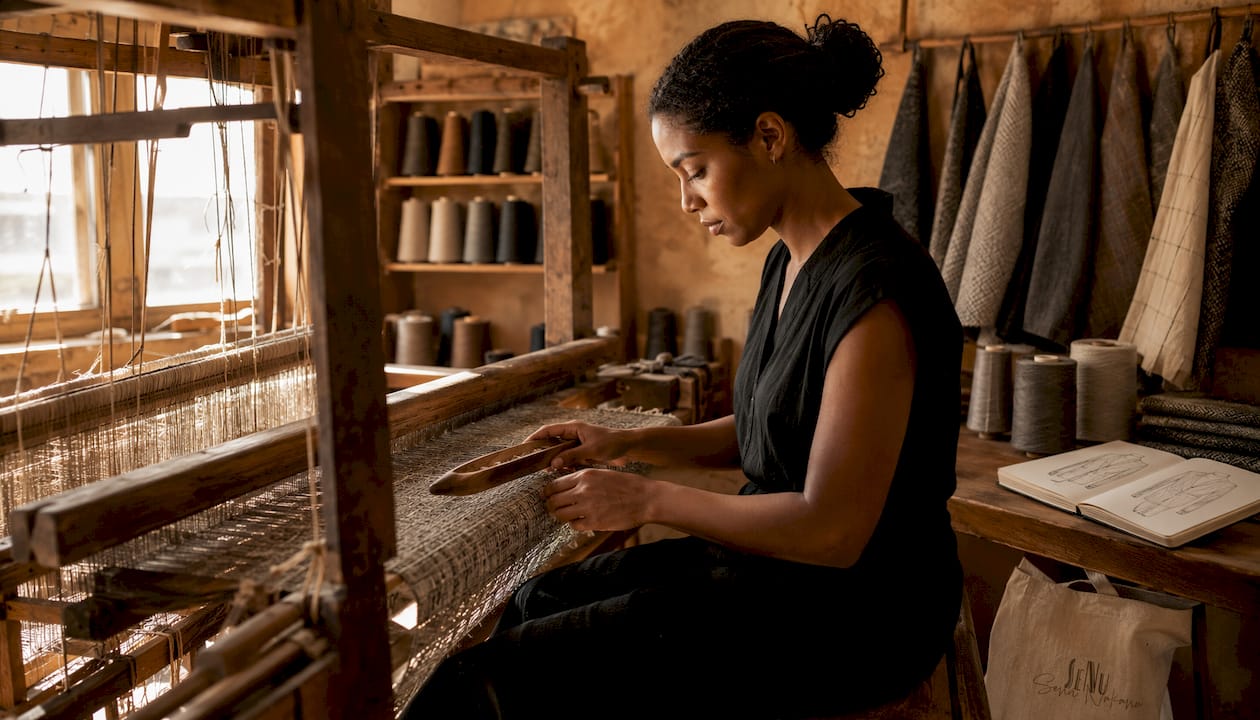
Weaving is one of the oldest fabric construction methods, interlacing warp and weft threads on a loom to produce strong, structured textiles. Handwoven blazers and jackets, often made in twill or plain weave from wool or cotton, carry a density and drape that machine-woven equivalents rarely match. West African kente cloth blazers, for example, carry symbolic color meanings woven directly into the fabric's geometry.
5. Felted wool coat
Felting transforms loose wool fibers into dense, durable fabric through heat, moisture, and agitation, with no weaving or knitting required. The result is a coat with a thick, almost sculptural body that resists wind and holds its shape for decades. Natural dyeing gives each felted piece unique, vibrant color depth that synthetic processes cannot reproduce. Artisan felters in Central Asia and Scandinavia have practiced this technique for centuries, and the garments they produce are genuinely wearable heirlooms.
6. Hand-embroidered tunic or kaftan
Embroidery is not a construction method but an embellishment technique applied over a woven or knit base, and it is one of the clearest markers of handmade authenticity. West African kaftans, for instance, feature hand-stitched geometric or floral motifs that carry cultural meaning specific to the wearer's community. The Nyame Nti Embroidered Kaftan from Senanukunu's collection exemplifies this tradition, with embroidery that tells a story of heritage and pride in every stitch.
7. Hand-sewn tailored dress or suit
Tailored garments are cut and sewn to individual measurements, a process that requires a skilled maker to draft a pattern, cut fabric by hand, and construct each seam with deliberate care. Unlike readymade pieces, tailored handmade garments account for the wearer's posture, proportions, and preferences. The result fits differently from anything pulled off a rack, and the construction quality, flat seams, hand-finished hems, and reinforced stress points, tends to outlast mass-produced alternatives by years.
8. Hand-block-printed or naturally dyed wrap dress
Block printing and natural dyeing are surface design techniques that transform a plain woven fabric into something deeply personal. Artisans carve wooden or metal blocks, apply natural pigments derived from plants or minerals, and press each repeat by hand, meaning slight misalignments and color variations are inherent to the process. A naturally dyed wrap dress in indigo or turmeric carries a living color that shifts subtly with each wash, deepening rather than fading.
| Garment type | Construction method | Key material | Regional tradition |
|---|---|---|---|
| Hand-crocheted dress | Crochet | Cotton | Zapotec, Oaxaca |
| Jamdani dress | Handloom weave | Handspun cotton | Indian subcontinent |
| Hand-knitted sweater | Knitting | Wool or cotton yarn | Global artisan |
| Handwoven blazer | Weaving | Wool, kente cloth | West Africa |
| Felted wool coat | Felting | Wool | Central Asia, Scandinavia |
| Embroidered kaftan | Woven base + embroidery | Cotton, silk | West Africa |
| Tailored dress or suit | Cut-and-sew | Varied | Global tailoring |
| Block-printed wrap dress | Woven base + block print | Cotton, linen | South Asia |
How do you recognize a truly handmade garment?
Subtle variations in stitch tension, pattern placement, and dye depth are the clearest signs of authentic handmade construction. These are not defects. They are the fingerprints of a human maker, and they are what distinguish a living garment from a factory copy.
Look for these markers when evaluating a piece:
- Stitch irregularity: slight variation in spacing or tension, especially in hand-knitted or hand-crocheted work
- Non-repetitive motifs: in handloom Jamdani or block-printed textiles, no two pattern repeats are perfectly identical
- Natural dye depth: colors that shift slightly across the fabric surface, with organic warmth rather than flat uniformity
- Hand-finished edges: rolled hems, hand-stitched linings, or knotted thread ends visible on the inside
- Maker's narrative: authentic artisan pieces come with a story, a name, a community, or a technique with a traceable heritage
Mass-produced garments are engineered for uniformity. Every seam allowance is identical, every print repeat is pixel-perfect, and every color is calibrated to a Pantone code. Handmade clothing celebrates the opposite: the slight shoulder embroidery that differs from piece to piece, the warp thread that catches the light differently at each angle.
Pro Tip: Turn the garment inside out before buying. Hand-finished seams, visible knotted threads, and carefully pressed allowances tell you more about construction quality than the outside ever will.
The materials themselves carry information. Handspun cotton feels softer and slightly uneven compared to industrial yarn. Naturally dyed fabric has a depth and warmth that synthetic dyes rarely achieve. When you care for handmade garments properly, these qualities deepen over time rather than diminish.
Why artisan craftsmanship and cultural legacy make handmade garments matter
Choosing a handmade garment is a conscious act against fast fashion, one that preserves traditional heritage techniques and supports ethical artisan partnerships. Every handmade piece carries the full weight of its supply chain: hand-spun yarn, hand-dyed thread, hand-loomed fabric, and hand-finished seams. That chain is transparent in a way industrial production rarely is.
Artisans face real challenges. Slow-craft techniques like hand crocheting and natural dyeing cannot be rushed, which is why production timelines of 8–10 weeks are standard for made-to-order pieces. Premium pricing reflects not just materials but the years of skill a maker has invested. Consumers who value authenticity understand this exchange: you are not paying for a product, you are investing in a relationship between maker and wearer.
At Senanukunu, this philosophy runs through every piece. Rooted in West African heritage and crafted with ethical intention, each garment carries the spirit of a legacy that stretches across generations. The handcrafted apparel Senanukunu curates is not simply clothing. It is cultural storytelling you can wear with pride.
Pro Tip: When a brand shares the name of its artisan partners or the specific region where a garment was made, that transparency is one of the strongest signals of genuine ethical production.
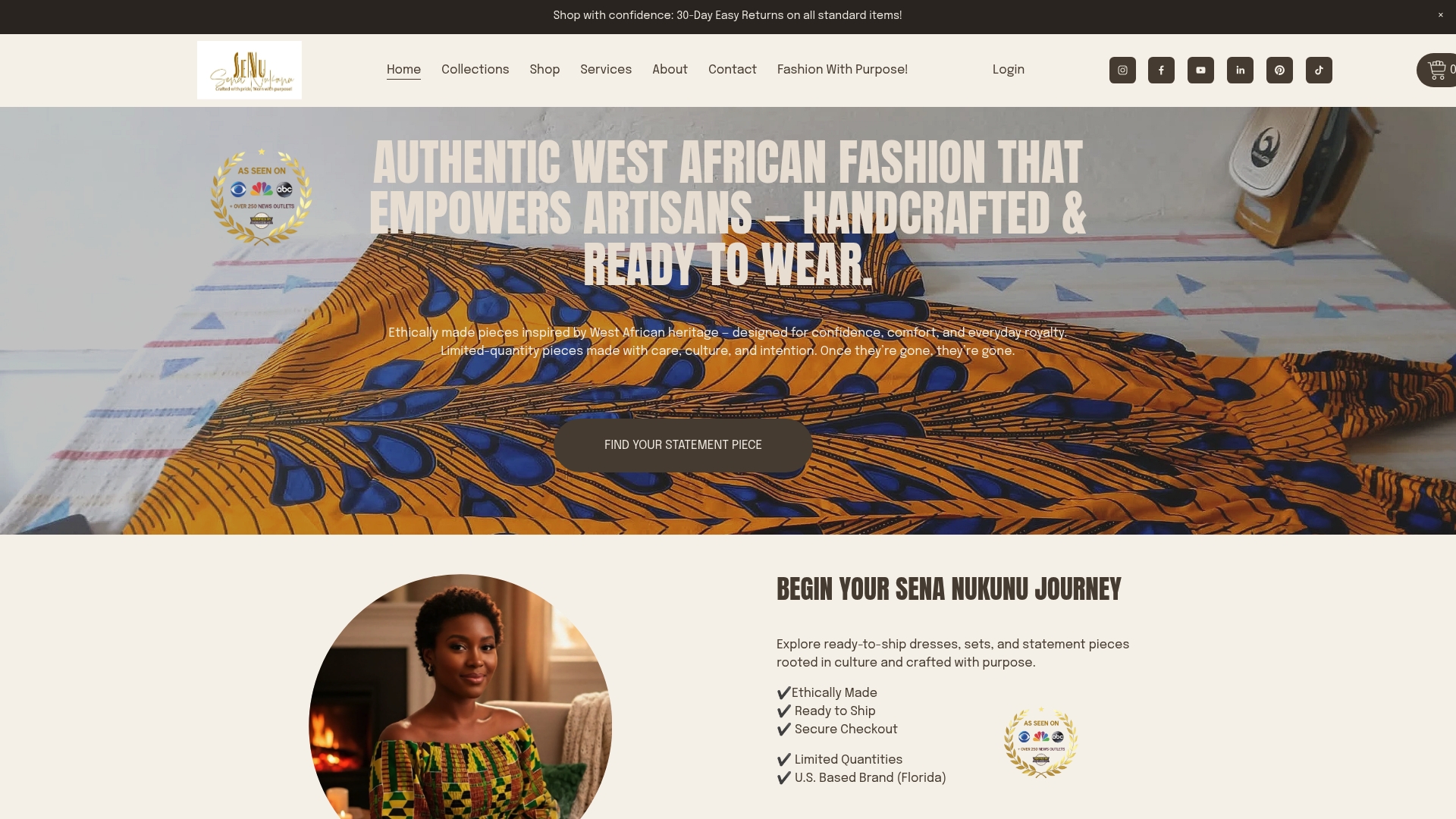
Senanukunu's handmade dress collection brings West African artisan tradition into your wardrobe with pieces designed to last, to mean something, and to be worn with intention. Explore the full range at Senanukunu and find the garment that carries your story.
Key Takeaways
Handmade garments are defined by their construction method, regional heritage, and the irreplaceable human skill embedded in every thread, making them fundamentally different from anything mass-produced.
| Point | Details |
|---|---|
| Three core construction types | Woven, knit, and non-woven fabrics each produce distinct garment structures and comfort profiles. |
| Production timelines reflect craft depth | Made-to-order artisan pieces typically require 8–10 weeks due to slow-craft techniques like hand crocheting and natural dyeing. |
| Imperfection signals authenticity | Stitch variation, non-repetitive motifs, and natural dye depth are markers of genuine handmade construction, not flaws. |
| Cultural heritage is embedded in technique | Traditions like Zapotec hand-crochet and Indian handloom Jamdani elevate garments into wearable expressions of regional identity. |
| Ethical value justifies the investment | Consumers who prioritize authenticity and personal connection find lasting meaning in handmade pieces that mass production cannot offer. |