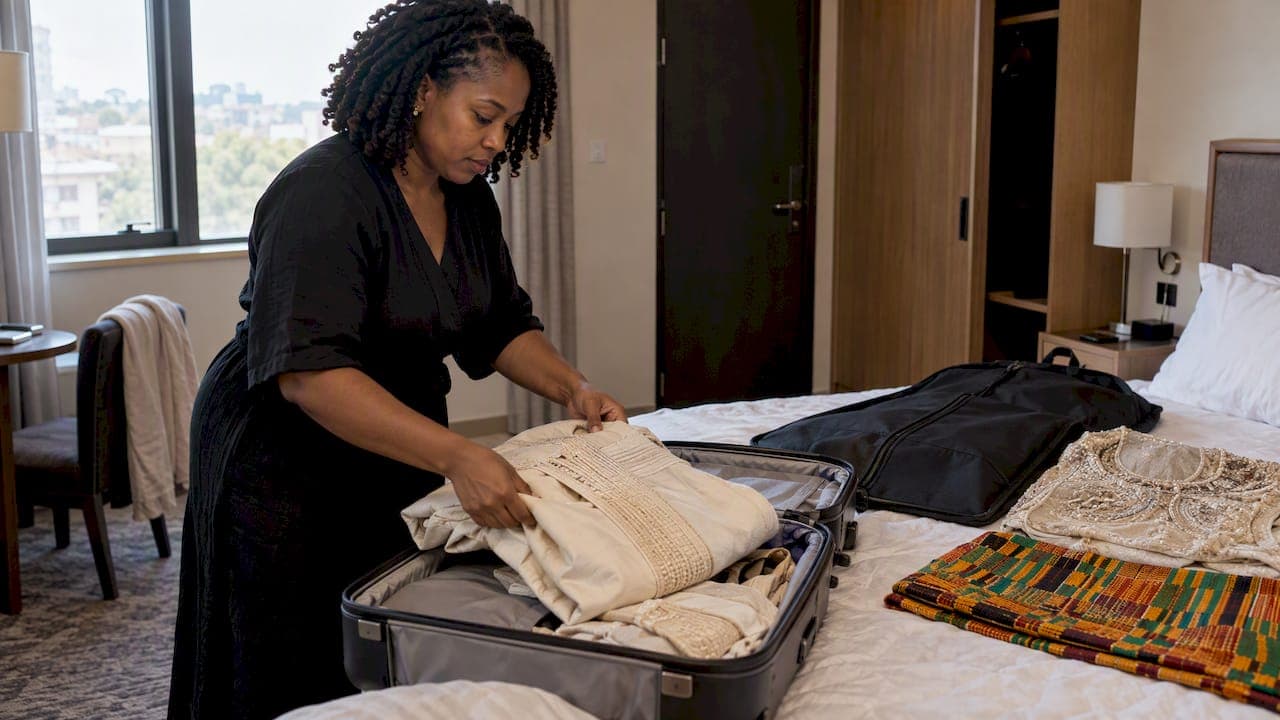
Yes, you can travel with authentic West African outfits, and doing it well comes down to three moves: pack them in a protective garment bag, pad every structured area, and build a capsule of versatile pieces around one statement garment. TSA guidance allows bulky garments in carry-on or checked bags, and brands specialize in pieces meant to move with you, not just sit in a closet.
TL;DR:
- Use a protective garment bag and padding to safeguard structured agbada or beaded kaftans during transit, especially when checked luggage is necessary.
- Favor cotton-based wax print fabrics for their durability and resistance to creasing, while reserving heavier, handwoven pieces like kente and aso-oke for the destination.
- Pack in layers: fold along existing seams, roll loosely, and protect embellishments with soft fabrics or separate pouches to prevent damage.
- Build a versatile outfit capsule around a statement piece, and coordinate accessories and layering options to maximize style with minimal pieces.
- Purchase from brands that specify fabric names, construction details, and limited runs to ensure durability and ethical sourcing for travel-ready West African garments.
Table of Contents
- How do you pack and protect delicate African garments for travel?
- Which West African fabrics and garment styles travel well?
- How do you style one African outfit into several travel-ready looks?
- What's the fastest way to handle stains, wrinkles, and loose beading on the road?
- What should you look for when buying authentic, travel-ready West African pieces?
- Why cultural context and ethical sourcing matter for travel-ready design
- Where to browse travel-ready West African outfits from Sena Nukunu
- FAQ
- Sources
How do you pack and protect delicate African garments for travel?
Structured agbada sets, beaded kaftans, and handwoven kente deserve the same care a textile conservator gives a museum piece, just scaled down for a suitcase. TSA screening rules permit wedding dresses and similarly bulky garments in both carry-on and checked luggage, but officers recommend a garment bag and may need to open it during screening, so pack with that in mind rather than layering fragile pieces under heavy items.
Carry on whenever your trip allows it. Checked bags get tossed, crushed, and occasionally rained on, and a one-of-a-kind piece isn't worth that risk for a short flight. When checking is unavoidable, call the airline ahead about garment stowage options, the same way TSA advises travelers confirm handling procedures for oversized items before they reach the airport.
Museum textile-packing guidance offers a surprisingly useful blueprint for home packing:
- Pad sleeves, shoulders, and collars with soft tissue or a clean cloth so the fabric holds its shape instead of collapsing into a crease.
- Fold along existing seams rather than inventing new fold lines, which is where wax print and aso-oke tend to crack or thin over time.
- Roll beaded or embroidered panels loosely with a layer of soft fabric between folds to keep trim from catching on itself.
- Slip small accessories like headwraps, cowrie jewelry, or coral beads into a separate protective pouch so they don't press against embellished fabric.
Pro Tip: Photograph your outfit before you pack it. If anything shifts or snags in transit, you'll have a clear reference for repairs and, if needed, for an airline damage claim.
Which West African fabrics and garment styles travel well?
Not every showstopper belongs in a suitcase, and knowing the difference saves you from unpacking a damaged heirloom at your destination. Wax print, or Ankara, is cotton-based and genuinely resilient, which is part of why it's become the dominant modern West African textile for both everyday and celebration wear. Its symbolic prints hold their color and structure through repeated folding far better than finer weaves do.
Kente and aso-oke are a different story. These handwoven cloths carry real weight and texture, and their value lies partly in that density, which also makes them more prone to stress at the fold lines if packed carelessly. Heavily beaded or hand-embroidered pieces need the same caution: gorgeous for the main event, risky for a week of transit.
A few rules of thumb make the packing decision easier:
- Choose garments with sturdy, reinforced seams over loosely finished ones for any trip longer than a few days.
- Favor pieces with detachable trim or jewelry over permanently fixed embellishment when space and handling are tight.
- Reserve your most heavily beaded or finely handwoven pieces for the destination event itself, and travel in something simpler.
- Pick one versatile dress, agbada jacket, or wrap set as your travel anchor, and build the rest of your looks around it.
How do you style one African outfit into several travel-ready looks?
A single well-chosen statement piece can carry an entire trip if you plan the supporting cast around it. The goal is fewer pieces, more combinations, which also happens to mean less to protect in transit.
- Anchor outfit: one structured agbada jacket or printed wrap dress worn as-is for the main event or dinner.
- Daytime remix: the same dress belted differently or worn open over a simple neutral top and trousers for sightseeing.
- Evening shift: swap flat sandals for a heeled pair and add statement jewelry to take the identical outfit from day to night.
- Layered cool-weather version: a tailored neutral coat over the piece for travel through cooler climates, keeping the print visible at the collar and hem.
Footwear and jewelry should work as hard as the clothing does; for inspiration on breathable choices and practical footwear to complement your look, see these day party outfit tips for outdoor Pittsburgh events. Pack one neutral flat and one dressier pair rather than a shoe for every outfit, and choose jewelry that nests or rolls flat so it doesn't press against fabric. For group travel and photos, coordinate through shared color families rather than identical prints, which keeps the cultural motifs intact without flattening everyone into a costume.
Pro Tip: Build your capsule around two or three core pieces you genuinely love, then let accessories do the work of making each day feel different.

What's the fastest way to handle stains, wrinkles, and loose beading on the road?
Minor damage happens, and most of it is fixable in a hotel room if you act quickly rather than letting a stain set or a wrinkle turn into a permanent crease.
- Blot a fresh stain immediately with a clean, slightly damp cloth, working from the outside in rather than scrubbing at the center.
- Use a mild, fragrance-free detergent diluted in water for spot cleaning, and always test it on an inside seam first.
- Steam instead of iron where you can. A handheld travel steamer, or even a bathroom shower's steam, relaxes wrinkles without the scorch risk of a hotel iron.
- Hang embellished pieces rather than folding them back into a drawer between wears, which keeps beading and trim from stressing against itself.
Conservation guidance on textile handling notes that humidity, light, and repeated handling are the biggest threats to delicate fiber and beadwork, which is exactly what a week of travel throws at a garment. If beading starts to loosen, a few tiny hand stitches now beat a full repair later, and anything beyond that is worth saving for a tailor once you're home.
What should you look for when buying authentic, travel-ready West African pieces?
The best travel wardrobe starts before you ever pack, with a piece built to move. A few things to check on any product page:
- Artisan provenance and construction notes, not just a product photo.
- Limited-quantity runs, which usually signal closer attention to finishing and seam quality.
- Clear fabric naming (Ankara, kente, aso-oke) rather than a vague "African print" label.
- Lining, closures, and garment weight listed plainly, since those details predict how well a piece folds and travels.
Our own Sena Nukunu collections are built on exactly these standards: limited runs, named fabrics, and construction details meant to hold up past a single wear.
Why cultural context and ethical sourcing matter for travel-ready design

We believe the best travel wardrobe honors where a garment comes from as much as where it's going. A piece made with intention, reinforced seams, artisan-finished trim, fabric chosen for its weight and drape, simply holds up better across time zones and climates than something mass-produced to look the part. Ethical sourcing and durability aren't separate goals; they tend to arrive together.
That's the thinking behind every Sena Nukunu piece: crafted in limited quantities, rooted in West African heritage, and built to be worn, not just admired. We invite you to explore our style guides for outfit recipes that carry that same spirit from one destination to the next.
— Sena
Where to browse travel-ready West African outfits from Sena Nukunu
Our collections, including Woven Nobility: Kings' Robe and Woven Radiance: Queens in Bloom, were built with the same packing logic covered above in mind: strong seams, named fabrics, and limited runs that reward close attention to construction.
Before you buy, check the product page for three things:
- Fabric name and weight, so you know how it folds.
- Lining and closure details, which affect how a piece travels.
- Limited-run language, a sign of closer finishing.
Browse Men's Agbada Ensembles, Men's Heritage, and Women's Collections and start building the travel capsule that carries you from the airport to the celebration.
FAQ
Can you bring African outfits through airport security?
Yes. TSA guidance allows bulky or structured garments like agbada sets and beaded kaftans in both carry-on and checked bags, though officers may need to open a garment bag for screening. Packing in a garment bag and arriving a little early for that extra step keeps things simple.
Should you roll or fold African print clothing for travel?
Fold along the garment's existing seams for structured pieces, and roll loosely for lighter wax print or Ankara fabric. Museum textile-packing guidance recommends avoiding sharp new creases on any patterned or woven fabric.
How do you keep beaded or embroidered African garments safe in a suitcase?
Pad the beaded area with a soft cloth layer and roll rather than fold it, keeping trim from catching on itself. Conservation guidance also notes that limiting handling and humidity exposure protects embellished fiber during transit.
What West African fabric is most durable for travel?
Wax print, or Ankara, is cotton-based and holds up well to folding and repeated wear, making it a dependable choice for travel compared with finer handwoven cloths like kente or aso-oke. Save the heavier handwoven pieces for the event itself.
Where can you buy authentic West African clothing designed with travel in mind?
Look for sellers who name their fabrics, disclose construction details, and produce in limited runs rather than mass quantities. Our Sena Nukunu collections are built around exactly that standard, with ready-to-wear pieces designed to hold their shape and craftsmanship from the suitcase to the occasion.
Sources
- Wedding Dress | Transportation Security Administration
- How to pack textiles | National Museums Scotland
- Textiles and costumes preservation guidance | Canadian Conservation Institute
- African wax print and West African textile traditions | Creative Hands Foundation