TL;DR:
- Embroidery in West African dress acts as a visual language that conveys cultural identity and social status through meaningful patterns.
- It is a living tradition that combines artistry, heritage, and social signals, with placement and color adding layers of message.
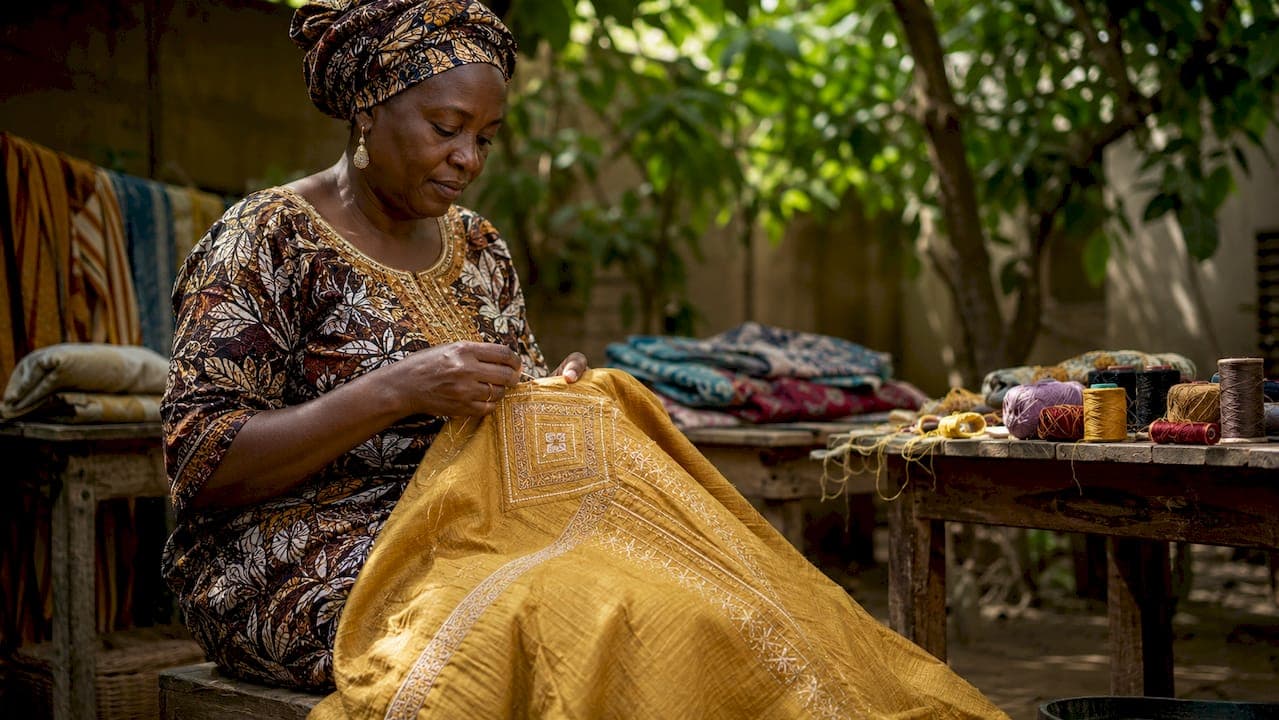
Embroidery in West African dress is defined as a visual language that communicates cultural identity, social status, and heritage through intricate stitched motifs and symbolic patterns. This is not decoration. Every thread placement on a garment like an agbada or kaftan carries a message that trained eyes within a community can read instantly. The role of embroidery in West African dress spans centuries of tradition, trade, and cultural pride, making it one of the most meaningful art forms in global textile history. Understanding it changes how you see, wear, and honor these garments.
How embroidery conveys cultural identity and social status
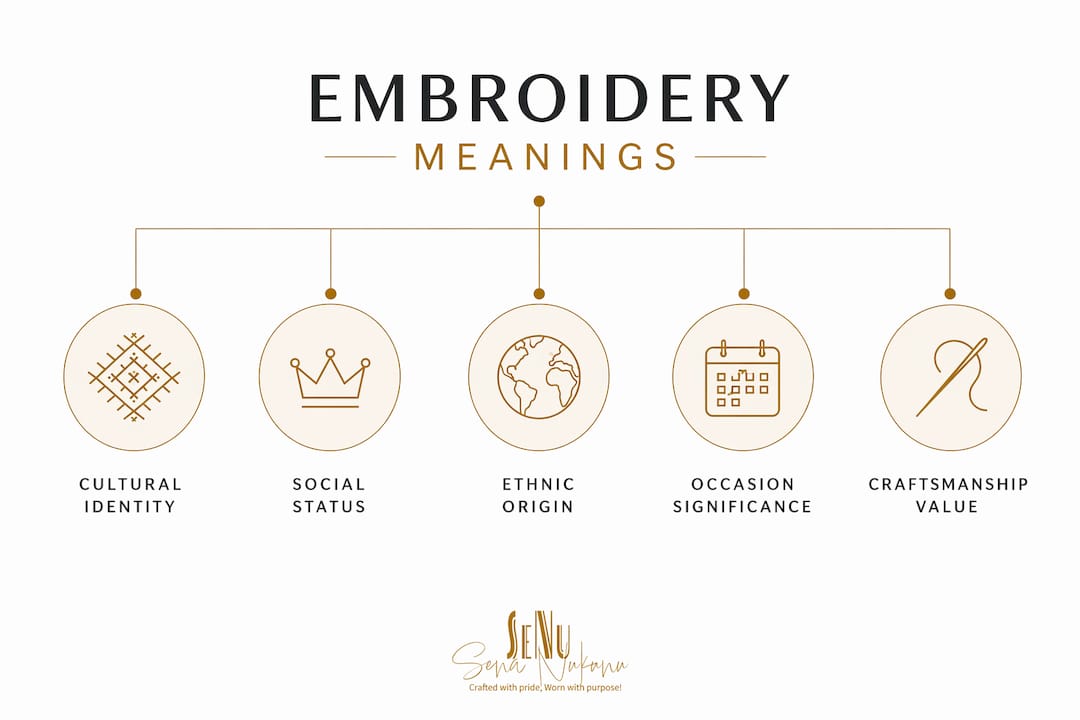
Embroidery functions as a non-Western literacy system, conveying proverbs, mathematical statements, and pictorial vocabularies that communicate identity and status publicly within communities. A person who knows how to read these patterns can determine a wearer's rank, region, and occasion without exchanging a single word. This is the true importance of embroidery in West African fashion: it speaks before the wearer does.
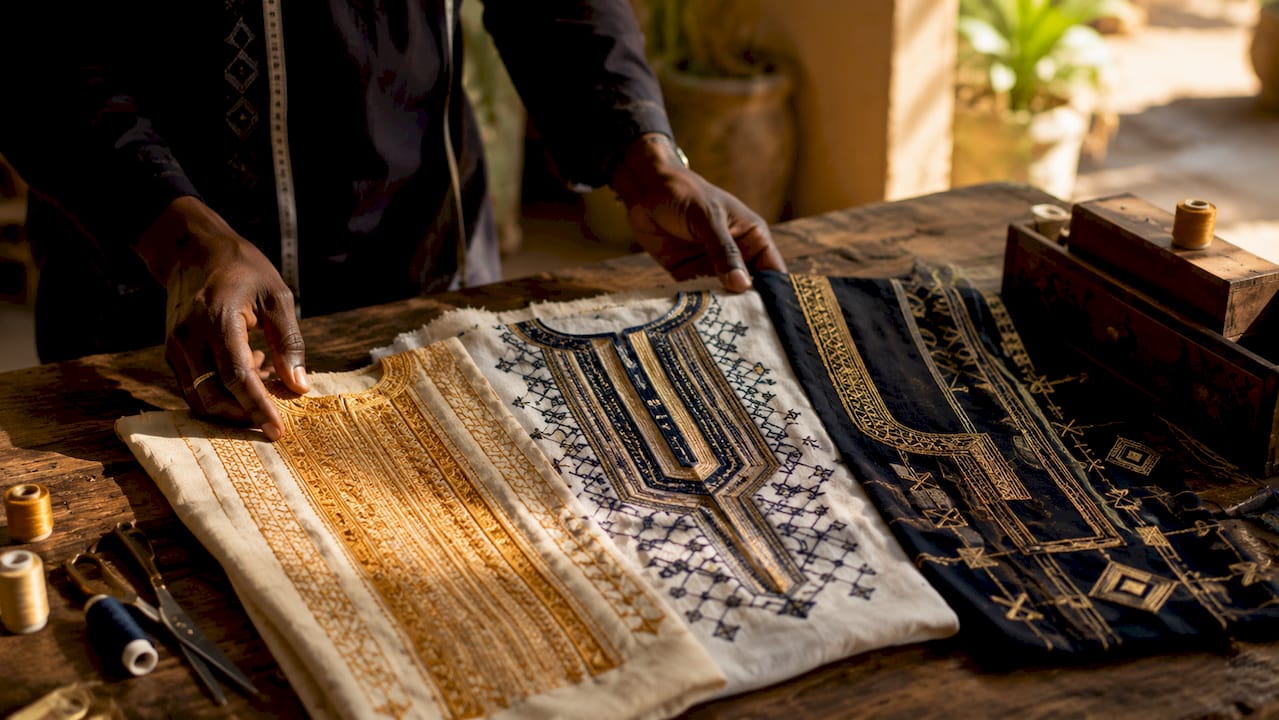
Placement on the garment carries specific meaning. Chest embroidery draws attention to the wearer's face and signals dignity. Sleeve embroidery communicates action and social standing. Pocket flap embroidery highlights wealth and meticulous attention to craft. Each zone of the garment is a deliberate statement, not a stylistic afterthought.
Color deepens the message further. White agbada with gold embroidery symbolizes purity, new beginnings, wealth, and divine blessings, making it the dominant choice at Nigerian weddings across many ethnic groups. Gold threads alone signal abundance and God's favor. White signals a clean slate and spiritual alignment. Together, they create a garment that announces the wearer's values and aspirations to everyone present.
- Chest placement: frames the face, signals dignity and authority
- Sleeve embroidery: communicates readiness, action, and social rank
- Pocket flaps: indicate wealth and precision craftsmanship
- Color white: purity, new beginnings, spiritual intention
- Color gold: wealth, divine blessing, and abundance
Pro Tip: When you attend a West African formal event, look at where the embroidery sits on the garment first. That placement tells you more about the wearer's status than the fabric itself.
What are the historical origins of West African embroidery?
The embroidery traditions woven into West African garments did not emerge in isolation. Trade routes and Islamic scholarly centers spread the wide-sleeved embroidered robe tradition across the region, blending Islamic and indigenous aesthetics into a unified visual culture. This fusion gave rise to garment forms like the agbada, the boubou, and the grand boubou, each carrying the marks of centuries of cultural exchange.
The transmission of embroidery skills followed a clear social structure. Women predominantly created embroidery, passing techniques down through female family lines. Men typically wove the base fabrics. This gendered division of textile arts preserved distinct artistic roles across generations, with women holding the creative authority over pattern and meaning.
The evolution of embroidery styles reflects four key historical forces:
- Trade route exchange. Merchants and scholars moving across the Sahara carried garment traditions between North Africa and West African kingdoms, enriching local aesthetics with new forms.
- Islamic influence. The spread of Islam introduced geometric and calligraphic motifs that merged with indigenous symbolic systems, creating hybrid visual languages.
- Ethnic specialization. Yoruba, Hausa, Wolof, and Mandé communities each developed distinct embroidery vocabularies tied to their own histories and values.
- Colonial disruption and resilience. Colonial-era trade shifted fabric sourcing and production methods, but communities preserved core embroidery traditions through family transmission.
- Digital preservation. Modern digital embroidery now archives traditional patterns and gives younger designers access to ancestral designs that might otherwise disappear.
The shift from hand-stitched to machine-produced embroidery has created real tension within these traditions. Machine production increases access but often strips away the cultural specificity that hand embroidery carries. Preservation efforts using digital archiving and artisan training programs work to keep the original meanings intact.
How do embroidery styles differ across West African ethnic groups?
West African embroidery is not a single tradition. It is a collection of distinct regional and ethnic practices, each with its own patterns, techniques, and meanings. Embroidered robes across Yoruba, Hausa, Wolof, and Mandé cultures communicate power, dignity, and religious status in ways that are philosophically distinct from one another, even when the garment silhouette looks similar.
| Garment | Primary Region | Embroidery Focus | Key Meaning |
|---|---|---|---|
| Agbada | Yoruba, Nigeria | Chest, sleeves, hem | Power, dignity, celebration |
| Boubou / Grand boubou | Wolof, Senegal; Mandé | Neckline, chest panel | Spiritual authority, formal rank |
| Kaftan | Hausa, Nigeria; broader West Africa | Collar, cuffs, front panel | Elegance, religious identity |
| Country cloth | Liberia | Full-body geometric patterns | Political authority, cultural leadership |
Country cloth embroidery in Liberia stands apart from the rest. Chiefs and diplomats wear it in formal political and ceremonial contexts, where the complexity of the embroidery signals the wearer's authority and cultural leadership. This is embroidery functioning as governance, not just fashion.
The patterns themselves carry names and histories. Many serve as cultural "texts," readable by community members who know the tradition. You can learn more about named West African motifs and their specific histories to deepen your understanding of what each design communicates.
- Yoruba agbada embroidery favors bold, symmetrical patterns that signal celebration and communal pride
- Hausa kaftans use fine geometric stitching around the collar and cuffs to mark religious observance
- Wolof grand boubou embroidery concentrates on the chest panel, emphasizing spiritual authority
- Liberian country cloth uses full-body geometric patterns tied directly to political rank
Pro Tip: Before purchasing a traditionally embroidered garment, research the ethnic origin of the pattern. Wearing a design without knowing its meaning is like quoting a text you have never read.
Why does embroidery still matter in West African fashion today?
Embroidery's significance in African textiles has not faded with time. It has expanded. West African designers now reinterpret traditional embroidery motifs within global fashion contexts, placing ancestral patterns on contemporary silhouettes for international audiences. This is not dilution. It is cultural pride expressed through a new medium.
For the diaspora, embroidery carries particular weight. Wearing an embroidered kaftan or agbada in the United States or Europe is a public declaration of heritage and belonging. West African styles in diaspora fashion serve as both personal identity markers and acts of cultural visibility. The garment becomes a statement that does not require explanation.
The economic dimension matters too. Skilled embroidery artisans represent a living tradition that supports families and communities. When you choose a hand-embroidered garment over a mass-produced imitation, you invest in that artisan's livelihood and in the survival of the tradition itself. Treating culturally significant textiles as mere decorative prints erodes their cultural value and meaning. Authenticity requires understanding the system of meaning behind the pattern.
- Diaspora communities use embroidered garments to assert cultural identity in new contexts
- Contemporary designers blend traditional motifs with modern cuts to reach global audiences
- Digital archiving protects endangered embroidery patterns for future generations
- Artisan-made embroidery supports economic resilience in West African communities
- Cultural literacy around embroidery deepens respect and prevents misrepresentation
The cultural significance behind iconic patterns is what separates a meaningful garment from a costume. When you understand what the stitches say, you wear the garment differently. You carry it with the weight it deserves.
Key Takeaways
Embroidery in West African dress is a living cultural language that communicates identity, status, and heritage through placement, color, and pattern, making cultural literacy the foundation of genuine appreciation.
| Point | Details |
|---|---|
| Embroidery as language | Patterns, placement, and color communicate rank, occasion, and identity without words. |
| Color carries meaning | White signals purity and new beginnings; gold signals wealth and divine blessing. |
| Regional diversity | Yoruba, Hausa, Wolof, Mandé, and Liberian traditions each carry distinct embroidery vocabularies. |
| Historical roots | Trade routes and Islamic scholarly centers shaped embroidery traditions across West Africa over centuries. |
| Cultural literacy matters | Understanding embroidery's meaning separates authentic appreciation from surface-level engagement. |
Embroidery is a text worth learning to read
I have spent years surrounded by West African garments, and the thing that strikes me most is how often people admire the beauty without asking what the beauty is saying. That gap is not a small one. It is the difference between seeing a garment and understanding it.
What I find most compelling about West African embroidery is that it never stopped being functional. It did not become art for art's sake. The stitches on a Hausa kaftan still mark religious devotion. The chest panel of a Wolof grand boubou still announces spiritual rank. The country cloth worn by a Liberian dignitary still carries the weight of governance. These are not relics. They are active texts.
The tension between tradition and modernity is real, and I do not think it resolves neatly. Machine embroidery makes beautiful garments accessible to more people, and that matters. But it also risks flattening the meaning into pure aesthetics. The answer is not to reject modern production. The answer is to stay curious, ask questions, and choose garments made by people who know what the patterns mean.
Every time you wear an embroidered West African garment with knowledge and intention, you participate in a tradition that has outlasted empires. That is worth something.
— Sena
Authentic West African embroidery, crafted with purpose
Senanukunu was built on the belief that every garment should carry meaning. The embroidered kaftans and statement pieces in the Senanukunu collection reflect real West African craftsmanship, with patterns chosen for their cultural resonance, not just their visual appeal. Each piece supports the artisans behind the work and honors the traditions that gave these designs their power. If you are ready to wear something that says more than words can, explore the full collection at Senanukunu. For a closer look at a signature embroidered piece that blends tradition with modern elegance, the Nyame Nti embroidered kaftan is a strong place to start.
FAQ
What is the role of embroidery in West African dress?
Embroidery in West African dress serves as a visual language that communicates cultural identity, social status, and heritage through symbolic patterns, colors, and placement on the garment. It is a form of non-Western literacy recognized within communities.
What do embroidery colors mean in West African garments?
White embroidery signals purity and new beginnings, while gold embroidery represents wealth, divine blessing, and abundance. These color meanings are consistent across many West African ethnic groups and occasions.
How does embroidery placement affect meaning on an agbada?
Chest embroidery draws attention to the wearer's face and signals dignity, sleeve embroidery communicates action and social rank, and pocket flap embroidery highlights wealth and attention to detail.
How has digital technology affected West African embroidery traditions?
Digital embroidery tools now archive traditional patterns and give younger designers access to ancestral designs, helping preserve craftsmanship that might otherwise be lost to time.
Why does cultural literacy matter when wearing embroidered West African garments?
Treating embroidered textiles as purely decorative erodes their cultural value and meaning. Understanding the history and symbolism behind a pattern is what makes wearing it an act of respect rather than appropriation.