The most influential Black designers in 2026 are Sergio Hudson, LaQuan Smith, Rachel Scott (Diotima), Frederick Anderson, Ruth E. Carter, Public School, Advisry, Aisling Camps, and Jacques Agbobly — each commanding attention through NYFW shows, Met Gala dressing, museum exhibitions, and a growing commitment to ownership and artisanal craft that is redefining what luxury means right now.
- Sergio Hudson: Sculptural power dressing with a devoted celebrity clientele; anchored the NYFW Fall/Winter 2026 calendar as one of the season's most anticipated shows.
- LaQuan Smith: Body-conscious, unapologetically glamorous silhouettes; a fixture in Essence's 2026 NYFW coverage and a red-carpet constant for A-list clients.
- Rachel Scott (Diotima): Afro-Atlantic tailoring rooted in Caribbean craft; one of three Black designers explicitly named as anchoring the official CFDA Fall/Winter 2026 calendar.
- Frederick Anderson: Architectural volume and refined couture sensibility; a consistent presence at NYFW and a designer whose work speaks to timeless elegance.
- Ruth E. Carter: Oscar-winning costume designer whose influence on cultural storytelling through dress extends from Hollywood to museum collections at the Smithsonian.
- Public School: Streetwear-inflected, politically aware ready-to-wear; a label whose DNA runs through the urban fashion conversation in 2026.
- Advisry: Quiet, research-driven menswear rooted in Black intellectual tradition; gaining recognition for off-calendar presentations that prioritize craft over spectacle.
- Aisling Camps: Emerging voice blending West African textile heritage with contemporary silhouettes; a name editors are watching closely this season.
- Jacques Agbobly: 2026 Vilcek Prize recipient for Creative Promise in Fashion and Design; a sustainable made-to-order practice centering Afropolitan identity.
Key Takeaways
The most influential Black designers in 2026 are shaping fashion through ownership, artisanal craft, institutional recognition, and cultural storytelling — not trend cycles alone.
| Point | Details |
|---|---|
| Nine designers to watch | Hudson, Smith, Scott, Anderson, Carter, Public School, Advisry, Camps, and Agbobly lead the 2026 conversation. |
| Ownership is the new influence | Forbes and industry insiders confirm influence is shifting toward IP control and sustainable production models. |
| Museum inclusion matters | The Met Costume Institute, Smithsonian, and Design Museum's "The Nue Black Aesthetic" signal institutional recognition as a key influence metric. |
| Off-calendar is growing | Independent Black designers increasingly favor off-calendar and direct-to-consumer formats to preserve craft and financial sustainability. |
| Vilcek Prize signals future leaders | Jacques Agbobly's 2026 award for sustainable, Afropolitan made-to-order practice points to where the next generation of influence is heading. |
Table of Contents
- Who are the most influential Black designers in 2026?
- What actually makes a Black designer "influential" in 2026?
- Where can you see and buy these designers' work in 2026?
- How is Black designers' influence actually shifting in 2026?
- What this shortlist says about fashion right now
- Support the designers and the craft: shop ethically made West African fashion
- Sources
Who are the most influential Black designers in 2026?
Essence and Ebony both place the same core group at the center of the 2026 runway conversation, and for good reason. These designers are not simply showing clothes — they are asserting ownership, shaping cultural narratives, and earning institutional recognition that places them in a different category from trend-makers. Here is what you need to know about each one.
Sergio Hudson
Hudson's signature is power: structured shoulders, body-conscious cuts, and a palette that reads as both modern and timeless. His Fall/Winter 2026 NYFW show drew immediate press attention for its confident tailoring and the breadth of his celebrity clientele, which includes some of the most photographed women in the world. Hudson occupies a rare position — a Black-owned luxury label with genuine red-carpet reach.
- Signature: Sculptural tailoring, bold color, pragmatic glamour
- 2026 highlight: NYFW Fall/Winter 2026 official calendar show; continued Met Gala dressing
- Availability: RTW and made-to-order; available via his label's direct channels and select luxury stockists
LaQuan Smith
Smith builds clothes for women who want to be seen. His aesthetic is unapologetically sensual — body-skimming silhouettes, sheer panels, and a commitment to celebrating the female form that has made him a go-to for entertainers and athletes alike. His 2026 NYFW presentation reinforced his status as one of the most culturally resonant designers working today.
- Signature: Body-conscious luxury, sheer fabrication, maximalist glamour
- 2026 highlight: NYFW Fall/Winter 2026 show; consistent red-carpet presence across awards season
- Availability: RTW; available via his label's website and specialty boutiques
Rachel Scott (Diotima)
Scott's work at Diotima is among the most intellectually rich in American fashion. She draws on Caribbean craft traditions, Afro-Atlantic history, and the textures of the natural world to build collections that feel both deeply personal and universally resonant. Her inclusion on the official CFDA NYFW calendar for Fall/Winter 2026 is a signal of institutional confidence in her vision.
- Signature: Afro-Atlantic tailoring, crochet and natural fiber, narrative-driven collections
- 2026 highlight: NYFW Fall/Winter 2026 official calendar show; growing museum and press recognition
- Availability: RTW and limited-order; direct-to-consumer and select stockists
Frederick Anderson
Anderson's couture sensibility sets him apart in a market that often rewards the casual. His architectural volumes and refined fabrication speak to a client who wants something genuinely special — not trend-driven, but lasting. He was among the three designers Ebony named as anchoring the 2026 NYFW calendar, a recognition that reflects his sustained relevance.
- Signature: Architectural volume, couture construction, refined femininity
- 2026 highlight: NYFW Fall/Winter 2026 calendar; continued press recognition in major outlets
- Availability: Couture and RTW; available through his label and select retailers
Ruth E. Carter
Carter's influence operates on a different register from runway designers, but her cultural weight in 2026 is undeniable. Her Oscar-winning costume work for Black Panther and Black Panther: Wakanda Forever placed African textile traditions in front of global audiences, and her pieces are held in the Smithsonian's permanent collection. She is a living bridge between Black fashion history and contemporary cultural power.
- Signature: Afrofuturist storytelling, Pan-African textile research, cinematic scale
- 2026 highlight: Continued museum programming and cultural retrospectives
- Availability: Costume design and exhibition; not RTW, but her influence shapes the broader market
Public School
Dao-Yi Chow and Maxwell Osborne built Public School into one of the most politically aware labels in American fashion. Their streetwear-inflected, conceptually grounded collections speak to a generation that sees clothing as a form of argument. In 2026, the label's DNA continues to shape how streetwear trends intersect with Black creative leadership.
- Signature: Streetwear-luxury fusion, political messaging, sharp tailoring
- 2026 highlight: Continued influence on the streetwear-to-luxury pipeline; press and retail presence
- Availability: RTW; available via select retailers and the label's own channels
Advisry
Advisry is the kind of label that rewards patience. Its research-driven menswear, rooted in Black intellectual and sartorial history, favors off-calendar presentations over the noise of traditional runway cycles. That deliberateness is itself a statement — and in 2026, it is earning the label a growing audience among insiders who value craft over spectacle.
- Signature: Research-driven menswear, Black intellectual tradition, quiet luxury
- 2026 highlight: Off-calendar presentations; growing critical recognition
- Availability: Limited-order and direct-to-consumer
Aisling Camps
Camps is one of the most compelling emerging voices in the 2026 conversation. Her work weaves West African textile heritage into contemporary silhouettes with a lightness that feels genuinely new. Editors are watching her closely, and her trajectory mirrors the broader shift toward designers who carry cultural specificity as a strength, not a niche.
- Signature: West African textile traditions, contemporary silhouette, vibrant color
- 2026 highlight: Growing editorial coverage; emerging presence in the NYFW conversation
- Availability: Limited RTW and direct-to-consumer
Jacques Agbobly
Agbobly's 2026 Vilcek Prize for Creative Promise in Fashion and Design is one of the year's most meaningful recognitions. His practice centers Afropolitan identity and sustainable made-to-order production — a model that is both ethically grounded and commercially forward-thinking. His work connects West African heritage to global luxury audiences without flattening either.
- Signature: Afropolitan identity, sustainable made-to-order, narrative craft
- 2026 highlight: Vilcek Prize 2026; growing institutional and press recognition
- Availability: Made-to-order; direct-to-consumer
| Designer | Signature / Visual Language | 2026 Highlight | Notable Clients / Celebrity Dressing | Availability | Why Influential in 2026 |
|---|---|---|---|---|---|
| Sergio Hudson | Sculptural tailoring, bold color | NYFW FW26 show, Met Gala dressing | A-list entertainers, political figures | RTW, made-to-order | Black-owned luxury with red-carpet reach |
| LaQuan Smith | Body-conscious luxury, sheer fabrication | NYFW FW26 show, awards season | Entertainers, athletes | RTW, boutiques | Cultural resonance, unapologetic glamour |
| Rachel Scott (Diotima) | Afro-Atlantic tailoring, natural fiber | NYFW FW26 official calendar | Press and institutional clients | RTW, limited-order | Narrative craft, CFDA calendar anchor |
| Frederick Anderson | Architectural volume, couture construction | NYFW FW26 calendar | Refined luxury clientele | Couture, RTW | Sustained couture relevance |
| Ruth E. Carter | Afrofuturist storytelling, Pan-African textiles | Museum programming, retrospectives | Hollywood productions | Exhibition, costume | Smithsonian collection, global cultural reach |
| Public School | Streetwear-luxury fusion, political messaging | Retail and press presence | Culturally engaged consumers | RTW, select retailers | Streetwear-to-luxury pipeline leadership |
| Advisry | Research-driven menswear, quiet luxury | Off-calendar presentations | Insiders, press | Limited-order, DTC | Craft-first model, intellectual authority |
| Aisling Camps | West African textile, contemporary silhouette | Editorial coverage, NYFW adjacency | Editors, emerging clientele | Limited RTW, DTC | Emerging voice, cultural specificity |
| Jacques Agbobly | Afropolitan identity, sustainable made-to-order | Vilcek Prize 2026 | Institutional and press audiences | Made-to-order, DTC | Award recognition, ethical production model |
What actually makes a Black designer "influential" in 2026?
Influence in 2026 is not measured by follower counts or trend cycles alone. The editors, curators, and industry insiders who build these lists use a more demanding set of criteria — and understanding them helps you evaluate any designer, not just the ones on this shortlist.
- Celebrity dressing and red-carpet reach: A designer who dresses clients at the Met Gala or major awards ceremonies earns immediate global visibility. Hudson and Smith both operate at this level consistently.
- Institutional recognition: Museum inclusion — whether in the Smithsonian's permanent collection or a major exhibition like the Metropolitan Museum's Costume Institute Spring 2026 programming — signals that a designer's work has moved beyond trend into cultural canon. Ruth E. Carter is the clearest example here.
- NYFW and CFDA calendar presence: Anchoring the official calendar, as Scott, Hudson, and Anderson did for Fall/Winter 2026, still carries weight as a marker of industry standing.
- Awards and prize recognition: The Vilcek Prize, the CFDA Awards, and similar honors validate a designer's practice with independent, expert judgment. Agbobly's 2026 Vilcek Prize is a concrete signal of future influence.
- Ownership and business model: Designers who control their IP, supply chains, and production are building something durable. This is increasingly the metric that separates a moment from a legacy.
- Press coverage in major outlets: Consistent coverage in Forbes, Ebony, Essence, and Wallpaper* reflects sustained critical attention, not just a single viral moment.
Pro Tip: Watch for designers adopting sustainable made-to-order models — like Agbobly's Vilcek Prize-winning practice. This production approach signals both ethical seriousness and financial discipline, two qualities that tend to predict long-term label survival.
The cultural meanings embedded in Black dress run deeper than aesthetics alone, and the most influential designers in 2026 understand that every collection carries a responsibility to that legacy.
Where can you see and buy these designers' work in 2026?
Following these designers does not require a front-row seat. There are practical, accessible ways to engage with their work this year.
- NYFW official calendar shows: Hudson, Smith, Scott, and Anderson all showed on or adjacent to the CFDA Fall/Winter 2026 calendar. Future season schedules are announced via the CFDA website and covered in real time by Vogue, Essence, and Ebony.
- Off-calendar and digital presentations: Advisry and emerging designers like Aisling Camps favor off-calendar formats — follow their label accounts and press contacts for announcement timing.
- Museum exhibitions: The Metropolitan Museum of Art's Costume Institute and the Smithsonian both hold relevant programming in 2026. Ruth E. Carter's work appears in permanent and traveling collections.
- The Design Museum's "The Nue Black Aesthetic": Running from November 2026 through August 2027, this exhibition is one of the most significant institutional presentations of contemporary Black design this year.
- Label webstores and direct-to-consumer channels: Most designers on this list sell directly. Diotima, Advisry, and Agbobly's label all offer direct purchase options, often in limited quantities.
- Specialty retailers and stockists: Hudson and Smith are available through select luxury boutiques. Check each label's stockist page for current retail partners.
For readers who want to support artisan fashion and West African heritage more broadly, direct-to-consumer and made-to-order purchases from independent labels are among the most meaningful ways to put money where your values are.
How is Black designers' influence actually shifting in 2026?
The core shift is this: influence is moving toward ownership, artisanal value, and institutional recognition rather than trend-making alone. Forbes reported in February 2026 that designers and stylists across the industry are prioritizing control of their creative and production processes — IP ownership, supply chain transparency, and sustainable manufacturing — as the new markers of serious, lasting influence.
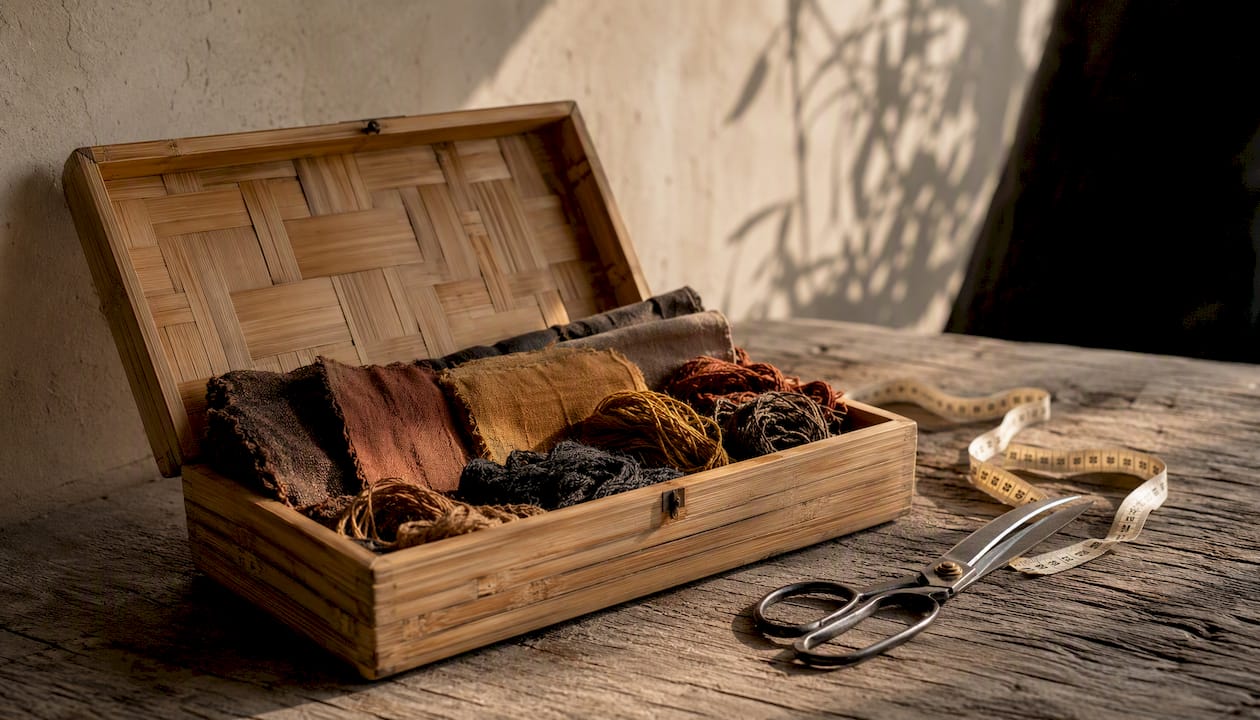
This is not a small pivot. For decades, Black designers were credited with originating trends that were then commercialized by labels that did not share their cultural roots. The 2026 conversation, as documented by both Forbes and Ebony, is about correcting that dynamic through structural ownership.
The institutional side of this shift is equally significant. The Design Museum's "The Nue Black Aesthetic" — running November 2026 through August 2027 — explicitly reframes Black design as diasporic and multi-voiced rather than a single monolithic aesthetic. That curatorial argument matters because it creates space for designers like Agbobly, Camps, and Scott to be recognized on their own terms, not as variations on a single "Black style."
The Smithsonian's documentation of Black artists across disciplines provides the historical scaffolding for this institutional turn — fashion designers are increasingly understood as part of a long creative lineage, not a separate commercial category. Meanwhile, independent Black designers are bypassing traditional runway cycles in favor of off-calendar presentations and direct-to-consumer models, a practical response to cost pressures that also happens to preserve artisanal quality and creative control.
Agbobly's Vilcek Prize is the clearest single example of these forces converging: a research-driven, Afropolitan practice, built on sustainable made-to-order production, recognized by an independent institution for its creative promise. That combination — craft, heritage, sustainability, and institutional validation — is the template for influence in 2026.
What this shortlist says about fashion right now
The 2026 shortlist of top Black designers tells a story that goes beyond individual talent. It reflects a moment when craft, ownership, and cultural storytelling are being recognized as the foundations of lasting influence — not just in Black fashion, but across the industry.
What strikes me most about this group is how deliberately each designer has chosen their lane. Hudson and Smith have built luxury labels with genuine celebrity reach. Scott and Agbobly are doing something more patient: building practices rooted in heritage research and artisanal production that will outlast any single season. Carter has already secured her place in museum collections. And emerging voices like Camps are carrying West African textile traditions into contemporary silhouettes with a confidence that feels earned, not performed.
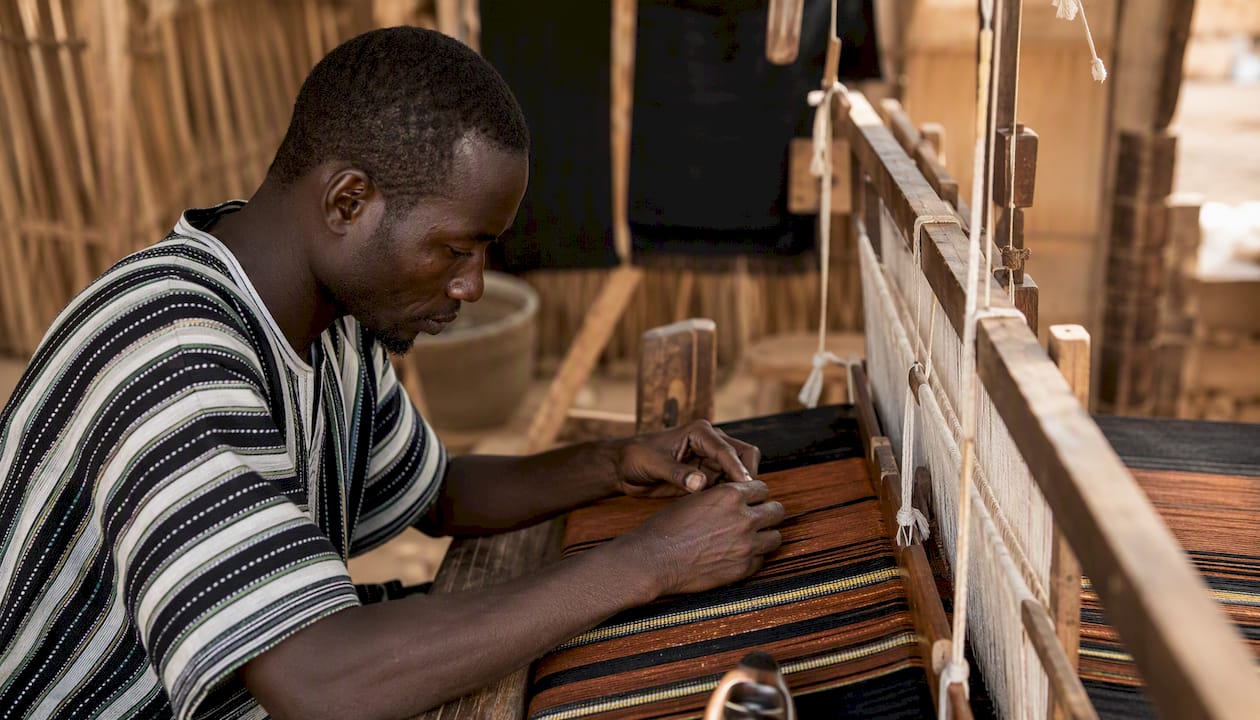
This is what honoring Black culture in fashion looks like when it is done with integrity — not borrowing aesthetics, but centering the people, practices, and histories that created them. At Senanukunu, we recognize this commitment in our own work: every piece we make carries the spirit of West African artisanship, crafted with care and purpose for people who understand that what you wear is a statement about what you value.
Support the designers and the craft: shop ethically made West African fashion
The designers on this list are building something meaningful — and you can be part of that story. At Senanukunu, we share their commitment to artisanal production, cultural pride, and ethical manufacturing. Our ready-to-wear collection features limited-quantity pieces crafted with West African heritage at their heart — dresses, kaftans, matching sets, and statement pieces made for people who want their wardrobe to mean something.
Explore the full Senanukunu collection and wear the legacy.
Sources
- Black Designers to Watch at New York Fashion Week Fall/Winter 2026 - Ebony
- The State Of Black Fashion: Here's What Designers And Stylists Have To Say
- The Black Designers You Need To Know Showing At NYFW Fall/Winter 2026 - Essence
- Jacques Agbobly - Vilcek Foundation
- Metmuseum