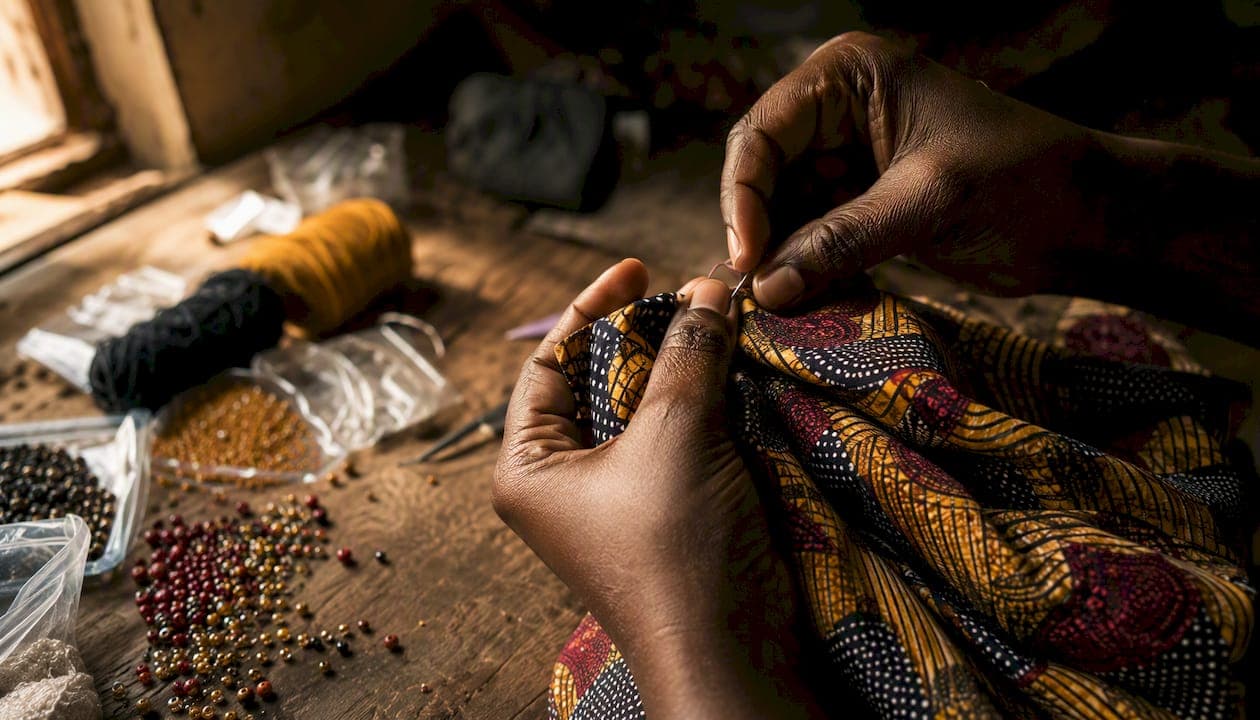
Yes — many garments carry explicit, inspiring backstories that connect craft, culture, and real human lives. The inspiring stories behind garments span several distinct categories: artisan revival projects that rescue endangered weaving traditions, refugee and family heritage narratives stitched into contemporary collections, reintegration and peacebuilding initiatives that use sewing as a path to healing, archival reclamation efforts that turn family prints into living objects, and celebrity memoirs that reveal how personal costumes shape public identity.
You will find all of these in the examples below, grounded in published journalism, NGO reporting, and academic research. A few names anchor the credibility of this list from the start: Senanukunu, which curates West African heritage and craft into ready-to-wear pieces; Lemlem, founded by Liya Kebede to preserve Ethiopian handweaving; and Dolly Parton, whose memoir Behind the Seams shows how a stage costume can carry an entire life story.
Key Takeaways
Garments with inspiring stories share five verifiable elements: named maker, named technique, clear provenance, community impact, and documented narrative — and the most credible brands make all five findable.
| Point | Details |
|---|---|
| Five credibility markers | Look for named maker, technique, provenance, social impact, and documented narrative before trusting a garment story. |
| Craft intensity signals authenticity | Specific labor details — like a buttonhole requiring up to 40 minutes — distinguish real artisan work from vague claims. |
| Ethical storytelling centers makers | Consent, named credits, and makers' own words separate responsible brands from those that exploit cultural aesthetics. |
| Traceability takes real commitment | Full supply-chain transparency can take years to build; brands that publish specifics have earned that claim. |
| Senanukunu as a starting point | Senanukunu's West African collections combine heritage craft, ethical production, and provenance storytelling in ready-to-wear pieces. |
Table of Contents
- Six garments whose backstories will change how you see what you wear
- What actually makes a garment's story inspiring and credible
- How ethical designers tell garment stories without exploiting makers
- How to find, verify, and care for garments with real stories
- How Senanukunu preserves West African heritage in every piece
- How these examples were selected
- Why garment stories are worth protecting
- Meaningful West African garments, ready to wear
- Sources
Six garments whose backstories will change how you see what you wear
These case studies span continents and communities, yet each one demonstrates the same truth: the story behind a garment can carry as much weight as the fabric itself.
The Spirit Kaftan: cross-cultural weaving and ecological memory
The Spirit Kaftan project fused Hmong handweaving and indigo dyeing techniques from Laos with Australian native indigo, honoring matriarchal custodianship and shared ecological knowledge across two cultures. The result is a garment that holds both a technique and a relationship — between makers, between continents, between generations of women who have tended indigo plants as living knowledge.
Ixora / Stitches for Peace: sewing as a path from conflict to community
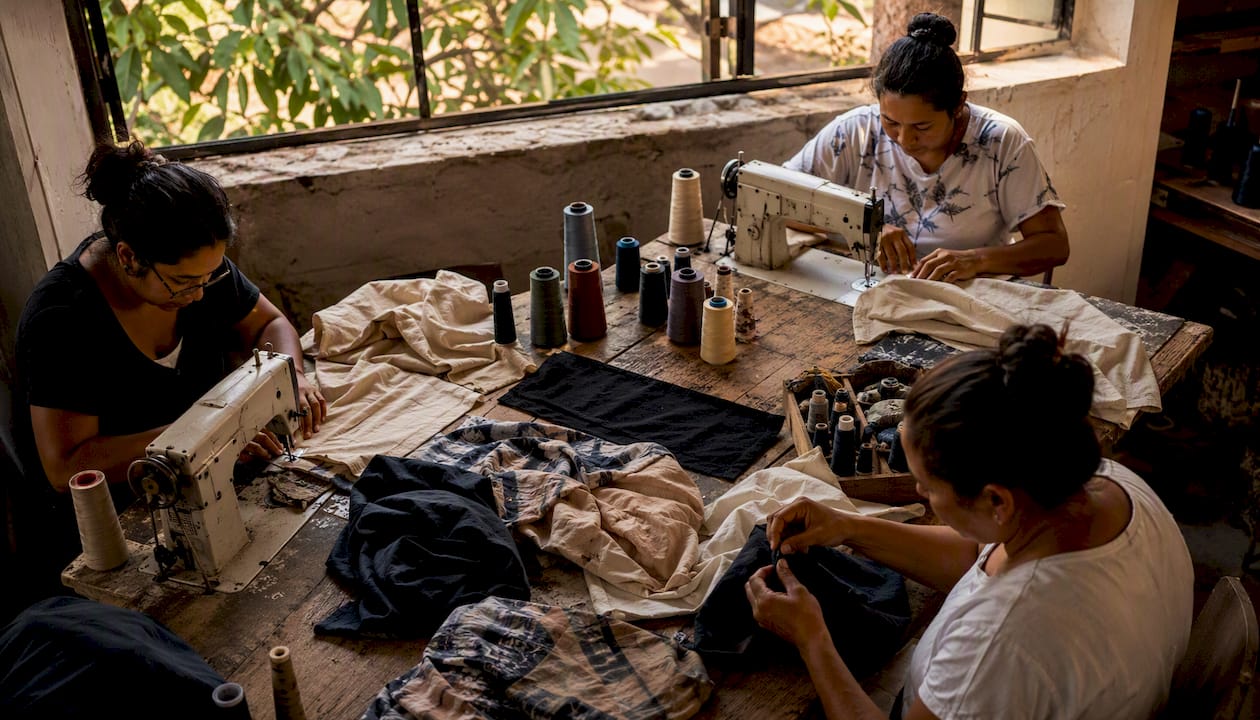
Ixora began as a reintegration project for women ex-combatants in Colombia, using sewing workshops to provide training, psychosocial support, and community. The label has faced security-related pauses, yet it persists as proof that fashion can be a livelihood and a healing tool simultaneously. Each piece carries the resilience of women who chose craft over conflict.
Lemlem: preserving Ethiopian weaving, one artisan at a time
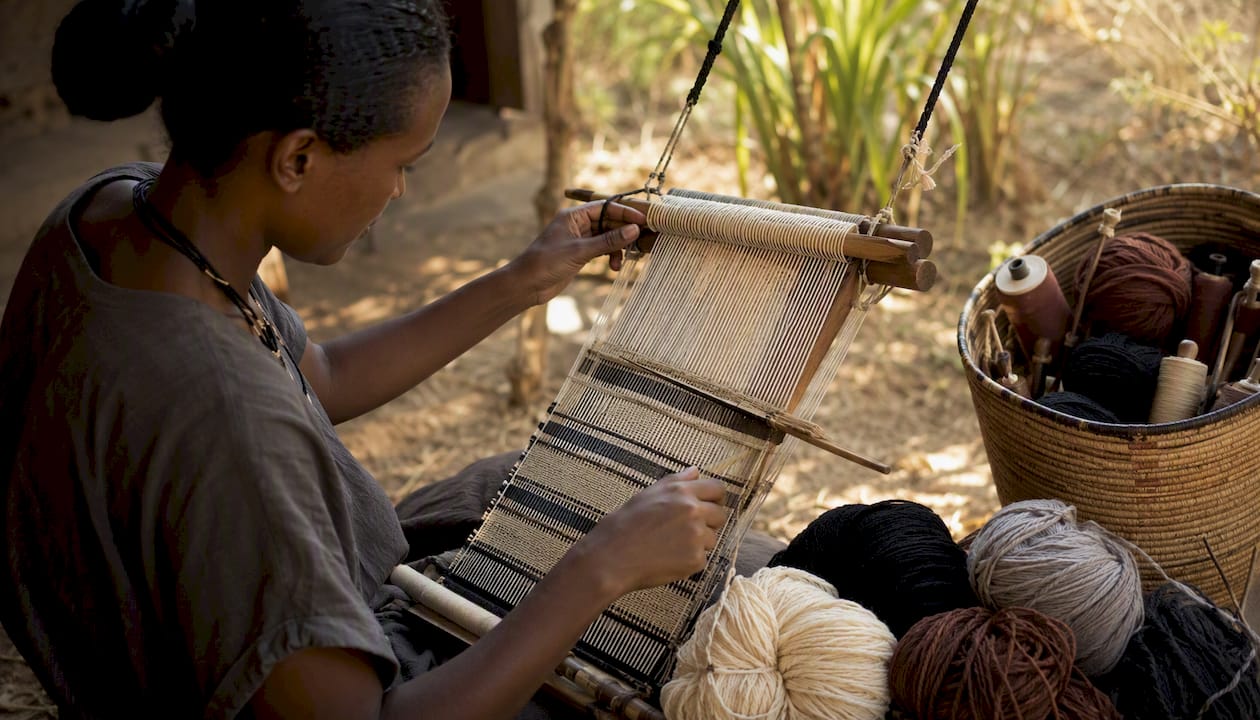
Liya Kebede founded Lemlem to preserve traditional Ethiopian handweaving and create sustainable jobs for women artisans, partnering with woman-owned ateliers and earning B Corp certification. The brand pairs design with social programs, making every piece a traceable act of cultural preservation.
Istory (Kang Ji-hyun): carrying North Korean defectors' stories in wearable art
Seoul-based designer Kang Ji-hyun uses subtle visual devices — sewn patches, discreet motifs — to carry the personal histories of North Korean defectors without turning the garment into a political statement. The wearer knows the story; the world sees only the beauty.
Charles Lu: a love letter to refugee history
Charles Lu describes his collections as a "love letter" to his family's refugee history, weaving his parents' experiences into contemporary silhouettes. Heritage becomes design language, and personal grief becomes shared beauty.
Daisy the Blouse Maker and the Wallach Project: reclaiming what archives hold
The Daisy storytelling methodology reconstructs factory workers' lived experiences from archives and oral histories, revealing the embodied labor behind ready-made garments. Separately, the Wallach Project turns a family's archival printmaking tradition into functional everyday goods, so descendants interact with their heritage rather than preserve it behind glass. Dolly Parton's memoir Behind the Seams works the same way at a personal scale: stage costumes become autobiography, and rhinestones become cultural memory.
What actually makes a garment's story inspiring and credible
Not every "handmade" label tells a real story. The difference between marketing copy and a genuinely inspiring narrative comes down to five verifiable elements:
- Named maker identity: a specific artisan, cooperative, or community — not an anonymous workshop
- Named technique or material: kente weaving, indigo dyeing, hand-rolled buttonholes — something a reader can research independently
- Clear provenance: where the garment was made, by whom, and under what conditions
- Community or social impact: economic opportunity, cultural preservation, or psychosocial benefit that extends beyond the brand
- Documented narrative: interviews, press coverage, academic research, or archival material that a buyer can read
Authenticity signals worth trusting include artisan photos with names, workshop visit documentation, supply-chain traceability commitments, and reputable press coverage. B Corp certification, as Lemlem holds, is one of the most recognized third-party standards for social and environmental accountability.
Pro Tip: Ask for concrete details — who made it, how long the technique takes, where the materials originate. A brand that answers those questions specifically is telling a real story. One that responds with "inspired by" is not.
The craft intensity behind luxury tailoring offers a useful benchmark: at high-end shirtmakers, a single buttonhole can require up to 40 minutes and more than 100 stitches per inch. That kind of specificity is what separates a genuine garment story from a vague claim.
How ethical designers tell garment stories without exploiting makers
Responsible storytelling centers the maker, not the brand. The best practices are straightforward:
- Obtain explicit consent before publishing artisan names, images, or personal histories
- Credit named artisans in product descriptions and editorial content
- Share pay and fair-trade commitments publicly, with specifics rather than generalities
- Use makers' own words and images rather than stock photography
- Avoid language that exoticizes or flattens cultural complexity into a single "exotic" aesthetic
Kang Ji-hyun's approach at Istory demonstrates how restraint can be its own form of respect: subtle patches carry heavy personal narratives without turning the wearer into a walking exhibit. The garment communicates to those who know, and simply looks beautiful to those who don't.
Red flags to watch for: anonymous "handmade" claims with no maker names, stock imagery of artisans in generic settings, and impact statistics with no third-party verification. Ethical fashion storytelling requires the same standard of evidence you would expect from any credible journalism.
How to find, verify, and care for garments with real stories
Where to look
- Curated boutiques and platforms that publish artisan profiles alongside product listings
- Verified editorial profiles in publications like Good Housekeeping, Vogue, and regional fashion press
- Artisan markets and cultural festivals where makers are present in person
- Brand websites that link to press coverage, certifications, or supply-chain documentation
Questions to ask before you buy
| Question | What a good answer looks like |
|---|---|
| Who made this piece? | A named artisan, cooperative, or community with a profile |
| Where was it made? | A specific region, workshop, or country with context |
| Which technique was used? | A named method (e.g., kente weaving, batik, hand embroidery) |
| What are the pay and partnership terms? | Fair-trade certification, named partnership, or published wage data |
| What proof of provenance exists? | Press coverage, certification, artisan photos, or supply-chain documentation |
Caring for artisan garments
- Hand wash or use a gentle cycle with cold water and mild detergent
- Cool iron on the reverse side to protect surface texture and dye
- Store folded in breathable cotton, away from direct sunlight, to preserve color integrity
- Keep original tags and any provenance cards — they are part of the garment's story
Supporting beyond the purchase
Sharing a garment's provenance story on social media extends its reach to new audiences. Choosing repair over replacement honors the maker's labor. When a piece reaches the end of its life, donating to a textile archive or cultural organization keeps the story in circulation.
How Senanukunu preserves West African heritage in every piece
Senanukunu is a Florida-based e-commerce platform built around one conviction: that West African fashion carries stories worth wearing. Every piece in the collection — from ready-to-wear dresses and kaftans to agbada sets and matching statement sets — is produced in limited quantities with ethical manufacturing and artisanal craftsmanship at the center.
The brand's storytelling approach draws on West African cultural heritage: named materials, traditional silhouettes, and production practices that honor the communities behind the craft. Product descriptions reflect provenance rather than vague inspiration, and the brand's commitment to limited-quantity production means each piece retains the intentionality of handcrafted work.
- What Senanukunu sells: dresses, kaftans, agbada sets, jackets, and matching statement sets
- How stories are told: product notes that reference heritage, technique, and cultural context
- Who benefits: artisans and communities connected to West African craft traditions
Pro Tip: When shopping Senanukunu's collections, read the product descriptions carefully — the cultural context and craft details are where the story lives. If you want to know more about a specific piece's provenance, reach out directly through the site.
How these examples were selected
This list draws on a specific set of source types, chosen for their credibility and depth:
- Published journalism from outlets including The New York Times, Vogue, Good Housekeeping, and Korea JoongAng Daily
- Designer interviews and brand profiles that include direct quotes and named artisans
- NGO and UN reporting on reintegration and peacebuilding projects (Ixora / Stitches for Peace)
- Academic and methodological case studies (Daisy the Blouse Maker, FashionStudies.ca)
- Direct brand material from Senanukunu, reflecting first-hand curatorial expertise
This is a curated, illustrative list — not an exhaustive survey of every garment with a meaningful story. Use the five-element checklist in the credibility section above when evaluating any new claim you encounter.
Why garment stories are worth protecting
The most powerful thing a garment can do is remind you that someone made it. Not a machine, not a supply chain abstraction — a person, with a name, a community, and a reason for choosing this craft. When you wear a piece whose story you can trace, you carry that person's work into the world in a way that no museum exhibit can replicate.
What concerns me about the current conversation around "ethical fashion" is how quickly the language of storytelling gets hollowed out. Brands learn that provenance sells, and suddenly every label claims a heritage. The checklist in this article exists precisely because the difference between a real story and a marketing narrative is not always obvious — but it is always findable, if you ask the right questions. Wearing garments with genuine stories is not a passive act. It is a choice to support the artisans, communities, and traditions that make those stories possible.
Meaningful West African garments, ready to wear
Senanukunu brings the principles in this article to life in a collection you can shop today. Each piece reflects West African heritage, ethical production, and the kind of craft intentionality that turns a garment into a story worth telling.
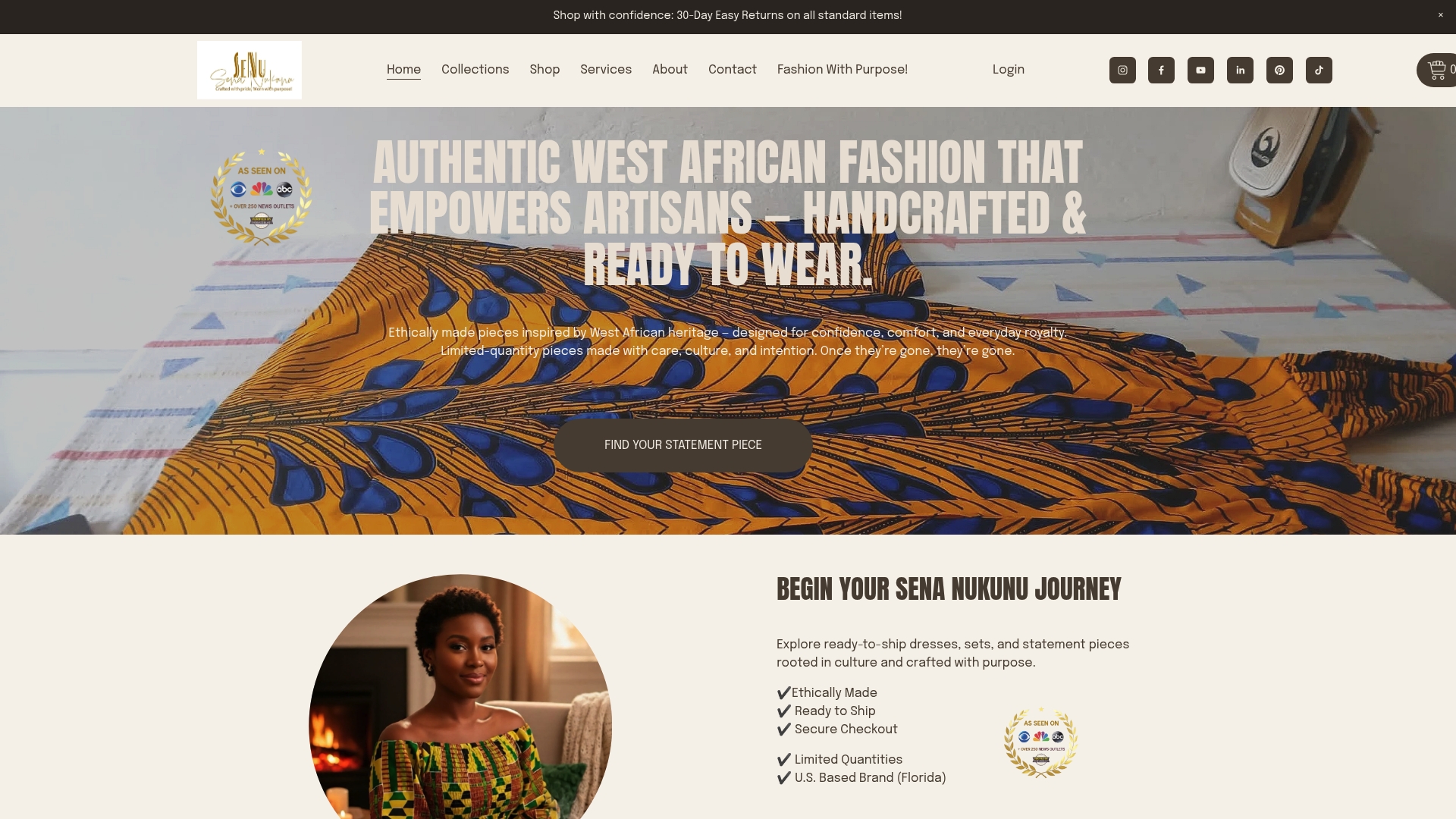
Browse the full collections to find kaftans, dresses, agbada sets, and matching statement pieces — all produced in limited quantities with artisanal care. Product pages include cultural context and craft details so you know exactly what you are wearing and why it matters. For custom or bespoke inquiries, the brand welcomes direct contact through the site.
Visit Senanukunu and find a piece whose story you want to carry.
Sources
- Spirit Kaftan (Garland Magazine)
- From delinquent to fashionista: Designer Kang Ji‑hyun tells stories of North Korean defectors through style (Korea JoongAng Daily)
- Netflix-famed Charles Lu stitches refugee history into fashion line (NOW Toronto)
- Conflict to catwalk: Women ex‑combatants weave reconciliation (UN News)
- Liya Kebede on Lemlem and artisan empowerment (GoodHousekeeping)
- Fashionstudies