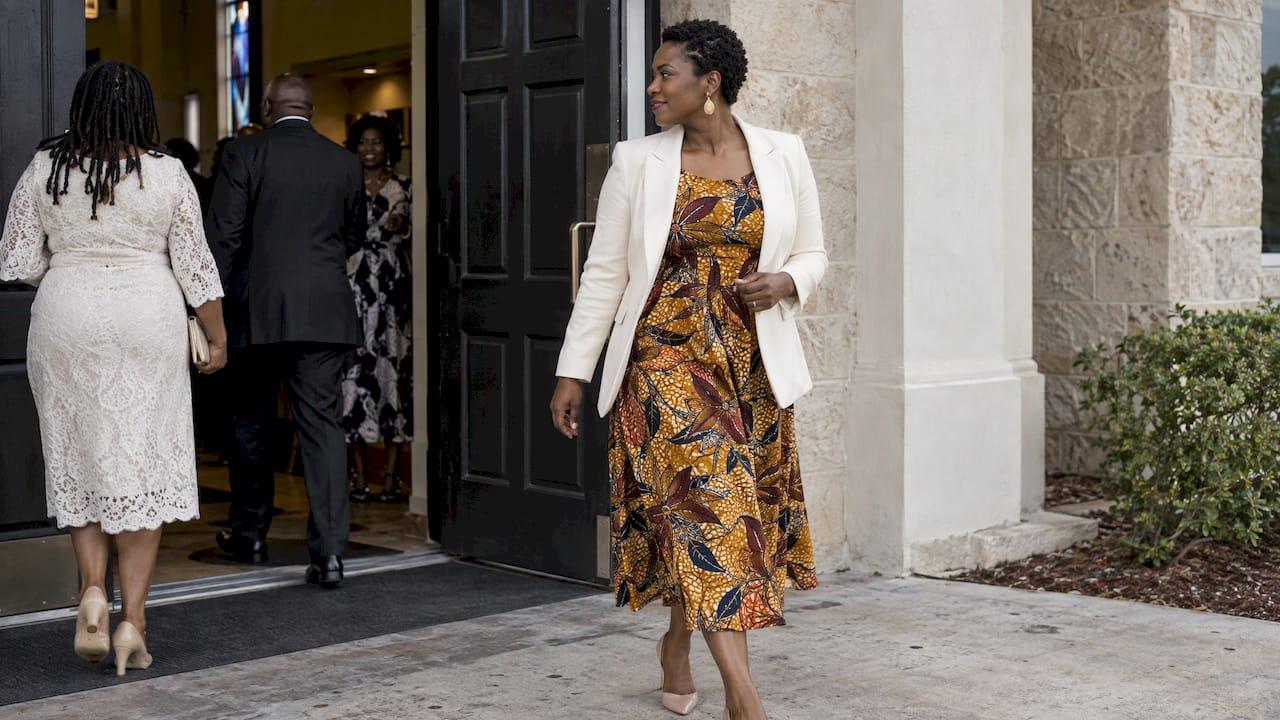
The best African Easter outfit pairs a spring-bright palette (pastels, ivory or white) with one heritage statement piece: a kaftan, an agbada set, an Ankara midi dress or a hand-wrapped headtie. Easter Sunday already celebrates new beginnings through clothing, so West African tailoring and cloth fit naturally into the day. At Sena Nukunu, our ready-to-ship West African dresses, kaftans, agbada sets and matching sets are made in limited quantities, so what you wear to the table or the pew is not what everyone else is wearing.
TL;DR
- Start with white, ivory or a pastel (blush, lavender, mint, soft yellow), then let one West African piece carry the look.
- Women: a midi Ankara dress, a floor-length white gown with a gele, or an embroidered kaftan. Men: an ivory or pastel agbada or kaftan set.
- Keep the rest simple: one bold print, neutral accessories, comfortable shoes for a long service and an egg hunt.
- Coordinate the family through one shared color or print rather than identical outfits.
- Order early enough to allow for tailoring and fit, since good fit is what makes heritage cloth look regal.
Table of Contents
- Why African dress and Easter belong together
- Colors that suit Easter
- Fabrics and silhouettes that work
- Easter looks for women
- Easter looks for men
- Dressing the whole family
- Hats, head wraps and finishing touches
- Worked example: three outfits, one Sunday
- Wear something made with care
- Our perspective
- How to plan your Easter outfit, step by step
- FAQ
- Sources
Why African dress and Easter belong together
Easter in many Black American churches is a fashion event with deep roots. NPR's 2025 report on the holiday calls it the "Olympics of church fashion", where hats draw the eye first, daughters coordinate with their mothers and every accessory is new.
The meaning behind the clothes matters just as much. At Harlem's Abyssinian Baptist Church, Vogue's 2025 Easter coverage describes one family dressed entirely in white to signify purity and a fresh start with the resurrection. It also quotes a congregant who sees dressing up as a way to lift up community and preserve identity.
Wearing West African cloth and silhouettes to Easter extends that same idea. You are dressing with intention, honoring where you come from and celebrating spring in one outfit. That is the thread running through everything below.

Colors that suit Easter
Easter palettes are soft and luminous. InStyle's stylist notes that pastels feel timeless, fresh and celebratory, and the same piece points to lace, silk and subtle texture as alternatives to florals. Translate that into African dress this way:
- White and ivory. The clearest nod to renewal. An ivory agbada or a white floor-length gown needs no pattern to feel ceremonial.
- Pastels. Blush, lavender, mint and soft yellow work in solid kaftans, embroidered necklines and lighter Ankara prints.
- Bold prints with a calm base. If you love saturated wax-print color, let it sit on one piece and keep the rest white, cream or a soft neutral.
- Gold accents. Kente's color language gives gold a place at celebrations, since the cloth was traditionally worn as festive dress for special occasions. Gold jewelry or trim ties a pastel outfit back to heritage.
Fabrics and silhouettes that work
Ankara, the vivid wax-print cotton, is the most recognizable choice. Forbes describes U.S. Ankara as bright, saturated, patterned cotton and notes contemporary shapes such as A-line dresses, pencil skirts, pantsuits and tunics. Those silhouettes already read as polished enough for church.
For Easter specifically, think about three things:
- How long you will be seated. Midi lengths and A-line or wrap shapes move well and stay comfortable through service, lunch and photos.
- The weather. Spring can swing from chilly morning to warm afternoon. A tailored jacket or blazer over a dress or kaftan solves both.
- The formality of the day. Embroidered or richly woven fabrics suit a ceremonial service. Lighter cotton prints suit a brunch or a backyard gathering.
If you want more on making prints look deliberate, our guide to styling Ankara outfits with confidence covers placement and balance, and our modern Ankara dress styles article shows how to choose a cut.
Easter looks for women
Three directions cover most women's celebrations.
The statement midi
An Ankara midi dress in warm oranges, yellows or spring greens, finished with a crisp white blazer, is a dependable church-to-brunch look. Pulse Nigeria's Easter Ankara guide makes a point worth remembering: the key is a style that flatters your body, paired with simple accessories. A well-chosen fabric and a skilled tailor matter more than a complicated design.
The floor-length white gown
For a more formal service, a long white dress with dramatic sleeves and a wrapped gele in a complementary tone is striking. Vanguard Allure's 2026 Easter style guide suggests exactly this, with moderate heels, and also recommends an embroidered kaftan or wide-sleeve boubou in bold colors with delicate neckline detail.
The tailored separates or jumpsuit
If you prefer trousers, an African-print jumpsuit with a defined waist is both comfortable and elegant. Our African print jumpsuit guide explains how to style and care for one. A matching set works the same way: a coordinated top and skirt or trouser looks complete the moment you put it on, which is why our limited-run Ankara matching sets guide is a good next read.
Explore our women's collection and dresses to see the cuts available.
Easter looks for men
Men's African formalwear is made for a day like this. Flowing robes and layered sets carry a ceremonial presence that a standard suit does not, and ivory or pastel tones keep them in the spirit of spring.
- The agbada set. A three-piece agbada (a wide-sleeved, flowing robe worn over matching trousers and a tunic) in ivory or a soft neutral is the most commanding choice. Our Ivory Crown Agbada 3-piece set and Ivory Covenant Ensemble are natural starting points for a white-and-ivory Easter.
- The kaftan set. A kaftan is lighter and easier to move in, which suits a long day. The Midnight Prestige Kaftan 3-piece set offers a deeper tone for men who want contrast against a family in pastels.
- The statement robe. For a stronger entrance, the Woven Nobility: Kings' Robe collection is built around that regal silhouette.
Keep men's accessories restrained: a simple cap or none, polished shoes and perhaps one piece of jewelry. The cloth does the talking.
Dressing the whole family
NPR's report describes full family coordination: girls in babydoll dresses echoing their mothers' outfits, matching headbands and shining shoes. Vogue notes that families treat shopping and getting ready together as a ritual. You can bring that spirit to African dress without making everyone wear the same thing.
Three easy approaches:
- One shared color. Everyone wears ivory, with each person's piece in a different cut.
- One shared print. A mother in an Ankara dress, a daughter with a headband or sash cut from the same cloth, a father with a pocket square or trim.
- Complementary tones. Dad in ivory, Mom in lavender, children in mint and soft yellow, all with a touch of gold.
If your celebration extends beyond Sunday service into a larger gathering, our guide to African church attire breaks down outfits built to last a long day.
Hats, head wraps and finishing touches
In the Black church tradition, the head is where Easter dressing peaks. NPR quotes expert Crumpton tracing the tradition to head adornment during the Great Migration and Harlem Renaissance. Church mothers dressed in silk, rhinestones, flowers, feathers and lace, adornment meant to catch God's eye. A Patheos profile of a Harlem hat maker explains the biblical reasoning behind it, and why the covering is made beautiful.
An African Easter look can honor that custom in two ways: a wide-brimmed hat in a pastel or white, or a gele or headwrap in a tone drawn from your outfit. Choose one, not both, so the head does not compete with the print.

For everything else, Vanguard Allure's Easter accessories piece suggests strappy sandals, a slim belt, a mini bag in a soft hue, pearl accents or layered gold jewelry, and a turban or fascinator for church. A good rule: if the outfit carries a bold print, keep the jewelry simple. If the outfit is a solid white or ivory, let the jewelry and head covering be the statement.
Worked example: three outfits, one Sunday
Here is how the principles come together for a family of three at a morning service followed by lunch at home.
| Person | Look | Finishing touches |
|---|---|---|
| Mother | Ankara midi dress in warm yellow and green, white blazer | Gold studs, headwrap pulling one color from the print, flats |
| Father | Ivory kaftan or agbada set | Polished shoes, one gold accessory |
| Daughter | Pastel dress with a sash or headband in the mother's print | Shiny shoes, small bag |
Notice what is shared: ivory, one print repeated in a small way and a touch of gold. Nobody matches exactly, but the family clearly arrived together.
Wear something made with care
If you want the outfit to say as much as the day itself does, start with our women's collection, our men's agbada and kaftan sets, or the full collections page. Sena Nukunu is a Florida-based brand offering authentic West African ready-to-wear and custom fashion for men and women, from dresses and kaftans to agbada sets, jackets and matching statement sets. Our pieces are made with ethical manufacturing and artisanal craftsmanship, in limited quantities, so your Easter outfit is as distinctive as the occasion.
If you have a particular vision, such as a custom piece for a family photo or a wedding-season celebration, see our services page.
Our perspective
Easter has always asked people to arrive looking renewed. In Black churches, that has meant generations of mothers, fathers and children choosing their best, then wearing it with pride. We see African dress as part of that same story, not a costume added to it.
What we care about is the hand behind the cloth. Each of our pieces is made in limited quantities, with artisanal craftsmanship and ethical production, because a garment you wear to a day of renewal should carry the dignity of the people who made it. Every stitch is a small act of cultural storytelling.
So our advice is simple. Choose one piece that moves you, whether that is an ivory agbada, a kaftan or a vibrant Ankara dress, and let it lead. Keep the rest quiet. Wear it with the confidence of someone who knows exactly where their style comes from.
Sena
How to plan your Easter outfit, step by step
- Choose your palette first. Decide on white, ivory or a pastel, and note the colors your family will wear.
- Pick the one statement piece. A kaftan, agbada set, Ankara dress or gele. Everything else supports it.
- Check the length and layers. Midi or floor-length, with a jacket or blazer for variable spring weather.
- Allow time for fit. Pulse Nigeria's guide credits a creative tailor as part of what makes a budget-friendly Ankara outfit elegant. A hem or sleeve adjusted to you changes how the whole look hangs.
- Add the head and the details. Hat or headwrap, then jewelry and shoes you can stand and sit in comfortably.
- Try it all together at home. Put on the full outfit, with shoes and accessories, at least a few days ahead.
For a wider wardrobe approach, our list of must-have African-inspired pieces helps you choose items you will wear long after Easter, and our look at how U.S. shoppers wear Ankara shows placement and tailoring ideas.
FAQ
What color should I wear for an African Easter outfit?
White and ivory are the most symbolic, and Vogue describes an all-white family look chosen to signify purity and a fresh start. Pastels such as lavender, blush, mint and soft yellow are the other classic choice. A bold Ankara print also works when the rest of the outfit stays neutral.
Can I wear Ankara to church on Easter?
Yes. Ankara dresses, skirts, jumpsuits and tunics are all worn for Easter. Choose a midi or longer length, a modest neckline and a tailored fit, and add a white or neutral blazer if you want a more formal feel.
What can men wear for Easter in African style?
An agbada set or a kaftan set in ivory, white or a soft pastel suits the day well. Keep accessories minimal and let the cut and cloth carry the look.
How do I coordinate African outfits for the whole family?
Share one element rather than matching exactly: a color, a print or a gold accent. For example, put everyone in ivory with different cuts, or repeat one fabric in a sash, headband or pocket square.
Do I need a hat or headwrap?
Not necessarily, but it is a meaningful tradition in many Black churches. A wide-brimmed hat or a gele in a complementary tone adds ceremony. If your outfit already has a bold print, a simple solid covering usually looks best.
Sources
- Why Easter Sunday in the Black church is the Olympics of church fashion, NPR
- On Easter Sunday, congregants at Harlem's Abyssinian Baptist Church, Vogue
- 12 Easter Outfits to Wear This Spring, InStyle
- Wrapped in Pride, Smithsonian National Museum of African Art
- African print apparel and contemporary styles, Forbes
- 18 stunning Ankara outfit ideas for Easter Sunday, Pulse Nigeria
- Easter Sunday Style Inspiration, Vanguard Allure
- Easter Accessories That Elevate Everything, Vanguard Allure
- How Easter Sunday Hats Get Made, Patheos