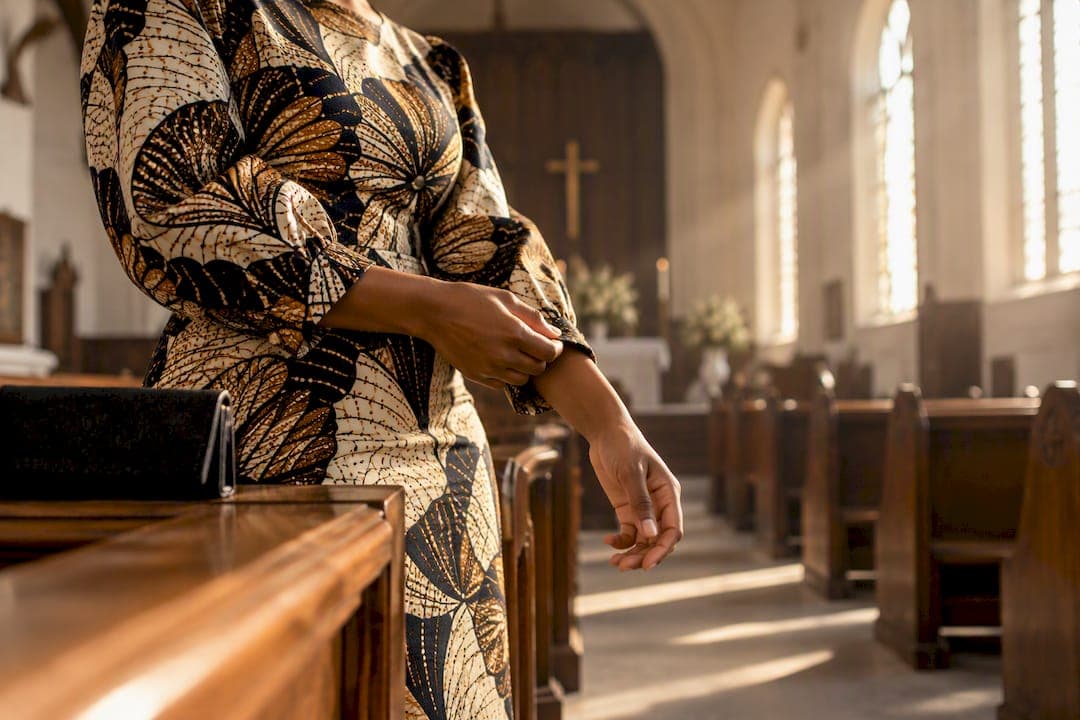
For church, the styles that consistently work are Ankara maxi dresses, Aso Oke sets, kaftans and boubou gowns, and tailored skirt-and-blouse co-ords. The rule that ties them together: choose a modest cut, a breathable and fully lined fabric, and functional details like pockets, since those small choices decide whether a beautiful dress actually feels right through a two-hour service. Read on for how to style each one and where to find a piece worth building a wardrobe around.
TL;DR:
- Most African church outfits should have full lining and hem lengths below the knee to ensure modesty and durability during long services.
- Ankle-length or midi hemlines with high or boat necklines are generally appropriate, while sheer fabrics require layering or a slip for opacity.
- Heavier woven fabrics like Aso Oke and brocade are ideal for special occasions, with prices increasing based on hand-woven quality and intricate details.
- Accessories such as headwraps, structured hats, and modest shoes can elevate simple garments rather than compete with bold prints.
- Focus on fabric choice for comfort, with cotton wax prints being the most practical for warm environments and extended wear.
Table of Contents
- Which African Church Outfits Actually Work?
- How Do You Style African Prints Modestly for Church?
- What Fabrics and Colors Suit Church Attire?
- How Do You Buy or Commission a Church Dress?
- Sena Nukunu Styling for Church Sundays
- What Should Church Attire Cost?
- Why Church Attire Carries Weight Beyond Fashion
- Shop Sena Nukunu for Church-Ready Style
- Sources
- FAQ
Which African Church Outfits Actually Work?
Every one of these looks solves a specific problem: how to look regal without feeling restricted, and how to honor tradition without wearing something that fights you by the second hymn.
Ankara wax-print maxi dresses remain the workhorse of the African church wardrobe for good reason. A long skirt that grazes the ankle, sleeves that cover the shoulder, and a structured bodice give the print room to shine while keeping the silhouette dignified. The bold pattern does the visual work, so the cut can stay simple.
Aso Oke and other woven sets carry more formality. Hand-woven strip cloth signals a special occasion, a wedding, a christening, an Easter or homecoming Sunday, rather than an ordinary week. If your congregation treats certain Sundays as milestone events, this is where a woven set earns its place.
Kaftans and boubou gowns put comfort first without sacrificing presence. A wide, flowing cut moves easily when you sit, stand, and kneel through a full service. Add a fitted belt at the waist and a structured handbag, and the same relaxed silhouette reads polished instead of loose.
Tailored co-ords, a matching skirt and blouse cut from African print or solid fabric, suit a more modern church wardrobe. They mix easily with blazers or wraps and photograph well for family gatherings after service.
Accessories anchor the whole look:
- A gele or headwrap in a coordinating or contrasting fabric
- A modest, structured hat for congregations where hats are customary
- Closed-toe shoes or low block heels for standing during long services
- A small handbag sized for a Bible, phone, and offering envelope
How Do You Style African Prints Modestly for Church?
Building a church-ready look is a sequence of small decisions, not one big choice. Work through it in order:
- Set the sleeve length first. Elbow-length or longer sleeves cover the most ground and work with nearly every silhouette, from fitted bodices to flowing kaftans.
- Choose the hemline next. Ankle-length or midi cuts below the knee suit most congregations; a true floor-length gown reads most formal.
- Pick a modest neckline. A boat neck, high round neck, or modest V that sits above the collarbone keeps the focus on the print, not the cut.
- Layer only if the fabric calls for it. A light slip underneath sheer chiffon or organza solves opacity issues instantly, and a cropped jacket or wrap adds warmth without hiding the outfit's shape.
Temperature and transparency are the two problems that actually derail an outfit on a Sunday morning. A slip under a sheer overlay, a light shawl in an air-conditioned sanctuary, or a cardigan for a cooler morning service fixes both without changing the dress itself.
Headwear deserves its own attention. A simple gele tied in a rose or fan shape reads polished in minutes once you have practiced the fold twice, and it does more to elevate a plain dress than almost any other accessory. Reporting on churchgoing traditions has long noted how Sunday worship hats function as visual signals of belonging in Black congregations, not just decoration.
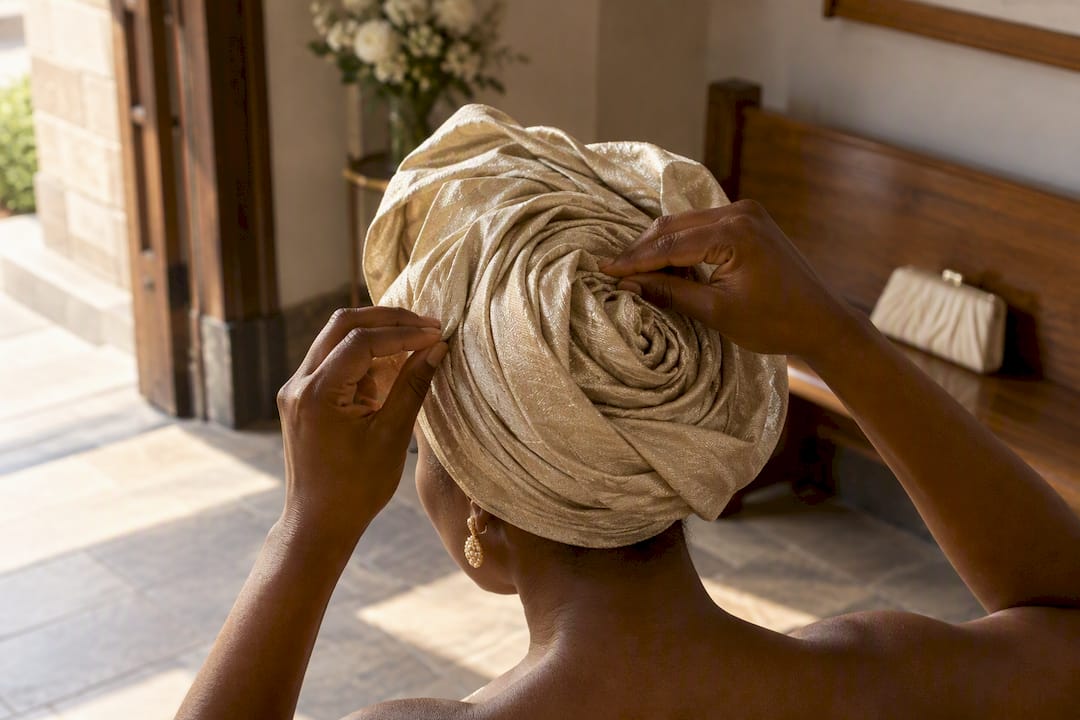
Pro Tip: If your dress has a loud, large-scale print, keep jewelry and shoes solid and understated. Let the fabric be the statement piece, and use accessories to ground it rather than compete with it.
What Fabrics and Colors Suit Church Attire?
The fabric decides comfort more than the silhouette does, so start there. Cotton wax print (the classic Ankara base) breathes well and holds structure without weight, which makes it the most forgiving choice for a warm sanctuary or a service that runs long. Aso Oke and brocade sit heavier and more formal, better suited to occasion Sundays than weekly wear. Chiffon and organza work best as accents, an overlay sleeve or a sash, since on their own they need a lining to avoid transparency.
A few practical notes matter more than they seem:
- Full lining prevents show-through in bright light near stained glass windows
- Wax prints resist wrinkling better than pure cotton, which matters after a car ride to service
- Heavier brocades hold their shape while seated for long stretches, unlike thin synthetics that crease
Color carries meaning in many African church traditions, though the meaning is not universal. Research on South African Independent Churches documents color coding in church uniforms, where white commonly signals purity and blue or green marks prayer or healing roles in certain denominations. In Zambian Catholic communities, printed chitenge cloth similarly carries group identity among women's associations, marking membership as much as personal taste. These associations shift by region and congregation, so treat any color guide as a starting point, not a rulebook, and ask before wearing a specific color to a service where uniforms are worn.
How Do You Buy or Commission a Church Dress?
Fit problems rarely show up in a fitting room mirror. They show up an hour into the service, when a hem rides up while sitting or a sleeve pulls at the shoulder during a hymn. Check these before you buy:
- Lining: full lining, not partial, for opacity in bright light
- Hem and sleeve length: measure while seated, not just standing
- Closures: hidden zippers or wrap ties are easier to manage than back buttons
- Pockets: genuinely useful for a phone or tissue during a long service
- Fabric opacity: hold any lightweight print up to a window before committing
Measure yourself seated as well as standing, since that is where most modesty problems appear. A tailor can usually drop a hem an inch, extend a sleeve, or raise a neckline in under a week, which solves 90 percent of fit complaints on an otherwise good dress.
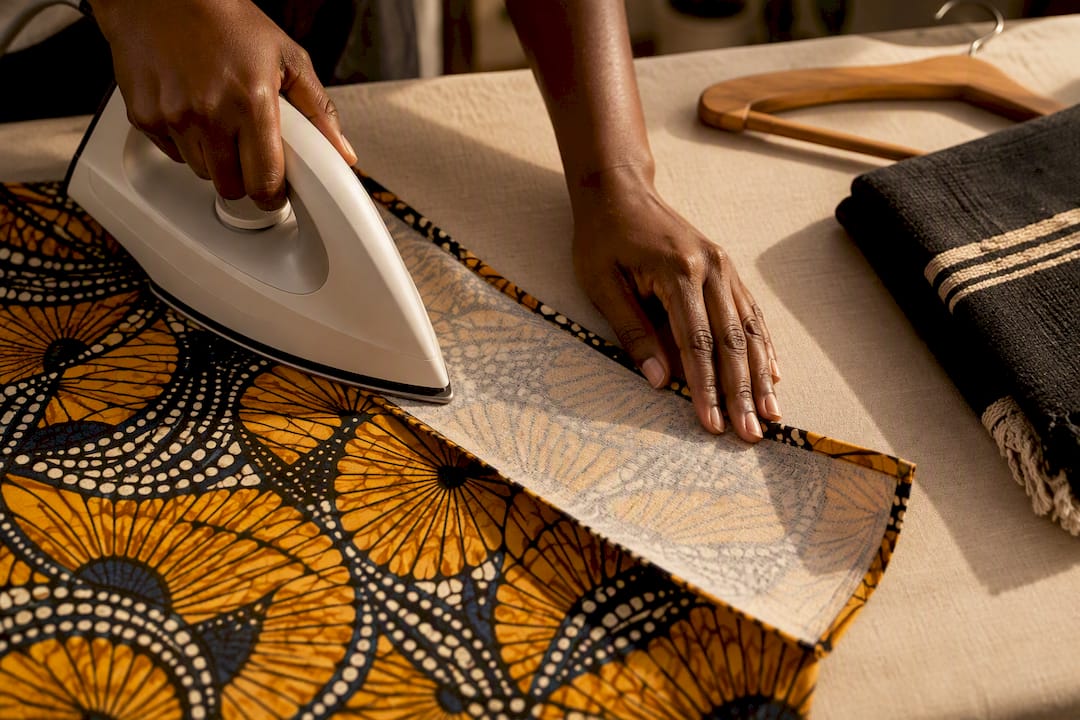
Ready-to-wear works when you need something within days and your size runs true to standard measurements. Custom or made-to-order pieces are worth the extra lead time for weddings, anniversaries, or any Sunday you want a fit built specifically for your body. Care matters as much as the purchase: hand wash or use a gentle cycle for wax prints, press on the reverse side to protect the pattern, and hang rather than fold heavier brocades to avoid crease lines across the bodice.
Sena Nukunu Styling for Church Sundays
The brand offers pieces designed for service mornings, not just for photos. A Woven Radiance: Queens in Bloom silhouette pairs a structured bodice with a flowing skirt, ready for a coordinating gele and low block heel. A Woven Stride: Queen In Comfort piece suits a longer service where you need ease through the shoulders and waist without losing shape.
Three quick recipes to build from our collections:
- A fitted maxi, a solid-color headwrap, and closed-toe heels for a regular Sunday
- A woven set, statement earrings, and a structured clutch for a milestone service
- A kaftan, a fitted belt, and low sandals for a warm-climate congregation
The collections include limited-quantity artisan-crafted pieces showcasing detailed craftsmanship alongside bold prints. Explore the full collection page for current styles.
What Should Church Attire Cost?
Budget expectations vary widely across African church attire, and knowing where the price differences actually come from helps you shop smarter rather than just cheaper.
Entry-level Ankara maxi dresses in mass-produced cotton wax print sit at the lower end of the range, since the fabric costs less and construction is typically simpler, often unlined or partially lined. Mid-range pieces, structured Ankara dresses with full lining, hidden closures, and finished seams, cost more because those details take additional labor and better interior fabric. Aso Oke sets and heavier woven pieces sit at the top of the range almost always, since hand-woven strip cloth takes far longer to produce than printed cotton and the yardage required for a full set is substantial.
Custom and made-to-order pieces generally cost more than ready-to-wear equivalents, reflecting the tailoring time and individual attention rather than markup for its own sake. Limited-quantity artisan pieces, the kind built in small runs rather than mass production, price higher than fast-fashion equivalents because the labor-to-garment ratio is simply different. If budget is the main constraint, prioritize spending on the pieces you will wear most often, a versatile maxi dress or a tailored co-ord, and treat a heavier Aso Oke set as an occasional-wear investment for milestone Sundays rather than weekly rotation.
Why Church Attire Carries Weight Beyond Fashion
Clothing in African and African diaspora churches has rarely been just fashion. Scholarship on church uniforms in African Independent Churches traces how colonial-era dress standards gave way to indigenized, symbolic garments that congregants now wear as markers of dignity and belonging, not imposed rules. Expectations still vary by congregation, so ask before assuming a color or uniform detail carries the same meaning everywhere. Wear what moves you, and let it meet the room you're walking into with respect.
— Sena
Shop Sena Nukunu for Church-Ready Style
Senanukunu exists for exactly this moment: the Sunday you want a dress that carries real West African craftsmanship instead of a print copied onto fast fashion. The Women's Collections include limited-quantity pieces made by artisans in ethical conditions, offering garments inspired by heritage.
When you're choosing a piece, check the lining first, since a fully lined dress holds its shape and opacity through a full service far better than an unlined one, and look for a length that already sits at or below the knee so a tailor has less work to do. Browse the Women's Collections for ready-to-ship pieces, or explore Woven Nobility, Woven Stride, and the rest of our collections to find the silhouette that fits your congregation and your calendar. If a piece speaks to you, it's ready to ship, not a maybe for someday.
Sources
- Robes of Resistance: Black Women, Church Uniforms, and Decolonial Identity in South African Independent Churches (AICs)
- Thesis/research on uniforms and social identification in African churches
- Sunday worship hats and Black women — Washington Informer
FAQ
What Is Considered African Church Attire?
African church attire typically means modest, often colorful clothing rooted in West and Southern African traditions, such as Ankara maxi dresses, Aso Oke sets, kaftans, and tailored co-ords. The common thread is coverage (sleeves, hemline below the knee) paired with fabric that holds structure through a full service.
Why Do African Americans Dress Up for Church?
Dressing up for church in African diaspora communities functions as an expression of dignity and identity, not simply fashion, tracing back to how church dress evolved from imposed colonial standards into markers of cultural pride. It's a weekly act of self-respect and community presentation as much as a style choice.
What Are Some Examples of African Cultural Attire?
Common examples include Ankara wax-print dresses, Aso Oke woven cloth for formal occasions, kaftans and boubou gowns, and gele headwraps. Color and cloth also carry meaning in specific traditions; chitenge fabric marks group identity among some Catholic women's associations in Zambia, for instance.
How Do You Style African Attire for a Modern Look?
Pair a bold-print maxi dress or co-ord with understated jewelry and closed-toe shoes so the fabric stays the focal point. A structured belt, a neatly tied headwrap, and a small handbag finish the look, and pieces from Senanukunu's Women's Collections are already cut with this balance in mind.