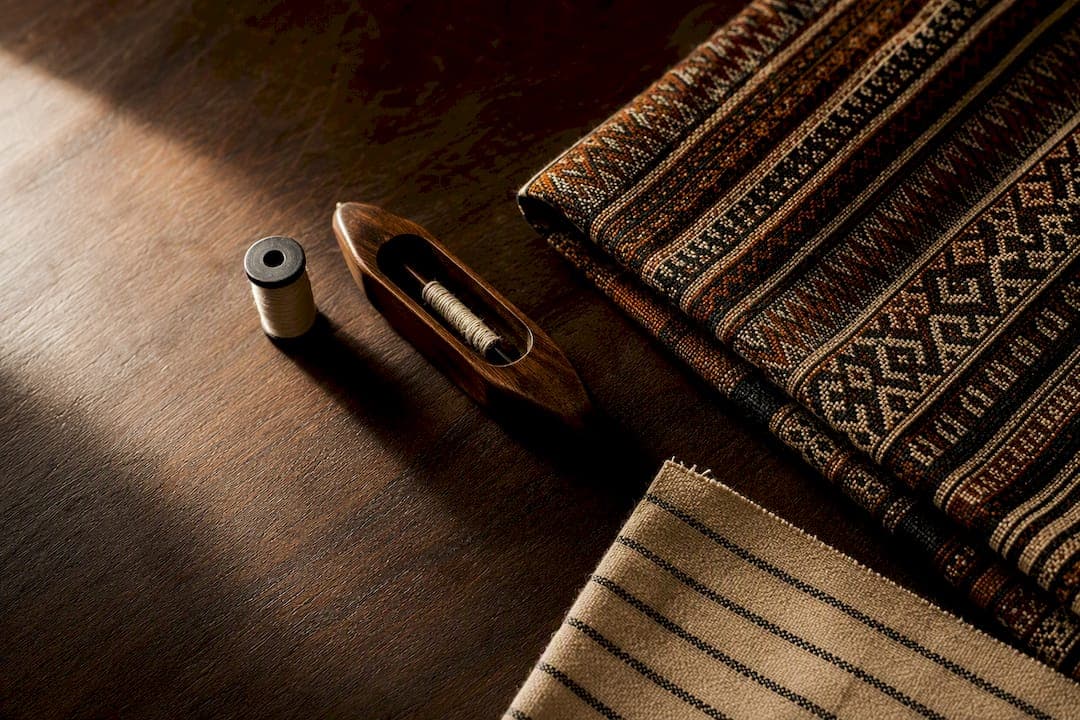
The line between the two comes down to power, consent, and credit: appreciation happens when someone learns about a culture, seeks permission where it matters, and gives credit and benefit back to the community of origin; appropriation happens when a dominant group extracts a sacred or meaningful element, strips its context, and profits with no acknowledgment or reciprocity. Three quick checks reveal which side of the line a choice falls on: who benefits financially, was any form of consent or consultation sought, and is the origin community credited accurately. The rest of this guide walks through why that distinction carries real weight, and how to act on it.
TL;DR:
- Wearing cultural elements without consultation or proper credit can cause erasure, exploitation, or denigration of original communities.
- Authentic partnerships involve sourcing directly from artisans, paying fair wages, and clearly crediting the origin to prevent cultural theft.
- Recognizing sacred items and decontextualized patterns as inappropriate helps identify potential appropriation in fashion.
- Legal protections are limited for traditional cultural expressions, making moral and ethical practices essential for respectful engagement.
- Buying from small, artisan-supported collections ensures direct benefit to the source community and promotes genuine cultural appreciation.
Table of Contents
- Cultural Appreciation vs. Appropriation Fashion: What's the Real Difference?
- Why Does This Distinction Actually Matter?
- What Are the Warning Signs of Appropriation in Fashion?
- How Do You Practice Cultural Appreciation Instead of Appropriation?
- What Do WIPO and Legal Scholars Say About Cultural Borrowing?
- How Does an Ethical Fashion Brand Put This Into Practice?
- A Note on Staying Humble in This Work
- Want to Wear the Culture, Not Just the Trend?
- Sources
- FAQ
Cultural Appreciation vs. Appropriation Fashion: What's the Real Difference?
Cultural appropriation, as defined by scholars, is the adoption of cultural elements by members of a dominant group in ways that are extractive, unacknowledged, or disrespectful, and it typically involves a power imbalance between the groups involved. Cultural appreciation flips that dynamic. It centers learning, permission, accurate attribution, and reciprocity, meaning the culture being drawn from actually gains something from the exchange, whether that's recognition, revenue, or a genuine collaborative relationship.
Three specific harms separate appropriation from harmless borrowing:
- Erasure happens when a design's origin is scrubbed from the story, so a runway look inspired by a specific ethnic group gets marketed as generic "tribal print" or "ethnic chic" with no source named.
- Exploitation happens when a brand profits from a community's aesthetic without paying, crediting, or partnering with the artisans who created or preserved it.
- Denigration happens when a sacred or meaningful garment gets reduced to a costume or trend, stripped of the ceremony, rank, or spiritual weight it carries at home.
Borrowing itself isn't automatically harmful. Fashion has always moved across borders, and cultures have exchanged textiles, silhouettes, and techniques for centuries. What determines harm is context: who holds the power in the exchange, whether the source community had any say, and whether the result flattens a living tradition into a disposable trend. A West African print reproduced by a fast-fashion label with no sourcing disclosure sits in a very different category than a print licensed directly from the weavers who designed it.
Why Does This Distinction Actually Matter?
Appropriation does more than offend. It flattens meaning, erasing the specific history, region, and people behind a garment, and reduces centuries of craft to a passing aesthetic. When a headwrap tied for religious observance becomes a "boho accessory," the spiritual and cultural function disappears from the story entirely, leaving only the shape.
The economic harm runs just as deep. When global brands replicate patterns, weaves, or silhouettes without paying or crediting the originating communities, the people who developed and sustained those techniques see none of the profit. Academic analysis of the fashion industry's remix culture finds that appropriation disputes recur constantly because IP law offers limited protection for communal traditional designs. A pattern held collectively by a region or ethnic group rarely qualifies for the kind of individual copyright or trademark protection that would let its originators demand payment.
There's a psychological cost too. Seeing your heritage worn as costume by people who've never had to defend it, explain it, or live with the stereotypes attached to it, reinforces the sense that culture is only valuable once it's been detached from the people who built it. That reputational risk cuts both ways: designers and retailers who get called out for lifting sacred or specific cultural elements face public backlash that can outlast the trend cycle by years.
Statistic Callout: Legal scholarship on fashion and intellectual property consistently notes that traditional cultural expressions, including patterns, weaves, and motifs tied to specific communities, are largely not covered by existing IP frameworks, so the law typically offers little recourse even when extraction is clear.

What Are the Warning Signs of Appropriation in Fashion?
Certain patterns show up again and again in fashion controversies, and learning to spot them turns an abstract ethical question into a concrete checklist.
- Sacred items marketed as costume. Ceremonial headdresses, religious garments, or ritual jewelry sold as a Halloween accessory or festival "look" strip meaning from something that was never meant to be casual.
- Decontextualization. A pattern or silhouette gets renamed, rebranded, or marketed with no reference to its actual origin, so shoppers have no idea where it came from or why it matters.
- Profit without credit. A brand replicates a distinctive weave or print, sells it at scale, and never names, pays, or partners with the artisans whose technique it borrowed.
- Flattening into stereotype. An entire region's fashion gets reduced to one exaggerated visual shorthand, erasing the diversity of styles, techniques, and meanings within that culture.
Consider a few anonymized patterns that show up across the industry. A luxury label releases a runway collection built around a specific community's textile motifs, credits no source, and prices the pieces well beyond what the originating artisans could ever charge for their own work. A costume retailer sells a "tribal warrior" outfit assembled from unrelated cultural elements mashed together for shock value, with entire seasonal costume categories built around vague, decontextualized cultural imagery.
A celebrity wears a garment tied to a specific rank or achievement within a culture, with no understanding of what that garment signifies, at an event with no cultural connection at all.
Now compare those to a counterexample. A brand partners directly with weavers in a specific region, names the technique and its origin on every product page, pays fair rates, and reinvests part of the profit into the community. The visual result might look similar to an appropriated version at a glance, but the presence of consent, credit, and payment changes everything about what that garment represents.

How Do You Practice Cultural Appreciation Instead of Appropriation?
Turning the warning signs into action looks different depending on whether you're buying, designing, or selling. Understanding cultural appropriation in the abstract only helps if it translates into habits.
If you're a shopper:
- Research where a print, silhouette, or technique actually comes from before you buy it.
- Prioritize buying directly from artisans or brands that source from and pay the originating community.
- Ask brands direct questions about sourcing and partnership when that information isn't listed.
- If someone from that culture tells you a piece or use is inappropriate, listen and adjust rather than getting defensive.
If you're a designer or retailer:
- Seek actual consent from the community whose designs, patterns, or techniques you're drawing on, rather than assuming inspiration is permission.
- Hire or co-create with origin artisans instead of replicating their work internally.
- Document where every design element came from, and make that provenance visible to customers.
- Build revenue-sharing or royalty arrangements so the originating community benefits financially, not just symbolically.
Communication matters as much as sourcing. Accurate attribution means naming the specific region, ethnic group, or artisan collective, not a vague "global inspiration" credit line. The strongest brand storytelling puts origin voices at the center of the narrative instead of using them as a footnote, an approach reflected in how brands document types of contemporary West African motifs and the meaning behind them.
Pro Tip: If you discover your own past purchase, product, or campaign caused harm, the sequence matters: apologize directly and specifically, remediate where possible (pull the product, redirect profits, credit publicly), and change the underlying process so it doesn't repeat. A vague statement without a changed practice behind it fixes nothing.
Practical ethics guides converge on the same core actions across nearly every source: research the origin, credit accurately, pay fairly, and build genuine collaboration rather than one-way extraction.
What Do WIPO and Legal Scholars Say About Cultural Borrowing?
The World Intellectual Property Organization has published draft steps specifically for fashion companies engaging with Indigenous Peoples' traditional cultural expressions, developed alongside Indigenous communities, fashion companies, and IP experts. The guidance treats consultation as the starting point rather than an afterthought, recommending brands:
- Consult with the originating community before using a traditional design, symbol, or technique.
- Secure informed consent rather than assuming silence means approval.
- Adapt designs in ways the community itself considers acceptable, rather than unilaterally modifying sacred or significant elements.
- Establish benefit-sharing arrangements so the community gains financially from commercial use.
WIPO frames these draft steps as practical conversation starters rather than binding law, and that distinction matters because intellectual property law itself often can't reach these cases. Legal scholars have proposed a concept called "cultural passing off," along with taxonomies that sort cultural signifiers by how distinct and commercially exploited they are, in an effort to identify which misuses might support an actual legal claim. Most cases, though, remain outside what courts can address. That gap is exactly why moral and ethical obligations carry so much weight in fashion. The law sets a floor, not a ceiling, and brands that wait for legal pressure before acting respectfully are already behind.
How Does an Ethical Fashion Brand Put This Into Practice?
Some fashion brands build collections around West African heritage with commitments such as authentic sourcing, ethical manufacturing, and support for artisans whose craftsmanship shapes every piece. That approach shows up in how the brand talks about its own products, treating each garment as a piece of a larger cultural story rather than a disconnected trend.
Some collections are made in limited quantities, crafted with care and purpose, and rooted in a legacy of artisanship that deserves to be named, not erased.
Guides like ways to honor Black culture in fashion and explanations of what makes culturally inspired fashion ethical give shoppers language for evaluating any brand, not only this one. The takeaway for other retailers is straightforward: name your sources, keep production small enough to stay accountable, and let the artisans behind the work stay visible in the story you tell.
A Note on Staying Humble in This Work
None of us gets this perfectly right on the first try, and that's the honest starting point. The goal isn't to memorize a rulebook. It's to keep listening, stay willing to be corrected, and treat relationships with origin communities as more important than any single aesthetic choice.
A few small habits carry real weight: buy from makers who benefit directly from the sale, share and amplify origin voices instead of speaking over them, and stay curious enough to keep learning after you think you already understand.
— Sena
Want to Wear the Culture, Not Just the Trend?
Some brands offer an alternative to fast fashion's copy-and-erase cycle by providing pieces sourced from West African artisans, made in limited quantities, with the story of who made them kept front and center instead of stripped away. Collections of men's and women's fashion may tie back to craftsmanship and heritage rather than a trend cycle that disappears next season.
Buying this way does more than fill a closet. It puts money directly behind the artisans and traditions that inspired the piece, which is the reciprocity so much of fashion's appropriation problem is missing in the first place. If you're ready to shop with that intention, browse the current Woven collections and find a piece with a story you can actually name.
Sources
- WIPO — Traditional knowledge and fashion
- Culture appropriation and the global fashion industry — Cambridge University Press
- Cultural appropriation — Wikipedia
- Fashion and ethics: cultural appropriation — Indiana University Libraries guide
FAQ
Is There a Real Difference Between Appropriation and Appreciation?
Yes. Appreciation involves learning, consent, credit, and reciprocity, while appropriation involves extraction from a group with less power, usually with no acknowledgment or benefit returned. The clearest test is whether the origin community was consulted and whether they gained anything from the exchange.
Is Wearing a Kimono Cultural Appropriation?
It depends heavily on context. Wearing a kimono respectfully, understanding its significance, sourcing it appropriately, and not reducing it to a costume, tends to read as appreciation, while wearing a ceremonial version as a party costume without that understanding tips toward appropriation.
Is It Wrong to Dress as Another Culture for a Costume?
Dressing as a caricature of another culture, especially using sacred or ceremonial items as costume pieces, causes real harm because it denigrates meaningful traditions for entertainment. The distinguishing factor is whether the "costume" reduces a living culture to a stereotype or exaggerated prop.
Does Senanukunu Sell Authentic West African Pieces?
Senanukunu sells ready-to-wear and custom West African inspired fashion, including agbada sets, kaftans, dresses, and matching statement pieces, made through ethical manufacturing in limited quantities. Current prices are listed directly on the Senanukunu collections page.
Can Fashion Brands Legally Be Stopped From Copying Cultural Designs?
Rarely, because most traditional cultural expressions fall outside standard intellectual property protections designed for individual authorship rather than communal traditions. Legal scholars have proposed concepts like "cultural passing off" to close some of that gap, but most cases still fall outside what courts can address, which is why ethical practice matters more than legal enforcement.