TL;DR:
- African fashion weeks are a decentralized series of city-based events across the continent that showcase cultural heritage and develop industry infrastructure. They prioritize craftsmanship, sustainability, and long-term growth over Western spectacle-driven models, making them more accessible and community-focused. These events collectively form a dynamic ecosystem that is shaping global fashion through cultural storytelling and industry-building initiatives.
African fashion weeks are a collection of city-based events held across the continent that combine runway showcases with cultural celebration and commercial industry development. They are not a single unified event. They are a decentralized circuit of distinct programs in cities like Lagos, Nairobi, Dakar, Accra, and Cape Town, each with its own identity, schedule, and accreditation process. Understanding what are African fashion weeks means recognizing them as both cultural institutions and business platforms. Lagos Fashion Week stands as one of the most recognized institutional hubs, while Africa Sourcing Fashion Week and South African Fashion Week each anchor different pillars of the ecosystem. Together, these African fashion events represent one of the most dynamic and rapidly evolving forces in global fashion today.
What are african fashion weeks, really?
African fashion weeks are decentralized, city-specific events without a single continent-wide governing body. That distinction matters enormously. When you hear "Paris Fashion Week," you picture one city, one calendar, one prestige hierarchy. African fashion weeks operate differently by design. Each city builds its own program, attracts its own designers, and serves its own regional market.
The circuit spans more than 20 events across the continent. Lagos Fashion Week functions as the most institutionally developed hub, offering buyer programs, fashion education, and textile initiatives alongside its runway shows. Africa Sourcing Fashion Week in Nairobi focuses on trade and manufacturing connections. South African Fashion Week prioritizes ecosystem development and measurable commercial outcomes. These are not interchangeable events. They are complementary pillars of a growing continental industry.
The term "African fashion week" is the widely used descriptive phrase, but industry insiders increasingly refer to this ecosystem as the African fashion circuit. That framing captures the interconnected, multi-city nature of these events far better than any single-event label.
How do african fashion weeks differ from western fashion weeks?
The contrast with Western fashion weeks is sharp and intentional. European fashion weeks in Paris, Milan, and London are spectacle-driven, seasonal, and extraordinarily expensive. Participation costs at Western shows can reach €100,000 to €500,000 per designer. That financial model excludes most of the world's emerging talent by default.

African fashion weeks reject that model. The priorities here are craftsmanship, sustainability, small-batch production, and long-term industry development. Lagos Fashion Week, for example, operates on a non-profit model that allows variable designer participation costs, making the runway genuinely accessible to emerging voices. That is not a compromise. It is a deliberate philosophical choice about what fashion is for.
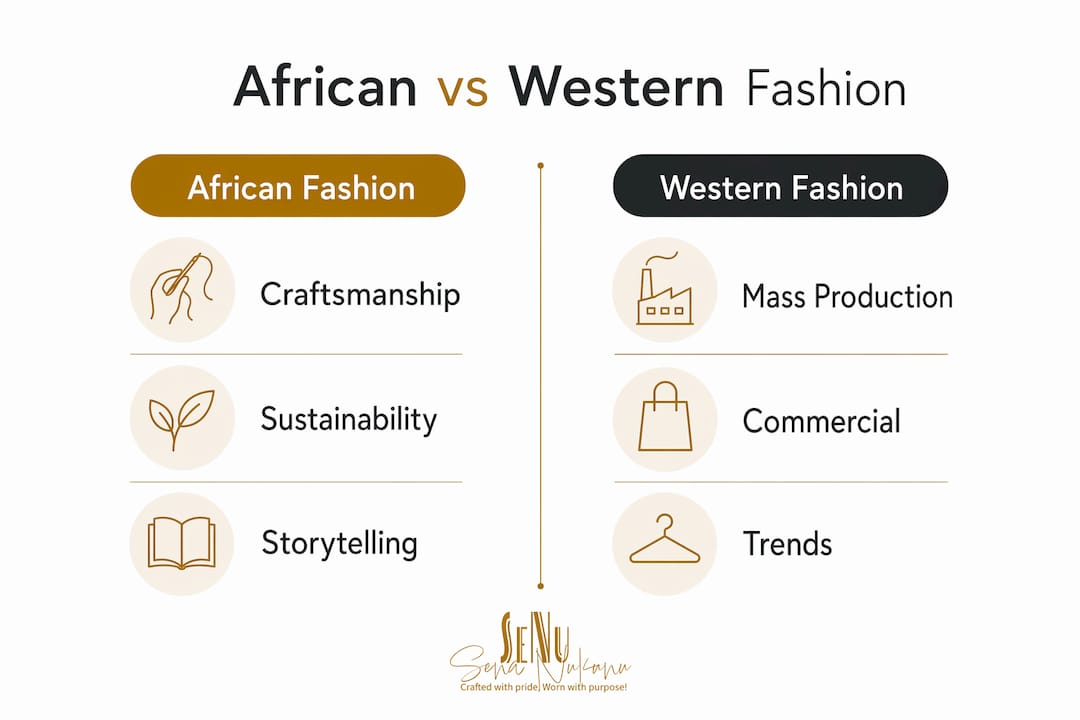
The cultural priorities also differ. African fashion showcases treat the runway as a space for storytelling, heritage preservation, and artisanal recognition. Every garment carries the weight of a tradition, a textile technique, or a community of makers. Western luxury fashion often defines prestige through excess and exclusivity. African fashion weeks are reframing global conversations by defining luxury through material intelligence, ethical production, and cultural depth instead.
The format itself is evolving. In 2026, L'Afrique Fashion Fest spans Lagos, Port Harcourt, and London in a single edition. That multi-city, hybrid approach reflects a broader trend across the circuit toward digital accessibility and international reach.
Key distinctions between African and Western fashion weeks include:
- Cost structure: African events prioritize accessible participation over prestige pricing.
- Production philosophy: Small-batch, artisanal, and sustainable methods over mass seasonal output.
- Cultural function: Heritage storytelling and community recognition alongside commercial goals.
- Format flexibility: Hybrid online and offline formats, multi-city editions, and regional collaborations.
- Industry focus: Long-term infrastructure building over short-term trend cycles.
Pro Tip: If you follow African fashion weeks for trend forecasting, look beyond the runway images. The buyer programs, textile initiatives, and industry roundtables at events like Lagos Fashion Week reveal where the continent's fashion economy is actually heading.
Which are the top african fashion weeks today?
The top African fashion weeks each occupy a distinct role in the continental ecosystem. Here is a direct comparison of the most influential events currently shaping the circuit.
| Event | Location | Primary Focus | Unique Feature |
|---|---|---|---|
| Lagos Fashion Week | Lagos, Nigeria | Runway, buyer programs, education | Non-profit model; textile and production support |
| Africa Sourcing Fashion Week | Nairobi, Kenya | B2B trade, manufacturing | 3,500+ visitors from 30+ countries |
| South African Fashion Week | Cape Town/Johannesburg | Ecosystem development, media value | Audited ROI metrics for partners |
| Week of Fashion South Africa | South Africa | Menswear, womenswear, graduate talent | Expanded to womenswear in 2026 |
| Hub of Africa Fashion Week | Addis Ababa, Ethiopia | Pan-African designer showcase | 15-year legacy; designers from Ethiopia, Kenya, Nigeria, South Africa |
| L'Afrique Fashion Fest | Lagos, Port Harcourt, London | Multi-city, diaspora reach | Three-city 2026 edition |
| Dakar Fashion Week | Dakar, Senegal | Cultural heritage, West African design | Strong focus on traditional textiles |
Africa Sourcing Fashion Week deserves special attention for what it represents. Its three-day program connects textile and leather manufacturers directly with global buyers. That B2B infrastructure is rare in fashion week formats anywhere in the world. The event's reach across 30+ countries signals that Nairobi is positioning itself as a manufacturing and trade hub, not just a cultural showcase city.
South African Fashion Week measures success differently from most events. It evaluates outcomes through digital performance, media value, and partner ROI. That accountability framework is a sign of institutional maturity. It treats fashion weeks as business investments, not just cultural moments.
How do african fashion weeks build industry infrastructure?
The most successful African fashion weeks function as value chain integration platforms, not just runway events. That distinction separates the events that genuinely advance designer careers from those that offer visibility without commercial follow-through.
Lagos Fashion Week exemplifies this model. Its buyer programs connect designers with retail partners. Its fashion education components prepare emerging talent for the business realities of the industry. Its textile initiatives support the upstream supply chain that designers depend on. The runway show is the visible tip of a much larger operational structure.
"The future value of African fashion weeks lies in transforming runways into fashion stock exchanges, focusing on buyer programs, retail readiness, and industry infrastructure rather than just visibility and hype." — OMIREN STYLES
That vision is compelling, and it is already partially realized. But the circuit faces real structural challenges. Participation costs extend beyond show fees to collection development, logistics, PR, and travel. Many designers self-fund their participation without any guarantee of commercial return. Wholesale and retail infrastructure remains fragmented across the continent, meaning runway visibility does not automatically translate into sales.
The events that are solving this problem share common features:
- Structured buyer access programs that connect designers with verified retail partners.
- Industry roundtables that address supply chain, pricing, and export readiness.
- Digital distribution channels that extend runway reach beyond the event itself.
- Mentorship and retail training components for emerging designers.
Supporting West African artisans through ethical purchasing is one direct way fashion enthusiasts contribute to this infrastructure from outside the industry.
What can you expect when attending african fashion week events?
Attending African fashion week events requires preparation that differs from attending a single centralized event. Because the circuit is city-specific with separate scheduling and accreditation processes, your first step is always localized research. There is no single ticket or press pass that covers the continent.
Here is what the experience typically includes and how to prepare:
- Research the specific event. Lagos Fashion Week, Dakar Fashion Week, and Africa Sourcing Fashion Week each have distinct registration processes, dates, and access tiers. Start at the official event website for the city you plan to attend.
- Understand the program structure. Most events combine runway shows with trade exhibitions, cultural performances, panel discussions, and networking sessions. Africa Sourcing Fashion Week, for example, is primarily trade-focused, while Dakar Fashion Week leans heavily into cultural heritage programming.
- Explore digital access. Many events now offer hybrid formats with livestreamed shows and digital lookbooks. The 2026 L'Afrique Fashion Fest spanning Lagos, Port Harcourt, and London is a prime example of how the circuit is expanding its digital reach.
- Engage with the full range of styles. African fashion showcases cover menswear, womenswear, artisanal garments, and graduate collections. The Week of Fashion South Africa expanded in 2026 to include womenswear and graduate student showcases alongside its established menswear program.
- Support ethical and sustainable brands. Many designers at these events work with small-batch, artisanal production methods. Buying directly from designers or their authorized retailers after the show is one of the most meaningful ways to support the ecosystem.
Pro Tip: Follow the social media accounts of specific African fashion weeks at least three months before the event. Accreditation windows for press and buyers open early and close fast, especially for Lagos Fashion Week and South African Fashion Week.
The diaspora style trends emerging from these events are increasingly influencing international fashion, which means you can engage with the aesthetic even if you cannot attend in person.
Key takeaways
African fashion weeks are decentralized, city-based platforms that combine cultural storytelling with serious business infrastructure, and the most influential events measure success through commercial outcomes, not just runway visibility.
| Point | Details |
|---|---|
| Decentralized circuit | African fashion weeks are city-specific events, not one continental program, requiring localized research for attendance. |
| Business infrastructure focus | Top events like Lagos Fashion Week offer buyer programs, retail training, and textile support beyond the runway. |
| Accessible participation model | Non-profit and variable-cost structures make African fashion weeks more inclusive than Western counterparts. |
| Hybrid and multi-city formats | Events like L'Afrique Fashion Fest span multiple cities and digital platforms, expanding global reach in 2026. |
| Commercial accountability | South African Fashion Week measures success through audited media value and partner ROI, not audience hype alone. |
Why african fashion weeks deserve your full attention
I have followed the African fashion circuit for years, and the observation that stays with me is this: these events are doing something Western fashion weeks stopped doing a long time ago. They are building industries, not just brands.
Paris and Milan create desire. Lagos and Nairobi create infrastructure. That is not a small distinction. When Lagos Fashion Week runs buyer programs alongside its runway shows, it is acknowledging that a beautiful collection means nothing if the designer cannot get it into stores. That kind of institutional honesty is rare in fashion anywhere.
What excites me most right now is the hybrid format evolution. The 2026 L'Afrique Fashion Fest spanning three cities is not a logistical experiment. It is a statement about where African fashion's audience actually lives, including the diaspora in London, New York, and beyond. The circuit is catching up to its own global relevance.
The challenge I see is the self-funding trap. Too many talented designers are spending money they do not have on runway appearances that do not convert to sales. The "fashion stock exchange" model, where events prioritize buyer access and retail readiness over spectacle, is the right direction. Events that commit to that model will outlast those that do not.
My recommendation: do not just watch the runway shows. Follow the buyer programs, the industry roundtables, and the post-event commercial outcomes. That is where the real story of African fashion's global rise is being written. And if you want to understand why celebrating African designers matters beyond aesthetics, the infrastructure these events are building is your answer.
— Sena
Discover the spirit of african fashion at Senanukunu
The creativity and cultural pride you see on African fashion week runways live in every piece at Senanukunu. Our collection is rooted in West African heritage, crafted in limited quantities with care, and designed to carry the same spirit of artisanship and legacy that defines the continent's most celebrated designers.
Whether you are drawn to the bold textiles of Lagos Fashion Week or the timeless elegance of Dakar's heritage-inspired designs, you will find pieces at Senanukunu that speak that same language. Browse our curated dress collection and wear the story of West African craftsmanship with confidence. Every piece is ready to ship and made to make you feel regal, connected, and proud.
FAQ
What are african fashion weeks in simple terms?
African fashion weeks are a circuit of city-based fashion events held across Africa that combine runway shows with cultural programming and business development. They are not one event but a collection of distinct programs in cities like Lagos, Nairobi, Dakar, and Cape Town.
How many african fashion week events exist?
The African fashion circuit includes over 20 events across the continent, with Lagos Fashion Week, Africa Sourcing Fashion Week, and South African Fashion Week among the most institutionally developed.
Can you attend african fashion weeks virtually?
Many African fashion weeks now offer hybrid formats with digital access. The 2026 L'Afrique Fashion Fest spans Lagos, Port Harcourt, and London, and several events provide livestreamed shows and digital lookbooks for international audiences.
How do african fashion weeks support designers financially?
Lagos Fashion Week operates on a non-profit model with variable participation costs, making it far more accessible than Western shows. However, designers still often self-fund collection development, logistics, and travel, and commercial returns are not guaranteed without strong buyer program infrastructure.
What makes african fashion weeks different from paris or milan?
African fashion weeks prioritize craftsmanship, sustainability, and long-term industry building over seasonal spectacle. Western shows can cost €100,000–€500,000 per designer, while African events use accessible cost structures and focus on buyer access, retail readiness, and cultural storytelling.