TL;DR:
- Matching set fashion involves wearing coordinated pieces made from the same fabric, print, or color story, creating a unified look. Its history reflects evolving styles from formal to casual, emphasizing versatility, fit, and cultural significance, especially in West African textiles. Contemporary trends highlight affordable, culturally inspired options, encouraging styling variations to maximize wardrobe use.
Matching set fashion is having a moment, and it is far bigger than the tracksuit revival you might be thinking of. At its core, what is matching set fashion? It is the art of wearing two or more pieces designed from the same fabric, color story, or print, creating a unified look with built-in visual intention. But that definition barely scratches the surface. These coordinated fashion sets carry real history, deep psychological pull, and surprising styling flexibility that most people never fully explore. If you have ever dismissed a matching set as too simple or too bold, this guide will change how you see them.
Table of Contents
- Key Takeaways
- What is matching set fashion: origins and history
- Defining matching sets: design, coordination, and terminology
- How to style matching sets for maximum versatility
- The psychological and cultural appeal of matching sets
- Current matching set trends and smart shopping tips
- My take on matching sets as a styling tool
- Discover vibrant matching sets at Senanukunu
- FAQ
Key Takeaways
| Point | Details |
|---|---|
| Matching sets have deep roots | These looks trace back to mid-20th century designers who used coordinated pieces to express freedom and polish. |
| Matching does not mean identical | Harmony in color, texture, or pattern counts as a true coordinated set, with no need for exact duplication. |
| Two pieces can become many outfits | Treating sets as capsule pieces creates three or more outfit variations from just one purchase. |
| Fit determines everything | Poor tailoring doubles visual flaws; the right fit transforms a matching set into a statement look. |
| Cultural significance adds depth | Matching sets from West African textile traditions carry storytelling and legacy, not just aesthetics. |
What is matching set fashion: origins and history
To understand where matching set fashion stands today, you have to go back about a century. Early 20th-century fashion was structured, corseted, and deeply formal. Coordinated dressing was a luxury signal, not a practical tool.
The turning point came in the mid-20th century. The modern matching set trend traces its design philosophy to innovators like Coco Chanel, who in the 1960s pushed women toward coordinated outfits that prioritized freedom of movement alongside a polished appearance. Chanel understood something that contemporary designers still build on: when pieces share a visual language, the wearer projects confidence without effort.
The decades that followed brought interesting shifts:
- 1970s and 1980s: Matching leisure sets became synonymous with casual culture. Velour tracksuits and coordinated sportswear made the concept democratic and accessible.
- 1990s: Minimalist fashion pulled attention toward separates, and the matching set fell slightly out of editorial favor.
- 2000s: A quiet resurgence began through streetwear, with brands pairing logo-printed tops with matching bottoms in a way that felt fresh rather than retro.
- 2010s to present: Co-ord sets balance structure and fluidity in ways previous decades never fully achieved, with cropped tops and wide-legged trousers becoming a defining silhouette of contemporary matching set outfits.
"Fashion is not something that exists in dresses only. Fashion is in the sky, in the street; fashion has to do with ideas, the way we live, what is happening." — Coco Chanel
This evolution matters because it tells you that matching sets have never been static. Every decade reinterpreted them to reflect how people wanted to feel and be seen.
Defining matching sets: design, coordination, and terminology
Here is where a lot of people get confused, and the confusion is worth clearing up. Not all coordinated looks are matching sets, and not all matching sets need to be perfectly identical.
Matching in fashion today stresses harmony through shared elements like color palette, fabric weight, or print, rather than requiring exact duplication. A linen blazer paired with linen trousers in the same shade is a matching set. So is a dashiki print top worn with a wrap skirt cut from the same Ankara fabric, even if the silhouettes differ dramatically.
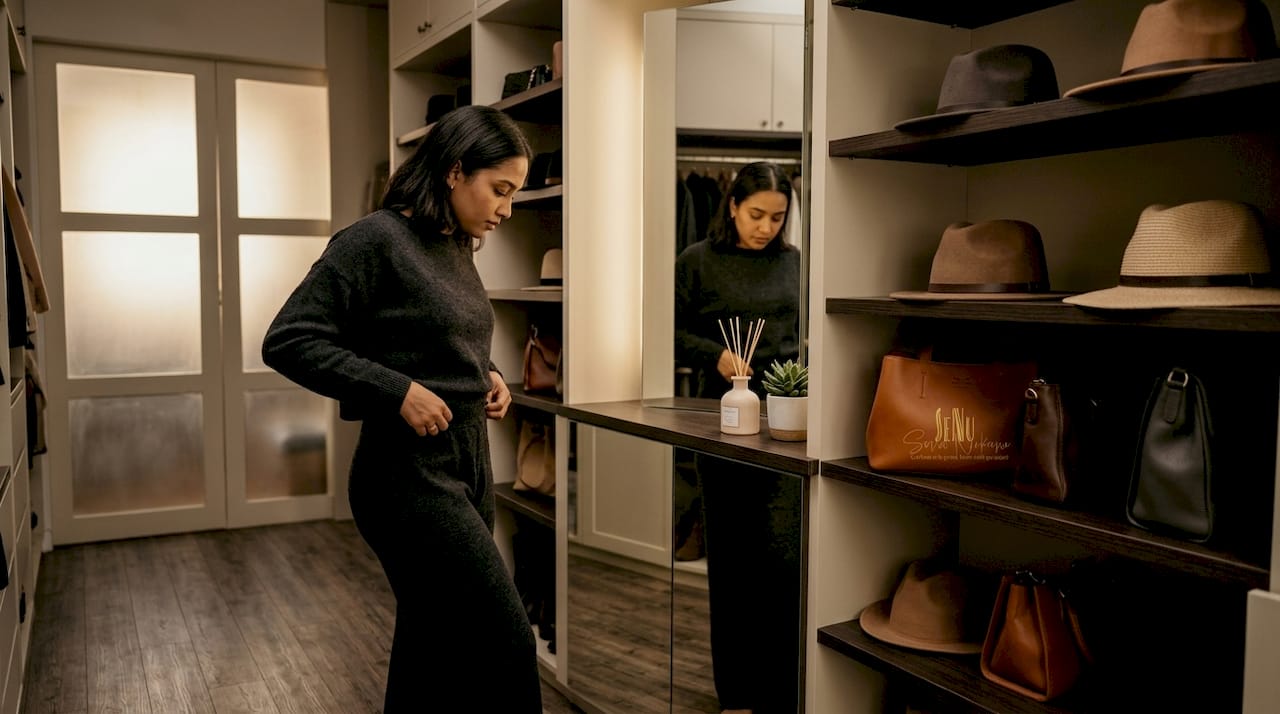
The term "co-ords" comes from the word "coordinated" and is often used interchangeably with matching sets, though it sometimes implies a slightly more relaxed coordination standard. Here is a quick breakdown to organize the terminology:
| Term | What it means | Example |
|---|---|---|
| Matching set | Two or more pieces from identical fabric or print | Kente-print crop top and wide-leg trousers |
| Co-ords | Coordinated pieces with shared color or texture | Navy linen blazer and tailored navy shorts |
| Coordinated outfit | Pieces chosen to complement, not necessarily match | White blouse with patterned skirt in similar tones |
| Three-piece set | Matching top, bottom, and a third piece like a jacket | Matching blazer, cami, and trouser in one print |
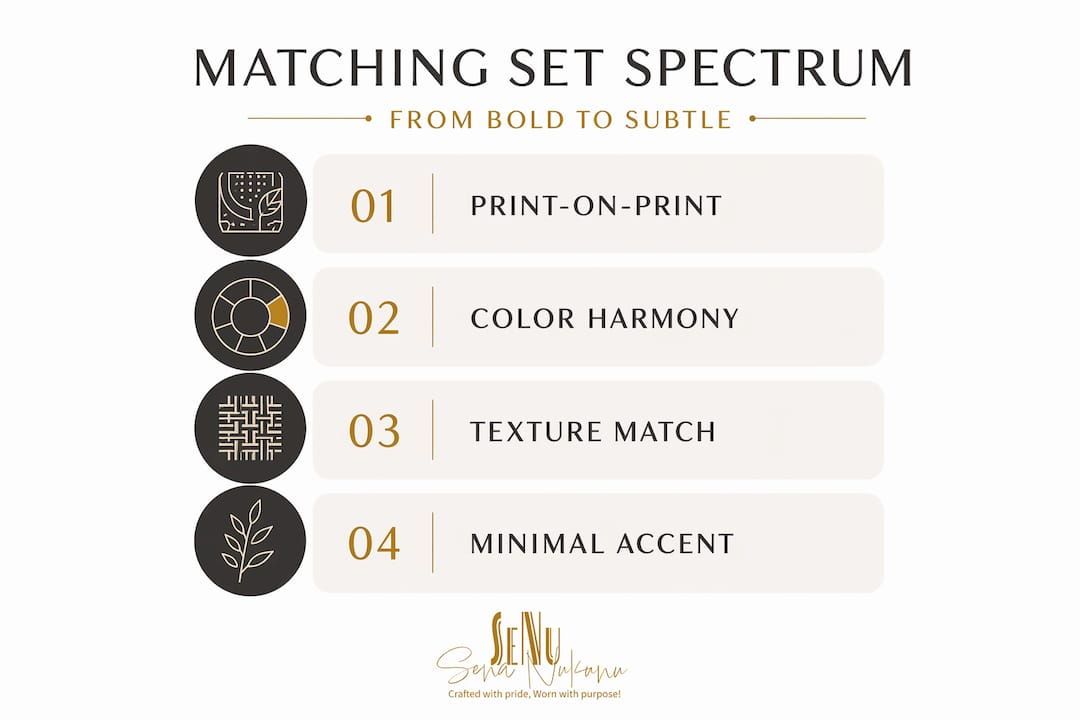
The critical insight here is that matching set fashion operates on a spectrum. You can go full print-on-print with a bold African wax fabric, or you can keep it understated with a monochrome linen duo. Both count. Both carry intention.
Pro Tip: When you choose a matching set with a high-contrast or large-scale print, let the set do all the talking. Keep accessories minimal and let the fabric carry the visual weight.
How to style matching sets for maximum versatility
The biggest styling mistake people make with matching sets is wearing them only as a complete unit, as if the pieces are married to each other forever. They are not. Treating matching sets as capsule wardrobe pieces and mixing individual pieces with other items creates three or more distinct outfit variations from just two garments.
Here is a practical framework for getting the most from any coordinated set you own:
-
Wear the set as intended. Start here. Put both pieces on together and study the silhouette. This is your baseline look, and it tells you what the designer intended in terms of proportion and balance.
-
Separate the top and style it with denim. A printed or textured top from a matching set almost always becomes a statement piece when paired with simple jeans or dark denim. This is how you extract a casual daytime look from a dressy set.
-
Pair the bottom with a neutral or contrasting top. Wide-leg matching set trousers worn with a white fitted tee or a structured blazer in a complementary color creates a look that reads entirely different from the original set.
-
Layer strategically. A matching set bottom worn under a trench coat or oversized blazer transforms the entire outfit's formality level without requiring any new pieces.
-
Add texture through accessories. A bold woven bag, stacked bracelets, or a printed scarf introduces a new layer of dimension, especially useful when the matching set itself is a solid color.
When it comes to fit, the rules are unforgiving. Poor fit in matching sets can double visual flaws and create what stylists bluntly call a "pajama appearance." The top and bottom do not need to be form-fitting, but they need to be intentional. A relaxed silhouette works beautifully when both pieces are the same level of relaxed. Mixing a boxy top with baggy bottoms in the same print, without any fitted element to anchor the look, reads as unintentional.
Pro Tip: If you fall in love with a matching set but one piece does not fit perfectly off the rack, invest in basic tailoring for that piece. The cost is almost always worth it, and it turns a good outfit into a great one.
You can find expert guidance on wearing statement pieces confidently if you want to go deeper on the art of building bold looks that feel intentional rather than overwhelming.
The psychological and cultural appeal of matching sets
There is a reason matching sets feel good the moment you put them on. Matching sets appeal psychologically by creating visual harmony that reduces cognitive load and increases confidence. Your brain reads a coordinated outfit as resolved, complete, and settled, and that sense of resolution translates into how you carry yourself.
This goes beyond personal psychology. Coordinated outfits serve as social signals, symbolizing unity, group identity, and shared aesthetic values. Think about how sports teams use matching uniforms to build cohesion, or how traditional West African ceremonies use coordinated fabrics worn by family members to express belonging and lineage. The matching set is never just clothing. It is communication.
From a wardrobe philosophy standpoint, matching sets align beautifully with minimalist and capsule wardrobe thinking. Instead of owning fifty individual pieces that rarely work together, a well-chosen set gives you a reliable visual foundation. When every piece in your wardrobe is designed to coordinate, getting dressed becomes a creative act rather than a stressful one.
Wearing a matching set rooted in cultural textile tradition is not just a style choice. It is a way of carrying forward the stories woven into every thread.
There is also something deeply empowering about wearing matching sets from specific cultural traditions. Ankara fabric sets, Kente-print co-ords, and handwoven textile duos carry the identity and resilience of the communities that created them. When you choose those pieces intentionally, you are participating in a living legacy of artistry and expression.
For a deeper look at how cultural fashion can be styled with confidence, the guide to styling Ankara outfits from Senanukunu offers grounded, specific advice.
Current matching set trends and smart shopping tips
The numbers confirm what you already sense when you scroll through social media or walk into boutiques. Women's matching set arrivals surged 75% from 2019 to 2022, and that momentum has not slowed down. Travel-ready sets, day-to-night convertible pieces, and culturally inspired prints are all driving the current wave of interest.
What makes today's market particularly exciting is accessibility. Many matching sets are available for under $50, blending comfort and a polished appearance for travel, work, and daily wear. You do not need to spend dramatically to find quality coordinated sets.
When shopping for your next matching set, keep these priorities in mind:
- Prioritize fabric with structure. Linen, cotton canvas, and woven textiles hold their shape across long days and warm climates, which is especially important for travel-ready sets.
- Choose prints with personal resonance. A geometric Kente pattern or an abstract Adinkra-inspired print will carry meaning that a generic floral never will. Wear what tells your story.
- Check the size consistency. Some brands size tops and bottoms separately. Always verify that the pieces are offered as a coordinated unit or that the sizing translates well across both.
- Think about the third-piece potential. Before buying, ask yourself whether the top works with jeans and whether the bottom works with a neutral top. If yes to both, you are getting significant wardrobe value.
Senanukunu's collection of 2-piece and 3-piece sets is built specifically around this kind of versatility, with West African fabrics and silhouettes designed to function as both a complete look and as individual statement pieces.
My take on matching sets as a styling tool
I have watched matching sets get dismissed as the "lazy" fashion choice, and I disagree with that entirely. In my experience, it takes more confidence to wear a bold, coordinated set than it does to hide behind a neutral, mixed outfit. The matching set forces you to own the look completely.
What I have learned from watching people wear these pieces is that fit and intention are the only two variables that separate a powerful matching set from one that falls flat. When you put on a set that fits exactly right, there is a posture shift. People stand taller. They move differently. That is not a small thing.
My honest advice: stop treating your matching set as a uniform you put on and forget. Treat it as a foundation. Wear the top separately on Tuesday. Pair the trousers with a denim jacket on Thursday. Let the pieces work across your week. When you do that, you stop seeing a matching set as a single outfit and start seeing it as a wardrobe strategy. That shift in thinking changes everything about how you shop and how you dress.
The cultural matching sets I find most compelling are the ones where the fabric itself has a story. Every stitch carries the spirit of a legacy, and that adds a dimension to your look that no generic coordinated set can replicate.
— Sena
Discover vibrant matching sets at Senanukunu
If this article has sparked something in you, whether curiosity about styling, appreciation for the history, or a desire to own a coordinated set that truly means something, then Senanukunu was built for exactly that moment.
Senanukunu offers a curated collection of West African-inspired matching sets, crafted with intention and respect for the artisans behind every piece. From bold Ankara print co-ords to elegant handwoven fabric sets, each piece is designed to work as a complete look and as versatile separates. Pieces are available in limited quantities, so they stay special and stay meaningful. If you are ready to wear fashion that carries culture, confidence, and craftsmanship in every thread, explore the full range of vibrant styles at Senanukunu and find the set that speaks to who you are.
FAQ
What are matching sets in fashion?
Matching sets are two or more clothing pieces designed from the same fabric, print, or color story to create a unified, coordinated look. They can be worn together as a complete outfit or styled separately as individual pieces.
How do I style a matching set without looking overdressed?
Separate the pieces and style one at a time with neutral basics, or wear the full set with understated accessories to let the fabric speak. Fit is the key variable: a well-fitted relaxed set always reads as intentional, not overdone.
What is the difference between co-ords and a matching set?
Co-ords are coordinated pieces that share color or texture but may not be from identical fabric, while matching sets are cut from the exact same material or print. Both fall under the broader umbrella of coordinated fashion sets.
Why are matching sets so popular right now?
Women's matching set arrivals surged 75% between 2019 and 2022, driven by demand for versatile, travel-friendly pieces that look polished with minimal effort. Their psychological appeal, comfort, and capsule wardrobe efficiency keep driving that growth.
Can I wear a matching set to work?
Yes, provided the fabric and silhouette are appropriate for your environment. A tailored linen co-ord or a structured woven set works beautifully in professional settings, especially when paired with clean footwear and minimal accessories.