
TL;DR:
- Fashion as self-expression involves using clothing and accessories to communicate identity and values nonverbally. It functions as a semiotic system where garments encode cultural and personal meanings, revealing layers of identity and social belonging.
Fashion as self-expression is the practice of using clothing, color, silhouette, and accessories to communicate identity, values, and culture without speaking a word. Scholars formally call this semiotic dressing, the idea that every garment carries coded meaning readable by others. What is fashion as self-expression in everyday life? It is the deliberate choice to wear a kente-print wrap dress to a meeting, a vintage band tee to a first date, or a bold headwrap to a family gathering. Each choice tells a story. Style is the personal embodiment of those choices, and it speaks before you ever open your mouth.
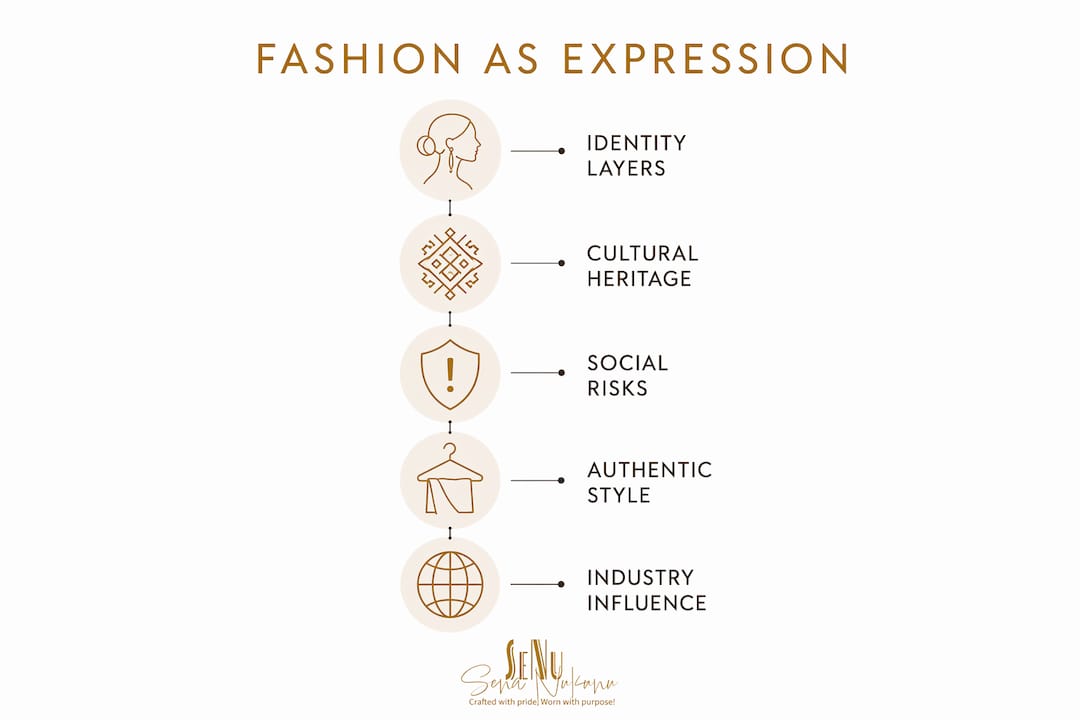
How does fashion serve as a language of self-expression and identity?
Fashion functions as a semiotic system, a structured visual language where garments, colors, and silhouettes carry encoded cultural and personal meanings. Scholars Roland Barthes, Joanne Entwistle, and Malcolm Barnard each described clothing as a "social skin," the outermost layer through which private identity meets public life. That framing matters because it shifts fashion from vanity to communication.
"Every garment functions as a communicative choice, reflecting personal history and cultural narrative, not merely aesthetic preference."
The social dimension of dressing is captured in the concept of the "looking-glass self," the idea that people dress both for how they see themselves and for how they want others to see them. You choose a structured blazer not just because you like it, but because it signals authority. You reach for a flowing linen set because it signals ease. Both choices are identity statements.
Fashion also mediates desire and social norms, constantly negotiating between individuality and collective acceptance. That tension is what makes personal style choices so charged. Dressing is never purely private. It is always a negotiation between who you are and who the world expects you to be.
Key ways fashion operates as a language:
- Color signals mood, cultural affiliation, and status across different societies.
- Silhouette communicates formality, gender expression, and subcultural belonging.
- Fabric and texture convey economic position and ethical values, such as choosing handwoven cloth over mass-produced synthetics.
- Accessories function as punctuation marks, sharpening or softening the overall message of an outfit.
In what ways do clothing choices reflect multiple layers of identity?
A single outfit can carry multiple identity markers at once. Fashion communicates intersecting identities including gender, profession, social group, religious affiliation, sexual orientation, and financial status, often within one look. A 2025 study focusing on LGBTQIA+ individuals found that style functions as a primary communication tool when verbal or social recognition is limited. That finding applies broadly: for many people, clothing is the first accessible site of self-declaration.
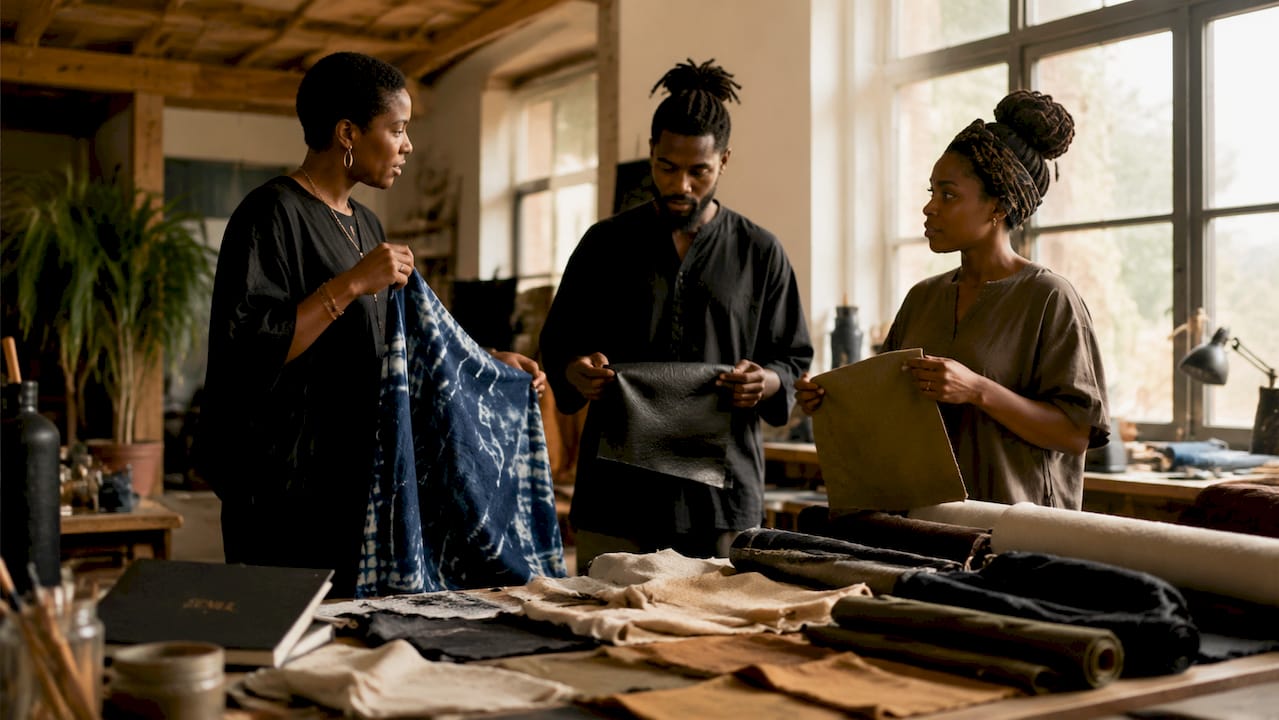
Cultural heritage shapes these choices profoundly. West African textile traditions, for example, use specific patterns and colors to signal lineage, celebration, and community role. Wearing an Ankara print or an embroidered kaftan is not just an aesthetic choice. It is a declaration of belonging and pride. Senanukunu's pieces are built on exactly this principle, where heritage and values are woven into every design.
Fashion also marks difference as much as belonging. Subcultural groups from punk to streetwear communities use clothing to signal "we are not them." That act of distinction is itself a form of identity work.
| Identity layer | How fashion expresses it | Example |
|---|---|---|
| Cultural heritage | Textiles, patterns, and colors tied to tradition | Kente cloth, embroidered kaftans |
| Gender expression | Silhouette, cut, and styling choices | Tailored suits, flowing wrap dresses |
| Professional role | Formality level and dress codes | Structured blazers, uniforms |
| Religious identity | Modesty standards, symbolic garments | Headscarves, modest-cut dresses |
| Subcultural belonging | Logos, brands, and styling codes | Streetwear, vintage, cottagecore |
Pro Tip: When you feel disconnected from your wardrobe, ask which identity layer feels most underrepresented in your closet. That gap is often where the most authentic style work begins.
How do individuals negotiate social risks through fashion?
Not everyone can dress freely. Young consumers in restrictive societies use what researchers call consumer bricolage to assert identity while managing social risk. A study drawing on 40 interviews and 150 surveys among 18–35 year-olds identified five specific practices. Each one is a form of adaptive agency, a way of saying "I exist" within a system that limits expression.
- Accessorizing. Adding culturally significant jewelry, bags, or headwear to an otherwise conventional outfit. The base look satisfies social expectations; the accessory carries the personal message.
- Customization. Altering mass-produced garments through embroidery, dyeing, or tailoring to create something that feels personal and distinct.
- Hybrid styling. Combining elements from different cultural or subcultural codes in one outfit, honoring multiple identities simultaneously.
- Assembling. Curating a look from thrifted, inherited, or handmade pieces that carry specific personal or cultural histories.
- Ideational bricolage. Dressing according to an internal philosophy or value system, such as ethical sourcing or cultural pride, even when the outward look appears conventional.
Consumer bricolage reveals fashion as an adaptive survival mechanism, not just a lifestyle preference. This is why fashion as identity is never trivial. For many people, the way they dress is a daily act of resilience. Style is the territory where personal agency survives even when other freedoms are constrained.
What practical tips help you express yourself authentically through fashion?
Authentic self-expression through style starts with self-knowledge, not a shopping cart. Personal style does not require expensive clothing. Small, intentional details aligned with your internal interests build a more genuine wardrobe than any trend-driven haul. The goal is coherence between who you are and what you wear.
Here is how to build that coherence deliberately:
- Audit what you already own. Pull out the pieces you reach for instinctively. They reveal your actual style preferences, not your aspirational ones.
- Identify your color story. Notice which colors make you feel most like yourself. Wear them more. Color is the fastest way to shift how you feel in a room.
- Choose silhouettes for comfort first. A silhouette that restricts your movement or makes you self-conscious undermines the confidence that authentic style is meant to build.
- Invest in one statement piece per season. A single culturally rich or visually bold piece, like a hand-embroidered jacket or a printed wrap dress, does more expressive work than a closet full of basics.
- Let style evolve. Personal style develops continuously as an ongoing practice of self-discovery, shifting with new influences, relationships, and life stages. Resist the urge to fix your style in place.
Pro Tip: Before buying anything new, ask: "Does this piece say something true about who I am right now?" If the answer is no, put it back.
Reading fashion confidence tips from people who have done this work is also genuinely useful. The most confident dressers are not the ones with the largest budgets. They are the ones who have done the internal work of knowing themselves.
How do cultural and industry forces shape personal fashion expression?
Fashion expression is never created in a vacuum. The fashion industry provides semiotic tools and curated identities that individuals then select, remix, and personalize. You are simultaneously the author and the audience of your own style narrative. That dual role is what makes fashion so dynamic.
The relationship between individual expression and industry influence works in two directions.
| Direction | Who drives it | What it produces |
|---|---|---|
| Top-down | Fashion industry, media, trend forecasters | Seasonal palettes, silhouette trends, curated aesthetics |
| Bottom-up | Individuals, subcultures, diaspora communities | Street style, cultural revivals, ethical fashion movements |
West African fashion is a powerful example of the bottom-up direction. Diaspora communities in the United States have carried traditional textiles, prints, and silhouettes into mainstream fashion conversations, not because a trend forecaster approved them, but because wearers insisted on their cultural significance. Senanukunu's cultural storytelling through fashion is rooted in exactly that tradition.
The healthiest relationship with fashion is one where you use industry offerings as raw material, not as a script. Trends give you options. Your identity gives you direction.
Key Takeaways
Fashion as self-expression is a structured, culturally shaped practice where every clothing choice communicates identity, values, and belonging to the world around you.
| Point | Details |
|---|---|
| Fashion is a visual language | Garments encode cultural and personal meaning through color, silhouette, fabric, and accessories. |
| Identity is layered in every outfit | A single look can express gender, heritage, profession, and values simultaneously. |
| Bricolage enables expression under constraint | Accessorizing, customization, and hybrid styling let individuals assert identity even in restrictive contexts. |
| Authentic style requires self-knowledge | Small, intentional choices aligned with your values build more genuine style than trend-following. |
| Industry and culture both shape expression | Personal style draws from top-down trends and bottom-up cultural movements in equal measure. |
Why fashion has always felt personal to me
I have spent years thinking about what it means to dress with intention, and the clearest truth I have found is this: the most powerful outfits are not the most expensive ones. They are the ones that carry a story.
What most style advice gets wrong is the assumption that self-expression is about standing out. For many people, especially those navigating cultural expectations or social restrictions, self-expression through clothing is quieter and more deliberate than that. It is a hand-embroidered hem on an otherwise plain dress. It is a headwrap in a specific color that signals something to those who know how to read it. Style is often a private language spoken in public.
The other thing I believe strongly: fashion and self-identity are not fixed. The version of you that dressed five years ago was not wrong. She was just earlier. Letting your wardrobe evolve as you evolve is not inconsistency. It is honesty. The goal is not to find your "signature look" and freeze it. The goal is to keep dressing truthfully, season after season, as you grow into more of yourself.
— Sena
Senanukunu: wear your story with pride
Every piece in the Senanukunu collection is designed to do what great fashion has always done: say something true about the person wearing it.
Senanukunu's ready-to-wear dresses, matching sets, and statement pieces draw from West African heritage, crafted in limited quantities with care and ethical intention. Whether you are drawn to intricate embroidery, vibrant Ankara prints, or timeless silhouettes, each piece is built to carry meaning. Explore the full collection at Senanukunu and find the pieces that speak your language. If you are looking for something specific to anchor your personal style, the statement dress collection is a strong place to start.
FAQ
What is fashion as self-expression in simple terms?
Fashion as self-expression is the practice of using clothing and accessories to communicate your identity, values, and culture to the world. Every deliberate style choice is a form of nonverbal communication.
Can fashion really communicate identity without words?
Yes. Fashion functions as a semiotic system where garments encode cultural and personal meanings that others read and interpret, often instantly and unconsciously.
Does authentic self-expression through style require a large budget?
No. Authentic personal style is built through small, intentional choices aligned with your values and personality, not through expensive purchases or trend-driven spending.
How does cultural heritage influence fashion choices?
Cultural heritage shapes the textiles, colors, silhouettes, and symbols a person gravitates toward, turning clothing into a declaration of belonging, pride, and shared history.
What are bricolage practices in fashion?
Bricolage practices are adaptive styling techniques including accessorizing, customization, and hybrid styling that individuals use to assert identity and manage social expectations within restrictive environments.