TL;DR:
- Proper dress fitting involves precise preparation, including wearing exact shoes, undergarments, and accessories.
- Active movement tests during fitting reveal hidden comfort and fit issues, ensuring confidence on celebration day.
- Embracing cultural heritage in dress choice and fit enhances self-expression, confidence, and celebration authenticity.
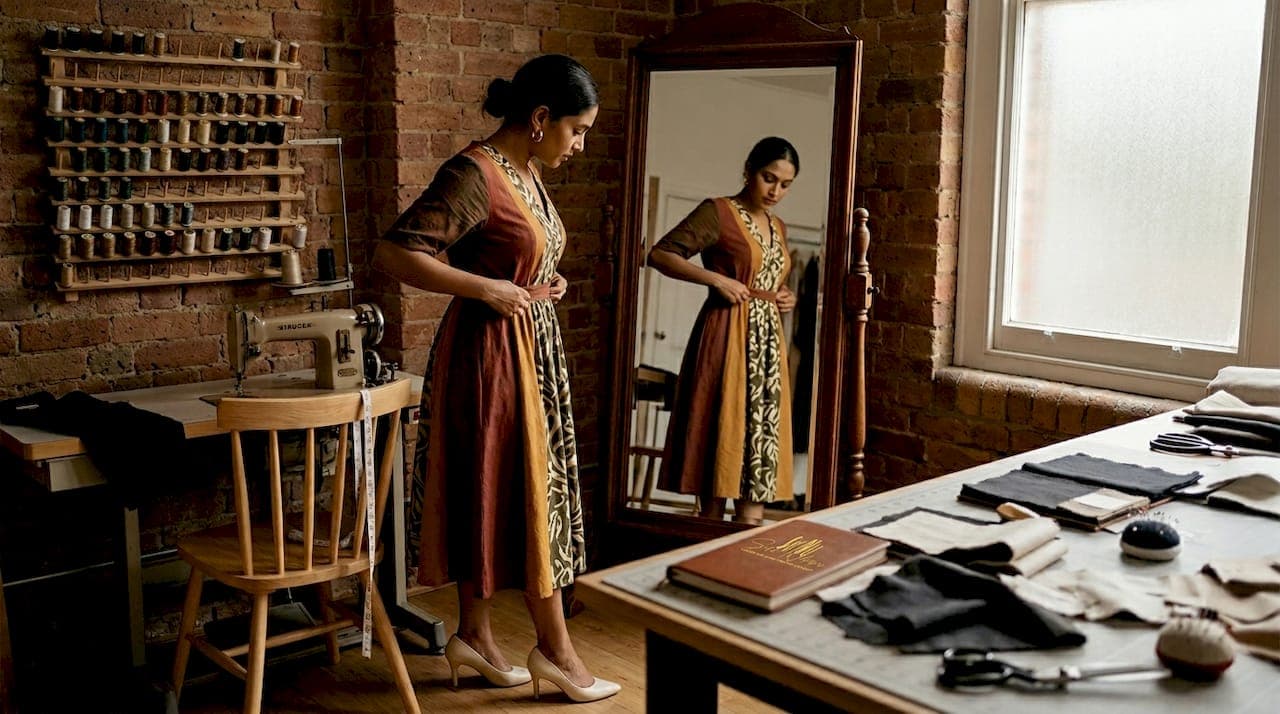
There is a moment every woman dreads: standing at a celebration that matters deeply to her, wearing a dress that pulls in the wrong places, gaps at the back, or rides up with every step. That moment, when discomfort overshadows joy, is entirely preventable. A well-managed dress fitting, especially one that honors the intricate artistry of African heritage fashion, is the foundation of true celebration confidence. This guide walks you through everything you need to prepare, execute, and perfect a fitting so that when your celebration day arrives, all you feel is joy, pride, and the quiet power of a dress that was made for you.
Table of Contents
- What you need for the perfect dress fitting
- Step-by-step: The fitting process for celebrations
- Troubleshooting and common mistakes to avoid
- Celebrating culture and empowerment through your final dress fit
- The hidden art of empowered dress fitting: Beyond the mirror
- Find your perfect cultural celebration dress with Sena Nukunu
- Frequently asked questions
Key Takeaways
| Point | Details |
|---|---|
| Bring essential items | Arrive at your fitting with event shoes, undergarments, and accessories for the best outcome. |
| Follow step-by-step fitting | Move through the fitting process intentionally, testing movement and fit at every stage. |
| Communicate openly | Voice any discomfort or concerns right away for timely adjustments. |
| Honor your heritage | Incorporate culturally inspired styles and traditions that promote confidence and empowerment. |
| Expert guidance helps | Work with professionals who understand both technical fit and the importance of cultural expression. |
What you need for the perfect dress fitting
Now that you're ready to transform your event experience, let's start with what you need before walking into your fitting appointment. Preparation is not a formality. It is the difference between a fitting that gives your tailor accurate information and one that leaves critical details to guesswork.
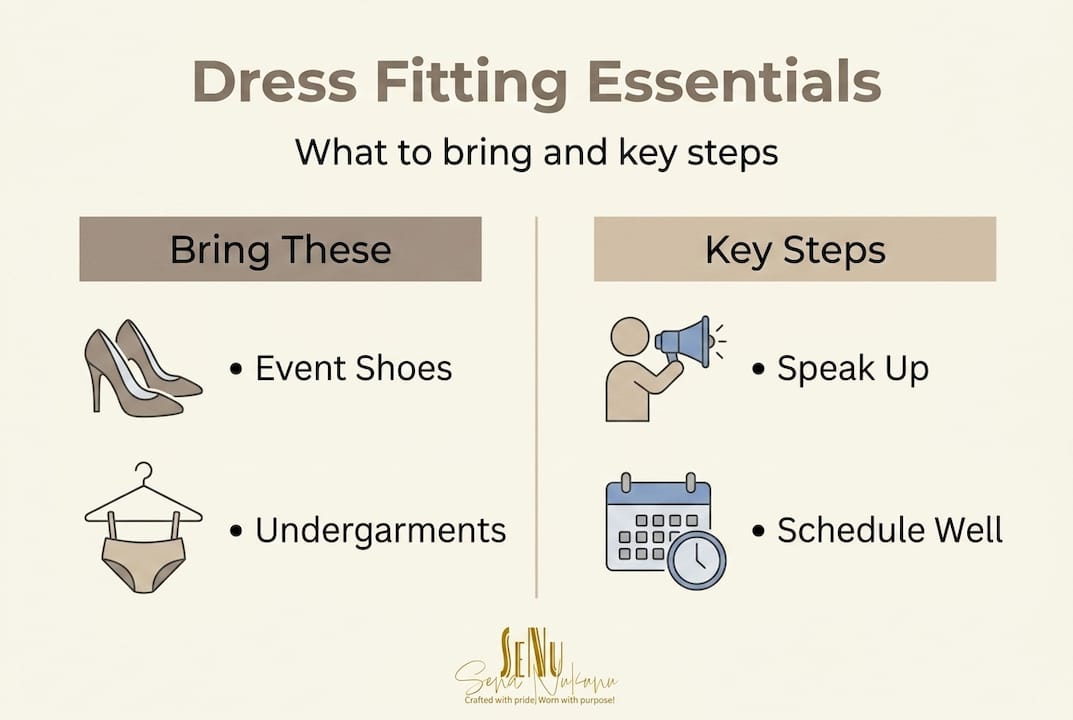
The single most important principle here is accuracy. Your dress must be fitted to the exact version of you that will appear at your celebration. That means arriving in the shoes you will wear, the undergarments that shape your silhouette, and any foundational shapewear you plan to use. Wedding dress fitting essentials confirm that wearing your exact event shoes and undergarments, bringing accessories and any veil, and testing movements like walking, sitting, and dancing are non-negotiable steps for a successful fitting. A two-inch heel changes your hem length entirely. The right bra changes your neckline fit. These details are not small.
Your pre-fitting checklist:
- Event shoes, worn and broken in
- Chosen undergarments and shapewear
- Strapless bra if the dress requires one
- Any veil, headpiece, or crown
- Jewelry and statement accessories you plan to wear
- A hair trial updo if your hairstyle will be elevated
- A trusted friend or stylist for a second perspective
- Water and a light snack to maintain energy
Accessories deserve special mention because they carry enormous cultural weight in West African fashion traditions. Intricate beaded necklaces, woven headwraps, and bold cuff bracelets can shift the visual balance of a dress dramatically. Exploring accessories for fitting ahead of time allows your tailor to see the complete picture and make thoughtful adjustments to neckline depth, sleeve length, or bodice detail so that every element works in harmony.
| Fitting requirement | Why it matters | What to do |
|---|---|---|
| Event shoes | Determines correct hem length | Wear the exact pair you'll use on the day |
| Undergarments | Shapes silhouette and bodice fit | Bring the specific bra and shapewear you've chosen |
| Accessories | Influences visual balance and neckline | Bring jewelry, headpieces, and statement pieces |
| Movement testing | Confirms range of motion | Walk, sit, raise arms, and dance in the dress |
| Communication | Ensures tailoring accuracy | Speak up about every comfort issue immediately |
When exploring dresses inspired by West African heritage, you will notice that each piece is designed with cultural storytelling in mind. Bringing your accessories to the fitting is not just practical. It is a ritual of honoring the full vision of your look, the same way West African style traditions have always treated adornment as a complete, unified expression.
Step-by-step: The fitting process for celebrations
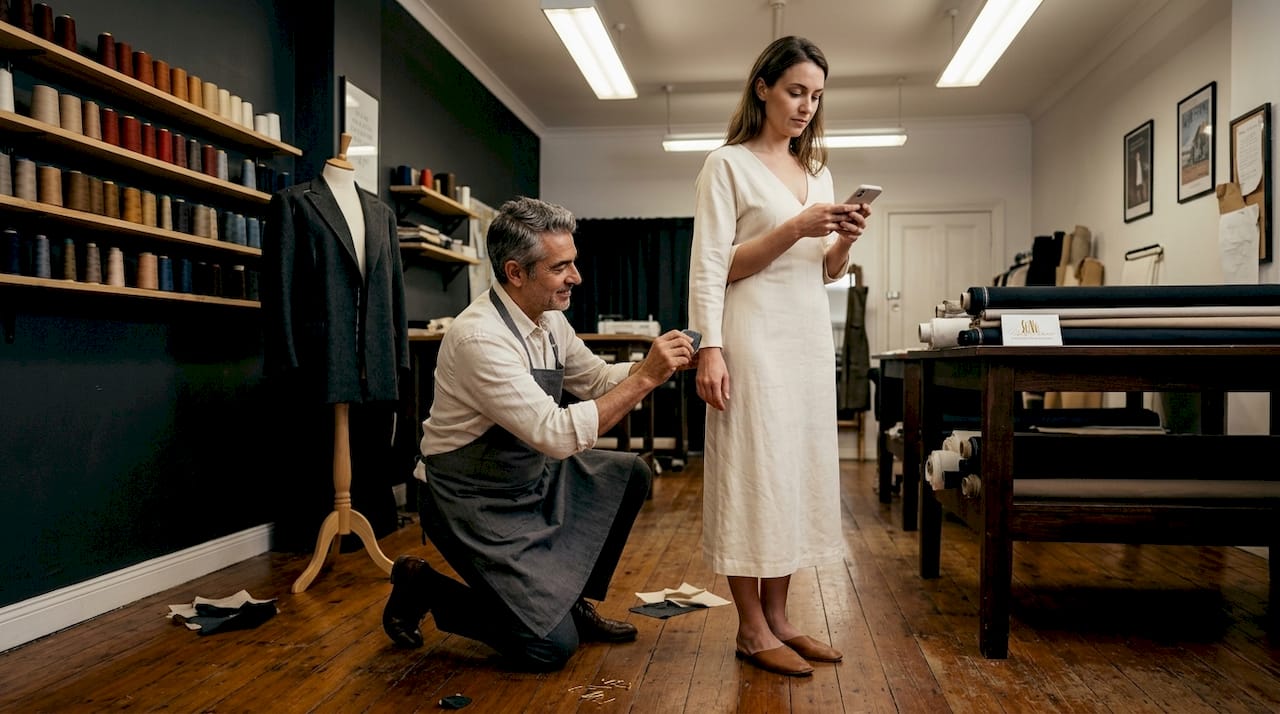
Once you're equipped with the right gear, it's time to follow a clear, step-by-step process. A structured fitting is not about standing still and nodding politely. It is an active, collaborative conversation between you and your tailor or stylist, and you have every right to be an engaged, informed participant throughout.
The fitting process, step by step:
- Put on all foundational layers first. Shoes, undergarments, shapewear, and any base layers go on before the dress. This is the exact silhouette your tailor needs to work with.
- Step into the dress carefully. Have your tailor or a trusted companion help so the fabric isn't stressed during the process.
- Stand naturally. Resist the urge to pose or hold an unnatural posture. Your tailor needs to see how the dress settles on your actual, relaxed body.
- Walk a full circuit. Walk across the room and back at a normal, relaxed pace. Notice if the hem drags, the bodice shifts, or the skirt restricts your stride.
- Sit down completely. Sit as you would at a dinner table or event chair. Check for pulling at the hips, bunching at the waist, or any tightness in the back.
- Test your range of motion. Raise both arms above your head, reach forward, and twist gently at the waist. You should be able to do all of this with ease.
- Practice your bustle or train management. Expert guidance on dress fitting process tips recommends practicing your bustle early so you can move freely throughout the event without feeling anchored to the floor.
- Dance. Yes, genuinely. Take a few steps as you would on a dance floor. If the fabric fights you, that needs to be addressed.
- Communicate every concern clearly. Tell your tailor exactly what you feel, where you feel it, and how significant it is. Vague feedback leads to incomplete adjustments.
- Document pin placements. Take photos of the dress with all pins in place so you have a reference for the next fitting session.
Understanding the difference between bespoke and ready-to-wear fitting approaches helps you set realistic expectations and prepare accordingly.
| Factor | Bespoke fitting | Ready-to-wear fitting |
|---|---|---|
| Starting point | Pattern built from your measurements | Standard size adjusted to your body |
| Number of fittings | Typically 3 or more sessions | Often 1 or 2 alterations appointments |
| Customization level | Unlimited changes to design | Adjustments within the garment's structure |
| Turnaround time | Weeks to months | Days to a few weeks |
| Cultural integration | Full control over heritage elements | Depends on the brand's existing designs |
| Cost | Higher investment | More accessible price point |
Understanding African attire and ethics gives you a deeper appreciation for why ethical, ready-to-wear options crafted with care can be just as meaningful and precise as bespoke pieces when the brand behind them is committed to cultural integrity and quality craftsmanship. Ready-to-wear does not mean impersonal. It means thoughtfully made.
Pro Tip: Schedule your fitting at roughly the same time of day as your event. Your body naturally changes in volume and posture throughout the day. Fitting at 10 AM when your event starts at 6 PM can create small but noticeable discrepancies in comfort and silhouette by evening.
For guidance on showcasing your unique style with confidence, remember that a perfectly fitted dress is only the beginning. The way you carry it, inhabit it, and move in it is what truly completes the look.
Troubleshooting and common mistakes to avoid
Even with careful preparation and process, missteps can disrupt the ideal outcome. Knowing what to watch for means you can catch problems early, before they become day-of disasters.
The most common fitting mistakes:
- Arriving without your event shoes, resulting in an inaccurate hem
- Wearing different undergarments than planned, altering the dress's silhouette
- Rushing through the fitting to save time, missing subtle fit issues
- Staying silent about discomfort out of politeness or uncertainty
- Failing to test a full range of movements, discovering restrictions too late
- Not scheduling a final fitting close enough to the event date
- Ignoring small issues like minor pinching, assuming they will resolve on their own
Every one of these mistakes is common, and every one is avoidable. Testing movements like walking, sitting, and dancing and communicating any comfort issues immediately are habits that experienced stylists recommend for a reason. Movement testing is the most reliable way to expose hidden fit problems that static standing simply won't reveal.
Knowing the signs of a poor fit is equally important. Pinching at the underarm means the armhole needs reshaping. Fabric sagging at the bust means the bodice cups need adjustment. A skirt that feels tight across the thighs when you walk means the hip measurement needs releasing. These are not flaws you should accept. They are signals that more work is needed, and you deserve to voice that clearly.
"Your dress should move with you, not against you. Every adjustment you ask for is an act of self-respect and a commitment to showing up fully at your own celebration."
Pro Tip: Don't be shy. Tell your tailor exactly where something feels wrong, even if you can't name the technical term for the issue. Point to it, describe the sensation, and let the professional translate your experience into a solution. That is their craft, and your honest feedback is what makes it possible.
The concept of empowering statement pieces in West African fashion is built on the idea that clothing should affirm the person wearing it. A dress that restricts, pinches, or sags is doing the opposite of that, and no amount of visual beauty compensates for physical discomfort that distracts you from the joy of your celebration.
Celebrating culture and empowerment through your final dress fit
With your fit perfected, it's time to focus on the deeper meaning behind your look. A dress fitting is not simply a practical appointment. For women who choose culturally inspired fashion rooted in West African heritage, it is a moment of affirmation, an act of choosing to be seen in the fullness of who you are.
Ways that dress fitting honors African heritage:
- Selecting fabrics like Ankara, Kente, or Adire that carry historical and cultural significance
- Incorporating traditional silhouettes that honor regional West African style
- Choosing cultural fashion statements that connect your celebration to ancestral artistry
- Working with ethical brands that support artisans and sustain traditional craft practices
- Pairing your dress with handcrafted accessories that deepen the cultural narrative
- Using the fitting process to refine how heritage elements are expressed on your specific body
Statistic spotlight: Studies consistently show that wearing clothing connected to personal cultural identity significantly increases feelings of self-confidence and belonging at social events. When comfort and self-expression come together, empowered celebration moments follow naturally.
The fitting process, when approached intentionally, becomes a creative conversation about who you are and how you want to be seen. Choosing a dress that reflects your heritage is a declaration. Making sure it fits you perfectly is the commitment that backs that declaration up with action. Comfort amplifies confidence. When you are not tugging, adjusting, or managing discomfort, you are fully present, fully yourself, and fully free to celebrate.
The hidden art of empowered dress fitting: Beyond the mirror
All these steps build to a perspective many overlook. Most conversations about dress fittings treat them as a logistical task, a box to check before the celebration. Bring your shoes. Pin the hem. Come back next week. Done. But that framing misses something vital.
In West African tailoring traditions, the act of creating a garment for a person is never purely technical. It is relational. The tailor studies how a person holds their shoulders, how they breathe, how they move when they forget they are being watched. Every choice, from seam placement to the fall of a neckline, is informed by the whole person, not just their measurements. That philosophy is something we can all carry into our fitting appointments, regardless of the dress or the occasion.
The conventional approach to fitting prioritizes appearance above all else. Does it look right in the mirror? But the more powerful question is: does it feel right when you move, laugh, reach for someone you love, or stand at the center of a room that is celebrating you? That question shifts the fitting from a passive approval process to an active, empowered choice.
Understanding cultural heritage in fashion reveals that the most enduring style traditions were never about conforming to a silhouette. They were about expressing identity, status, joy, and resilience through fabric and form. When you insist on a fitting that honors your comfort and your cultural pride equally, you are participating in that same tradition.
The details that seem minor, a quarter inch at the waist, the way a sleeve falls just past the elbow, the precise height of a neckline, are not minor at all. They are the details that determine whether you feel like yourself or like someone wearing a costume. Empowered dressing is precise dressing. It takes time, advocacy, and intention, and it is absolutely worth every moment.
Find your perfect cultural celebration dress with Sena Nukunu
Ready to bring your empowered celebration vision to life? At Sena Nukunu, every dress is crafted with the same care and cultural pride you have just invested in this fitting journey.
Browse our curated collection of African-inspired dresses designed to honor West African heritage while celebrating the beauty and individuality of every woman who wears them. Whether you are preparing for a wedding, a naming ceremony, a graduation, or any milestone that calls for something truly special, our ethically made, limited-quantity pieces are ready to become part of your story. Explore our custom design services for a personalized fit, and complete your look by browsing handcrafted pieces when you add accessories that speak to your heritage and your vision.
Frequently asked questions
Why are event shoes and undergarments necessary for a dress fitting?
They ensure the dress is altered to your exact silhouette and height for comfort and appearance on event day. As fitting guidance confirms, wearing your specific shoes determines the correct hem length, and your undergarments shape the bodice silhouette that all adjustments are based on.
How do accessories impact the fitting process?
Bringing your accessories allows the tailor to account for their influence on the overall look and ensures the dress style is cohesive. Preparation essentials include accessories and veils specifically because they affect how the neckline, sleeve, and bodice details are balanced visually.
What's the best way to communicate fit issues during a dress fitting?
Speak up clearly about any discomfort or movement issues so adjustments can be made immediately. Point directly to where something feels wrong and describe the sensation, because your tailor's goal is to translate your experience into a precise, technical solution.
Can dress fitting reflect personal heritage?
Yes, choosing culturally inspired dresses and accessories during fitting empowers self-expression and celebrates heritage in a deeply personal way. The fitting process becomes a creative affirmation when you bring intentional cultural elements, from fabric choices to handcrafted accessories, into every decision you make.