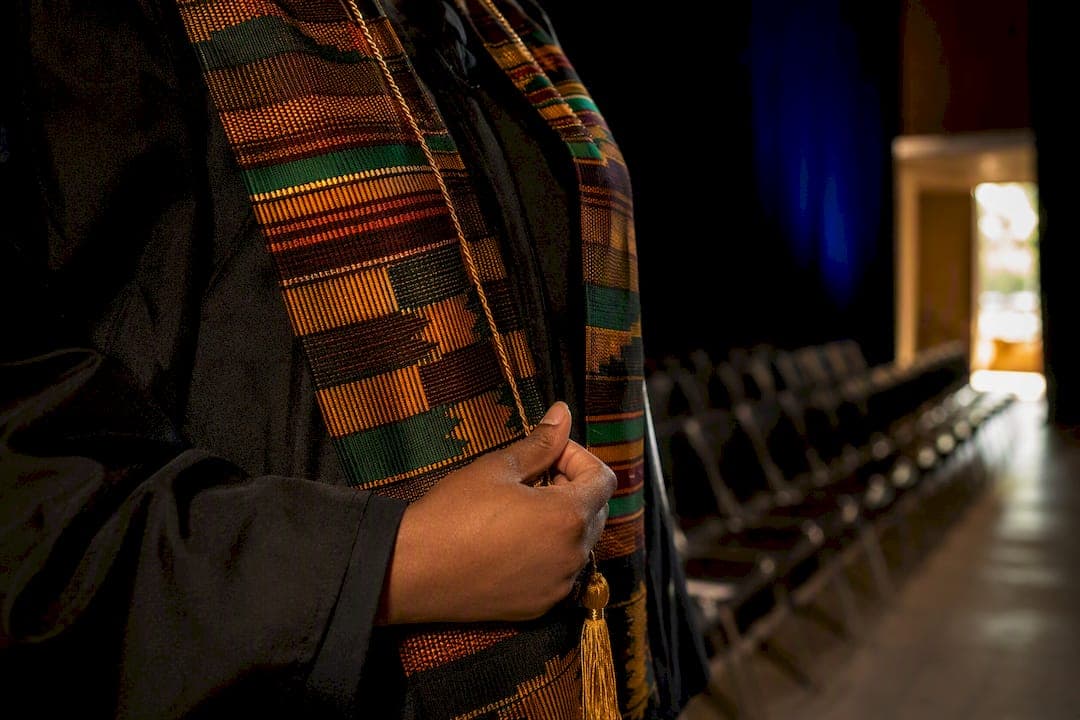
A Kente stole is a ceremonial strip of West African cloth that graduates wear over their gown to honor African heritage and mark real achievement, not just a fashion accessory for photos. The respectful approach is simple: choose authentic handwoven Kente when your timeline and budget allow, verify that a U.S. source can ship and personalize it before your ceremony date, and let the stole's colors and craftsmanship speak for themselves. A domestic option is worth checking first.
TL;DR:
- Opt for handwoven Kente if you have sufficient lead time and want a durable, heirloom-quality piece, despite higher costs and longer delivery.
- If your ceremony is soon or budget is limited, printed Kente stoles offer faster shipping and lower prices but lack the reversible, textured quality of authentic weaving.
- Wear a Kente stole as an honor, aligning its colors and craftsmanship with its cultural significance, especially if invited as a gesture of respect rather than personal heritage.
- Ensure your gown's style complements the stole, with simple, neutral outfits for women and minimal accessories for men, to keep the Kente pattern as the focal point.
- Confirm the origin, material, and customization options of a Kente stole beforehand, and order at least six weeks in advance if you want personalized embroidery or a handwoven piece.
Table of Contents
- What Does a Graduation Kente Outfit Actually Represent?
- Handwoven or Printed: Which Kente Stole Fits Your Ceremony?
- What Should Women Wear Under a Kente Stole?
- How Should Men Style a Kente Graduation Look?
- How Do You Drape and Personalize a Kente Stole Correctly?
- Where Can You Buy a Kente Stole in the United States?
- Sena's Perspective: Honoring Heritage With Style and Ethical Sourcing
- Ready to Order Your Graduation Piece?
- Sources
What Does a Graduation Kente Outfit Actually Represent?
The Kente stole traces back to Ghana and the Asante people, where the cloth once signified royalty and status long before it reached a single American campus. Its journey into U.S. commencement culture is often traced to a 1993 ceremony at West Chester University, which became a model other schools adopted and grew into what's now called the Donning of the Kente, a ceremony that treats the stole as recognition of a journey completed, not decoration.
Each color carries its own weight:
- Black represents people of African descent and shared ancestry.
- Red signifies kinship, sacrifice, and struggle.
- Green stands for growth, fertility, and abundance.
- Yellow or gold denotes wealth, royalty, and status earned.
If you're not of African descent but were invited to wear Kente by a mentor, program, or organization, wear it as intended, as an honor extended to you, and let that context guide how you speak about it.
Handwoven or Printed: Which Kente Stole Fits Your Ceremony?
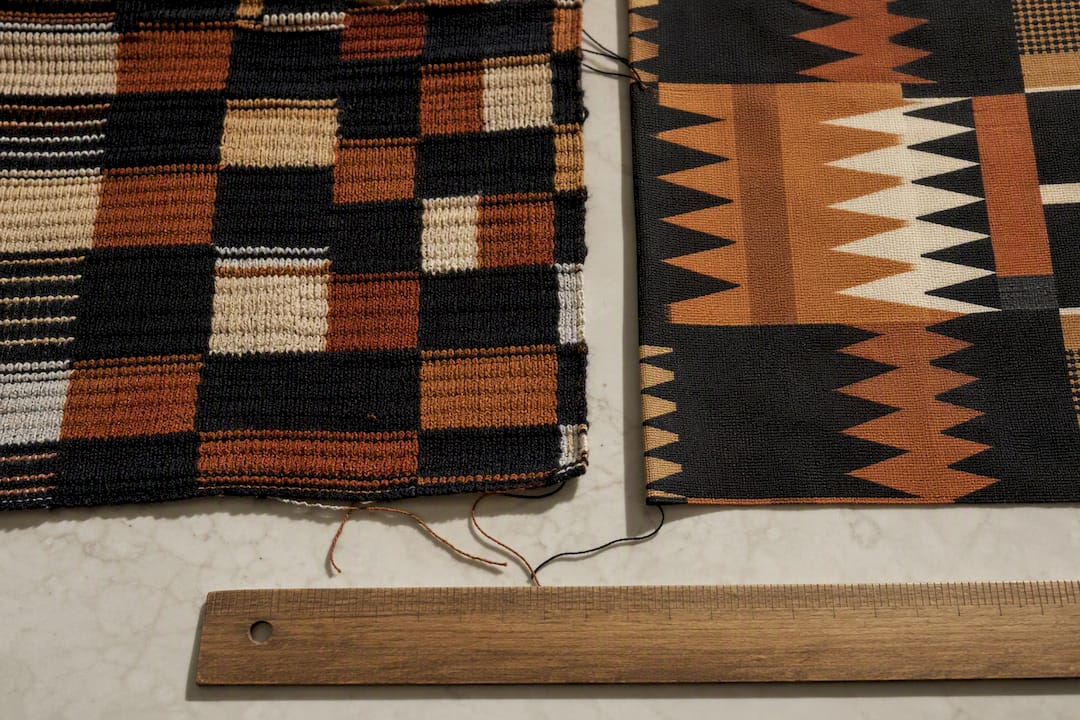
Authentic handwoven Kente is made on a traditional loom, strip by strip, then sewn together into the finished cloth. You'll feel raised ridges in the weave, notice the pattern reads clearly on both sides since handwoven Kente is fully reversible, and see slight irregularities that machines can't replicate. That craftsmanship takes time and costs more, with handwoven stoles typically costing significantly more than printed ones.
Printed stoles use satin or polyester fabric stamped with a Kente-inspired pattern. They're widely available, ship fast, and generally cost less than handwoven options, which makes them a practical choice when your ceremony is weeks away rather than months.
- Choose handwoven if you have enough lead time and want an heirloom piece.
- Choose printed if you're working with a tight deadline or a modest budget.
- Either way, confirm the material before buying: printed Kente patterns are common worldwide, so "Kente print" doesn't always mean handwoven cloth.
Pro Tip: Ask the seller directly whether the stole is loom woven or printed. A reputable shop will answer without hesitation, and hesitation itself tells you something.
What Should Women Wear Under a Kente Stole?
Your gown fabric and silhouette matter more here than most people expect, since a stole drapes differently over structured versus flowing fabric.
- Sheath dresses keep a clean line under the gown and don't compete with the stole's pattern.
- Wrap dresses move well for walking across a stage and photograph beautifully from any angle.
- Mermaid silhouettes add drama for the reception after regalia comes off, though they're less practical for sitting through a long ceremony.
A full Kente-inspired gown, like the Kente wrap gown or the Kente elegance smocked dress, works when your program allows regalia to come off for photos or a reception. If you're wearing academic robes for the full ceremony, a stole layered over a simple dress, like the Dzidula Kente one-shoulder gown, reads as more intentional than trying to layer two bold patterns.
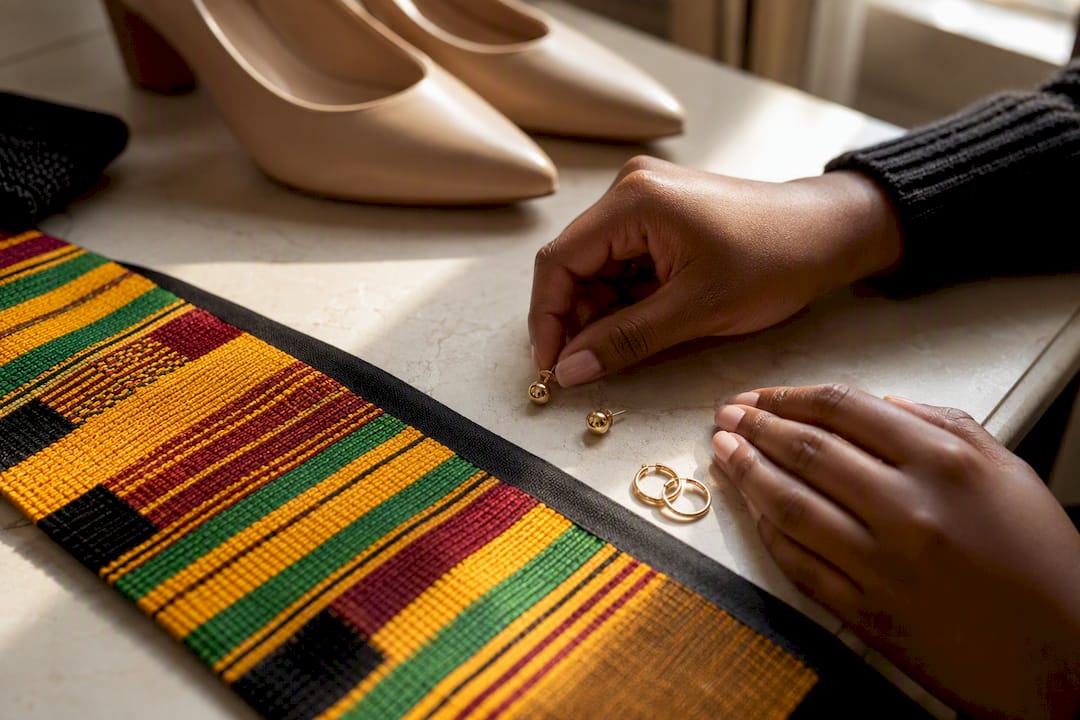
Keep jewelry minimal, gold studs or small hoops, and stick to neutral shoes so the stole stays the visual center. Embroidered names, degree years, or Greek letters are appropriate additions and won't clash with commencement formality if placed near the bottom edge rather than across the chest.
How Should Men Style a Kente Graduation Look?
Tailored shirts with Kente trim along the collar or cuffs pair naturally with academic gowns without adding bulk underneath. For ceremonies where regalia comes off partway through, or for the reception, an agbada set like the Gold Garnet Ascension ensemble delivers real presence.
- Drape the stole over a plain collared shirt so the pattern isn't fighting another print.
- Keep the belt and shoes in one neutral tone, black or brown, not both.
- Skip heavy accessories. Let the stole and the trim details do the work.
- Fraternity and sorority members often add embroidered letters to the stole's lower third, which keeps organizational pride visible without overwhelming the cloth's own pattern.
How Do You Drape and Personalize a Kente Stole Correctly?
Draping is simpler than it looks, but small details separate a polished look from a sloppy one.
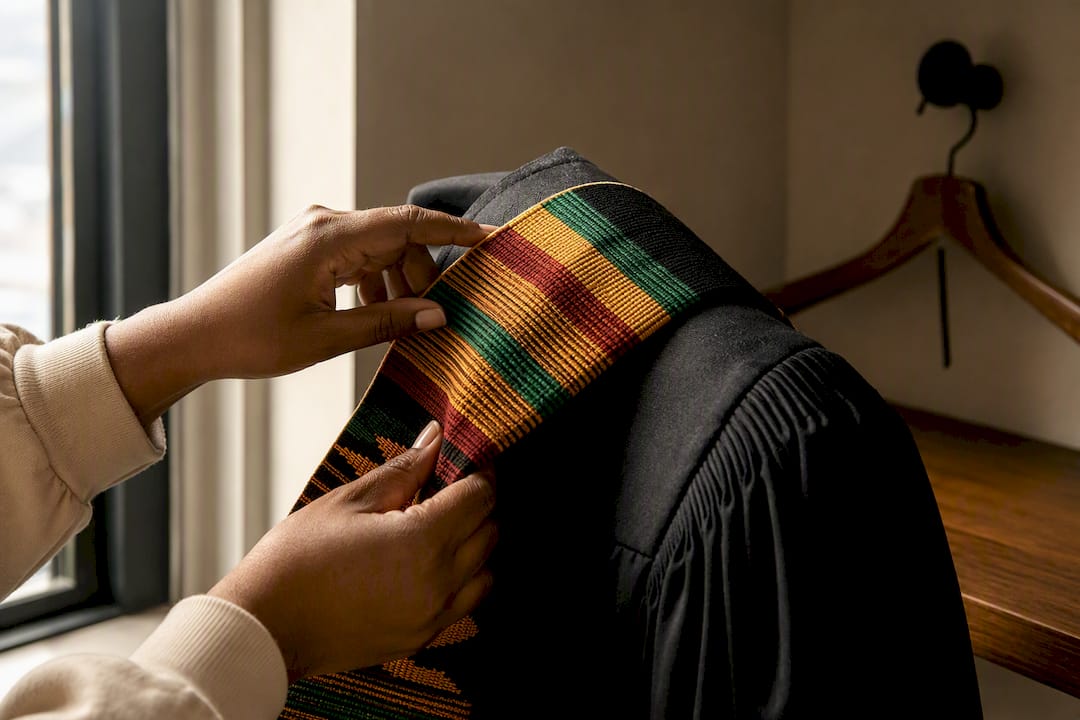
- Lay the stole flat over your shoulders on top of the gown, not underneath it.
- Even out both ends so they hang to roughly the same length, usually mid-thigh.
- Skip knots or clips at the front. Let the fabric fall naturally.
- Check with your commencement office about whether your school holds a separate Donning of the Kente ceremony or expects the stole worn throughout the main procession, since that distinction varies by campus.
Embroidery is where most graduates personalize the piece: a name, graduation year, or Greek letters stitched near the bottom edge turns the stole into a keepsake you'll actually keep. Steam wrinkles out gently rather than ironing directly on the fabric, and store it flat or rolled, never folded tightly for weeks, so it arrives at your ceremony looking as good as the day it shipped.
Pro Tip: Practice draping the stole over your actual gown at least once before the ceremony. Fabric that looked fine on a hanger sometimes sits differently once it's layered over robes.
Where Can You Buy a Kente Stole in the United States?
Before you buy, confirm these five things:
- Weave origin. Ask directly whether the piece is handwoven in Ghana or printed elsewhere.
- Material. Cotton and rayon blends feel different from polyester satin, and it shows in photos.
- Reversibility. Genuine handwoven cloth reads clearly on both sides; printed pieces usually don't.
- Photo quality. High-resolution images should show weave texture up close, not just a styled flat lay.
- Shipping and returns. Confirm the seller ships domestically within the U.S. and has a clear return policy if sizing or color looks different in person.
Customization adds time. Embroidery, name stitching, or Greek letter additions can take several weeks depending on the shop's queue, so order well in advance before your ceremony if you want a personalized piece and aren't cutting it close on a printed alternative. Handwoven pieces with custom requests can take longer given the labor involved in the weave itself.
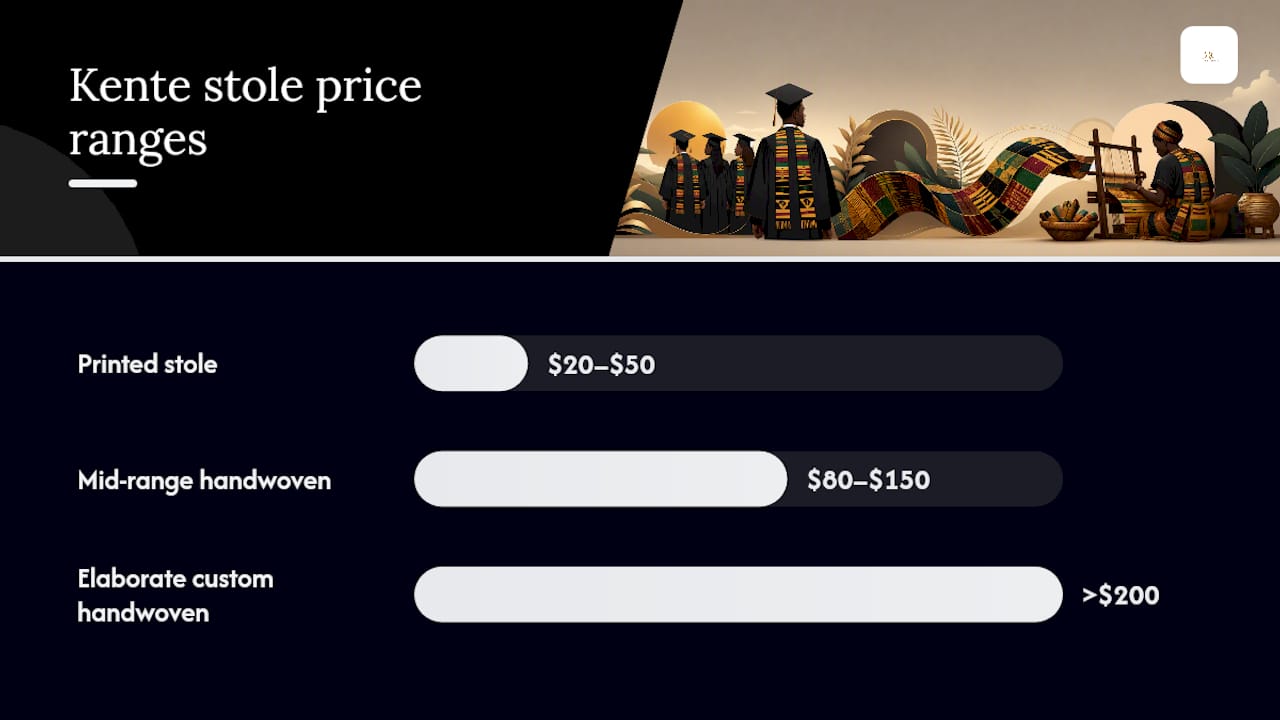
Pricing generally breaks down this way: printed stoles run $20 to $50, mid-range handwoven pieces run $80 to $150, and elaborate custom handwoven regalia can exceed $200. The higher cost on handwoven cloth reflects the labor of strip weaving on a traditional loom, work that simply can't be rushed or replicated by a printer.
Sena's Perspective: Honoring Heritage With Style and Ethical Sourcing
Too many graduation outfit guides treat Kente as a pattern to match rather than a tradition to respect. Some brands build every piece around artisan partnerships and ethical production because the story behind the cloth matters as much as how it photographs on stage. Some brands keep pieces limited in quantity on purpose, and they lean into U.S. availability so graduates aren't left guessing whether a custom order will clear customs in time. If your timeline is tight or your order needs something specific, reaching out directly may help resolve issues.
— Sena
Ready to Order Your Graduation Piece?
Choosing between a printed stole and a handwoven heirloom shouldn't mean choosing between speed and meaning. Many companies ship pieces from U.S. inventory or through a custom timeline communicated up front, so customers are not left guessing whether their order arrives before commencement.
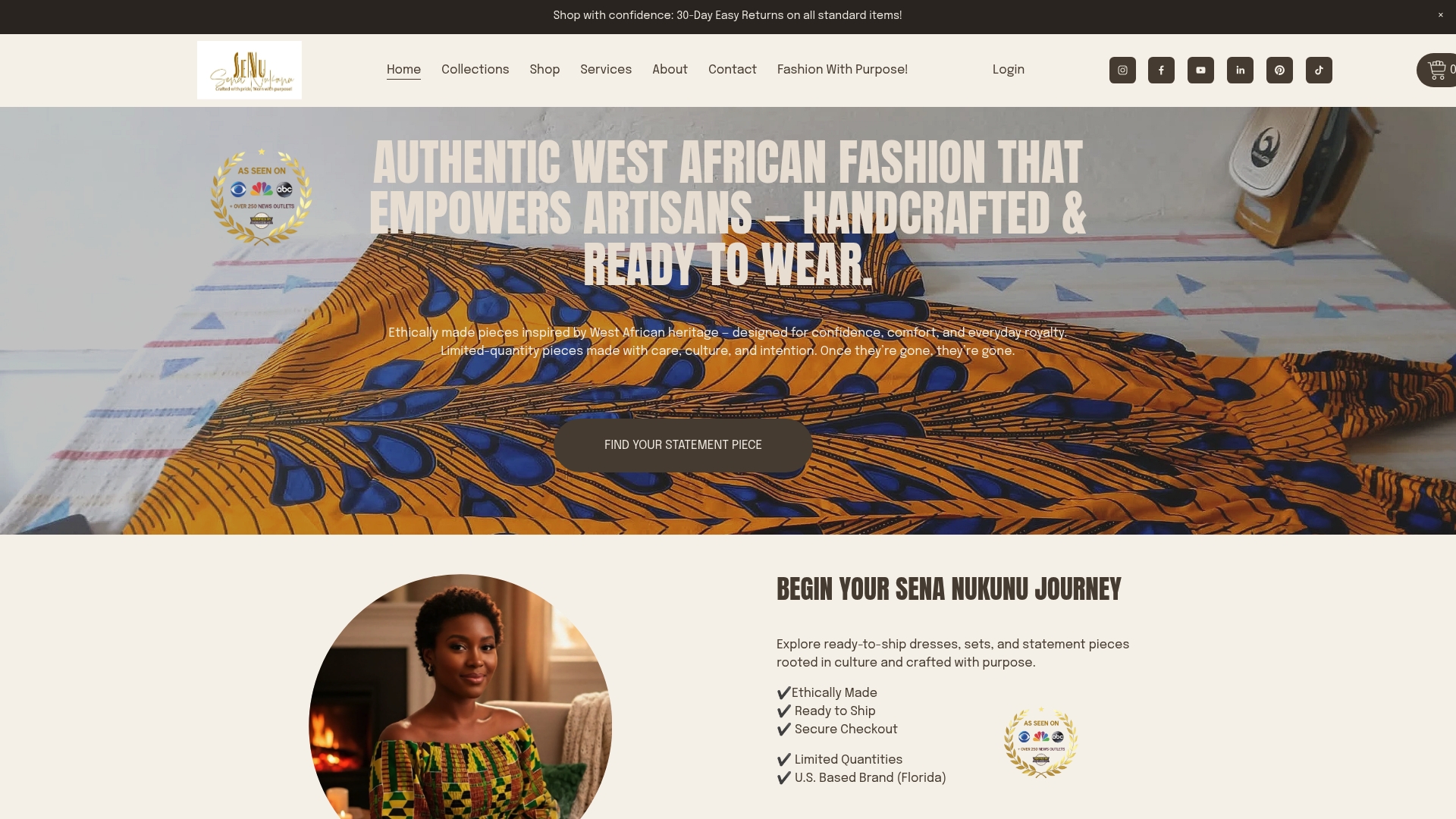
Our ready-to-wear dress collection covers gowns and sets that pair naturally with a Kente stole, whether you want a full Kente-inspired piece like the wrap gown or a simpler silhouette that lets a personalized stole take center stage. Agbada sets, custom embroidery requests, and Greek letter additions may be available; reaching out early allows more room to get details right. Start browsing the full collection at Sena Nukunu and place your order with enough lead time for customization, ideally six weeks or more before your ceremony date.
Sources
- Donning of the Kente: More than a graduation tradition, a ‘symbol of achievement’ - Inside UNC Charlotte
- Kente cloth - Wikipedia
- Kente history - Baylor University multicultural resources
- The History and Significance of Kente Cloth in the Black Diaspora - AAIHS