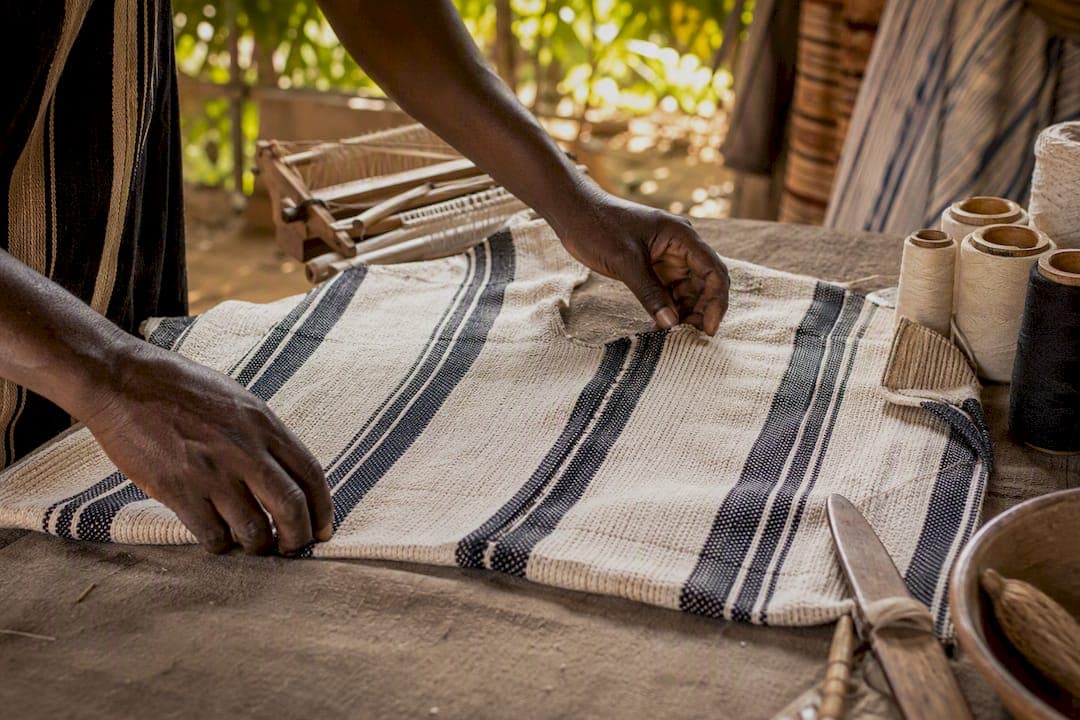
A batakari, also called fugu, is a handwoven, strip-stitched Ghanaian smock, originally a northern warrior and royal garment now celebrated nationwide and internationally. Every panel comes from narrow cotton strips woven by hand, sewn into a loose tunic that has clothed chiefs, protected soldiers, and now shows up on runways and diplomatic stages alike. It carries the weight of centuries: a garment born in the savanna communities of northern Ghana that became a national emblem of pride and belonging. Here is what you will find ahead:
- The smock's roots in 19th-century warrior and royal tradition
- Its many regional names and what they reveal
- How artisans actually weave, sew, and decorate one
- Who wears it today, and why Ghana now has a "Fugu Day"
- What to look for when buying a genuine handwoven piece, and how to care for it
Key Takeaways
The batakari smock endures because its strip-woven construction, regional identity, and recent government-backed revival keep centuries-old craftsmanship economically and culturally relevant today.
| Point | Details |
|---|---|
| Origin and meaning | The smock originated among northern Ghanaian ethnic groups as warrior and royal dress before becoming a national symbol. |
| Names vary by region | Terms like fugu, bun-nwɔ, bana, and dansika describe the same garment family across different languages and areas. |
| Craft drives value | Strip-weaving, hand-sewn panels, and embroidery make authentic pieces slower to produce and pricier than machine-made copies. |
| Cultural revival is active | Ghana's Fugu Day initiative and diplomatic visibility have renewed nationwide and international interest in the garment. |
| Choose ethical sources | Senanukunu offers limited-quantity, ethically made West African-inspired pieces that honor the same craft traditions. |
Table of Contents
- The History and Origins of the Batakari Smock
- What Are the Regional Names for the Batakari?
- How Is a Batakari Made from Raw Cotton to Finished Garment?
- Who Wears a Batakari, and What Does It Signal?
- How Has the Batakari Gone Global in Recent Years?
- How Can You Tell a Batakari Is Authentic?
- How Do You Care for a Handwoven Batakari?
- Why Senanukunu Understands the Craft Behind the Batakari
- A Personal Note on Why This Craft Deserves Respect
- Bring Home a Piece of This Living Heritage
- Sources
The History and Origins of the Batakari Smock
The batakari traces its roots to the savanna belt of northern Ghana, among the Dagbon, Mamprusi, Gonja, and Frafra peoples, where strip-weaving has been a livelihood and an art form for generations. Long before the smock became a national symbol, it was a working garment tied to specific roles: warriors wore it into battle, chiefs wore it to hold court, and hunters wore it into the bush.
Its 19th-century reputation carries a layer of mysticism worth understanding rather than dismissing. Some Ashanti variants of the era were believed to carry protective power, with certain smocks described by wearers and observers as talismanic or even "bulletproof". Whether or not those claims held up under fire, they tell you something real: the garment was never treated as ordinary cloth. It was armor for the body and, in the minds of those who wore it, armor for the spirit too.
The smock's early identity was never purely decorative. It functioned as a marker of rank, a spiritual shield, and a badge of readiness for battle, all stitched into the same piece of cloth.
By the 20th century, the batakari had moved from the battlefield to the political stage. Northern chiefs continued wearing it as ceremonial dress, but a turning point came when national leaders began adopting it publicly, using the smock to signal unity across Ghana's regions rather than allegiance to one. That shift matters more than it might seem. A garment once associated narrowly with northern warrior culture became, through repeated public wear, a shorthand for Ghanaian identity itself.
Cultural heritage authorities now describe the batakari as living heritage, a phrase that captures something important: this is not a museum artifact. It is a garment still woven by hand in the same communities that originated it, still worn at durbars and inaugurations, still passed down through families of weavers who learned the craft from parents and grandparents. The history did not end. It kept walking.
What Are the Regional Names for the Batakari?
Ask a weaver in Tamale, a trader in Bolgatanga, and a tailor in Accra to name this garment, and you might get three different answers, all correct. Names shift with language, ethnicity, and region:
- Fugu: the most widely recognized name nationally, often used interchangeably with batakari
- Bun-nwɔ: a term used in some Gur-speaking communities
- Bana: another regional variant tied to specific ethnic groups
- Dansika: used in parts of the north to describe related smock styles
These names are not just linguistic trivia. When you are researching or buying a piece, knowing that a seller might list it as "fugu" rather than "batakari" helps you avoid confusion and recognize authentic listings. Silhouette and embroidery density also shift slightly by locale, with some communities favoring wider sleeves or denser stitched patterns around the neckline, so two smocks from different regions can look distinct while sharing the same core construction.
How Is a Batakari Made from Raw Cotton to Finished Garment?
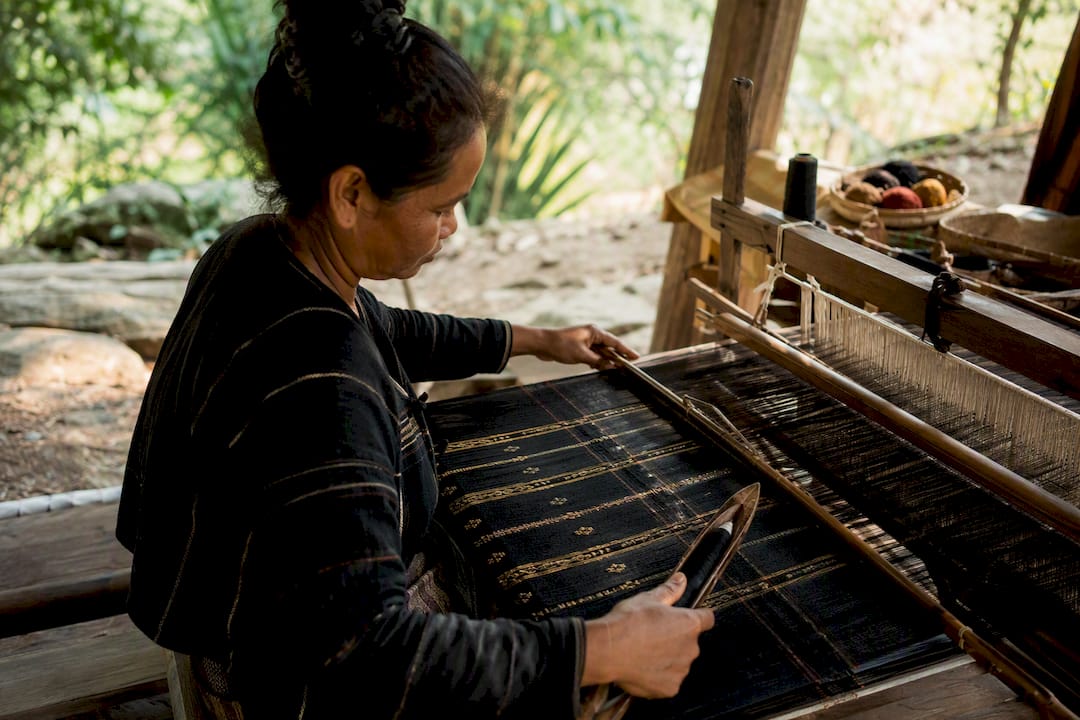
Everything about the batakari's look and durability starts with strip-weaving, a technique where artisans weave cotton on narrow horizontal looms, producing strips typically just a few inches wide. Those strips get sewn edge to edge to build the full width of fabric needed for a garment. This is what gives the smock its texture: subtle ridges where strips meet, slight variations in tension that no machine loom replicates.
The process moves through distinct stages, and skipping any one of them shows in the final product.
- Spinning and dyeing: raw cotton gets spun into thread and dyed, often in deep indigo, white, or earthy tones depending on regional tradition
- Weaving the strips: artisans work narrow looms for hours at a stretch, producing long bands of cloth strip by strip
- Sewing the panels: strips are joined by hand or machine into wider fabric, then cut and assembled into the tunic shape
- Embroidery and detailing: decorative stitching, often geometric or symbolic, gets added around the neckline, chest, and sleeves
A single smock can take days to weeks depending on complexity, and that labor is exactly why handwoven pieces cost more than mass-produced imitations. Scholarly work on West African textile traditions documents how strip-weaving techniques connect across the region, a shared craft language spoken in slightly different dialects from Ghana to Mali to Nigeria.
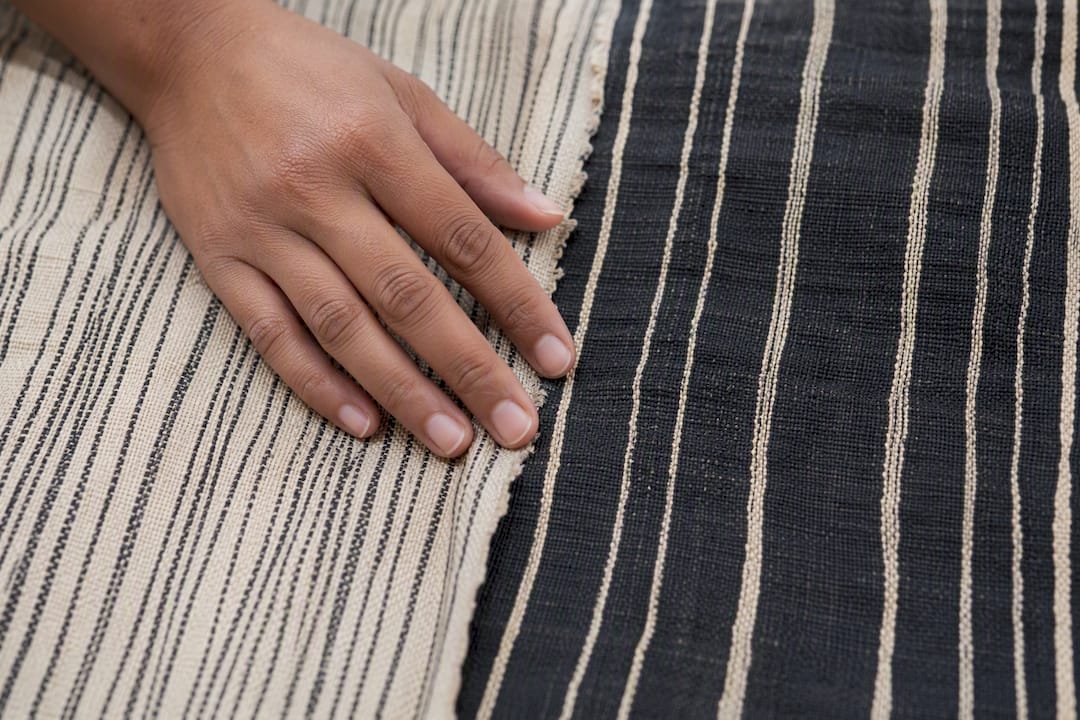
Pro Tip: Run your hand along the seams where strips join. Genuine handwoven batakari will show faint texture and minor irregularities in stripe width. If every line is perfectly uniform, you are likely looking at a machine-loomed copy, not a handwoven original.
Who Wears a Batakari, and What Does It Signal?
The batakari's meaning shifts depending on who wears it and when. Traditionally, it belonged to chiefs presiding over durbars, warriors preparing for conflict, and spiritual leaders performing ceremonial duties. Today the circle has widened considerably.
- Politicians wear it during state functions to project connection to Ghanaian heritage rather than Western formalwear
- Diaspora communities wear it at weddings, graduations, and cultural festivals as a statement of identity
- Younger Ghanaians increasingly wear it as everyday fashion, pairing it with jeans or sneakers rather than traditional trousers
Color and embroidery density often signal status: elaborately embroidered smocks in rich indigo or white tend to mark ceremonial or royal use, while simpler, lighter versions serve everyday wear. Ghana's government leaned into this cultural momentum directly. Officials designated Wednesdays as "Fugu Day" to encourage nationwide wearing of the smock, a move that followed a lighthearted social media exchange with Zambia and quickly turned into a genuine cultural movement. The initiative aimed to strengthen national unity while boosting demand for artisan-made garments, according to reporting on the Fugu Day initiative. Some observers describe it as one of the more effective recent examples of a government campaign translating directly into visible, everyday cultural practice.
How Has the Batakari Gone Global in Recent Years?
The smock's visibility exploded well beyond Ghana's borders in the past few years, and the shift happened fast. State visits, diplomatic photo opportunities, and social media debates turned a regional garment into an internationally recognized symbol almost overnight.
- Diplomatic moments: Ghanaian leaders wearing the batakari at official functions drew international press attention and sparked online conversations about African fashion pride
- Economic ripple effects: renewed interest has created real market opportunities for northern Ghanaian artisans and designers, who report increased demand for handwoven pieces
- Runway reinterpretation: contemporary designers now experiment with lighter fabrics, tailored silhouettes, and mixed textiles while keeping the strip-woven core intact
- Cross-cultural styling: partner platforms like Kenny Wade Clothing show how traditional garments adapt for formal ceremonies and modern occasions without losing their cultural anchor
None of this diluted the garment's meaning. If anything, the attention pushed more buyers toward asking where their smock actually came from, who wove it, and whether their purchase supported the communities that built the tradition.
How Can You Tell a Batakari Is Authentic?
Authenticity comes down to details a mass-produced imitation cannot fake easily. Look closely at the seams first: handwoven strips show slight irregularities in stripe width and tension, while machine-loomed knockoffs tend to look suspiciously perfect. Check the fiber too. Genuine pieces use cotton with a slightly coarser, more organic hand-feel compared to synthetic blends.
Pricing varies widely depending on the level of embroidery, the complexity of custom tailoring, and shipping costs if you are buying internationally. A simpler, lightly decorated smock will cost considerably less than a heavily embroidered ceremonial piece made to order. Treat any price that seems too low for a "handwoven" claim with skepticism.
Before buying, ask sellers a few direct questions:
- Where was this piece woven, and by which artisan community?
- Is the embroidery hand-stitched or machine-applied?
- What cotton or fiber blend is used?
- Does the seller work directly with artisans, or resell mass imports?
Pro Tip: Ask for a close-up photo of the seam where two woven strips meet. A seller proud of genuine handwork will happily provide it. Hesitation or vague answers are often a signal to keep looking.
Ethical sourcing matters as much as authenticity. Buying from brands that maintain direct relationships with weaving communities keeps the tradition financially sustainable, rather than letting the craft's value get captured entirely by middlemen.
How Do You Care for a Handwoven Batakari?
Handwoven cotton needs gentler treatment than typical ready-to-wear clothing, and a little care goes a long way toward keeping it looking sharp for years.
- Hand wash in cool water with a mild, dye-safe detergent; avoid harsh bleach or enzyme-heavy formulas that can weaken natural fibers
- Air dry flat away from direct sunlight, which fades indigo and natural dyes over time
- Reshape while damp to preserve the tunic's structure, then fold rather than hang for long-term storage
- Store with natural pest deterrents, like cedar blocks, to protect cotton from moths
- Consult a textile conservator for embroidery repairs or significant tears rather than attempting a quick fix yourself
For a deeper walkthrough on preserving handmade textiles, Senanukunu's guide on caring for handmade garments covers techniques that apply directly to strip-woven pieces.
Why Senanukunu Understands the Craft Behind the Batakari
Sena, the voice behind this piece, brings a background steeped in West African fashion and textile storytelling, the kind of grounding that comes from paying attention to how garments carry culture forward. Senanukunu is built on that same commitment: empowering artisans, preserving cultural storytelling, and offering limited-quantity pieces crafted with intention rather than mass-produced haste.
The brand's catalog reflects heritage-rooted design, built to give wearers confidence and regal presence in everyday life. Operating from Florida, Senanukunu holds firm to ethical manufacturing standards that respect the artisans and traditions behind every piece.
A Personal Note on Why This Craft Deserves Respect
The batakari carries more than fabric. It carries the hands that wove it, the history that shaped it, and the pride of people who kept the craft alive against every pressure to abandon it. We invite you to look closer at authentic pieces, ask where they came from, and support the weavers still keeping this heritage threaded together.
— Sena
Bring Home a Piece of This Living Heritage
Senanukunu gives you a direct line to authentic, artisan-crafted West African fashion, without the guesswork of sorting genuine handwork from mass-produced imitations sold under vague "inspired by" labels. Every piece in the collection is made in limited quantities, rooted in ethical manufacturing, and designed to carry the same cultural weight and craftsmanship the batakari tradition represents.
If you want to see how that craftsmanship translates into wearable, everyday statement pieces, browse the dresses collection or visit the main shop to explore the full range. Shipping and return details are listed at checkout, so you know exactly what to expect before you commit. Start by picking one piece that speaks to you, and let it carry the story forward.
Sources
- Batakari - Wikipedia
- Ghana declares Wednesday 'Fugu Day' to promote batakari after Zambia banter - BBC