
An agbada is a flowing, four-piece robe rooted in Yoruba tradition, worn by men across West Africa and its diaspora as a marker of dignity, celebration, and heritage. The Yoruba word itself points to something voluminous and grand, and the ensemble lives up to it: an oversized outer robe, an inner top, wide trousers, and a cap, each piece carrying weight far beyond its stitching.
TL;DR:
- Most agbada garments are heirloom pieces crafted from durable, hand-woven fabrics like aso-oke or damask, often dating back to the 19th or early 20th centuries.
- The four key components are the awosoke (outer robe), awotele (inner top), sokoto (trousers), and fìla (cap), with embroidery density indicating prestige and social status.
- Fabric choices like velvet, damask, and aso-oke stripes now coexist as valid options, each suited to different occasions, budgets, and regional styles.
- Wearing an agbada signifies participation in a formal, status-oriented tradition, often worn at ceremonies to demonstrate respect, family lineage, and social standing.
- Authentic, ready-to-wear agbada sets are available from ethical brands, offering an alternative to overseas tailoring and costume-grade replicas, with style and fabric choices linked to specific occasions.
Table of Contents
- What Does Agbada Mean, and Where Did It Come From?
- What Are the Four Pieces of an Agbada?
- Which Fabrics and Styles Define a Modern Agbada?
- Why Do People Wear Agbada, and What Does It Signal?
- How Should You Wear and Fit an Agbada?
- Who Backs This Guide on Agbada Style and Fit?
- The Agbada Isn't a Costume. It's a Living Wardrobe Choice
- Where to Find Authentic, Ready-to-Wear Agbada Sets
- Sources
- FAQ
What Does Agbada Mean, and Where Did It Come From?
The garment traces back to prestige robes worn across West African empires, with strong ties to the trans-Saharan trade routes that carried textiles, dyes, and tailoring techniques between regions for centuries. Scholars and curators connect the agbada's volume and cosmopolitan influences directly to that trade network, which explains why the robe shares DNA with garments far outside Yoruba territory.
Two cousins make the family resemblance obvious:
- Babban riga, the Hausa equivalent, worn in similar volume and ceremonial contexts across Northern Nigeria.
- Grand boubou, its counterpart across Francophone West Africa, from Senegal to Mali.
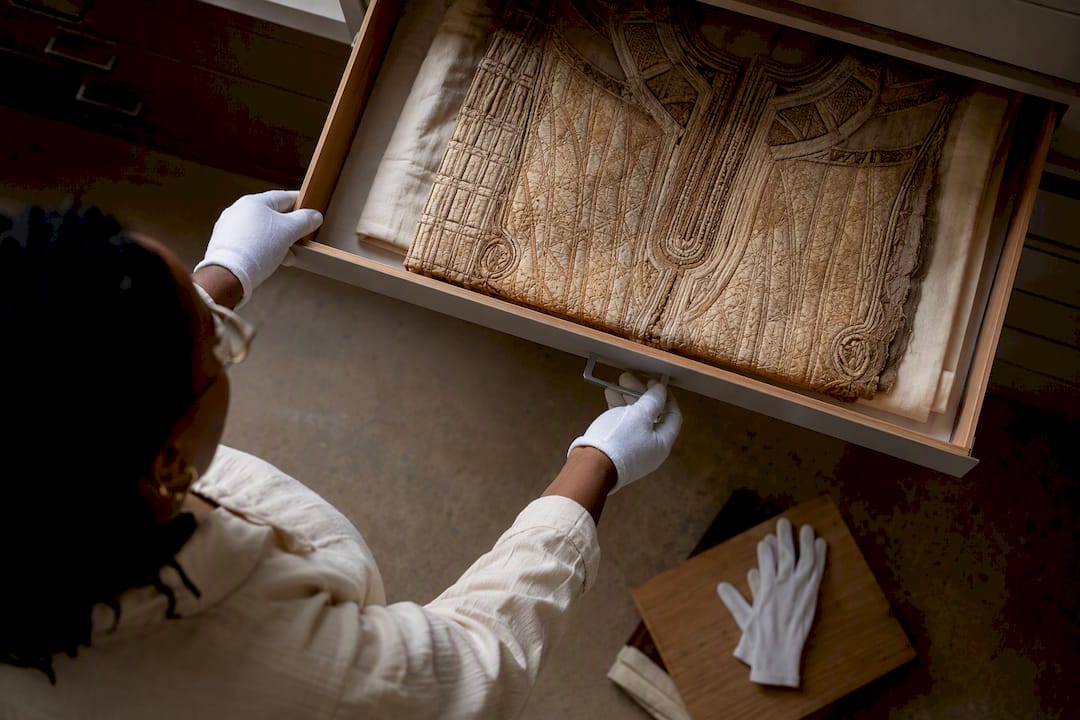
The Metropolitan Museum of Art holds ceremonial robes documenting that these garments were hand-woven, densely embroidered, and passed down as heirlooms rather than replaced season to season. That single fact reframes the agbada: it was never meant as everyday cloth. It was wealth you could wear, and often wealth a grandson would eventually inherit.
Statistic Callout: Museum accession records for ceremonial West African robes routinely date individual pieces to the 19th and early 20th centuries, evidence that some agbada and related garments were preserved as family heirlooms across multiple generations rather than discarded after a single event.
What Are the Four Pieces of an Agbada?
An agbada is not one garment. It's a coordinated system, and knowing the parts is the fastest way to spot a well-made one.
- Awosoke, the outer robe, cut wide and often sleeveless in the arm openings, meant to billow rather than cling.
- Awotele, the inner top, either a buba (a looser tunic) or a dansiki (a slightly more fitted version), worn directly under the robe.
- Sokoto, the trousers, gathered at the waist and tapering or draping depending on the style.
- Fìla, the cap, which finishes the silhouette and carries its own set of style rules.
This four-piece structure is confirmed in encyclopedic references documenting Yoruba dress, and it's the detail most casual descriptions skip. The awosoke usually features a rectangular centerpiece panel running down the chest, framed by embroidery that thickens near the neckline and pocket openings. The denser and more intricate that embroidery, the more prestige the piece traditionally signals.
Pro Tip: Check the centerpiece panel first when judging quality. Hand-embroidered motifs with raised, corded stitching almost always outclass flat machine embroidery, even when the fabric underneath looks similar at a glance.
Which Fabrics and Styles Define a Modern Agbada?
Fabric does most of the talking before a single stitch of embroidery gets noticed. Aso-oke, a hand-woven strip cloth with distinctive stripes, remains the most culturally loaded choice, often reserved for weddings and chieftaincy events. Damask offers a shinier, more affordable alternative that has become the everyday formal standard. Velvet signals luxury and tends to appear at the most significant ceremonies, while cotton and lighter wax prints suit warmer climates and less formal gatherings.
Contemporary style families have grown around these fabric choices:
- Traditional or OG styles, heavy on embroidery and volume, closest to historic prestige robes.
- Minimalist styles, using premium plain fabric with restrained detailing.
- Velvet or luxury styles, built for maximum visual weight at major events.
- Aso-oke stripe styles, prized for their handwoven texture and regional authenticity.
- Damask and organza-adjacent styles, valued for shine and lighter weight in warmer settings.
Academic work on West African ceremonial textiles tracks this shift toward contemporary adaptation, noting that velvet, damask, and aso-oke stripes now coexist as equally legitimate expressions of the same core garment rather than a hierarchy of "real" versus "modern." Price and care generally follow fabric: aso-oke and velvet run higher and need more careful handling, while damask and cotton are more forgiving for regular wear. Anyone shopping for modern agbada looks will notice these fabric families repeat across nearly every design.
Why Do People Wear Agbada, and What Does It Signal?
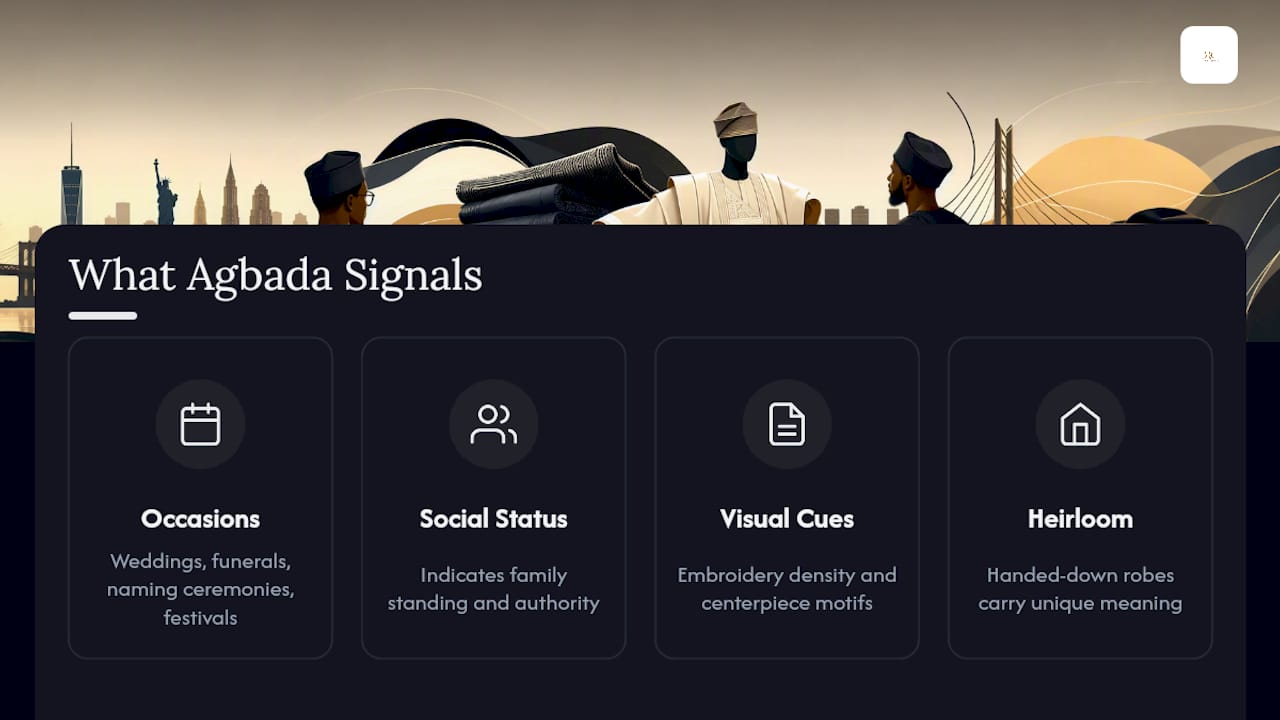
Weddings, chieftaincy installations, funerals, naming ceremonies, and major festivals are the settings where agbada shows up most, and in each case, the robe is doing social work beyond simply covering the body. It signals that the wearer takes the occasion seriously enough to invest in his appearance, and it often signals family standing, since the finest robes have historically belonged to men of status.
Museum notes on named historical robes worn by regional rulers document this status function directly: garments accessioned into permanent collections were worn specifically at formal ceremonies tied to leadership roles, not casual daily dress. That link between garment and authority hasn't disappeared. It's just widened to include grooms, honored guests, and elders at family celebrations.
Statistic Callout: Curatorial records tied to related West African robes note that embroidery density and centerpiece motifs served as the primary visual cues of rank, a detail that still guides how buyers judge an agbada's formality today.
Heirloom use reinforces all of this. A robe worn by a grandfather at his own wedding, handed down for a grandson's naming ceremony, carries meaning no new purchase can fully replicate, though a well-chosen new piece can absolutely start that lineage for a family that doesn't have one yet. Anyone dressing for a West African wedding as a guest is stepping into that same tradition of dressing to honor the occasion, even without inherited cloth.
How Should You Wear and Fit an Agbada?
Fit comes down to one early decision: volume or tailoring. Traditional agbada favors dramatic width in the sleeves and body, while modern tailored versions trim the silhouette for a cleaner, more Western-friendly drape without losing the robe's basic shape.
- Choose your trouser type. Sooro trousers sit close to the leg for a sharper look; kembe trousers billow wide, matching a more traditional, voluminous robe.
- Pick a cap style. Fìla caps sit structured and upright; abetiaja caps have flaps that can be worn down to cover the ears or turned up for a sleeker profile, changing the entire formality of the outfit.
- Confirm your lengths before ordering. Outer robe length, sleeve drape, and trouser break all need separate measurements. The encyclopedic record on agbada construction confirms sooro and kembe as the two dominant trouser cuts, which is exactly the vocabulary to use with a tailor.
Pro Tip: When ordering or altering, tell your tailor whether you want a "sooro fit" or "kembe fit" by name. Those two words communicate more precisely than "slim" or "loose" and prevent guesswork on a garment this structured.
Who Backs This Guide on Agbada Style and Fit?
An example brand focused on authentic West African fashion can provide insight into agbada inventory, tailoring feedback, and customer fit considerations for occasions such as weddings. Pieces like the Gold Garnet Ascension ensemble and the Spirit of Ancestry ensemble show the embroidery placement and fabric choices this article describes, in construction rather than theory.
The brand's style guides on modern men's agbada looks walk through real fit decisions for U.S. body types and climates. Every piece is produced in limited quantities with artisans compensated fairly for hand-embroidery work, which keeps the craftsmanship tied to the same traditions this article traces back centuries.
The Agbada Isn't a Costume. It's a Living Wardrobe Choice
What strikes me most about the agbada is how little it has actually changed in function, even as fabric and tailoring shift with every generation. A robe once reserved for kings and elders now shows up on grooms, graduates, and men who simply want to feel the weight of something intentional on their shoulders. That continuity, not the embroidery, is the real inheritance. Wearing one today isn't nostalgia. It's participation in a tradition that was always designed to keep adapting.
— Sena
Where to Find Authentic, Ready-to-Wear Agbada Sets
One can find ethically produced agbada sets made in limited quantities, offering an alternative to ordering from overseas tailors or purchasing costume-grade knockoffs at party stores.
Every set draws on the same fabric families and embroidery traditions covered above, from aso-oke stripes to richer damask and velvet options, built into ready-to-wear pieces across Men's Agbada Ensembles, Men's Heritage, and Women's Collections. If you want to compare themed sets side by side, the full collections page groups pieces like Woven Nobility: Kings' Robe and Woven Crowns: Radiant Rise so you can shop by occasion rather than guesswork. Ready to see what's new? Check the latest style previews before the next limited run sells out.
Sources
- Encyclopedia
- Hausa, Nupe, and/or Yoruba artists - Agbádá (man’s ceremonial robe) - Metropolitan Museum of Art
- Gregg collection: Agbada (object record)
FAQ
What culture is agbada from?
Agbada originates with the Yoruba people of Nigeria, though closely related robes appear across West Africa under different names, including babban riga among the Hausa and the grand boubou in Francophone regions.
Is agbada Ghanaian?
Agbada is Yoruba in origin, not Ghanaian, though similar voluminous ceremonial robes exist in Ghana and across the wider region as part of shared West African prestige dress traditions.
What is the agbada?
The agbada is a four-piece Yoruba men's ensemble made up of a large outer robe (awosoke), an inner top (awotele), wide trousers (sokoto), and a cap (fìla), traditionally worn for ceremonies and celebrations.
Which tribe owns agbada?
The Yoruba are the tribe most directly associated with the agbada by name and construction, though the broader garment family is shared and adapted across multiple West African ethnic groups.
Where can I buy an authentic agbada set?
Senanukunu offers ready-to-wear and limited-edition agbada sets made with ethical production practices, with current styles and pricing available on the Senanukunu site.