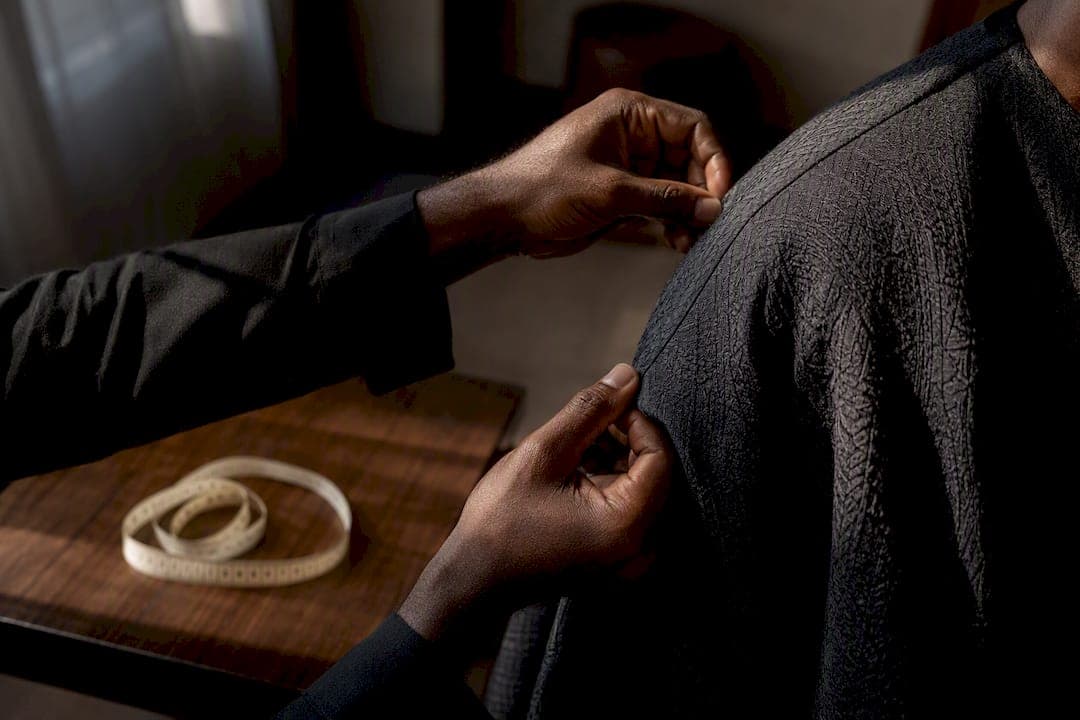
The single rule that matters most: get the shoulders right, and everything else follows. Wear an agbada whose shoulder seams sit exactly at your own shoulder line, layer buba and sokoto underneath, step into the robe, and arrange the front panels with intention rather than letting them fall where they land. A standard four-piece set runs 4 to 7 yards of fabric, and once the fit is right, the cap and shoes finish the story.
TL;DR:
- Ensuring the shoulder seam sits exactly at your natural shoulder line is critical for a commanding, well-balanced agbada fit.
- Typically, four to seven yards of fabric are needed for a complete set, with heavier fabrics like brocade or damask for formal occasions.
- The outfit’s overall look depends on precise tailoring, especially shoulder alignment, sleeve length, and trouser hem, before choosing embroidery or accessories.
- Lighter fabrics such as cotton or Ankara are suitable for casual or warm weather, while silk and velvet are ideal for evening and ceremonial wear.
- Proper dressing includes layering in the correct sequence, pinning for symmetry, and practicing sitting to ensure the agbada folds naturally without losing its shape.
Table of Contents
- How Do You Put on an Agbada Step by Step?
- What Should the Fit and Tailoring Look Like?
- Which Fabrics Work Best for an Agbada?
- How Do You Accessorize an Agbada?
- How Should Styling Change by Occasion?
- What Mistakes Should You Avoid?
- Sena Nukunu's Fit and Tailoring Tips for U.S. Shoppers
- How Do You Layer an Agbada With a Kaftan or Buba?
- What Do the Patterns on an Agbada Mean?
- How Do You Wear an Agbada Comfortably in Different Weather?
- What Most Guides Get Wrong About Agbada Fit
- Where to Find a Well-Fitted Agbada Ready to Wear
- Sources
- FAQ
How Do You Put on an Agbada Step by Step?
Dressing in an agbada is a sequence, not a scramble. Rush the layering and the whole silhouette looks lopsided by the time you reach the front door.
- Put on the sokoto (trousers) first. They should sit at your natural waist, with the hem breaking just above the ankle bone, never bunching over your shoe.
- Add the buba (inner tunic). This is your base layer, and it should feel close to the body without restricting your shoulders.
- Step into the agbada from the top down, letting the neckline settle before you adjust anything else. Pulling it on sideways twists the back panel and throws off the drape for the rest of the day.
- Center the back panel so the embroidery or fabric pattern falls straight down your spine, then bring the front panels forward and cross them so the overlap sits evenly on both sides.
- Settle the sleeves by raising both arms halfway. If the fabric bunches at the elbow or pulls at the shoulder seam, the robe needs adjusting before you leave the house.
- Finish with the fila (cap), tilted slightly rather than centered flat, and step into your shoes last so you can judge the finished trouser length.
Tailors and stylists have long recommended using a few discreet pins or a hidden tie at the underarm seam to keep the front panels symmetrical through a night of standing, greeting guests, and sitting down to eat. Before you walk out, do a full mirror check: shoulders square, sleeves clear, trouser hem clean, and panels balanced left to right.
Pro Tip: Practice sitting down once before the event. A well-draped agbada should fold naturally into your lap without you having to yank the fabric out from under you. If it doesn't, the shoulder fit is off, not the sitting.
What Should the Fit and Tailoring Look Like?
Fit is the entire game with an agbada. A robe that's too wide at the shoulder reads as bulky and dated no matter how fine the embroidery is; one that's tailored to your actual frame reads as commanding. The shoulder seam should sit exactly where your natural shoulder ends, not an inch beyond it, and this single measurement does more for how the garment looks than any other adjustment you'll make.
Here's what to check before you commit to a size:
- Shoulder seam lands right at the edge of your shoulder bone, with no drooping or pulling.
- Sleeve clearance allows your arms to extend fully without the fabric snagging at the elbow or bunching at the wrist.
- Trouser length stops just above the ankle bone with no break folding over the shoe.
- Total yardage for a complete four-piece set typically runs 4 to 7 yards, depending on your height and how full you want the drape.
If any of these are off, a tailor can shorten or extend the shoulder line, narrow the sleeve opening, or add side vents for easier movement. Ask specifically for these fixes by name. Quality agbada construction has always centered on shoulder alignment and controlled drape over sheer fabric volume, and that's still true whether you're buying ready-to-wear or having a piece made.
Which Fabrics Work Best for an Agbada?
Fabric choice sets the tone before anyone even sees the embroidery. Heavier weaves like brocade and damask hold structure and shape formal, ceremonial looks, while cotton and Ankara prints move easier and read as more relaxed. Silk and velvet sit at the top end for evening galas and receptions where you want maximum shine under the lights. Agbada styles today range from minimalist modern cuts to heavily embroidered ceremonial robes, and the fabric you choose should match which end of that spectrum your event calls for.
Yardage shifts with fabric weight, too. A lightweight cotton set might use closer to 4 yards, while a fuller brocade robe with more draped volume can push toward 7 yards total across all four pieces. Lining adds structure to lighter fabrics, and starch or interfacing at the collar and front panels keeps embroidered details crisp instead of collapsing into the folds.
How Do You Accessorize an Agbada?
Restraint is the accessory rule here. One or two pieces that pick up a color or thread from the embroidery will always outperform a stack of jewelry competing for attention.
- Cap (fila): Match it to your dominant fabric color rather than a random accent, and make sure it sits snug enough to stay put without pinching.
- Footwear: Leather loafers, babouche slippers, or embroidered mules pair naturally with the robe's formality.
- What to skip: Lace-up athletic shoes undercut the whole look instantly, no matter how sharp the tailoring is above the ankle.
- Jewelry: A single ring, a simple chain, or a pocket square is plenty. Anything louder pulls focus from the embroidery you're paying for.
How Should Styling Change by Occasion?
The same robe reads differently depending on where you're wearing it, and matching fabric weight to formality keeps you from being either underdressed or overdone.
- Weddings and formal ceremonies: Heavier brocade or damask, denser embroidery, and a matched fila and footwear set signal you understand the occasion's weight.
- Religious services: Moderate embroidery in calmer colors, paired with refined but understated accessories.
- Cultural festivals and celebrations: More room for bold color and pattern, especially if you're a guest rather than the person being honored.
- Casual or modern events: Lighter cotton or Ankara, minimal embroidery, and cleaner footwear like leather loafers keep things comfortable.
If you're the celebrant or host, lean into the fuller, more decorated version. Guests generally look better dressing one notch below the person the event centers on.
What Mistakes Should You Avoid?
Most agbada fit problems trace back to one of a handful of repeat offenders, and nearly all of them have quick fixes.
- Trousers too long: Hem them so the fabric stops above the ankle instead of folding over the shoe.
- Shoulder seam sitting too wide: Have a tailor bring it in rather than trying to bunch the excess fabric with pins.
- Skipping the underlayer: Wearing the agbada alone without a buba underneath reads as unfinished, not minimalist.
- Overloading accessories: Keep jewelry and add-ons minimal so they don't compete with the embroidery.
For care, dry clean brocade, damask, and velvet pieces to protect embroidery threads, and hand wash or gentle-cycle cotton versions. Store the robe folded along its natural seams or hung on a wide hanger, never crumpled, to keep the drape intact for the next wear.
Sena Nukunu's Fit and Tailoring Tips for U.S. Shoppers
Tall men run into a specific problem with off-the-rack agbada: sleeves that stop short and shoulders that pull the moment you raise an arm to greet someone. Sena Nukunu builds measurement guidance around exactly that gap, with specific checks for sleeve clearance and shoulder alignment for taller frames.
When you brief a tailor, use this language directly:
- "Align the shoulder seam to my natural shoulder point, not beyond it."
- "Add clearance at the sleeve so my arm extends fully without pulling."
- "Break the trouser hem just above the shoe, no fold."
Pro Tip: Bring a photo of how you plan to stand or greet people at the event. Tailors adjust differently for a robe that's mostly worn standing versus one that'll spend hours seated at a reception table.
How Do You Layer an Agbada With a Kaftan or Buba?
The agbada is the outermost of three layers, and each one has a job. The sokoto trousers go on first, followed by the buba or kaftan as your base tunic, and only then does the agbada go over the top. Skipping the middle layer, or wearing a buba that doesn't match in color or fabric weight, is one of the fastest ways to make an otherwise sharp robe look unfinished.
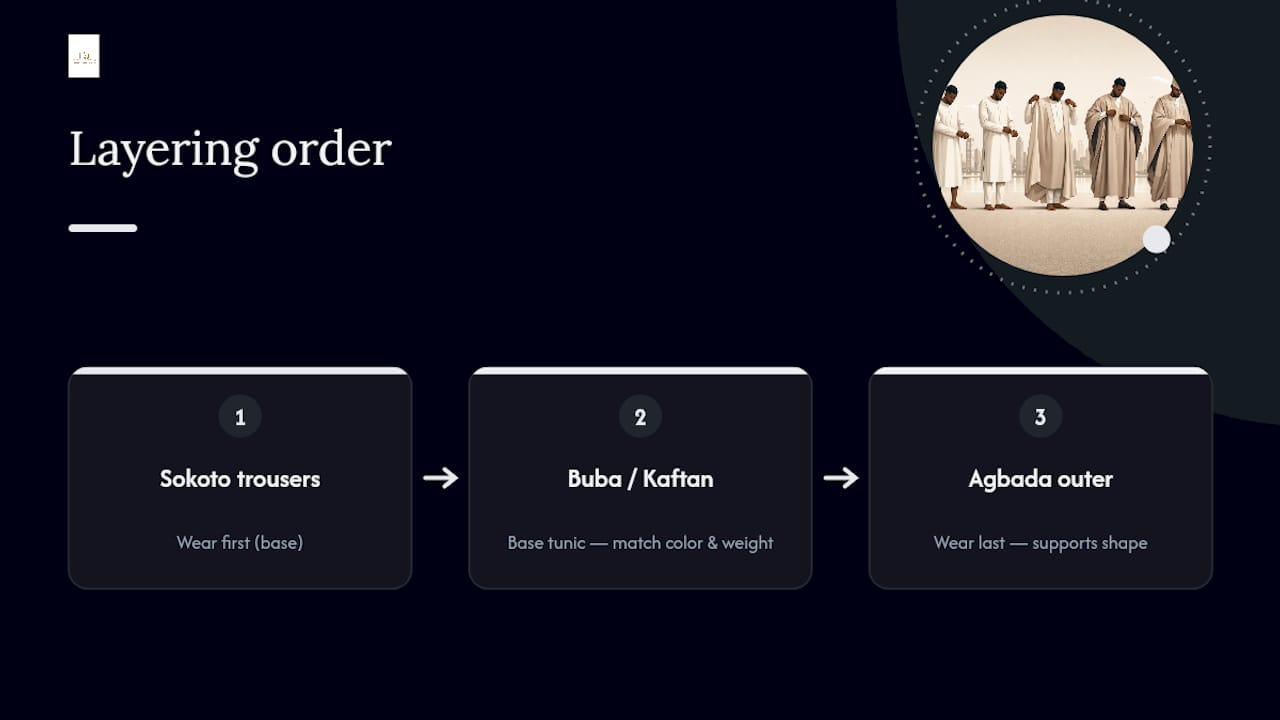
Color coordination between the buba and agbada matters more than most first-time wearers expect. A common approach is matching the buba to the agbada's base color exactly, letting the outer robe's embroidery do the visual work. Another option, more common at festive or celebratory events, pairs a contrasting buba underneath so a flash of a second color shows at the neckline and cuffs when the agbada opens as you move.
Fabric weight should also correspond between layers. A heavy brocade agbada paired with a paper thin buba will feel unbalanced against the body and won't hold its shape as well when you sit or gesture. Lighter agbada fabrics, like cotton or Ankara prints, pair naturally with a buba of similar weight, since both layers move together instead of fighting each other.
The kaftan variation works the same way but tends to appear in more relaxed, contemporary interpretations of the outfit, often skipping the separate sokoto for a single flowing piece underneath. Whichever combination you choose, the goal stays the same: the inner layer should support the outer robe's shape, not compete with it or disappear underneath it entirely.
What Do the Patterns on an Agbada Mean?
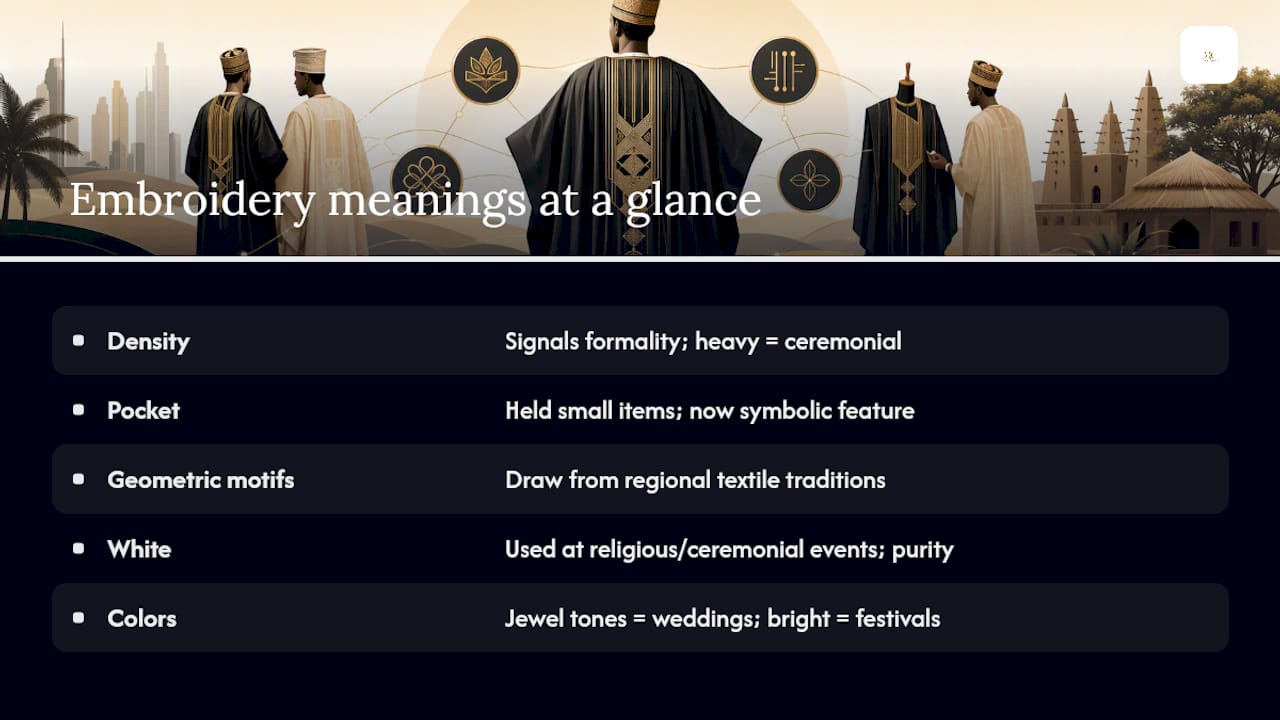
Agbada embroidery isn't decoration for decoration's sake. Certain motifs and patterns carry meaning tied to status, occasion, and regional tradition, and the density of that embroidery has historically signaled how formal or significant an event is. A robe reserved for a wedding or chieftaincy ceremony typically carries far heavier, more intricate stitching across the chest and sleeves than one worn for a casual gathering.
The pocket detail on the left chest, common on many agbada designs, traditionally held small personal items and has become as much a symbolic feature as a functional one. Geometric patterns and repeated motifs along the neckline and cuffs often draw from regional textile traditions, with each design carrying associations specific to the community and craftsmen who originated it.
Color plays its own symbolic role. White commonly appears at religious and ceremonial events tied to purity and celebration, while deeper jewel tones like burgundy, royal blue, and forest green tend to show up at weddings and formal receptions where the robe is meant to command a room. Bright, saturated colors and mixed patterns appear more often at festivals and cultural celebrations, where the mood calls for something louder.
What this means practically is that the embroidery on your agbada isn't just a style preference. It's a language, and choosing a heavily worked ceremonial piece for a casual outing sends a different signal than the event calls for, just as showing up to a wedding in a bare, unembellished robe can read as underdressed.
How Do You Wear an Agbada Comfortably in Different Weather?
Fabric weight has to shift with the season, or comfort becomes the thing that ruins an otherwise well fitted look. In hot, humid conditions, lightweight cotton or Ankara agbada sets breathe far better than brocade or velvet, which trap heat against the body over the course of a long outdoor event.
Layering underneath also changes with climate. In warmer months, a lighter buba made from breathable cotton keeps the base layer from adding unnecessary heat, while the outer agbada itself can be cut from a looser weave that allows airflow even with the robe's natural volume. In cooler weather, or for indoor winter events, brocade, damask, and velvet come back into play, since their heavier weight actually helps the robe hold its structure without needing extra layering underneath.
Humidity affects starched pieces differently than dry heat does. A heavily starched collar or front panel can go limp faster in high humidity, so if you're wearing an agbada outdoors in summer, ask your tailor for a lighter starch application that holds shape without becoming stiff and uncomfortable once the fabric absorbs moisture from the air.
For travel to an event, especially by plane, a voluminous robe takes some planning around movement and seating, a concern shared by other loose-fitting formal wear when you're navigating comfortable outfits for air travel. Packing the agbada folded along its seams, rather than crushed into a suitcase corner, keeps both the drape and any starched panels intact for when you actually put it on.
What Most Guides Get Wrong About Agbada Fit
Most advice on wearing an agbada spends its energy on embroidery, color, and accessories, and treats fit as an afterthought squeezed in at the end. That ordering is backwards. A stunning brocade robe with a shoulder seam that sits two inches too wide will always look worse than a plain cotton set that's actually cut for the wearer's frame. Volume without shape control is what makes a robe look costume like instead of commanding, and that's a tailoring problem, not a fabric problem.
The other gap in conventional guidance: almost nothing addresses fit for taller men specifically, even though sleeve length and shoulder placement are exactly where off-the-rack sizing fails tallest and widest people first. If you're above average height, treat sleeve clearance and shoulder alignment as non-negotiable checks before you even think about which embroidery pattern you want.
Prioritize in this order: shoulder fit first, trouser break second, fabric and embroidery third, accessories last. Readers who reverse that sequence, chasing the most elaborate robe before nailing the fit, end up needing a rushed tailoring appointment the week of the event instead of walking in confident from the start.
— Sena
Where to Find a Well-Fitted Agbada Ready to Wear
Ready-to-ship agbada sets alongside custom pieces are often cut with shoulder alignment and sleeve clearance considerations similar to those described in this guide, and some are produced in limited quantities through ethical manufacturing partnerships with West African artisans. That combination matters if you've ever ordered a robe online only to find the shoulders wrong and no clear way to fix it before the event.
Start with the Sands of Ancestry four-piece agbada set or the Black Crown Legacy ensemble to see how a properly proportioned set should drape. If you're taller than average or unsure what to request from a tailor, run through the measurement guide for tall men first, then bring those exact terms, shoulder seam, sleeve clearance, trouser break, to whoever fits your piece. Browse the full collection to compare fabrics and embroidery levels before you order, and reach out through the site if you need guidance sizing a custom set for your event.
Sources
- Yen
- Styling Agbada for Men | Kachins Couture
- Agbada for Men: 7 Stunning Styles Every Nigerian Man Should Own - Famk Apparel
- 5 Important Things You Must Know Before Wearing Agbada – Svelte Magazine
FAQ
How many yards does it take to sew an agbada?
A complete four-piece agbada set, including the sokoto, buba, outer robe, and fila, typically requires 4 to 7 yards of fabric, depending on height and how full the drape is meant to be.
Which fabric is best for an agbada?
Brocade and damask suit formal and ceremonial wear, cotton and Ankara prints work for casual and warm weather occasions, and silk or velvet fit evening and high formal events. Agbada styles range from minimalist to heavily embroidered, so fabric choice should match the event's formality.
How do Yoruba men traditionally dress for formal occasions?
Traditional Yoruba formal dress for men centers on the agbada worn over a buba and sokoto, finished with a fila cap, with heavier embroidery and richer fabric reserved for weddings, chieftaincy events, and religious ceremonies.
What shoes should you avoid wearing with an agbada?
Avoid lace-up athletic shoes entirely. Leather loafers, slippers, or embroidered mules match the robe's formality far better and keep the overall look consistent from head to shoe.
How do you know if an agbada fits correctly?
Check that the shoulder seams sit at your natural shoulder line, your arms extend fully without the sleeves pulling, and the trouser hem breaks just above the ankle without folding over the shoe.