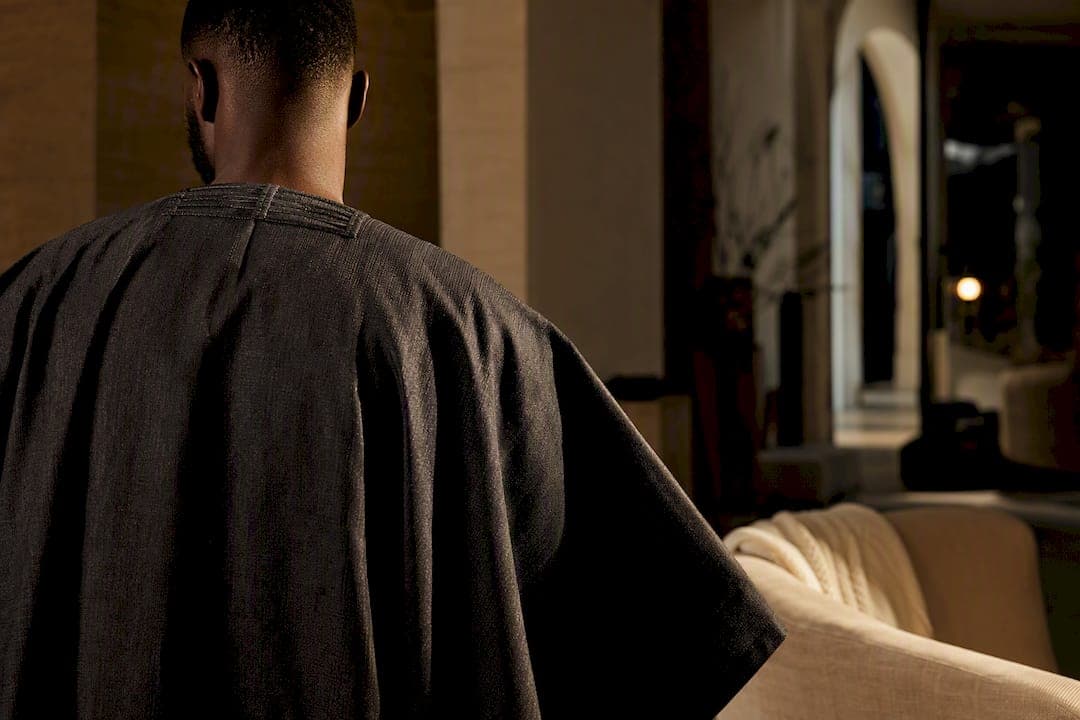
Tall men need an agbada built around three priorities, in order: accurate measurements (especially sleeve length, or yuki), a decision between custom tailoring and tall-labeled ready-to-wear, and embroidery placed to sit squarely on the chest rather than sliding down the torso. Start with your measurements before you fall in love with a fabric or a color. Sena Nukunu builds its agbada sets and kaftans with tall-friendly proportions and custom sizing in mind, which makes it a sensible first stop for a taller frame.
TL;DR:
- Tall men often need sleeve lengths close to 80 centimeters, requiring custom construction to ensure embroidery placement and proportion accuracy.
- A traditional full-length embroidered agbada works best for formal occasions, as it enhances height and commands presence on a taller frame.
- Tailors can independently adjust shoulder width, sleeve length, and garment drop, providing better fit and embroidery alignment than standard tall sizes.
- Heavier fabrics and lined constructions are recommended for cooler events, while lighter, unlined fabrics suit warm-weather celebrations.
- Proper measurement of height, shoulder width, chest, hip, sleeve length, and body length ensures a precise fit, especially for custom-made agbadas.
Table of Contents
- Best Agbada Styles for Tall Men
- How to Measure for an Agbada That Fits a Tall Frame
- Tailoring and Alterations: Custom vs. Ready-to-Wear Tall Sizes
- Fabrics, Lining, and Embroidery for Tall Bodies
- Styling Tips for Tall Men Wearing Agbada
- Sena Nukunu's Approach to Tall Sizing and Cultural Craftsmanship
- Find or Commission the Right Agbada at Sena Nukunu
- Sources
- FAQ
Best Agbada Styles for Tall Men
Height is an advantage in this garment, not a complication. The agbada was built as a display piece, a robe meant to widen a man's presence in a room, and a taller frame gives its architecture more room to work. The question isn't whether you can wear volume. It's which volume, and where.
The classic full-length embroidered agbada remains the strongest choice for weddings, naming ceremonies, and formal cultural events. Traditionally, the four-piece ensemble, the awotele (inner vest), sokoto (trousers), awosoke (outer robe), and fila (cap), was constructed with wide sleeves, side panels, and a broad embroidered chest panel specifically to project stature and presence, according to a breakdown of traditional agbada attire. On a shorter man, that much fabric can swallow the frame. On a tall man, it drapes the way it was designed to, and the embroidered chest panel reads as a focal point rather than clutter. In Yoruba usage, a tall, broad-shouldered man who carries an agbada with ease is sometimes described as agunlejika, a term that ties height directly to the garment's intended silhouette.
Not every event calls for maximum volume, though. A structured or minimalist agbada, or a kaftan-agbada fusion, gives a more modern line for daytime functions, business receptions, or travel where you need to move freely. These cuts trim the excess fabric at the sides while keeping the signature drape, and they tend to photograph better in tighter spaces where a full four-piece set can feel like too much robe for the room.
If you want the full traditional statement without stiffness, a longline three-piece set with wide sleeves gives you both volume and proportion. This is where tall men genuinely have an edge: the extra body length balances the sleeve width instead of fighting it, so the whole silhouette reads as intentional rather than oversized.
Embroidery scale matters as much as the cut. A few rules of thumb:
- 3D puff or raised embroidery works best on longer chest panels, since a taller torso gives the raised threadwork more vertical space to sit without crowding the neckline.
- Narrow, linear borders suit a minimalist or structured agbada, keeping the eye moving along the robe's length rather than concentrating at the chest.
- Heavier, all-over embroidery belongs on formal occasion wear, where the goal is maximum visual weight.
- Sparse, single-panel embroidery fits modern or business settings, where you want the cultural signature without the full ceremonial statement.
A three-piece agbada set with a larger embroidered panel illustrates the point: the same design that would overwhelm a smaller frame becomes the garment's strongest feature on a taller one.
How to Measure for an Agbada That Fits a Tall Frame
Get the measurements right and everything else, the style, the fabric, the tailoring decision, falls into place. Get them wrong and no amount of embroidery will fix the drape. Here's the sequence to follow, whether you're filling out an online order form or handing numbers to a tailor.
- Height. Measure barefoot, against a wall, morning or evening consistently. This anchors every other measurement and tells a seller or tailor which "tall" category you actually fall into.
- Chest. Wrap the tape around the fullest part of your chest, under the arms, keeping it level front to back.
- Hip or girth. Measure around the widest part of your hips, since the sokoto trousers and the robe drop both depend on this number.
- Shoulder point to shoulder point. Measure across the back, from the edge of one shoulder to the other. This determines how the awosoke sits before the sleeve even begins.
- Yuki (sleeve length). Measure from the center back of your neck, across the shoulder, and down to the wrist bone with your arm slightly raised, not hanging straight. This bent-arm position matters because it accounts for the extra fabric your arm needs when you move, rather than leaving sleeves that ride up the moment you raise a hand to greet someone.
- Preferred body length. Decide how far below the knee you want the robe to fall, then measure from the nape of the neck straight down to that point.
Pro Tip: Take every measurement in the clothing you'll actually wear underneath the agbada. A light shirt versus a heavier layer can shift your chest and shoulder numbers enough to throw off the drape.
Yuki is the measurement most tall men get wrong, and it's the one that causes the most visible problems. Custom construction using ultra-wide fabric can produce a yuki of up to roughly 80 centimeters for super-tall wearers, a length that standard-width fabric simply cannot reach without piecing. If your sleeve falls short, the embroidered cuff detail sits mid-forearm instead of at the wrist, and the whole chest panel shifts out of proportion with it.
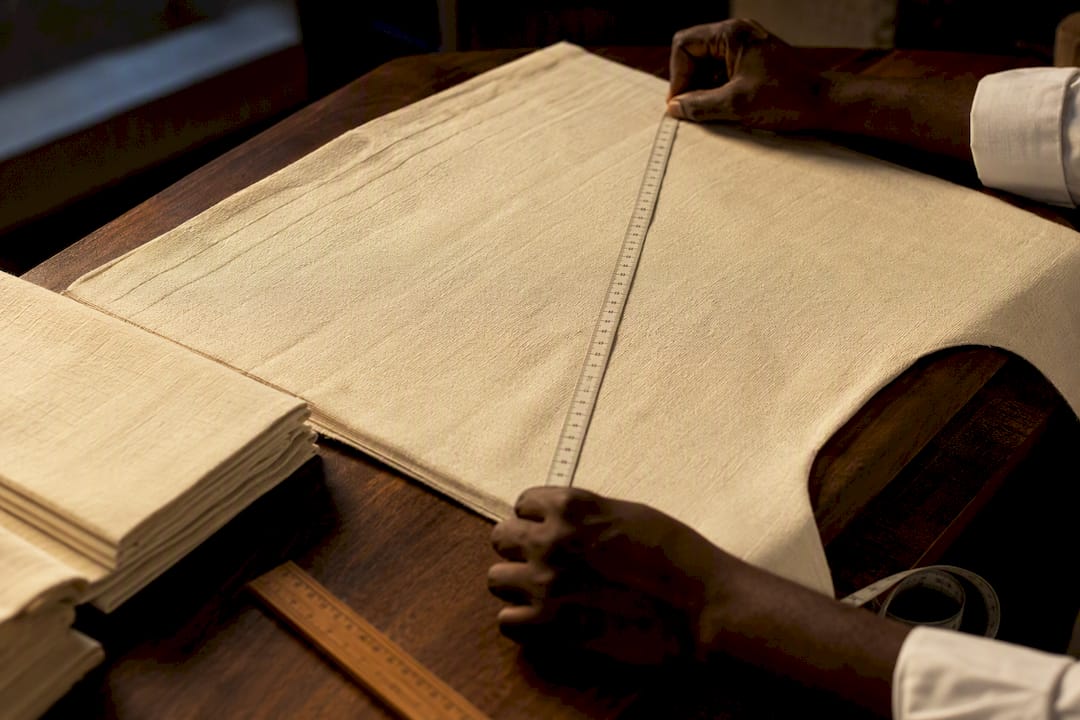
When you submit measurements online, round to the nearest half centimeter and note which unit you used. A tolerance of about one centimeter on sleeve length is standard; anything wider than that risks the cuff landing in the wrong place. If you're working with a tailor directly, bring all six numbers in one sitting rather than emailing them piecemeal. It saves a fitting.
Tailoring and Alterations: Custom vs. Ready-to-Wear Tall Sizes
Ready-to-wear tall labels solve the problem quickly, but they solve it for an average tall man, not for you specifically. If your proportions fall close to a standard tall grading, a labeled tall or jumbo set can fit well right out of the package, and it gets you into the garment faster with no lead time for construction. If your yuki, shoulder width, or torso length run outside that average, though, a labeled "tall" piece can still leave sleeves short or a robe drop that sits wrong at the hip.
Custom tailoring solves for you directly. Because the agbada's volume comes from patterning, wide sleeve panels, a draped robe body, extra side fabric, small errors compound rather than average out. A tailor can adjust shoulder width, sleeve length, and the robe's drop point independently, and for tall men that independent control is usually the difference between a garment that fits and one that merely covers. It typically costs more and takes longer, but the embroidery lands where it was designed to sit rather than several inches off target.
Two alterations come up constantly for tall clients: lengthening sleeves after the fact, and adjusting the awosoke drop. Both are harder to correct after construction than to plan for at the pattern stage, because lengthening a finished sleeve often means re-cutting the embroidered cuff, not just adding fabric.
Before committing to any custom order, ask the seller or tailor:
- What's your measurement protocol, do you require all six core measurements or just height and chest?
- Do you offer a mock-up or toile fitting before final construction?
- What's the lead time for a custom order versus a labeled tall ready-to-wear piece?
- What's your policy if the sleeve or drop needs adjustment after delivery?
Reputable tailors use a mock-up stage specifically to verify yuki and chest embroidery placement before cutting the final panels. That step catches sizing errors while they're still cheap to fix.
Fabrics, Lining, and Embroidery for Tall Bodies
Fabric weight changes how an agbada moves, and on a taller frame that difference shows more, not less. Heavier fabrics, brocade, guinea brocade, or a structured aso-oke, hold their shape and create the stiff, regal drape most people picture when they think of formal agbada. Lighter cottons and cotton blends move with the body instead of against it, which suits warm-weather events or settings where you'll be standing, greeting, and moving for hours.
Lining is the other lever. An awase, or lined, construction adds body and structure, useful in cooler weather or when you want the robe to hold a crisper line. A hitoe, or unlined, build is lighter and drapes closer to the body, better suited to warm climates or events where comfort matters more than stiffness.
- Choose heavier, lined fabric for winter formal events and receptions with extended standing time.
- Choose lighter, unlined fabric for outdoor or warm-season celebrations.
- Scale embroidery width to your chest measurement, not to the design you saw on a shorter model, so the panel reads proportionally rather than narrow.
- Match panel length to your measured body length so the embroidery doesn't stop short of the hem or crowd the collar.
A longline kaftan-agbada set shows how a lighter fabric and a longer panel work together on a taller build without losing the garment's formality.
Styling Tips for Tall Men Wearing Agbada
Fit problems don't stop at the robe. Trouser length is the most common styling mistake among tall men, sokoto cut for an average height bunches at the ankle on a taller wearer, breaking the clean vertical line the whole outfit depends on. Have the sokoto hemmed to your actual inseam rather than accepting a standard length.
Footwear should stay low-profile. Traditional slip-ons or leather sandals keep the proportion clean; a bulky sole adds height you don't need and disrupts the drape at the ankle.
The fila, or cap, needs to scale with your frame the same way embroidery does. An undersized fila on a tall man looks like an afterthought. Choose a slightly larger crown and brim so it reads as a deliberate part of the outfit rather than a prop.
- Hem sokoto trousers to your exact inseam, don't rely on "standard" length.
- Keep footwear low profile to preserve the vertical line.
- Size the fila up slightly to balance a taller head-to-shoulder ratio.
- Save maximal embroidery for weddings and ceremonies; keep it minimal for daytime or business functions.
Sena Nukunu's Approach to Tall Sizing and Cultural Craftsmanship
Fit is where cultural respect and practical clothing meet, and we built Sena Nukunu around that intersection. Operating from Florida, we design agbada sets, kaftans, and statement pieces with the traditional four-piece logic intact, wide sleeves, a proper chest panel, real drape, while offering custom sizing for men whose proportions fall outside standard grading. Every piece is produced in limited quantity with artisans who understand why the embroidered chest panel has to land in the right place, not just look good on a hanger. For a tall man, that attention to placement is the entire difference between a garment that fits and one that almost does.
— Sena
Find or Commission the Right Agbada at Sena Nukunu
Once you have your six measurements in hand, height, chest, hip, shoulder, yuki, and preferred body length, you're ready to order rather than guess. Certain vendors carry tall-friendly agbada sets and kaftans built with wider sleeves and longer body proportions, alongside custom sizing options for men who need more precision than a standard tall label offers.
When you order, submit your measurements at checkout or note them in your order request, expect a short production window since pieces are made in limited runs rather than mass-produced, and follow the care instructions included with the fabric you choose, since heavier lined pieces and lighter unlined ones need different handling. Browse the current tall-friendly styles or look at a set like the Midnight Covenant ensemble to see how the sleeve and chest proportions are built for a taller frame. Keep the measurement checklist from this guide next to you when you order, and start with your yuki number first.
Sources
- The Agbada Traditional Male Attire
- Achieve a Perfect Sleeve Length of 80cm — TL 42cm / Super Tall Compatibility
- Agbada for men: 5 steps to modern power dressing
FAQ
What Sleeve Length Should a Tall Man Choose for an Agbada?
Measure your yuki from the back of your neck to your wrist with your arm slightly raised. Tall men often need sleeve lengths close to 80 centimeters, which usually requires custom construction rather than a standard tall label.
Is Custom Tailoring Worth It for a Tall Agbada?
For most tall men, yes. Custom tailoring lets a tailor adjust shoulder width, sleeve length, and robe drop independently, which keeps embroidery placement accurate in a way standard tall sizing often can't match.
Which Agbada Style Works Best for a Tall, Formal Event?
A classic full-length embroidered agbada with a broad chest panel suits weddings and ceremonies best, since the traditional four-piece construction was designed to project stature on a larger frame.
How Do I Avoid My Trousers Bunching at the Ankle?
Have your sokoto hemmed to your exact inseam rather than accepting a standard length, and pair it with low-profile footwear to keep the vertical line clean.
Does Sena Nukunu Offer Custom Sizing for Tall Men?
Sena Nukunu offers custom sizing alongside its ready-to-wear agbada sets and kaftans, built with wider sleeves and longer body proportions in mind for taller frames.