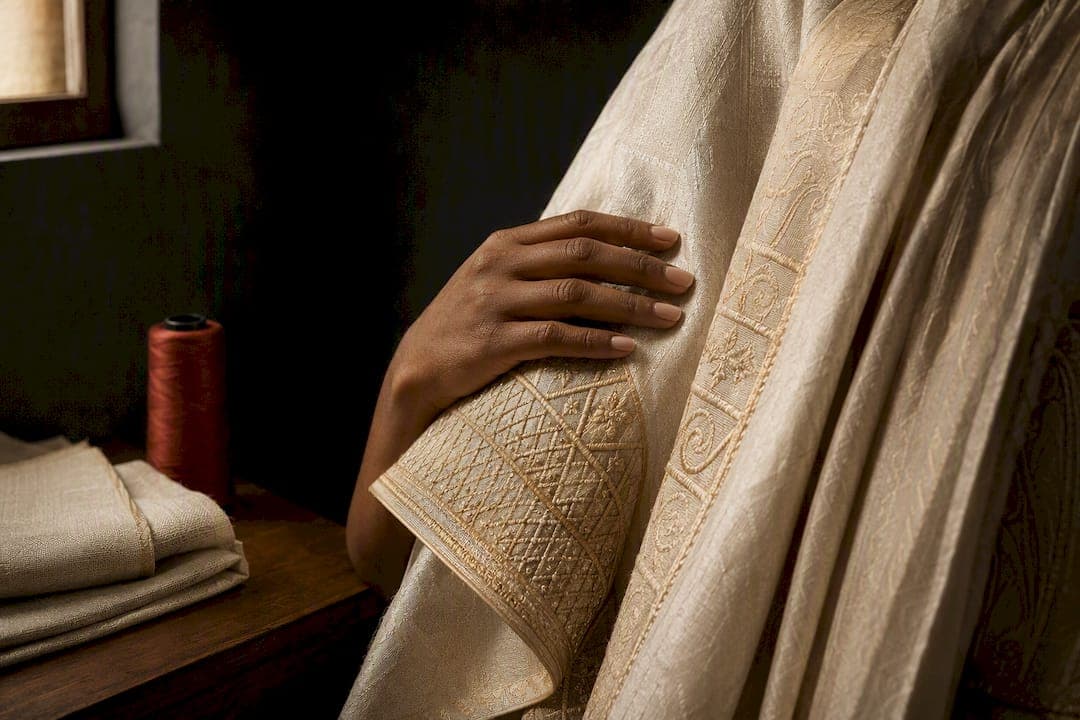
A women's agbada is a menswear-inspired oversized robe, reimagined with wide sleeves and chest embroidery, worn over a fitted underlayer or trousers. The single rule that governs every good version of this look: balance the robe's grand volume with something fitted underneath or a belt at the waist. Choose your fabric and cut for the occasion, then secure heavy panels so the drama stays intentional, not accidental.
TL;DR:
- An agbada is best styled with fitted garments underneath to maintain balance and prevent an overwhelming appearance.
- Regional differences influence agbada design, with Yoruba styles favoring maximum volume and embroidery, while Hausa variants feature denser patterns and narrower cuts.
- Formal occasions call for heavier fabrics like brocade or satin, while cotton and Ankara are suitable for casual or daytime wear.
- Tailoring adjustments such as wider armholes, hidden closures, or sleeve-length matching are crucial for proper fit and elegant drape.
- Accessories like coral beads, headwear, and waist beads add cultural meaning and should be chosen with awareness of tradition and occasion.
Table of Contents
- What Makes Women Agbada Styling Different From a Bubu?
- Which Silhouettes Are Trending in Women's Agbada Right Now?
- How Do You Style an Agbada From Head to Toe?
- What Fit and Tailoring Adjustments Actually Matter?
- Which Fabrics Work Best, and How Do You Care for Them?
- Why Does the Agbada Carry So Much Cultural Weight?
- How Do Agbada Styles Vary Across West Africa?
- What Accessories Traditionally Pair With Women's Agbada?
- A Note on Styling With Intention
- How Do You Buy or Commission Your First Women's Agbada?
- Sources
What Makes Women Agbada Styling Different From a Bubu?
The confusion between these two garments happens constantly, and it matters more than most shoppers realize. An agbada is borrowed straight from menswear codes: an oversized outer robe with wide, dramatic sleeves and embroidery concentrated at the chest, worn layered over another piece rather than as a standalone. A bubu, by contrast, is a softer, looser, single-layer garment with a more relaxed cut and no menswear architecture behind it. This isn't a redefinition of tradition. Designers are intentionally blending a masculine silhouette with feminine tailoring, which is a design choice built on top of the original form, not a replacement for it.
Three things separate one from the other visually:
- Layering structure: agbada goes over a base outfit; bubu stands alone.
- Embroidery placement: agbada concentrates detail at the chest and neckline; bubu embroidery tends to spread more evenly.
- Sleeve architecture: agbada sleeves are cut wide and structured; bubu sleeves are looser and less engineered.
The wider the sleeve and the longer the hem, the more formal and commanding the piece reads. A cropped hem with narrower sleeves shifts the same silhouette into daytime or statement-casual territory.
Which Silhouettes Are Trending in Women's Agbada Right Now?
Three silhouette families cover most of what you'll see on runways, at weddings, and in everyday statement dressing this year.
- Structured and long, worn over trousers. This is the formal-presence version: a full-length robe with defined shoulders, worn over tailored pants instead of a skirt. It reads powerful in a boardroom or at a gala, and the trouser base keeps movement easy despite the volume up top.
- Shorter, cropped robes for casual statement dressing. A hip-length or thigh-length agbada paired with jeans or a simple dress underneath brings the silhouette into everyday rotation. It keeps the embroidery and sleeve drama without the formality of a full sweep to the floor.
- Belted and waist-defined. Cinching the robe at the waist with a fabric belt or sash turns an oversized shape into something that reads as deliberate fashion rather than loose lounge wear, which is the fastest way to modernize a traditional cut without losing its identity.
Structured cuts have also gotten slimmer overall. Some designers now use velvet, cashmere, and polished brocade in trimmer shapes that keep the grandeur of a classic agbada while making it easier to move in, sit in, and wear for a full evening. If you're new to the style, start with the belted version. It's the most forgiving on different body types and the easiest to dress up or down depending on what you put underneath.
How Do You Style an Agbada From Head to Toe?
What goes underneath the robe changes the entire outfit. A fitted buba (the traditional blouse) or a slim turtleneck creates contrast against the oversized shape and keeps you from disappearing inside the fabric. Slim trousers or a pencil skirt do the same job below the waist. Skip anything loose underneath. Two oversized layers stacked on top of each other read sloppy instead of intentional.
- Jewelry and headwear: layered coral or glass beads bring traditional weight to the look, while a structured fila cap signals formality and a modern wide-brim hat pushes the same outfit toward fashion editorial territory.
- Footwear: flat sandals or loafers suit daytime and casual wear; a block heel or embellished mule matches formal events without sacrificing stability under a heavy robe.
- Color strategy: pick one dominant Ankara print or embroidery focal point and keep everything else close to monochrome, so the eye has one place to land instead of competing patterns everywhere.
- Occasion sets: agbada works well as coordinated Aso Ebi for group events or matched couple looks, with Ankara often used to personalize a shared color story. Sena Nukunu's guide to styling Ankara breaks down print pairing in more detail if you want to lean into that route.
Pro Tip: If you're wearing statement embroidery on the robe, keep jewelry to one bold piece instead of stacking multiple pieces. Let the garment do the talking.
For wedding season specifically, check what the event actually calls for before you commit to a fabric or color. Sena Nukunu's West African wedding guest guide walks through formality tiers that map directly onto agbada choices.
What Fit and Tailoring Adjustments Actually Matter?
An agbada that looks incredible on the hanger and fights you all night is a tailoring failure, not a design one. A handful of specific adjustments separate a garment that drapes with purpose from one that just looks big.
- Open the armholes wider than a standard sleeve, but reinforce the seam. Female wearers need more room to move than the traditional men's cut allows, and a reinforced seam keeps the wider opening from tearing under regular wear.
- Add hidden ties or snaps at the chest and shoulder. Tailors commonly build in internal ties or discreet snaps so the overlapping front panels stay closed as you move, without a single visible pin or clasp interrupting the drape.
- Slim the side seams only if you want a defined torso. Leave them wide for maximum drama, or take them in slightly for a shape that still reads as agbada but sits closer to the body.
- Match sleeve length to body length, not to a standard chart. A sleeve that's proportionally too long for your torso overwhelms the whole silhouette instead of framing it.
- Bring exact measurements to your tailor. Shoulder width, desired hem length, and how far past the wrist you want the sleeve to fall are the three numbers that matter most. Shoulder seam alignment and sleeve drape are the fit signals that separate a flattering robe from a shapeless one, so don't leave them to guesswork.
Which Fabrics Work Best, and How Do You Care for Them?
Fabric choice is the fastest way to shift an agbada from casual to ceremonial, often faster than cut or color. Heavier brocade and dense embroidery read formal the moment someone sees them, while lighter cotton and Ankara signal an intentionally relaxed, daytime version of the same shape.
- Formal fabrics: brocade and satin hold structure, catch light, and suit weddings, galas, and ceremonies.
- Casual fabrics: cotton and Ankara breathe better in warm climates and move more easily through a full day of wear.
- Weight and movement: heavier embroidery adds visual impact but also adds weight, so factor in how long you'll be wearing the piece before choosing dense detail.
Care depends entirely on what you picked. Heavily embroidered pieces need dry cleaning to protect thread work and beading from washing machine damage, while cotton and lighter Ankara versions tolerate a gentle hand wash or a delicate cycle. Store finished pieces folded loosely or hung on a padded hanger, away from direct sunlight, which fades embroidery color faster than almost anything else in a closet.
Why Does the Agbada Carry So Much Cultural Weight?
The agbada didn't start as fashion. It began as a marker of status, dignity, and often spiritual or ceremonial authority across West African societies, worn by rulers, elders, and men of standing at moments that mattered: coronations, weddings, religious observances, and community leadership roles. The volume of fabric itself carried meaning. More cloth signaled more resources and more social weight, and the way a robe was worn, layered, and accessorized told onlookers something specific about the wearer's position before a single word was spoken.
Women adopting and adapting the agbada is a newer chapter in that story, not a break from it. It reflects a broader shift in how West African fashion treats gender lines in traditional dress: borrowing the silhouette's power and formality while reworking the construction to fit female bodies and modern contexts. That's worth sitting with for a second. When a woman wears a structured agbada to a business event or a wedding, she's stepping into a visual language that has always meant authority, and choosing to claim it on her own terms.
This context changes how you might approach styling choices. A heavily embroidered, floor length piece in rich brocade isn't just a striking outfit. It's a garment built from a tradition where scale and craftsmanship signaled respect for the occasion, and wearing one well means understanding that weight, not just the silhouette.
How Do Agbada Styles Vary Across West Africa?
The agbada isn't a single fixed garment. It shifts in name, proportion, and finishing depending on where it comes from, and those differences show up in what you'll find when shopping or commissioning a piece.
Among the Yoruba in southwestern Nigeria, the agbada tends toward maximum volume: extremely wide sleeves, extended hem length, and often a matching cap or headwrap completing a full ceremonial set. This is the version most people picture first, and it's the template most contemporary women's designs borrow from most directly.
In Hausa communities in northern Nigeria, a closely related robe (often called a babban riga in its traditional form) tends to feature denser, more geometric embroidery concentrated around the neckline, with a slightly narrower overall drape than the Yoruba version. Across the border in countries like Senegal and Mali, related grand boubou styles share the oversized robe concept but favor their own embroidery traditions and often incorporate brighter, more saturated color combinations into formal wear.
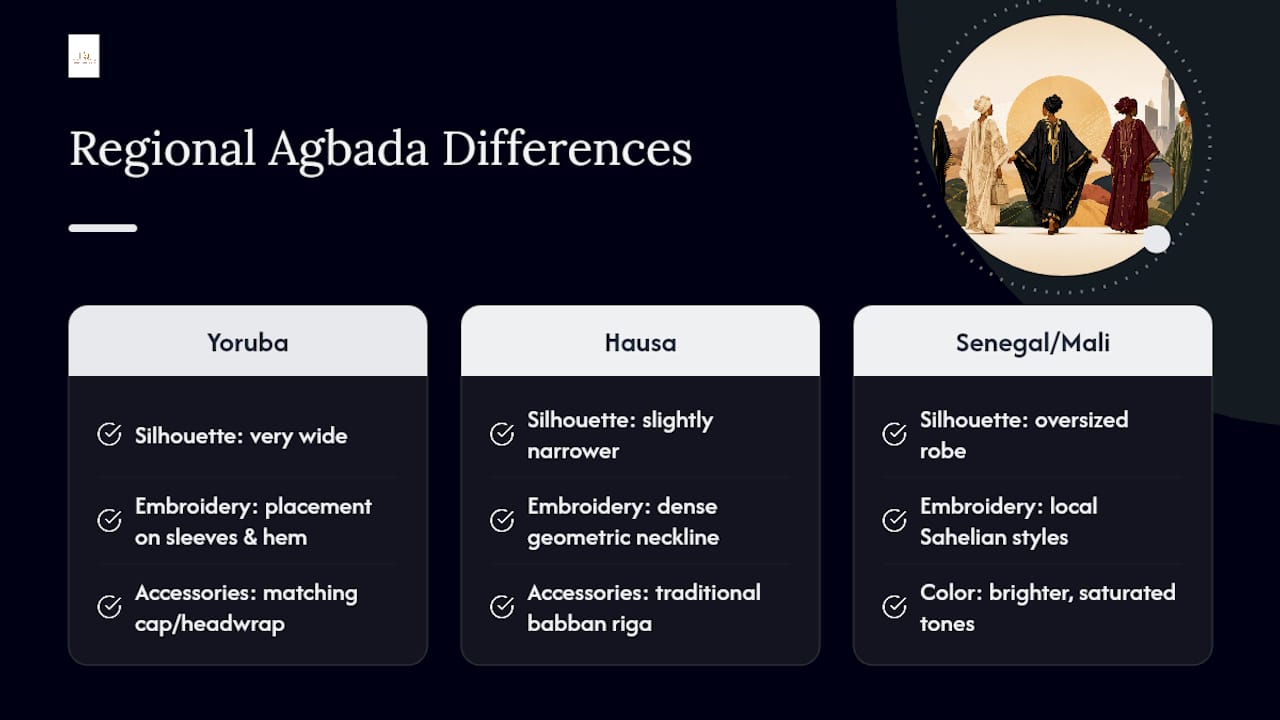
None of these regional versions are interchangeable, and a piece styled with Yoruba-inspired embroidery placement won't necessarily carry the same visual grammar as one built on a Sahelian grand boubou tradition. If cultural specificity matters to you, and it should, ask about a piece's regional inspiration before you buy or commission it. A good maker will know exactly which tradition their pattern draws from.
What Accessories Traditionally Pair With Women's Agbada?
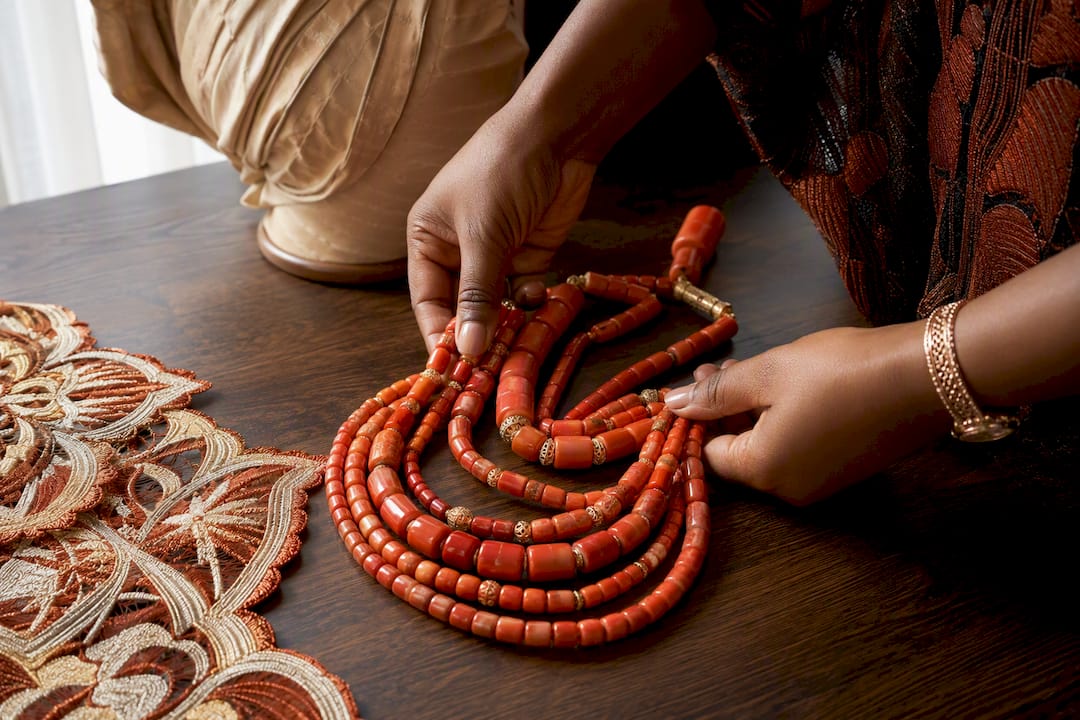
Certain accessories show up again and again alongside women's agbada, and most of them carry meaning beyond decoration. Coral beads, layered thick around the neck or wrist, historically signaled wealth and status across several West African cultures, particularly among Yoruba royal and chieftaincy families. Wearing coral with an agbada today still nods to that lineage of formality, even in a contemporary outfit.
Headwear carries similar weight. A structured fila cap or a wrapped gele headscarf traditionally completed a formal outfit, signaling that the wearer had dressed for a specific occasion rather than casual wear. Modern stylists often swap in a wide-brim hat for the same visual effect in a more editorial register, though it trades some of the cultural specificity for fashion flexibility.
Waist beads and fabric sashes serve a dual purpose: they're functional, cinching the robe's volume into a defined shape, and symbolic, with waist beads in particular carrying personal or ceremonial significance in several West African traditions that goes beyond styling. Choosing any of these pieces is worth a beat of thought about what they represent, not just how they photograph.
A Note on Styling With Intention
Agbada carries centuries of meaning before it ever reaches a closet, and that history deserves a moment of thought before a styling decision. The most respectful approach isn't rigid preservation of one fixed version. It's understanding what a piece draws from, then styling it with that context in mind rather than treating it as a costume. When you're unsure whether an adaptation honors the tradition or flattens it, ask the maker. Sena Nukunu builds every piece around that same question: sourcing craftsmanship that respects where a garment comes from while making it wearable for real, modern lives.
— Sena
How Do You Buy or Commission Your First Women's Agbada?
Ready-to-wear gets you into a finished piece fast, usually shipping within days, but it works best when you already know your measurements and the fit trade-offs of a set size range. Commissioning gives you control over shoulder width, sleeve length, and embroidery placement, though it typically takes longer and asks more of you upfront: accurate measurements, clear photos of drape you like, and specifics about where you want embroidery concentrated.
A suitable collection can sit closer to the ready-to-wear side of that equation without sacrificing the craftsmanship a custom order promises. Pieces like the Divine Legacy Agbada and the Ivory Crown Agbada 3-Piece Set are made in limited quantities by artisans working in ethical production, so you get chest embroidery, sleeve architecture, and fabric weight that actually match what you saw in the listing photos. If you're set on a fully bespoke fit down to the shoulder seam, a specialist like Elegance by Design handles custom gown tailoring for that route. But if you want a striking, well-made agbada without the back-and-forth of a full commission, browse Sena Nukunu's current collection and start with your shoulder and sleeve measurements in hand. That's the single detail that makes any ready-to-wear order fit the way it should.
Sources
- Latest Agbada Styles for Ladies | MyStitchBook Blog
- How To Wear Agbada With Style - The Chic Tribe
- 50+ Best Latest Agbada Styles for Ladies (2024) - BestLagos