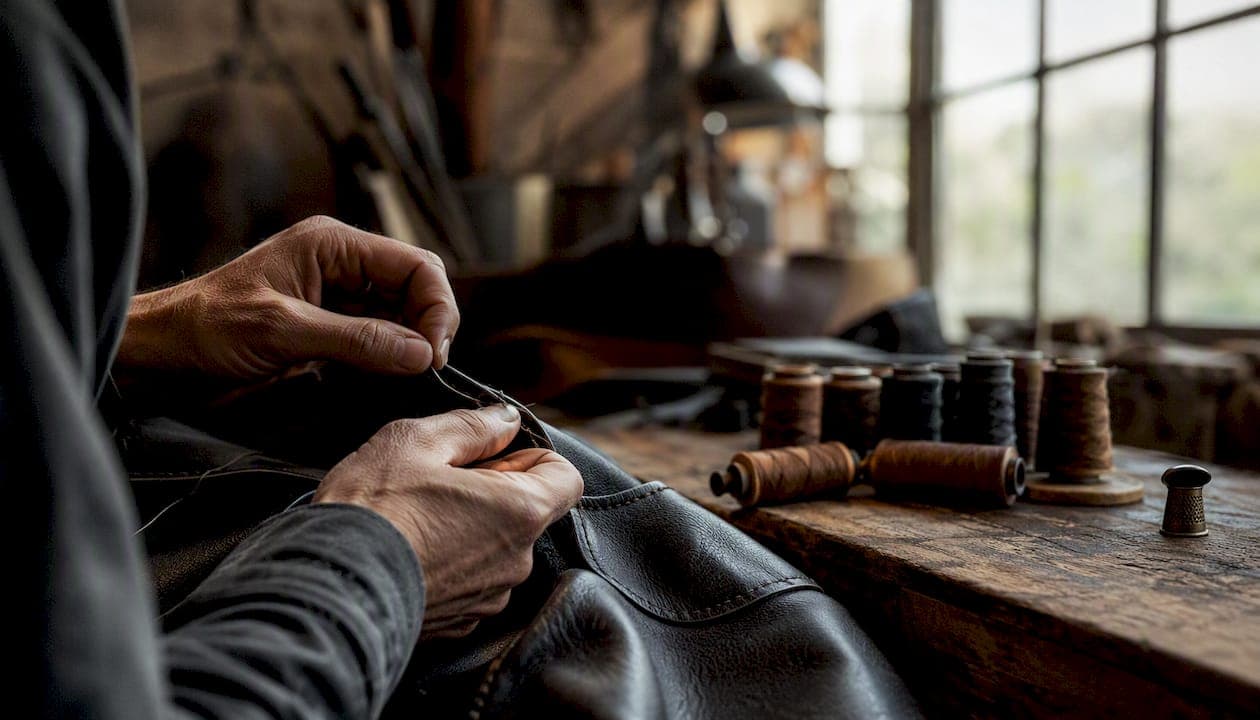
A handcrafted jacket is a purpose-built garment where artisans select the hide, cut each panel by hand, and finish every seam with intention, making it fundamentally different from anything stamped out by a factory line. If you want an exact fit and a piece that deepens in character with every wear, commission bespoke. If you need something beautiful sooner, a vetted handcrafted ready-to-wear piece delivers that same artisanal spirit with a shorter wait. This guide covers silhouettes, materials, fit, a craftsmanship checklist, and how to commission your own, so you can choose with real confidence.
Key Takeaways
A handcrafted jacket's value lies in the hide, the handwork, and the fit, and no amount of marketing language substitutes for evidence of all three.
| Point | Details |
|---|---|
| Silhouette first | Choose your silhouette based on proportion and lifestyle before selecting hide or color. |
| Hide determines longevity | Full-grain and premium hides age with character; corrected-grain leathers sacrifice patina for uniformity. |
| Fit starts at the shoulder | The shoulder seam must sit exactly at the bone; no other fit issue matters more or is harder to correct. |
| Inspect before you invest | Check stitch density, seam finishing, lining execution, and hardware weight as your primary quality signals. |
| Senanukunu | Offers limited-quantity handcrafted jackets and bespoke commission services rooted in West African artisanal craft. |
Table of Contents
- What is a handcrafted jacket style guide, and which silhouettes suit you?
- Which materials and construction details define a truly handcrafted jacket?
- How should a handcrafted jacket fit, and how do you measure for one?
- How do you inspect a jacket to confirm it is truly handcrafted?
- Bespoke, made-to-order, or ready-to-wear: which route is right for you?
- How do you style handcrafted jackets for a modern, timeless look?
- How do you care for a handcrafted leather jacket so it lasts for decades?
- Why craftsmanship and cultural legacy belong in the same conversation
- Senanukunu's handcrafted jackets and custom services
- Sources
What is a handcrafted jacket style guide, and which silhouettes suit you?
Every silhouette in the handcrafted jacket world carries its own cultural weight and proportion logic. 2026 trend observations favor slightly oversized and vintage-inspired cuts, including asymmetric zips, wide lapels, and boxy bombers, all of which are forgiving across body types. Here is how the major silhouettes break down:
- Bomber: A ribbed-cuff, elastic-hem jacket with a clean, rounded collar. It sits at the hip and works on almost every frame. Wear it over a slim turtleneck and straight-leg trousers for a look that reads effortless rather than casual.
- Moto/racer: Defined by an asymmetric zip, snap-down lapels, and a cropped, body-skimming cut. It flatters narrower frames and those who want to add visual structure to the torso. Pair with slim dark denim and Chelsea boots.
- Harrington: A lightweight, blouson-style jacket with a tartan lining and a stand collar. It layers cleanly over a crewneck and sits well on broader shoulders because the banded hem balances the silhouette.
- Trucker: A boxy, hip-length jacket with chest pockets and a button front. Its square shape suits leaner builds and pairs naturally with chinos or relaxed trousers.
- Field jacket: Longer, with patch pockets and a belted or drawstring waist. It adds length to shorter frames and works as a transitional layer over knitwear.
- Blazer-cut leather jacket: Structured lapels, a single- or double-button front, and a tailored body. This is the silhouette that moves most fluidly between smart casual and formal settings.
Pro Tip: When choosing a silhouette, hold your dominant wardrobe color palette in mind. A moto jacket in a rich cognac reads very differently from the same cut in black, and the color choice often matters more than the silhouette itself.
Which materials and construction details define a truly handcrafted jacket?
The hide you choose determines how a jacket drapes, ages, and feels against your body. Handmade jackets typically use full-grain or premium hides, and that choice is where quality diverges most sharply from mass production.
Comparing the most common hides
Lambskin is the softest option, with a fine, buttery grain and a natural drape that makes it ideal for slim-cut or tailored silhouettes. It marks more easily than heavier hides, so it rewards careful handling. Calfskin sits in a sweet spot: supple enough to drape well, firm enough to hold structure in a moto or blazer cut. Full-grain cowhide is the most durable choice, heavier in hand, and the one that develops the richest patina over years of wear. Full-grain leather ages beautifully, building a natural patina that corrected-grain or heavily finished leathers simply cannot replicate. Goatskin offers a pebbled, textured surface with good abrasion resistance, making it a strong choice for field and trucker styles. Suede (split leather, buffed to a nap) is the most casual of the group, soft and visually warm, but it requires more protective care.
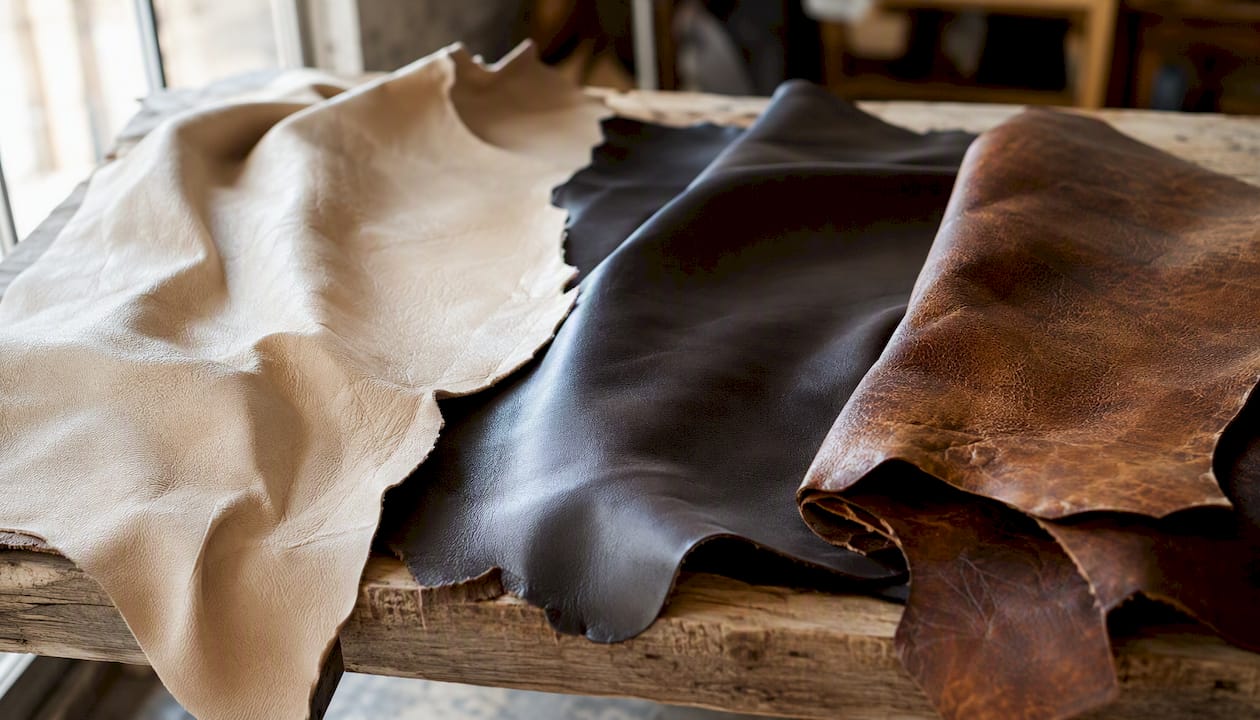
Weight matters practically. Lighter hides (roughly 0.6–0.9 mm) drape like fabric and suit tailored or fashion-forward cuts. Heavier hides (1.2 mm and above) hold their shape, resist abrasion, and are the traditional choice for moto and workwear silhouettes.
Tanning, finishing, and ethics
Vegetable tanning uses plant-derived tannins and produces a firmer, more natural-feeling leather that ages with visible character. Chrome tanning is faster, more uniform, and produces a softer, more consistent result, but the hide develops less patina over time. Aniline finishing preserves the hide's natural surface and markings; corrected-grain finishing sands the surface and applies a uniform coating, which hides defects but also sacrifices long-term character.
When a maker claims responsible sourcing, ask for specifics. The Leather Working Group is an industry body that audits tanneries for traceability and environmental practices, and its certification is one of the clearest signals that a supplier's claims hold up.
Construction details that separate artisanal from average
A well-made handcrafted jacket shows its quality in the details you have to look for, not the ones displayed on a hangtag. Thoughtful paneling and high-quality stitching are the most reliable visual cues. Excess panels often indicate smaller, lower-grade hides or an attempt to conceal surface defects.
- Seam finishing: Edges should be burnished, painted, or turned and stitched, never left raw.
- Lining: A well-constructed jacket uses separate sleeve and body linings for comfort and breathability. Clumsy linings or visible excess fabric are a clear signal of poor execution.
- Pocket construction: Welt pockets should lie flat with no puckering; patch pockets should sit square and even.
- Hardware: Zippers from YKK or equivalent-grade suppliers, solid brass or nickel hardware, and consistent finish across every fitting are the standard in artisanal work.
How should a handcrafted jacket fit, and how do you measure for one?
Fit is where a handcrafted jacket either justifies its price or fails it. The rules are specific, and they do not bend for style preferences.
- Shoulders: The seam must sit exactly at the edge of your shoulder bone. Any overhang or pulling toward the neck is a fit failure that no amount of breaking-in will correct.
- Sleeve length: The sleeve should end at the wrist bone, with roughly half an inch of shirt or knitwear visible below when layering.
- Torso length: A hip-length jacket should cover the waistband of your trousers by about an inch. A cropped moto should sit at or just above the natural waist.
- Layering allowance: Leather does not stretch the way woven fabric does. Build in an appropriate ease across the chest if you plan to wear a mid-layer underneath.
Leather relaxes and conforms with wear. A stiff new jacket typically softens noticeably after repeated wears, and the hide molds gradually to your posture and movement. Buy to fit your shoulders first; the body can be adjusted, but a shoulder seam cannot be moved without major reconstruction.
Measuring for a bespoke or made-to-order commission
Accurate measurements are the foundation of a successful commission. Take these with a soft tape measure, wearing only a light shirt:
- Chest: Measure around the fullest part, keeping the tape parallel to the floor.
- Shoulder width: Measure from the edge of one shoulder bone to the other across the back.
- Sleeve length: From the shoulder seam to the wrist bone, with your arm slightly bent.
- Back length: From the base of the collar to where you want the hem to fall.
- Biceps: Around the fullest part of the upper arm, relaxed.
Pro Tip: Have a second person take your measurements. Self-measuring introduces errors, particularly in shoulder width and back length, that compound into a poor fit.
Because leather is expensive and cannot be toiled in the same way as woven fabric, most artisan makers use a structured consultation and pattern-review stage rather than a traditional muslin mockup. Some makers offer a fabric test garment for complex bespoke commissions; ask about this before you commit.
How do you inspect a jacket to confirm it is truly handcrafted?
Genuine artisanal quality leaves evidence you can see and feel. Use this checklist whether you are buying in person or reviewing detailed photos from a maker. Recognizing artisanal craftsmanship comes down to knowing exactly what to look for.
- Stitch quality: Stitches should be even, consistent in length, and free of skipped or doubled points. Higher stitch density correlates with longer-lasting detail work in hand-finished garments, and the same principle applies to leather.
- Seam finishing: Turn the jacket inside out. Every seam should be finished cleanly, whether burnished, bound, or folded and stitched.
- Pattern matching: On jackets with printed or textured hides, panels should align at the seams. Mismatched grain or pattern at a seam line signals rushed cutting.
- Lining execution: The lining should lie flat, with no bunching at the armhole or excess fabric pooling at the hem.
- Hardware weight: Hold a zipper pull and feel its weight. Lightweight, hollow-feeling hardware is a cost-cutting signal. Solid pulls with a smooth glide indicate quality sourcing.
- Edge finishing and burnishing: Run your finger along every exposed edge. Rough, unfinished edges on a jacket marketed as handcrafted are a direct contradiction.
What to ask the maker before you buy
Ask for close-up photographs of the interior seams, the lining attachment at the armhole, and the zipper tape. Ask which tannery supplied the hide and whether they can provide any sourcing documentation. Ask for the stitch count per inch on the main seams.
Pro Tip: A maker who cannot or will not answer sourcing questions is telling you something. Transparency about hide origin and tannery is a baseline expectation from any artisan serious about their craft.
Red flags to walk away from: excessive panel count with no design rationale, a surface glaze that feels plasticky (often used to hide corrected-grain defects), zippers that catch or feel hollow, and lining fabric that is visibly puckered or misaligned at the armhole.
Bespoke, made-to-order, or ready-to-wear: which route is right for you?
Each purchase route offers a different balance of personalization, timeline, and investment. Bespoke workflows include consultation, measurement, patterning, a first-fitting session, a final fitting, and post-delivery adjustments, with lead times ranging from several weeks to a few months depending on the maker and complexity.
Process and timeline by route
| Route | Key Steps | Typical Lead Time | Fittings |
|---|---|---|---|
| Bespoke | Consultation, measurements, pattern draft, first fitting, final fitting, delivery | several weeks to a few months | 2–3 |
| Made-to-order | Measurements submitted, maker cuts to spec, single review stage | several weeks | 0–1 |
| Ready-to-wear (handcrafted) | Select size, review maker's size chart, order | 1–3 weeks | 0 |
What drives the price
Bespoke handcrafted leather jackets in the U.S. market typically range from several hundred to a few thousand dollars and above, depending on hide quality, lining choice, hardware, and the number of handwork hours involved. Made-to-order pieces generally fall between $400 and $1,200. Vetted handcrafted ready-to-wear sits between $250 and $800 for quality artisanal work. The single largest cost driver is handwork hours: a jacket with hand-stitched seams, hand-burnished edges, and hand-set hardware takes significantly longer to produce than one assembled with only machine stitching.
Questions to vet a maker before committing
- Can you share photographs of interior seam finishing and lining attachment on a recent commission?
- Which tannery supplies your hides, and do you hold any sourcing documentation or certification?
- What is your revision policy if the first fitting reveals a fit issue?
- Do you offer repairs or re-stitching after delivery, and at what cost?
- What is your current lead time, and how do you communicate progress during production?
How do you style handcrafted jackets for a modern, timeless look?
The most compelling handcrafted jacket looks in 2026 are built on high individualism: mixing unexpected elements, a neckerchief with tailored trousers, a structured underlayer beneath a relaxed bomber, rather than following a rigid pairing formula. The jacket is the statement; everything else is calibration.
Here are outfit starters by silhouette and occasion:
- Moto jacket, day: Slim dark jeans, a white Oxford shirt with the collar open, white leather sneakers. The contrast between the jacket's structure and the shirt's ease is the whole point.
- Bomber, smart casual: Tailored olive chinos, a fine-gauge merino crewneck, and suede loafers. Add a layered fine jewelry piece at the collar for a considered, modern finish.
- Blazer-cut leather, evening: Slim black trousers, a silk or satin blouse, and block-heel ankle boots. This combination reads refined without feeling costume-like.
- Field jacket, weekend: Relaxed straight-leg trousers in a warm earth tone, a chunky ribbed turtleneck, and lug-sole boots. The jacket's length and patch pockets add utility without sacrificing intention.
- Suede jacket, transitional season: Cream or oatmeal trousers, a simple fitted T-shirt, and clean white sneakers. Suede's warmth in color and texture does the visual work here.
For accessorizing, professional jewelry choices that harmonize with a refined leather jacket look tend toward clean metals and minimal layering. Shoes anchor the register of the outfit: sneakers read casual, loafers read smart casual, and boots read intentional regardless of the occasion.
Pro Tip: When mixing a handcrafted jacket with statement pieces, let one item lead. If the jacket is the statement, keep everything else in a supporting role. A bold jacket over a bold print is a conversation that neither piece wins.
How do you care for a handcrafted leather jacket so it lasts for decades?
A handcrafted leather jacket rewards consistent, simple care. The hide is a natural material that responds to moisture, temperature, and the products you apply to it. A practical routine, drawn from artisan guidance, extends its life and preserves the patina that makes it irreplaceable.
A maintenance schedule that actually works
- After each wear: Wipe the surface with a dry or barely damp soft cloth to remove dust and surface oils. Hang on a broad, padded hanger, never a wire one that distorts the shoulder.
- Monthly: Inspect for scuffs, dry patches, or early cracking at flex points (elbows, collar fold). Address dry patches immediately with a leather conditioner.
- Every 3–6 months: Apply a quality leather conditioner across the full surface, working it in with a soft cloth in circular motions. This preserves suppleness and prevents the hide from drying and cracking.
- Seasonal storage: Clean and condition before storing. Place in a breathable cotton garment bag, never plastic, which traps moisture. Store away from direct sunlight and heat sources.
Products and ingredients to avoid
- Avoid anything containing alcohol, petroleum solvents, or silicone. These strip the hide's natural oils and can cause irreversible drying or surface damage.
- Avoid wax-based products on aniline or semi-aniline leathers; they can darken the surface unevenly.
- Use pH-neutral, leather-specific conditioners. Brands like Leather Honey and Bick 4 are widely available in the U.S. and respected among leather care specialists.
Water exposure and repairs
Brief wetting, a few drops of rain, will not damage a well-finished leather jacket. Blot immediately with a dry cloth and allow to dry naturally away from heat. Soaking is a different matter: it can cause the hide to stiffen, warp, or develop tide marks. If a jacket is thoroughly soaked, condition it while still slightly damp to help the hide retain flexibility as it dries.
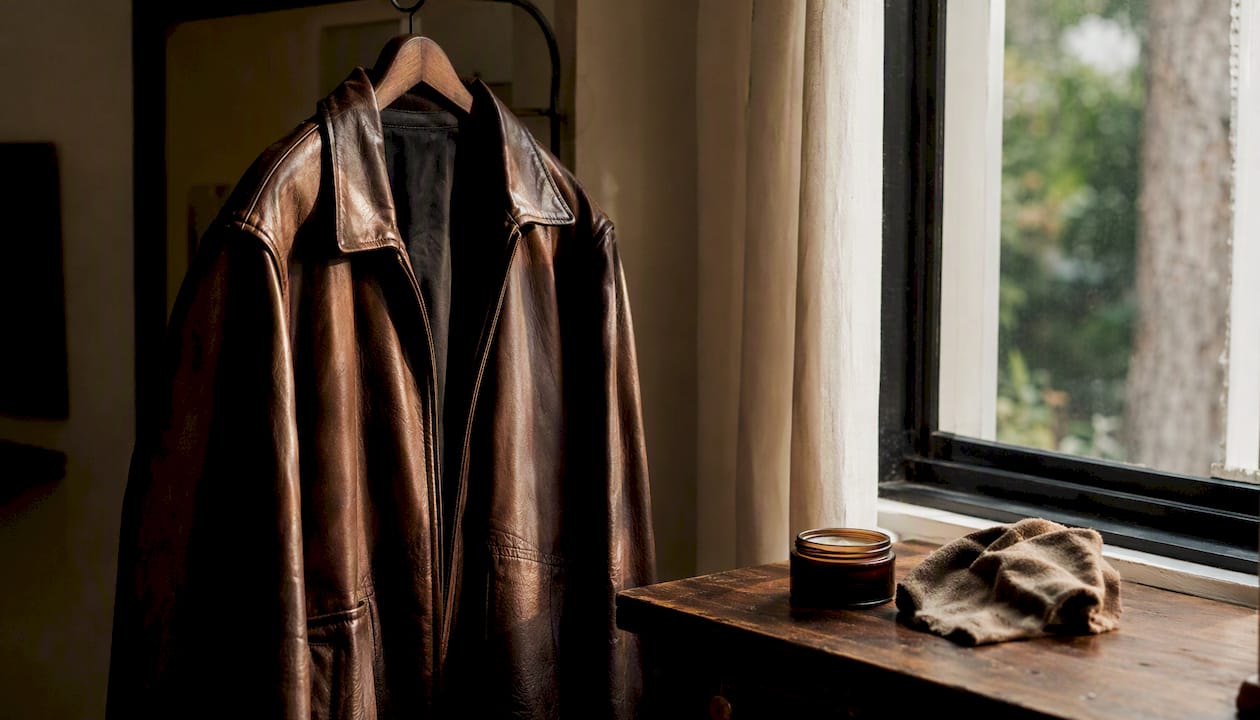
For re-stitching, hardware replacement, or relining, consult a leather specialist rather than a general tailor. Leather requires specific needles, thread weights, and adhesives that most fabric tailors do not stock.
Pro Tip: The single most damaging thing you can do to a leather jacket is store it in a plastic bag or a sealed container. Leather needs to breathe. A cotton garment bag is the minimum; a cedar-lined wardrobe is ideal.
Why craftsmanship and cultural legacy belong in the same conversation
At Senanukunu, we see handcrafted outerwear not as a product category but as a form of cultural expression, one where every stitch carries the spirit of a legacy and the intention of the hands that made it. West African artisanal traditions have long understood what the broader fashion world is only now catching up to: that a garment made with care, from traceable materials, by skilled hands, is worth more than its price tag suggests. It is an heirloom.
Our commitment to ethical production and cultural storytelling shapes every piece we offer. We work with artisans who share our values around limited-quantity production, responsible sourcing, and the kind of handwork that cannot be replicated at scale. When you wear a piece made this way, you are wearing a decision, a deliberate choice to honor craft over convenience.
- Every piece is produced in limited quantities, so the artisan's attention is never diluted across thousands of units.
- Sourcing transparency is a baseline, not a bonus. We ask the same questions of our makers that this guide asks you to ask of yours.
- Cultural pride is woven into the design language, connecting West African heritage to a global, contemporary wardrobe.
Handcrafted outerwear, at its best, is a statement piece in the truest sense: it speaks before you say a word.
Senanukunu's handcrafted jackets and custom services
Senanukunu offers a curated collection of handcrafted jackets rooted in West African artisanal tradition, each made in limited quantities with ethically sourced materials and a level of handwork that mass production simply cannot match. Whether you are drawn to a ready-to-ship statement piece or want to commission something made precisely to your measurements and vision, the path forward is clear.
Visit the Senanukunu jackets collection to explore available styles, or head to the custom services page to begin a bespoke commission. The process starts with a conversation about your measurements, preferred silhouette, and the occasion you are dressing for. From there, Senanukunu's artisans handle the rest, with full transparency at every stage of production. Every piece ships from a maker who stands behind their work.
Sources
These resources offer deeper technical detail for buyers who want to go further than this guide.
- Leather Jacket How To - The Manual
- From Bomber To Biker: The Ultimate Guide To Leather Jackets | The Journal | MR PORTER
- Leatherworkinggroup
- Jacket styling tips: stand out with modern & timeless looks
- The Ultimate Guide to Choosing a Hand Made Leather Jacket -