
TL;DR:
- Planning bridal party styling six months in advance ensures enough time for dress alterations and accessory coordination. Choosing a limited color palette and an anchor detail creates a cohesive, visually appealing look across the group. Allowing flexible silhouettes and proper fit enhances comfort and confidence, resulting in more natural and flattering photos.
Bridal party styling step by step is the process of coordinating attire, accessories, and beauty elements to create a unified, flattering look across your entire wedding party. Done well, it produces photos that feel intentional and warm, not forced or mismatched. The industry term for this practice is coordinated bridal styling, and it differs from simple matching because it prioritizes individual comfort and expression within a shared visual framework. Start with a clear palette, a defined anchor element, and a realistic timeline, and the rest of the process falls into place naturally.
When should you start planning bridal party styling?
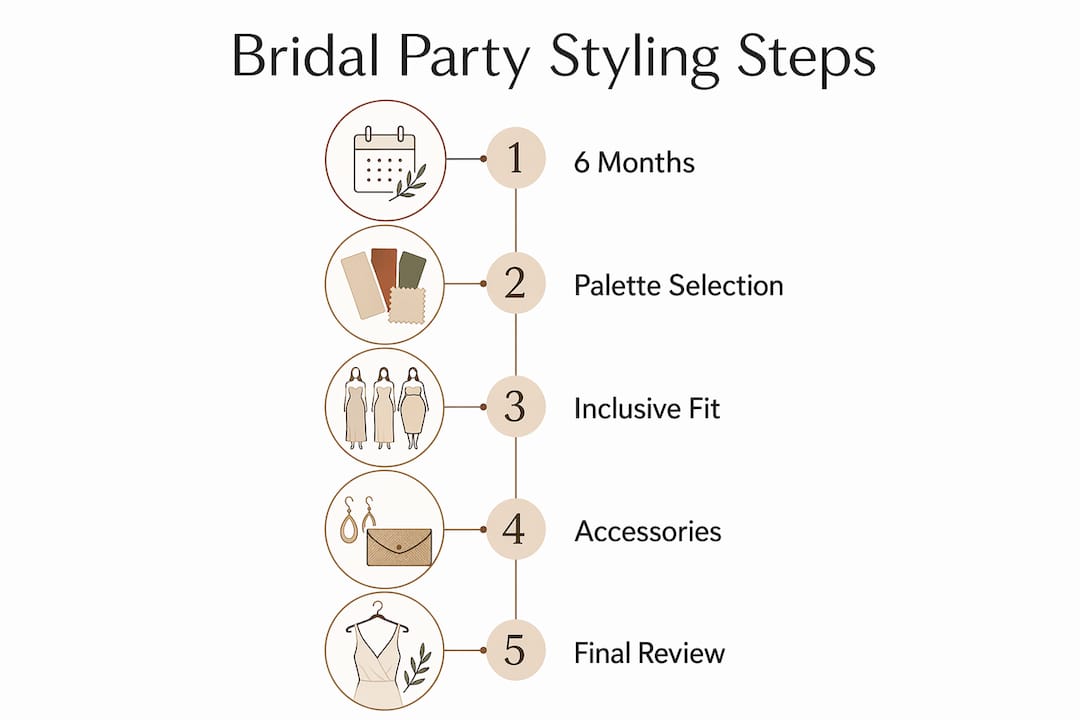
Starting at least 6 months before the wedding gives you enough time for shopping, ordering, alterations, and accessory coordination without panic. That window matters because custom or semi-custom dresses often carry 10–16 week production timelines, and alterations add another 4–6 weeks on top. Rushing this process is the single most common reason bridal parties end up with mismatched shades or ill-fitting gowns on the day.
The first task at the six-month mark is building a mood board. A visual checklist shared early reduces decision fatigue and keeps everyone aligned without requiring endless group chats. Pinterest boards, saved Instagram posts, or a simple shared folder all work. The goal is to give each party member a clear picture of the aesthetic before any shopping begins.
Communication at this stage prevents the most common conflicts. Tell your party upfront what is flexible (silhouette, shoe brand) and what is fixed (color family, jewelry tone). Clear boundaries make the process feel collaborative, not dictatorial.
- Set a firm deadline for dress orders, at least 4 months before the wedding
- Share the mood board with every party member at the same time
- Collect body measurements early, before any orders are placed
- Assign one point of contact for vendor questions to avoid confusion
Pro Tip: Create a shared notes document with key vendor contacts, order numbers, and fitting dates. One central reference saves hours of back-and-forth messages.
How do you choose and coordinate color palettes?
Color palette selection is the foundation of cohesive outfit coordination for weddings. The most effective approach is to limit your palette to 3–4 shades within one color family, keeping the lightest and darkest tones no more than 3–4 steps apart. That range keeps the group looking unified in photos without making everyone wear the exact same shade.
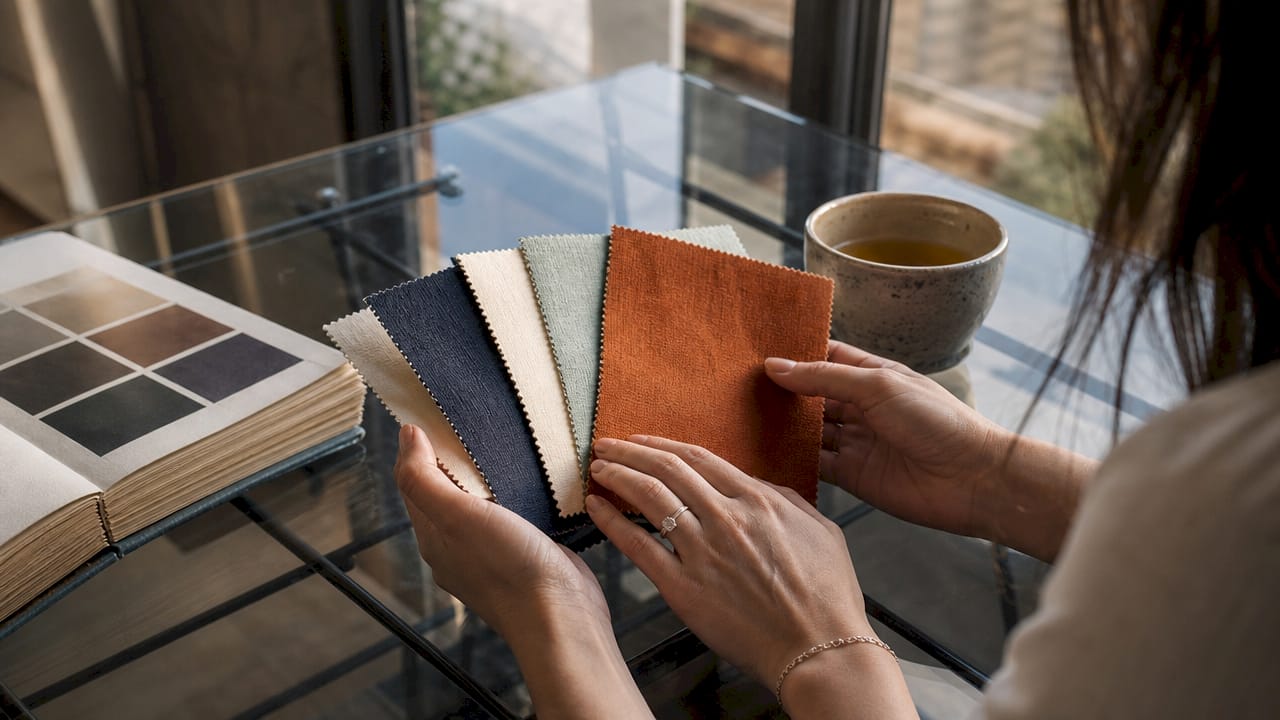
Choosing an anchor element is equally important. The anchor is one shared design detail, such as a neckline shape, a silhouette family, or a fabric texture, that ties the group together visually even when dress styles vary. Think of it as the thread that runs through every look. Without an anchor, a mix of styles reads as disorganized rather than intentional.
One detail most brides overlook: fabric colors look different on screens than they do in person. Always order swatches and compare them in natural daylight before placing final orders. A dusty rose on a monitor can arrive as a warm blush or a cool mauve depending on the fabric content and dye lot.
| Palette element | Best practice |
|---|---|
| Color family | Choose one: blush, sage, terracotta, navy, etc. |
| Number of shades | 3–4 maximum within the family |
| Tone range | Lightest to darkest no more than 3–4 steps apart |
| Anchor detail | One shared element: neckline, silhouette, or fabric |
| Swatch testing | Always test in natural daylight before ordering |
- Pick your anchor element before selecting individual dress styles
- Order swatches from every vendor, even if the color name matches
- Photograph swatches together in the same light to compare accurately
- Avoid mixing warm and cool undertones within the same palette
Pro Tip: Take all your swatches to the wedding venue during a site visit. Venue lighting, especially candlelight or string lights, shifts color perception significantly.
How do you style a bridal party for every body type?
Inclusive bridal party styling means focusing on fit, structured bodices, and supportive straps rather than enforcing a single silhouette across the group. That shift in focus produces better results for everyone. A well-fitted A-line on one person and a tailored column on another can read as completely cohesive when they share the same color and anchor detail.
Allowing bridesmaids to choose their silhouette within a defined style family reduces discomfort and builds confidence. A bridesmaid who feels physically at ease moves differently, stands taller, and photographs better. Comfort is not a concession. It is a styling decision that directly improves your photos.
Mixed patterns are a growing trend in 2026 bridal party styling. Scaled correctly, mixed patterns add dimension and visual interest, particularly for parties with diverse body types. A floral print in the same color family as a solid dress creates depth without breaking cohesion.
- Define a silhouette family (flowy, structured, or draped) rather than a single style
- Prioritize adjustable or stretchy fabrics for all-day comfort
- Allow each person to choose a neckline that works for their body
- Consider patterned options within the color family for added dimension
- Schedule individual fittings, not just group try-ons, for accurate alterations
For more on coordinating wedding attire across different body types and style preferences, the Senanukunu blog offers a detailed walkthrough.
How do you coordinate accessories, hair, and makeup?
Accessories create visual unity without requiring identical outfits. Coordinating jewelry tone, footwear style, and hair details across the party produces a polished group look. The rule is simple: agree on a metal tone (gold, silver, or rose gold) and a general shoe style (strappy sandal, block heel, or flat), then let each person choose within those parameters.
Hair and makeup follow the same coordination logic. The goal is a shared aesthetic direction, not identical looks. One person may wear a loose updo while another wears soft waves, but both looks feel connected when they share the same finish (romantic, sleek, or natural). Makeup works the same way: a warm berry lip on one person and a warm nude on another both read as cohesive when the skin prep and finish are consistent.
Follow these steps to coordinate beauty looks across the party:
- Schedule a full hair and makeup trial for the bride and at least one bridesmaid to preview the overall direction
- Share trial photos with all artists before the wedding day so everyone works from the same reference
- Book multiple artists or assistants for parties with more than 2–3 bridesmaids to protect the morning timeline
- Ask each artist to adapt the agreed look to individual skin tones rather than replicating it exactly
- Confirm a start time for hair and makeup that builds in at least 30 minutes of buffer per person
Larger bridal parties require multiple artists to maintain a stress-free morning schedule. One artist working alone on a party of five or more creates a bottleneck that delays the entire day. Book early, because experienced bridal artists fill their calendars months in advance.
Pro Tip: Ask your lead makeup artist to create a one-page brief with the agreed color palette, finish, and reference photos. Share it with every artist on the team before the wedding morning.
How do you finalize the styling process and avoid common mistakes?
The final 6–8 weeks before the wedding are for confirming, not deciding. Every dress should be ordered, every fitting scheduled, and every vendor confirmed by this point. The simple visual checklist you created at the six-month mark now becomes your quality control tool. Review it with each party member individually.
The most common last-minute problem is color mismatch in photos. Dresses ordered from different vendors, even in the same named shade, can photograph differently due to fabric content and dye variation. Photograph all dresses together in natural light at least 4 weeks before the wedding. That gives you time to address any visible discrepancy with a stylist or seamstress.
- Confirm all alteration appointments at least 6 weeks before the wedding
- Photograph all dresses together in natural daylight to check for color variation
- Share the final hair and makeup schedule with every party member in writing
- Assign a point person on the wedding morning to manage the beauty timeline
- Pack an emergency kit with safety pins, double-sided tape, and stain remover
For guidance on mastering dress fittings and what to expect at each appointment, the Senanukunu blog covers the process in detail.
Key Takeaways
Coordinated bridal party styling requires a clear palette, an anchor element, inclusive fit choices, and a six-month planning timeline to produce a cohesive and flattering result on the wedding day.
| Point | Details |
|---|---|
| Start six months out | Order dresses and share mood boards at least 6 months before the wedding. |
| Limit the color palette | Choose 3–4 shades within one color family to maintain photographic cohesion. |
| Prioritize fit over uniformity | Allow silhouette choices within a style family to support every body type. |
| Coordinate, do not match | Use an anchor element (jewelry tone, neckline, fabric) to unify without forcing identical looks. |
| Test before you commit | Order fabric swatches and photograph dresses together in natural light before finalizing. |
What I have learned from styling bridal parties
The advice I give every bride is this: coordination is not the same as matching, and the difference shows up in every photo. Parties that wear identical dresses often look stiff. Parties that share a color family and one anchor detail look intentional and alive.
The most underrated step in the whole process is the trial. Brides invest heavily in the dress and the venue, then skip the hair and makeup trial to save money. That is the wrong trade. A trial reveals what works on camera versus what looks beautiful in a mirror. Those are not always the same thing.
Comfort is a styling decision, not an afterthought. A bridesmaid who spends the reception tugging at her neckline or wincing in her shoes is not going to give you the candid photos you want. When you let people wear what fits and feels right within your framework, they relax. And relaxed people photograph beautifully.
My honest advice: set your non-negotiables early (color family, jewelry tone, general silhouette direction), communicate them clearly, and then give your party real flexibility within those boundaries. That combination of structure and freedom produces the most joyful, cohesive results. Every stitch and detail carries more meaning when the person wearing it feels genuinely confident.
— Sena
Vibrant styles for your bridal party, curated by Senanukunu
Your bridal party deserves pieces that feel as meaningful as the occasion itself. Senanukunu brings together ethically crafted, culturally rich designs rooted in West African heritage, offering statement dresses, matching sets, and accessories that bring warmth and intention to any wedding celebration.
Whether you are coordinating a full bridal party or searching for that one standout piece, explore vibrant styles at Senanukunu to find ready-to-wear options crafted with care and purpose. The collection includes curated bridal accessories and styling services designed to help every member of your party feel regal, comfortable, and fully themselves. Each piece is made in limited quantities, so the look your party wears will be as unique as the day itself.
FAQ
How early should I start bridal party styling?
Start at least 6 months before the wedding. That window covers dress ordering, alterations, accessory sourcing, and hair and makeup trials without rushing.
How many colors should a bridal party wear?
Limit the palette to 3–4 shades within one color family, keeping the lightest and darkest tones no more than 3–4 steps apart for photographic cohesion.
Do bridesmaids have to wear the same dress style?
No. Allowing each bridesmaid to choose a silhouette within a defined style family improves comfort and confidence while maintaining a unified aesthetic.
How many makeup artists do I need for a large bridal party?
Book multiple artists for parties of more than 2–3 bridesmaids. One artist working alone on a larger group creates timeline delays that affect the entire wedding morning.
What is the most common bridal party styling mistake?
Ordering dresses from different vendors in the same named color without testing fabric swatches first. Colors photograph differently depending on fabric content, so always compare swatches in natural daylight before placing orders.