
The most wearable types of comfort-driven dresses combine relaxed silhouettes with intentional construction: wrap dresses, midi shirtdresses, tiered maxis, relaxed kaftans, pull-on shifts, button-front shirt dresses, and engineered-corset pieces. Each one earns its place because it moves with your body, reads as occasion-ready, and holds its presence across a full day. Who What Wear named "occasion-comfortable" dressing a defining trend, pointing to linen, wrap silhouettes, and relaxed minis as the styles that deliver both. For culturally rich, ethically made options, Senanukunu brings West African artisan craft directly into this conversation.
- Wrap dress: Adjustable tie closure fits multiple body shapes; ideal for events and daily wear.
- Midi shirtdress: universally versatile silhouette that moves from desk to dinner with minimal restyling.
- Tiered maxi: Layered volume creates airflow and full coverage; strong for warm climates and travel.
- Relaxed kaftan: Rooted in West African and North African tailoring traditions; supreme breathability.
- Pull-on shift: No closures, no fuss — the truest "throw-on-and-go" silhouette.
- Button-front shirt dress: Structured yet open; adjustable at the collar and hem for temperature control.
- Engineered-corset piece: Placed boning or smocking that shapes without squeezing — structure you feel as support, not restriction.
Table of Contents
- What are the main types of comfort-driven dresses?
- Which fabrics make a dress truly comfortable all day?
- How do you choose an ethically made, comfort-first dress?
- How to style comfort-driven dresses from day to evening
- How to care for comfort-driven dresses so they last
- Why Senanukunu fits the comfort-first, ethically made standard
- Does inclusive sizing change how comfort-driven dresses fit?
- How do cultural and regional traditions shape comfort-driven dress designs?
- Key Takeaways
- Why comfort and cultural pride belong in the same dress
- Senanukunu: where to find ethically made comfort-driven dresses
What are the main types of comfort-driven dresses?
Each silhouette below delivers comfort through a different design logic. Knowing which one suits your body, climate, and occasion makes shopping far more precise.
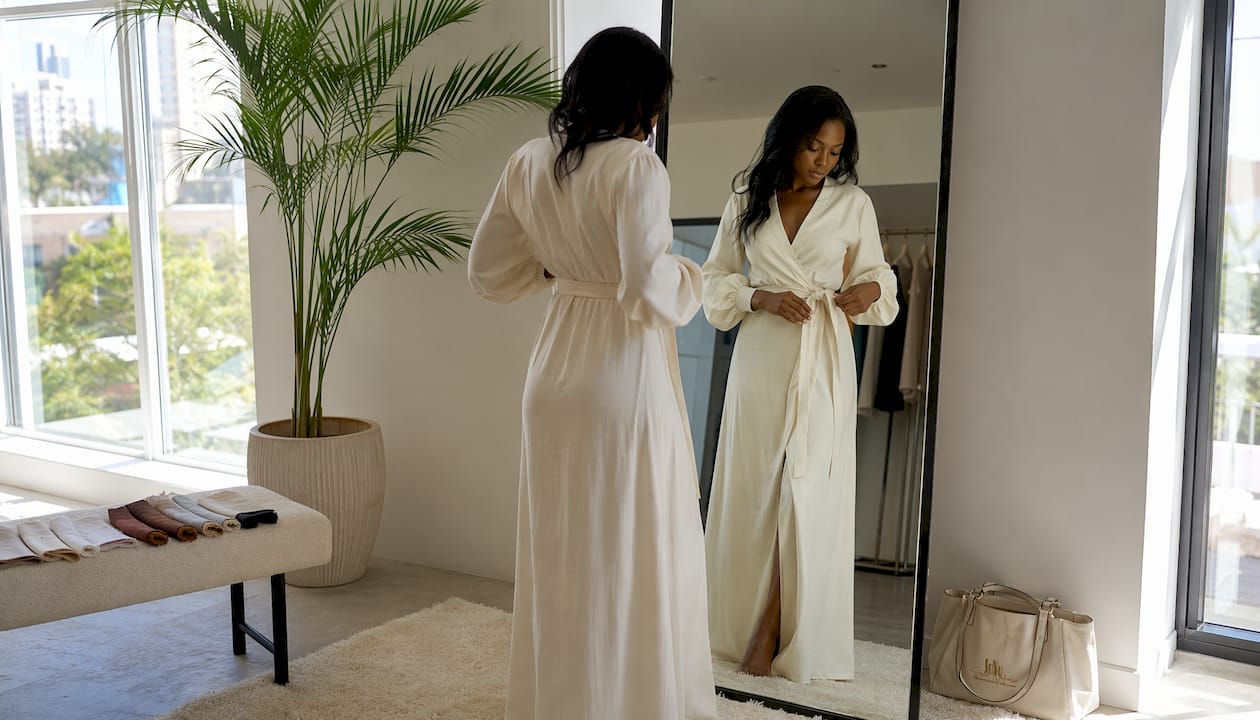
Wrap dress
The wrap's front-tie closure is its defining feature: you control the fit at the waist, which means it adapts across body changes, postpartum wear, and layering seasons. Look for a clean shoulder seam that sits at the edge of your shoulder, not drooping onto the arm. Ankara-print wraps, in particular, let the bold pattern do the visual work while the silhouette stays relaxed.
Midi shirtdress
A well-cut midi shirtdress reads polished from across a room and feels like a second skin up close. The button placket gives you ventilation control, and the shirt collar frames the face without adding bulk. Check that the hem falls at or below the knee and that the side seams hang straight rather than pulling forward.
Tiered maxi
Tiers create volume through fabric layers rather than tight gathering, so the dress breathes as you move. This silhouette has deep roots in West African ceremonial dress, where layered fabrics signal celebration and abundance. For fit, confirm the first tier begins at or below the natural waist so the skirt swings freely from the hip.
Relaxed kaftan
The kaftan's wide sleeves and open side seams are a direct inheritance from West African and Saharan tailoring, where airflow is a design requirement, not an afterthought. Natural fibers' cellular structure allows active airflow, making linen and cotton-silk jersey the preferred base fabrics. Fit check: the shoulder seam should sit wide, and the hem should clear the ankle for ease of movement.
Pull-on shift
No zipper, no button, no hook. The pull-on shift is the most democratic silhouette in this list because it requires zero adjustment once on. It hangs straight from the shoulders, which means it works across a wide range of body types without alteration. The trade-off is minimal waist definition, so a bold print or statement belt can add visual structure when you want it.
Button-front shirt dress
Practical closures like button-front plackets outperform back zippers for daily comfort because you can open the collar in heat and close it in air conditioning. This silhouette also accepts a belt naturally, giving you a second styling option without changing the dress. Check that buttons are reinforced at the stress points — chest and hem — before buying.
Engineered-corset piece
Strategic smocking and placed boning preserve structure without restriction, which is why this silhouette works for events where you need to look composed for hours. The key distinction from a traditional corset: the boning is placed to support posture, not compress the torso. Look for smocked panels at the back or sides rather than a rigid front busk.
Pro Tip: When shopping Ankara or kente-inspired prints, check that the pattern is placed intentionally at the bodice and hem — artisan-made pieces align motifs at the seams, while mass-produced versions often cut through the pattern without regard for its meaning.
Which fabrics make a dress truly comfortable all day?
Fabric choice determines whether a dress feels like a gift or a chore by hour three. Natural fibers lead because their cellular structure allows airflow that most synthetics cannot replicate.
- Linen: Breathes in heat, softens with every wash, and holds its shape through a full day of wear. Pre-washed linen is the gold standard — it arrives soft rather than stiff.
- 100% organic cotton poplin: Lightweight, crisp, and durable. A smocked bodice in organic cotton creates a comfortable yet flattering fit without added hardware.
- Cotton-silk jersey: The silk content adds drape and a slight sheen; the cotton content keeps it breathable. Low-heat drying preserves the fiber bond.
- Blended technical fabrics: Merino-blend and four-way stretch options add odor resistance and mobility for travel-specific wear, though they sacrifice some breathability compared to pure naturals.
Construction details matter as much as fiber content. French seams eliminate raw edges that scratch skin over time. Bound hems resist fraying without adding stiffness. Reinforced pocket seams — a detail style guides consistently flag as a comfort marker — prevent the pocket from pulling the skirt out of line.
| Construction Feature | Comfort Benefit | What to Check |
|---|---|---|
| French seams | No raw edges against skin | Turn dress inside out; seams should be enclosed |
| Smocked panels | Shape without restriction | Smocking should stretch at least 2 inches without resistance |
| Elasticized waistband | Pull-on ease, adjustable fit | Band should recover fully after stretching |
| Reinforced pockets | Weight distributed evenly | Pocket bag should be sewn to side seam, not just the facing |
| Bias cut | Drapes with body movement | Fabric should hang diagonally from grain line |
How do you choose an ethically made, comfort-first dress?
A product page tells you more than you might expect — if you know what to look for. Use this checklist before adding anything to your cart.
- Explicit fiber content: The label must name the fiber and percentage. "Soft fabric" with no fiber name is a red flag.
- Country of origin and artisan notes: Ethical brands name where and by whom a piece was made.
- Limited runs or artisan attribution: Small-batch production signals intentional craft over mass output.
- Clear sizing and fit guidance: Measurement charts, not just S/M/L, with notes on ease and silhouette.
- Returns and repair policy: A brand confident in its construction offers both.
- Photos of construction details: Seam finishes, lining, and closure hardware should be visible.
Red flags to walk away from: vague fiber listings ("polyester blend" with no percentages), hidden back zippers on dresses marketed as "easy wear," unlined heavy embellishments that scratch, inconsistent sizing across colorways, and zero production transparency.
| Dimension | 1 (Poor) | 3 (Acceptable) | 5 (Excellent) |
|---|---|---|---|
| Comfort | Stiff, restrictive | Moves freely, minor fit issues | Full range of motion, no pressure points |
| Breathability | Synthetic, traps heat | Blended fiber, some airflow | Natural fiber, active ventilation |
| Cultural authenticity | Generic print, no attribution | Named region or motif | Artisan-attributed, pattern-placed |
| Ethical transparency | No origin info | Country listed | Artisan named, factory certified |
| Long-term value | Pilling after 3 washes | Holds shape one season | Softens with wear, repairable |
How to style comfort-driven dresses from day to evening
A single well-chosen dress can carry you through a full day without a wardrobe change. The key is building around the silhouette, not fighting it.
- Wrap dress, daytime: Flat sandals, a woven tote, and minimal gold hoops. The print speaks; the accessories listen.
- Wrap dress, evening: Swap sandals for block-heeled mules, add a slim gold cuff, and let the tie fall at the hip rather than the waist for a longer line.
- Midi shirtdress, travel: Pack it flat, unrolled. Pair with white sneakers and a crossbody. Unbutton two buttons at the collar for airflow on arrival.
- Tiered maxi, event: A single statement necklace at the collarbone and strappy sandals. The tiers create enough movement that heavy jewelry competes rather than complements.
Styling statement pieces around West African prints works best when you treat the print as the focal point. Complementary neutrals — cream, warm sand, deep charcoal — let the pattern breathe without dulling it.
Pro Tip: For travel, choose a kaftan or tiered maxi in a dark-ground Ankara print. Dark grounds hide transit wear, and the loose silhouette means you can layer a fitted tank underneath in cold airports without the dress losing its shape.
How to care for comfort-driven dresses so they last
Proper care is where ethical investment pays off. A well-made linen or cotton-silk dress should soften and improve with age, not pill or shrink.
- Linen: Machine wash on a gentle cycle in cool water. Lay flat or hang to dry. Steam rather than iron directly — a steam shower for five minutes removes wrinkles without pressing fibers flat.
- Cotton-silk jersey: Hand wash or delicate cycle, cold. Low-heat tumble dry for ten minutes, then air-dry. Never wring.
- Natural dyes: Skip bleach entirely. A gentle, pH-neutral detergent preserves color depth without stripping the dye bond.
- Pocket seams and hems: Reinforce with a few hand stitches at the pocket corners after the first dozen washes. This is the seam most likely to open under daily use.
When you buy from an ethical brand, ask directly about repair services. A maker who stands behind their construction will tell you. That answer is one of the clearest trust signals in slow fashion.
Pro Tip: Store linen and cotton dresses hanging rather than folded. Fold lines in natural fibers can become permanent creases over time, especially in structured bodices.
Why Senanukunu fits the comfort-first, ethically made standard
Senanukunu was built on the belief that every stitch carries the spirit of a legacy. The brand's curated West African-inspired dress collection brings together ready-to-ship pieces in limited runs, each designed to meet the comfort and ethical criteria this article describes.
- Fabric and construction: Relaxed silhouettes, breathable natural fibers, and thoughtful pattern placement reflect the artisan traditions behind each design.
- Artisan partnerships: Pieces are crafted in limited quantities, with production transparency that lets you trace the garment's origin.
- Inclusive sizing and fit guidance: Clear measurement guidance accompanies each listing, with notes on ease and silhouette behavior across sizes.
- Returns and care support: The brand's commitment to craftsmanship extends to how it supports customers after purchase.
Readers can verify fabric details, artisan notes, and production information directly on each product page. The Ankara dress styles editorial offers additional context on pattern placement and modern silhouette choices.
Does inclusive sizing change how comfort-driven dresses fit?
Inclusive sizing done well means more than extending a size range — it means regrading each pattern so the comfort features (smocking ease, pocket placement, shoulder width) scale proportionally. A pull-on shift graded correctly at a size 2X should have the same swing and airflow as the size S version, not simply more fabric added at the side seams. When shopping, look for brands that publish full measurement charts with ease allowances, not just generic size labels. Fit guidance that addresses how a silhouette behaves at different proportions — where the waist hits, how the hem falls — is a sign the brand actually tested the garment across its size range. Dress fitting guidance that accounts for body diversity is one of the clearest markers of a brand that takes inclusive design seriously.
How do cultural and regional traditions shape comfort-driven dress designs?
West African dress traditions have always treated comfort as inseparable from dignity. The kaftan's wide sleeves and open construction, the boubou's generous drape, and the wrap's adjustable tie all emerged from climates and cultures where ease of movement and breathability were non-negotiable. These are not aesthetic choices borrowed for trend — they are functional solutions refined over generations. When contemporary designers work with Ankara, kente, or adire fabrics, the most respectful approach preserves that functional logic: letting the fabric breathe, honoring the print's placement, and crediting the artisan tradition behind it. Regional variations matter too. West African coastal communities favor lighter cotton weaves; Sahelian traditions lean toward heavier woven cotton and linen blends that insulate against desert temperature swings. Understanding these distinctions helps you read a garment's authenticity and its actual comfort performance for your own climate.
Key Takeaways
Comfort-driven West African-inspired dresses earn their place as statement pieces when silhouette, fabric, and ethical production work together — not as separate checkboxes, but as a unified design intention.
| Point | Details |
|---|---|
| Top silhouettes to know | Wrap, midi shirtdress, tiered maxi, kaftan, pull-on shift, button-front, and engineered-corset pieces each deliver comfort through distinct construction logic. |
| Three fabric checks | Confirm explicit fiber content, look for natural fibers (linen, organic cotton, cotton-silk jersey), and verify seam finishes like French seams or bound hems. |
| Buying red flags | Walk away from vague fiber listings, hidden back zippers on "easy wear" pieces, and brands with zero production transparency. |
| Inclusive sizing signal | Brands that publish full measurement charts with ease allowances — not just S/M/L — have actually graded their patterns for comfort across sizes. |
| Senanukunu | Offers curated, limited-run West African-inspired dresses with artisan attribution, breathable fabrics, and clear fit guidance on every product page. |
Why comfort and cultural pride belong in the same dress
The conventional wisdom in fashion still treats comfort and statement dressing as opposing forces — as if a dress that moves freely cannot also carry meaning. That framing misses everything West African textile traditions have always known. The kaftan, the wrap, the tiered boubou: these silhouettes were never designed to restrict. They were designed to honor. What I find most worth saying to anyone shopping in this space is this: the comfort features you are looking for — breathable fiber, relaxed silhouette, thoughtful construction — are not modern additions to traditional design. They are the tradition. When a brand attributes its artisans, limits its runs, and publishes its fiber content, it is not performing ethics. It is doing what craft has always required. Shop accordingly, and the dress you choose will carry that intention every time you wear it.
Senanukunu: where to find ethically made comfort-driven dresses
Senanukunu brings together a curated selection of ready-to-ship, West African-inspired dresses designed for exactly the reader this article was written for: someone who wants a piece that moves with them, carries cultural meaning, and holds up over time. Each listing includes fabric details, artisan notes, and sizing guidance so you can verify every comfort and ethics signal before you buy. Limited runs mean these pieces are made with intention, not volume. Visit Senanukunu to browse the current collection, check the fabric tags and production notes on each product page, and find the silhouette that fits your life.