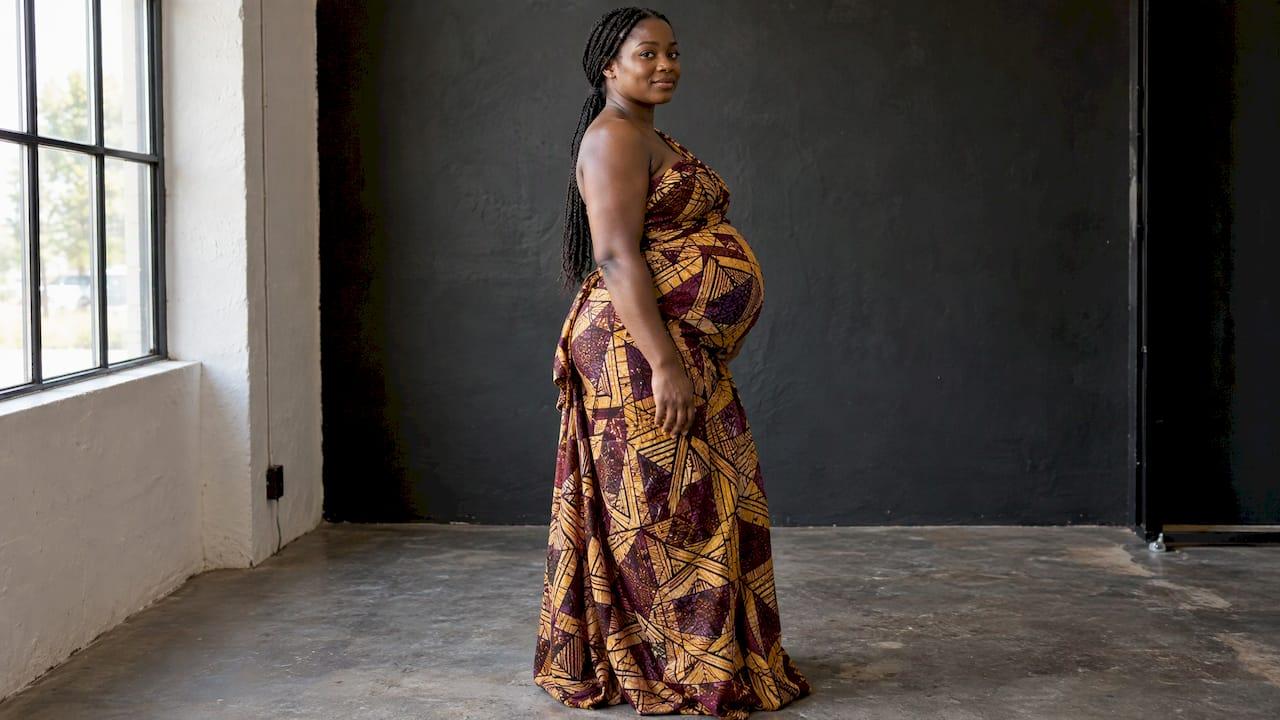
The best African outfit for a maternity photoshoot is a wrap, smocked or flowing gown in a heritage fabric like kente or Ankara, cut to move with your changing body and finished with a headwrap and jewelry that mean something to you. Choose the silhouette first, the fabric second and the accessories last, and try everything on in the weeks before the session. At Sena Nukunu, we design West African ready-to-wear in limited quantities, made with ethical manufacturing and artisanal craftsmanship, so a statement piece for this season of your life can also be one you keep.
TL;DR
- Pick a silhouette that starts at your narrowest point: empire, wrap, smocked or gathered shapes photograph the bump best.
- Kente, Ankara and Dutch wax prints carry meaning and color. Let one bold element lead and keep everything else simple.
- Stretch, drape and matte fabrics beat stiff, shiny or sheer ones on camera.
- A gele or headwrap, beaded or cowrie jewelry and a calm partner palette finish the frame.
- Plan outfits at least a month ahead and fit-test them again close to the session, because your body keeps changing.
Table of Contents
- Why African heritage dress suits a maternity portrait
- Start with the silhouette, not the print
- Fabrics and prints: what to wear and how it photographs
- Fit that follows your body
- Headwraps, jewelry and shoes
- Coordinating partner and family outfits
- Wearing cultural dress with respect
- A Sena Nukunu look for your session
- Our perspective
- FAQ
- Sources
Why African heritage dress suits a maternity portrait
A maternity session celebrates a threshold, and West African dress has long marked thresholds with cloth. Kente is handwoven in strips, and its patterns are read as stories of strength and continuity, which is why many mothers drape or wrap it for portraits that connect them to the generations before them. Ankara and Dutch wax prints bring bold geometry and saturated color that, in the same guide's words, naturally accentuate the pregnant silhouette.
There is a practical logic too. African maternity dressing grew from wraps, ties and layers made in light fabrics, so a garment could adjust as the pregnancy progressed. That idea, that clothes should work with the body and not against it, is the best test for any outfit you consider.
The result is a portrait that looks like you, your family and your story, not a generic pregnancy template.
Start with the silhouette, not the print
Cameras read shape in two dimensions. Fabric that bunches or a rigid seam at the widest part of the belly can look flat or bulky on camera, while adjustable, stretchy or smocked details let a garment mold to your curves.
Photographers keep returning to the same few shapes. One lists empire waists, wrap styles, draped or gathered fabrics and two-piece sets as the silhouettes that consistently photograph well. A US style guide recommends floor-length gowns or maxi dresses, either form-fitting or loose and flowy, to flatter the figure and show off the bump.
Here is how they translate into African styles:
| Look | Silhouette | Why it works on camera |
|---|---|---|
| Regal gown | Floor-length wrap or empire gown in kente or Ankara | Long line, easy movement, the bump stays the focal point |
| Soft and ceremonial | Smocked or gathered dress | Stretch at the waist and bust grows with you |
| Earthy and editorial | Wrap skirt with a beaded necklace and crown | Simple lines let jewelry and skin tone shine |
| Playful and modern | Matching two-piece set | Lets you cover, reveal or drape the belly within one session |
| Fitted and bold | Bodycon in a jewel tone | Shows the bump's exact curve, best for the mid-session reveal |
Timing matters as well. One maternity photographer calls 28 to 36 weeks the sweet spot, when the bump is rounded but you can still move and pose comfortably. Plan your outfits around that window.
Find your narrowest point
Where your waist sits shifts through pregnancy. A fit that starts at the natural waist early on tends to move to just above or below the bump in the third trimester. Choose empire, wrap or belted shapes that begin at that narrowest point, and avoid boxy crops or hip-length tunics that turn the figure into a rectangle.
Fabrics and prints: what to wear and how it photographs
Heritage fabrics each tell a different visual story. Use them deliberately.
Kente. Woven in vivid bands, kente works as a wrap, a draped shawl or a full gown. It takes its name from the word for basket, a nod to its woven construction. Because it is already rich in pattern, pair it with plain accessories and a neutral backdrop. If you want to see the idea in a finished piece, our Kente Wrap Gown and Kente Elegance Smocked Dress show how the cloth can be shaped for a statement look.
Ankara and Dutch wax prints. Bold geometric patterns work best against neutral backgrounds, and deep purples, golden yellows and rich blues are said to photograph beautifully on melanin-rich skin. Keep one print as the hero, not three.
Solids and soft textures. If a print feels like too much, a solid-color gown still reads as African through its cut, headwrap and jewelry. Our Lavender Bloom Wrap Gown is an example of a wrap silhouette in a softer palette.
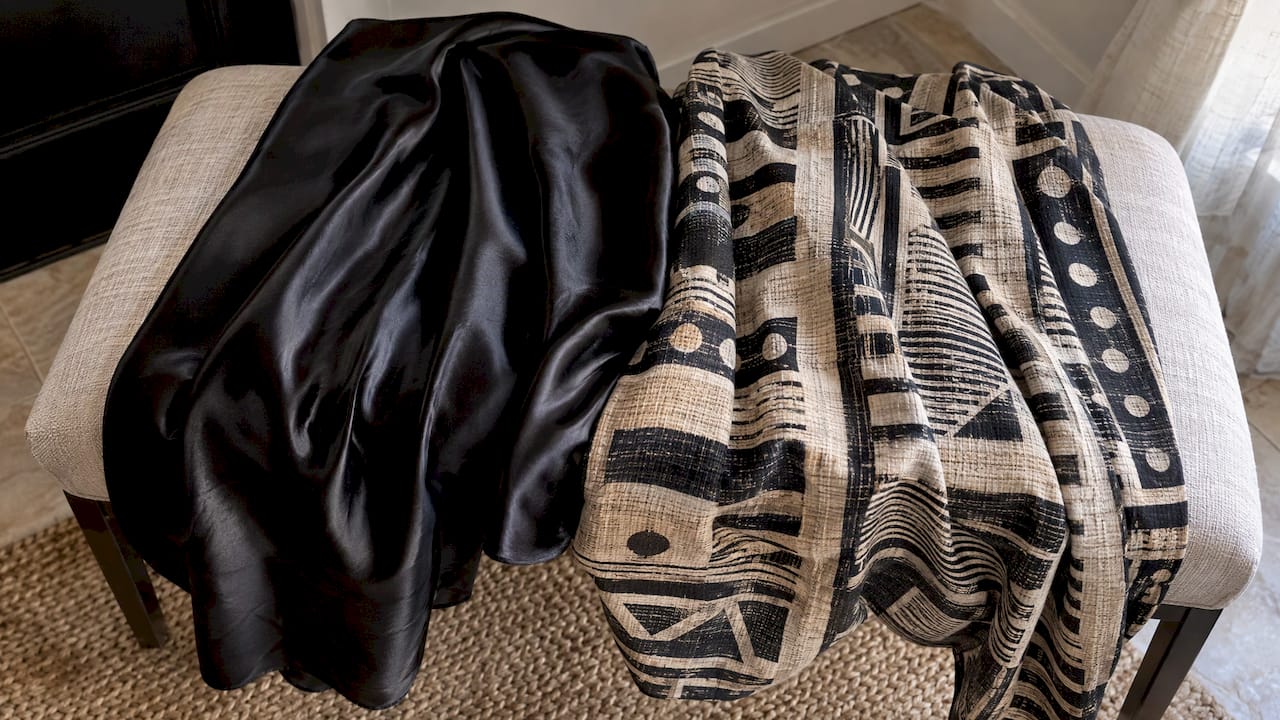
Fabrics to favor. Drapey options such as chiffon, jersey, linen and lace move beautifully, and a matte stretch knit is a glare-free choice. The same photographer says solid black or very dark colors can hide the bump unless the photographer lights for it on purpose, so tell yours if you love a dark look.
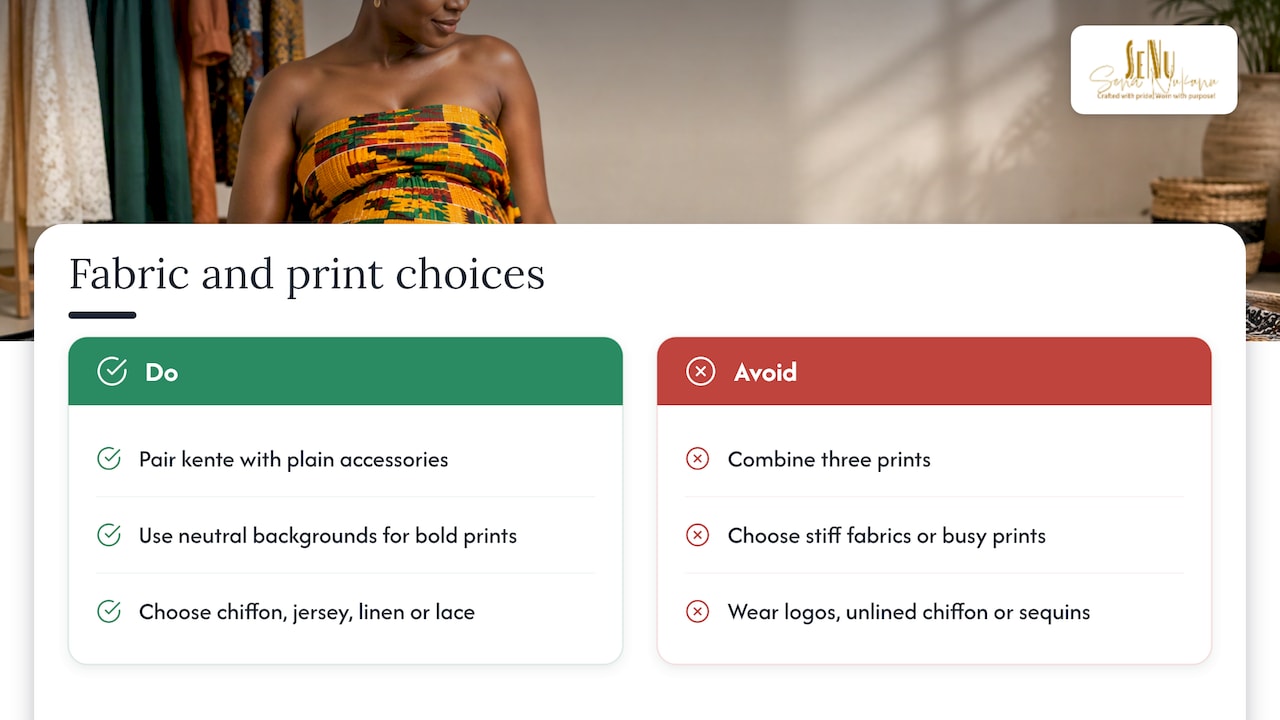
Fabrics to skip. Stiff fabrics, busy prints and logos take attention from you. Sheer unlined chiffon and sequins also tend to cause trouble on camera.
Colors that carry a mood
- Emerald or burgundy for a fitted, dramatic reveal.
- Earth tones or soft pastels for golden-hour, outdoor movement shots.
- Whites and light pastels for a soft, flattering studio look.
- Gold and rich blues for a regal feel against a neutral wall.
Choose colors that suit your skin tone and the location together. A saturated gown that glows in a studio can compete with a green garden.
Fit that follows your body
Pre-pregnancy size is only a starting point. One stylist tells The Bump that a size 6 may become a maternity 4, 6 or 8 depending on how you carry, so buy what fits and feels comfortable rather than trusting the label. Stretch, jersey and ruched details flex with your shape.
A few habits make the difference:
- Plan a month ahead. Outfits chosen early leave time for shipping, alterations and a backup option.
- Fit-test close to the date. What fits at 28 weeks may not fit at 32, so try everything on again before the session.
- Size up through the shoulders and bust if you are between sizes late in pregnancy, and let a smocked panel or empire cut handle the belly, as one photographer advises.
- Wear seamless undergarments so no lines show through the fabric.
- Do a sit-and-stand test. Sit for about twenty minutes, then stand and check for creasing.
- Wear what fits today. Stretchy, flowy, wrap-style pieces that are not labeled maternity often work just as well, and squeezing into a pre-pregnancy dress rarely photographs well.
If you are choosing between a few options, a wardrobe-planning app can help you see them together. A virtual try-on and outfit planning app lets you compare looks against the occasion and the weather before you commit.
Comfort on the day
Session comfort shapes how relaxed you look. One US guide suggests eating and hydrating beforehand, wearing comfortable shoes to the location and changing for photos, and building in a few bathroom breaks. It also notes that after 20 weeks you should avoid lying on your back for long and use side-lying poses instead, and that unusual activities should be cleared with your healthcare provider. If you have any pregnancy complication, ask your doctor or midwife about posing, heat and time on your feet before you book.
Headwraps, jewelry and shoes
Accessories are where the heritage becomes personal.
The gele and headwrap. The gele is a traditional Nigerian head wrap, called dhuku in Zimbabwe and duku in Ghana. It can be tied in dozens of styles, from tall sculptural shapes for formal looks to relaxed twists and simple knots. A well-tied wrap in a complementary fabric lifts a simple dress into ceremonial elegance. Silk reads sleek and sophisticated, while cotton gives a soft, natural texture, and the right styling lengthens the neck and adds height to the composition. If you are not confident tying one, practice before the session and bring a spare length of cloth.
Jewelry. Beaded necklaces, brass bangles and cowrie shells are classic choices. Cowries symbolize fertility and prosperity in many African cultures, so they suit this moment well. Choose pieces with personal meaning, such as something from a grandmother or a gift from your partner, and layer textures for depth. Photographers also suggest gold, pearl or matte metallic tones that complement the wardrobe without catching studio light, and statement earrings when your hair is pulled back.
Shoes. Barefoot is the simplest choice and keeps the focus on the gown. Nude or metallic heels work if you are comfortable in them. Comfort comes first, and the camera will show it.
A crown. A simple wrap skirt, a beaded shoulder necklace and a crown make an elegant African-inspired look, with a subtle head wrap adding a pop of color.
Coordinating partner and family outfits
The guiding principle is simple: you are the focal point, and everyone else supports the frame. A Colorado maternity studio suggests that if you wear blush, your partner wears charcoal or navy, and if you wear burgundy, cream or olive, avoiding bold patterns, graphic tees and large logos.
For an African-print look, that means:
- Let your gown carry the pattern, and dress your partner and children in solids pulled from its palette.
- If your partner wants to wear heritage dress, a kaftan or agbada in a solid or subtle weave keeps the balance. Our Men's Agbada Ensembles include three-piece sets such as the Ivory Crown Agbada 3-Piece Set.
- Keep metals and accessories in one family, either gold or brass, across the group.
If you are also planning a baby shower, our guide to African outfits for a baby shower can help you build a second look from the same palette.
Wearing cultural dress with respect
Every fabric, pattern and garment style carries meaning tied to its ethnic tradition, and wearing kente or adire connects the wearer to traditions stretching back centuries. Whether the heritage is yours by family or you are honoring it as a guest, a few habits help:
- Learn what the cloth is and where it comes from before you choose it.
- Choose attire that resonates with your own personal and cultural identity, as one guide to Black maternity shoots advises.
- Let a photographer know which elements matter most, such as a specific wrap or a family piece.
- Consider adding traditional music, dance or storytelling to the session, an idea suggested for African-themed shoots that makes the day culturally meaningful as well as beautiful.
Buying from makers who produce with care helps too, because the cloth stays connected to the artisans behind it.
A Sena Nukunu look for your session
We offer authentic West African ready-to-wear and custom fashion, including dresses, kaftans, agbada sets, jackets and matching statement sets, all made with ethical manufacturing and artisanal craftsmanship in limited quantities. Our pieces are ready to ship, which helps when you are working back from a session date.
Start with our Women's Collections, where lines such as Woven Stride: Queen In Comfort and Woven Radiance: Queens in Bloom sit alongside wrap gowns, smocked dresses and matching sets like the Adom Two-Piece African Print Set.
If you will be nursing after the birth, you may also want a dress that carries you beyond the session. Our guide to nursing-friendly African dresses explains what to look for.
Our perspective
We believe a maternity portrait should feel like a crowning, not a costume. When you step into a gown woven with a story, whether kente, a bold print or a quiet solid with a gele wrapped high, the cloth tells the world that you carry a legacy and are about to pass one on.
That is why we make pieces in limited quantities, with ethical manufacturing and respect for the artisans behind every stitch. A garment made with care carries its spirit into your photographs, and it stays in your wardrobe long after the session, for anniversaries, celebrations and the days when you want to feel regal.
So choose the silhouette that lets you breathe, the color that lifts your skin, and the details that mean something to your family. Wear the change, and let the portrait honor where you come from and where you are going.
Sena
FAQ
What is the best African outfit for a maternity photoshoot?
A floor-length wrap, empire or smocked gown in kente, Ankara or a rich solid is the most reliable choice. These shapes start at your narrowest point and move well. Add a gele and jewelry that carry personal meaning.
When should I take maternity photos?
Many photographers favor 28 to 36 weeks, when the bump is rounded and you can still move and pose comfortably. Order or select outfits at least a month before, and try them on again a week or two ahead, since fit changes quickly late in pregnancy.
Do I need clothes labeled as maternity?
Not necessarily. Stretchy, flowy and wrap-style pieces that fit you today often photograph as well as maternity-labeled ones. Buy for fit and comfort rather than the size on the tag, and size up in the shoulders and bust if you are between sizes.
What should my partner wear?
Choose solid colors that pull from your gown's palette, such as navy or charcoal with blush, or cream or olive with burgundy. Avoid large logos and competing patterns so you remain the focal point. A kaftan or agbada in a solid or subtle weave also works well.
Is it okay to lie down for poses?
After 20 weeks, side-lying poses are suggested instead of lying on your back for long. If you have any concern about posing, heat or standing for long periods, ask your doctor or midwife before the session.
Sources
- Her Vogue Life: maternity photo shoot ideas for Black women
- ROXAMINA Photography Academy: maternity photography outfits
- Lindsey Lambert Photography: what to wear to a maternity photoshoot
- Cecily Breeding Creative: photo session style guide
- Ana Koska Photography: what to wear for a maternity photoshoot
- Legit.ng: Ankara designs for gowns
- Elisabeth McKnight: what to wear for maternity photos
- The Bump: your complete guide to wearing maternity clothes
- PhotoAI Studio: maternity photoshoot ideas
- iLoveAfrica: African outfits for women
- Zesty Orange Photo: maternity photoshoot accessories
- Shutter Surprise by Nani: African culture inspired maternity sessions
- Colorado Maternity Photography: what to wear for maternity photos
- ParentZone: tips for Black maternity photoshoots
- Kingsgate Lifestyle: African maternity photoshoot ideas