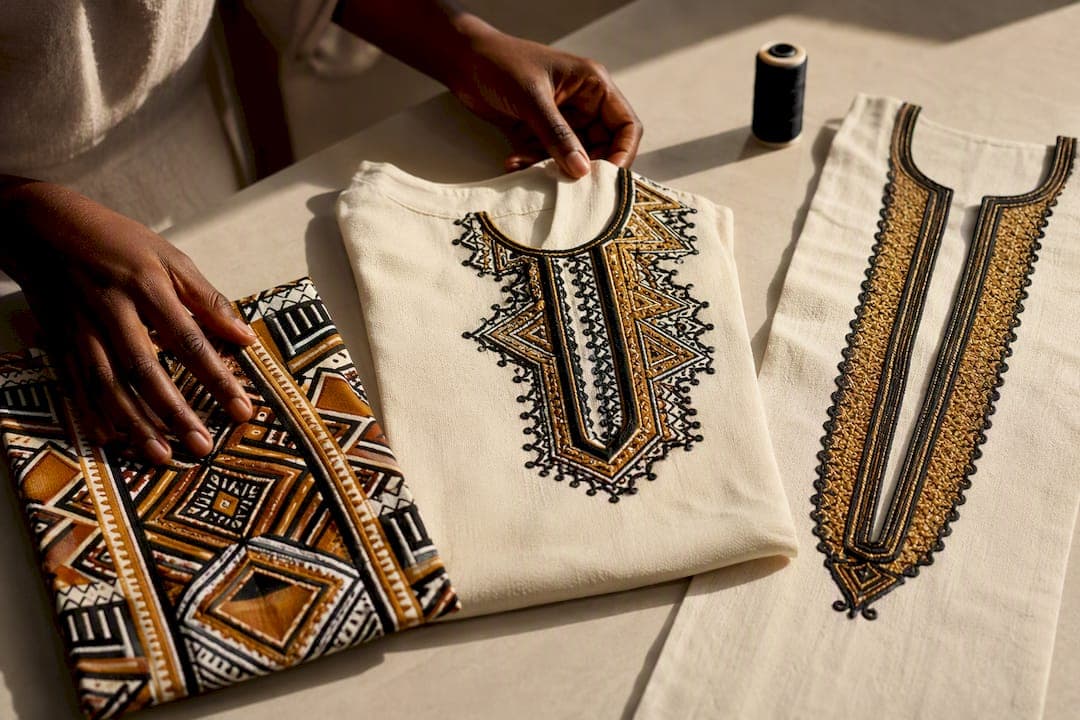
The dashiki comes in six recognizable forms: the short/hip-length pullover for everyday wear, the thigh-length version favored for casual outings, the knee-length or kaftan hybrid worn for celebrations, the peplum or tailored cut popular with women, and the modern hooded or T-shirt hybrid built for streetwear. Length and cut signal use, while fabric and embroidery signal formality. A cotton wax print hip-length shirt reads casual; a hand-embroidered knee-length piece reads ceremonial.
TL;DR:
- Short or thigh-length dashikis are ideal for casual, everyday settings and are easiest to style with simple jeans or chinos.
- Heavier, embroidered, and longer pieces like kaftans or full suits are more appropriate for ceremonies, weddings, or formal events.
- When shopping, measure your chest accurately and check construction details like side slits, reinforced seams, and true V-necks to ensure quality and fit.
- Regional variations include bold geometric West African styles with volume and embroidery, and straighter, simpler Senegalese and Sahelian designs.
- Opt for ethically made dashikis by reputable brands that emphasize craftsmanship, hand-finished details, and transparent sourcing to support authenticity and quality.
Table of Contents
- What Are the Main Dashiki Shirt Styles?
- Prints, Embroidery, and Fabric Quality to Look For
- How to Wear a Dashiki Shirt: Outfit Pairings That Work
- Matching Dashiki Style to the Occasion
- Sizing and Buying Tips That Actually Prevent Mistakes
- Regional Variations in Dashiki Designs
- Wearing Dashiki With Intention, Not Just Interest
- Where to Find Ethically Made Dashiki-Inspired Pieces
- Sources
- FAQ
What Are the Main Dashiki Shirt Styles?
The dashiki began as a loose-fitting pullover with a V-shaped embroidered neckline, and its name traces back to Yoruba and Hausa words describing that same shape. Everything sold today, from streetwear tees to wedding sets, descends from that original silhouette. Knowing which variant you're looking at will save you from ordering the wrong thing online.
- Short or hip-length dashiki: the classic, closest to the original garment. It hits at the hip, moves easily, and works for markets, cookouts, and everyday errands.
- Thigh-length dashiki: falls to mid-thigh and gets labeled "dashiki tunic" in many shops. Men often pair it with matching drawstring pants; women wear it belted or over leggings.
- Knee-length and kaftan hybrids: longer, fuller cuts that blur into the Senegalese kaftan family. These carry heavier embroidery and show up at weddings, naming ceremonies, and religious holidays.
- Peplum and tailored dashiki: a women's adaptation with a fitted bodice and a flared waist panel, built for a more structured silhouette than the traditional loose drape.
- Hooded and tee hybrids: dashiki prints applied to modern silhouettes, hoodies, crew necks, even bomber jackets, aimed at a younger, streetwear-minded shopper.
Formal versions of the dashiki extend even further, into full suits paired with sokoto trousers and a kufi cap, or into grand boubou and agbada sets. The garment's length and accompanying pieces are what determine which formal name applies, not the print alone.
Prints, Embroidery, and Fabric Quality to Look For
Fabric tells you almost everything about a dashiki before you touch it. Wax print cotton, sometimes called Ankara, carries bold repeating patterns dyed into the cloth on both sides. Solid embroidered tunics, by contrast, use one base color with stitched detail concentrated at the neckline and cuffs, a look often chosen for weddings and formal events.
One print deserves special mention: the Angelina motif, a swirling design that became iconic across West African markets. It has an odd origin story: European textile firms originally created it for African buyers, and it was popularized globally over the course of the 20th century, long before it became a symbol of the region's own style identity.
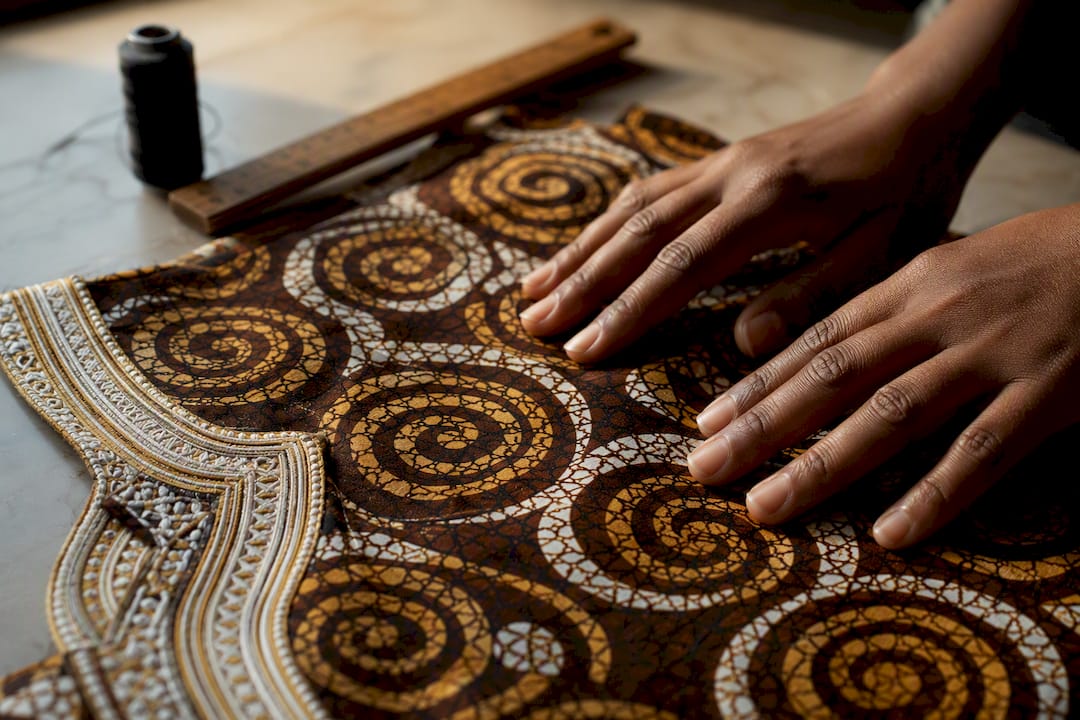
Pro Tip: Run your fingers along the neckline before buying. Hand-finished embroidery has slightly raised, uneven stitching; machine embroidery is flat and mechanically perfect. Neither is "wrong," but they command different price points.
Construction details worth checking:
- Side slits at the hem, which allow the loose cut to move without restricting your stride
- A true V-neck panel, not just a printed V shape with a round collar underneath
- Reinforced seams at the shoulders and underarms, where mass-produced pieces tend to fail first
- A chest pocket, common on men's styles and a small but reliable mark of tailoring care
Retailers who describe their pieces with real specifics, 100% cotton wax print, hand-finished panels, side slits, are almost always more trustworthy than listings that just say "African print shirt."
How to Wear a Dashiki Shirt: Outfit Pairings That Work
Styling a dashiki comes down to proportion. The shirt already carries visual weight, so the rest of the outfit should support it, not compete with it.
- Men, casual: pair a short or thigh-length dashiki with dark jeans or slim chinos, and let the print stay the loudest element. Simple leather sandals or clean sneakers finish it.
- Men, dressed up: match the dashiki top to drawstring pants cut from the same fabric, then add a kufi cap for full formality.
- Women, tunic route: belt a thigh-length or knee-length dashiki at the waist to convert it into a dress, or size up one full size and wear it as a relaxed shift.
- Women, layered route: throw a dashiki kimono or open jacket over a solid-color skirt to add pattern without overwhelming the outfit, since the dashiki was built as a unisex garment from the start and adapts naturally into belted tunics and dresses.
- Everyone, jewelry rule: stick to one statement piece, a cuff, a beaded necklace, or large earrings, and skip layering multiple bold accessories on top of an already-patterned shirt.
The one hard rule: don't pair two different wax prints in the same outfit unless they share a color family. It reads as clashing rather than intentional.
Matching Dashiki Style to the Occasion
Casual settings call for lighter cotton wax prints in shorter cuts, hip-length or thigh-length, worn loose. Office settings do better with a subdued, single-color embroidered tunic rather than a bold repeating print, which can read too casual for a workplace.
Ceremonial and wedding contexts call for the heaviest pieces in the category:
- A full dashiki suit with sokoto trousers and a kufi for men attending a naming ceremony or wedding
- A Senegalese kaftan or grand boubou—style set for milestone celebrations
- Heavily embroidered knee-length or ankle-length tunics rather than lightweight prints
If you're attending a cultural ceremony as a guest rather than a member of the community hosting it, ask what's appropriate beforehand instead of guessing. Wearing a respectful, well-made piece matters more than wearing the "right" pattern.
Sizing and Buying Tips That Actually Prevent Mistakes
Skip the S/M/L label entirely. Measure a shirt you already own flat, armpit to armpit, then double that number to get your true chest measurement, since dashiki sizing runs inconsistently between sellers.
- Lay a well-fitting shirt on a flat surface and measure straight across the chest.
- Double that number, then compare it against the seller's chest measurement, not their size label.
- Size up if you want the traditional loose drape; size down only if you're going for the fitted, peplum-style silhouette.
- Check the listing for side slits, reinforced seams, and embroidery close-ups before you buy, since sellers who publish full chest and length measurements for every size tend to be the more reliable ones.
- Wash cotton wax prints in cold water and skip the dryer's high heat, which preserves both the color and the pre-shrink fit.
Regional Variations in Dashiki Designs
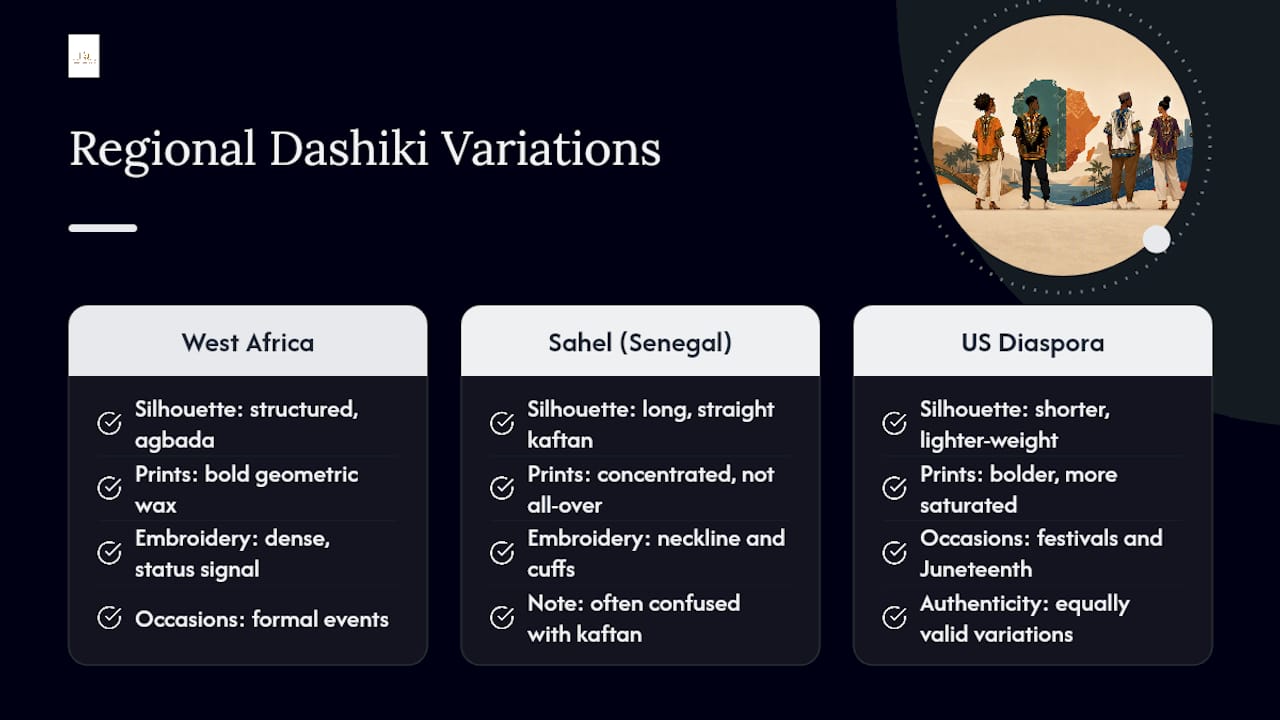
Dashiki styling shifts noticeably by region, even though the core silhouette stays recognizable everywhere. West African tailoring, particularly in Nigeria and Ghana, tends toward bold geometric wax prints and structured formal sets like the agbada, where volume and embroidery density signal status at events.
Senegalese and broader Sahelian styling leans toward the kaftan silhouette: longer, straighter cuts with embroidery concentrated at the neckline and cuffs rather than spread across the whole garment. That's part of why the dashiki and the kaftan get confused so often. They share a family resemblance but come from slightly different tailoring traditions within the same broader region.
In the diaspora, especially across the United States, dashiki styling has loosened considerably. Shorter, lighter-weight cuts dominate, prints get bolder and more saturated, and the garment shows up as often at cultural festivals and Juneteenth celebrations as it does at family gatherings. None of these variations is more "authentic" than another. They're evidence of a garment that has traveled, adapted, and kept its core identity intact the whole way.
Wearing Dashiki With Intention, Not Just Interest
A dashiki carries more history than its print suggests, and wearing one well starts with knowing where that history comes from. The garment moves easily across genders and settings, casual to ceremonial, which is part of what makes it worth learning rather than just buying. Choose pieces from makers who are transparent about who stitched them and how.
— Sena
Where to Find Ethically Made Dashiki-Inspired Pieces
Some brands keep runs small on purpose, which means the embroidery and fabric sourcing get real attention instead of getting rushed to fill a warehouse. That's the practical difference between a dashiki-inspired piece bought here and one pulled from a mass-market rack: fewer units, more hands involved in finishing each one.
If you're drawn to the tunic-to-dress conversion covered earlier, the tunic dress collection shows how a dashiki silhouette translates into a women's dress without losing its structure. Prefer layering over a kimono jacket instead? The dashiki kimono applies the same print logic in a lighter, open-front cut, similar in spirit to the layering pieces at Indijio's kimono collection if you want to compare styles side by side. Before you buy anywhere, zoom into the fabric close-ups and check the size chart against your own chest measurement, not the label size. Start browsing the full Senanukunu shop to see which cut fits your closet best.
Sources
Craftsmanship shows up in the details a photo can't always hide, and it's worth looking closely before you buy:
- Dashiki | Fashion History Museum (FIT)
- Dashiki — Wikipedia
- Kikoi
- African Dashiki - Best Authentic Unisex Dashiki Shirt — BaobabMart
Some catalogs reflect several of the styles covered here, including peplum tops, kimono jackets, and tunic dresses built from wax print cotton. Before buying anywhere, zoom in on product photos and check the published size chart. That's where hand-finished embroidery and reinforced seams either show up or don't.
FAQ
What Are the Different Styles of Dashiki Shirts?
The main styles are short/hip-length, thigh-length, knee-length or kaftan hybrid, peplum or tailored cuts for women, and modern hooded or T-shirt hybrids, with formal versions extending into full suits with sokoto and kufi or grand boubou sets.
Can Anyone Wear a Dashiki?
The dashiki is unisex by design and worn widely across the African diaspora as a marker of cultural pride, so anyone can wear one respectfully by learning its background and choosing pieces from makers who are transparent about sourcing and craftsmanship.
What Does Wearing a Dashiki Mean?
For many wearers, especially across the African diaspora, the dashiki functions as a visible symbol of cultural identity and pride, tied to its origins as a traditional West African pullover garment.
How Do You Wear a Dashiki Shirt?
Pair a shorter dashiki with jeans or chinos for a casual look, belt a longer tunic into a dress shape for women's styling, or match a full set with drawstring pants and a kufi for formal occasions, keeping jewelry to one statement piece.