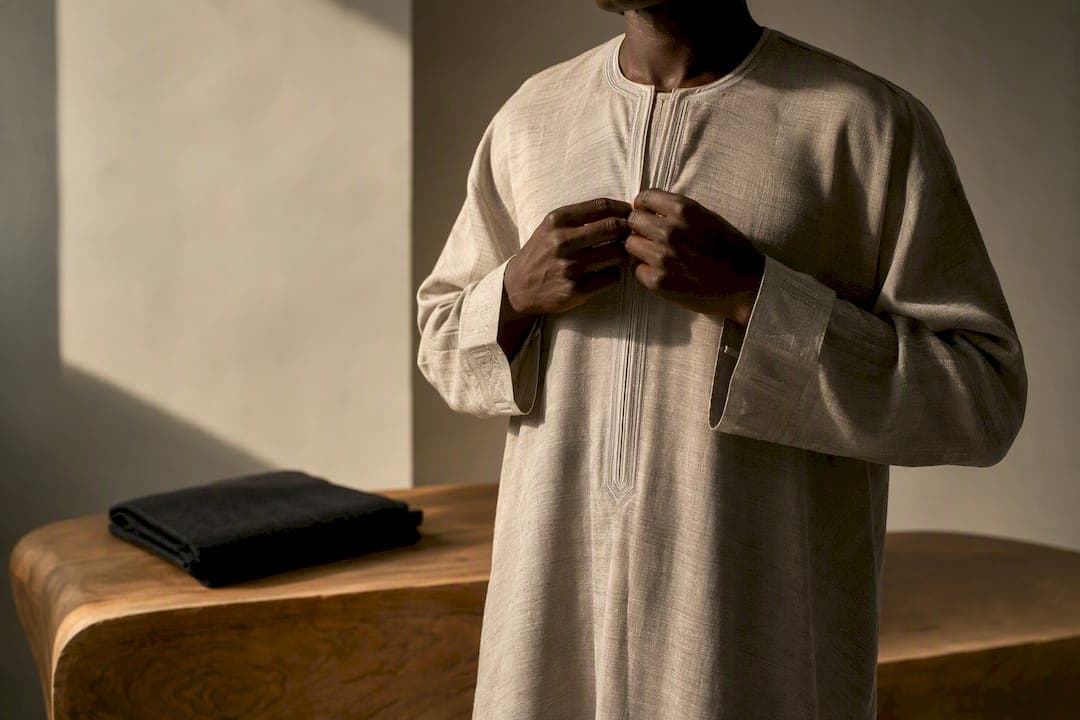
Men's kaftan outfits fall into four working categories: senator (structured, collared), long/traditional (ceremonial, flowing), contemporary/hybrid (tapered, urban), and ready-to-wear printed sets. Pick your style by the occasion you're dressing for first, then check the fit chart against your own measurements. Ethical, small-batch labels build directly into this category, with an emphasis on craftsmanship over mass production.
TL;DR:
- The senator style offers a structured, polished look suitable for professional or formal settings, with a collar and tailored fit.
- Longer traditional kaftans are ideal for ceremonial events, often in ankle-length with flowing fabric and matching accessories.
- Hybrid styles are designed for everyday urban wear, featuring tapered hems, cropped sleeves, and easy-care fabrics like Tencel or Japanese denim.
- Proper sizing depends on precise measurements of the shoulder, sleeve, and hem, with a 3 cm extra length recommended for post-wash settling.
- Higher-quality ceremonial kaftans in fabrics like Bazin Riche or silk justify their cost through craftsmanship and detailed embroidery.
Table of Contents
- Men's Kaftan Styles: Senator, Traditional, Hybrid, and Printed Sets
- How to Choose: A Fit and Construction Checklist
- Fabric and Construction: What Determines Comfort and Drape
- Building the Outfit: Shoes, Trousers, and Accessories
- Care, Alterations, and Keeping a Kaftan Looking New
- Where to Buy: What to Check on Any Product Page
- Styling for Different Body Types
- Pricing and Budget: What You're Actually Paying For
- Regional and Cultural Variations Worth Knowing
- Cultural Respect and Modern Wearability
- Shop Men's Kaftan Outfits at Senanukunu
- Sources
Men's Kaftan Styles: Senator, Traditional, Hybrid, and Printed Sets
A kaftan, at its core, is a long, loose tunic that falls somewhere between the knee and the ankle, with a front-opening closure and full sleeves. That's the shape everything else builds on. But the four dominant styles differ enough that picking the wrong one for the wrong room can leave you either overdressed or noticeably underdressed.
Senator style carries a structured mandarin or stand-up collar and a tailored, slimmer cut that traces back to political and professional dress. It reads sharp and buttoned-down, which makes it the safest choice when the setting calls for polish without a full suit. Look for a collar that holds its shape and a hem that grazes mid-thigh to just above the knee.
Long/traditional kaftans go the other direction entirely: ankle-length, roomy through the body, often paired with a matching cap or wrap. This is ceremonial wear, built for weddings, naming ceremonies, and religious observances where the garment itself is part of the statement.
Contemporary/hybrid styles trade some of that drape for structure. Expect tapered hems, cropped or three-quarter sleeves, and modern fabric blends like Tencel or Japanese denim that hold their shape through repeated wear and machine washing. This is the version most suited to urban, everyday rotation.
RTW printed sets lean on bold Ankara or Kente patterns, usually sold as matching top-and-bottom pairs. They're built for visibility and occasion energy rather than daily rotation.
Here's how to match style to setting:
- Office or client-facing events: senator style, solid or subtly textured fabric, minimal embroidery.
- Weddings and formal ceremonies: long/traditional, often in a three-piece set with matching trousers and a cap.
- Eid and religious gatherings: long/traditional or senator, depending on regional custom and family expectation.
- Festivals and casual outings: contemporary/hybrid or RTW prints, worn open over a t-shirt or fitted underneath a light jacket.
On a product page, the fastest way to identify style is the collar and hem combination. A stand-up collar with a tapered hem signals senator. A round or embroidered neckline with a full ankle drop signals traditional. Cropped sleeves and stretch fabric content in the description almost always mean hybrid.
How to Choose: A Fit and Construction Checklist
Sizing a kaftan online is different from sizing a shirt, because the garment's whole point is looseness with intention, not looseness by accident. Start by measuring a kaftan or long tunic you already own and love the fit of. Take four numbers: chest circumference, shoulder-to-shoulder width, sleeve length from shoulder seam to wrist, and total garment length. Compare those four numbers directly against the size chart on the product page rather than relying on your usual t-shirt size, since kaftan sizing runs looser and varies more between brands.
Three fit rules matter more than any others. The shoulder seam should sit right at the acromion, the bony point where your shoulder meets your arm, not sliding down toward your bicep. Sleeve length should reach the base of your thumb when your arm hangs naturally, which tends to produce the most polished silhouette available in ready-to-wear. And the hem needs roughly a 3 cm allowance beyond your ideal length, since kaftans settle slightly with wear and a tailor can always shorten but rarely lengthen.
Before checkout, do a simple mobility test if you're trying one on in person: sit down and raise both arms overhead. If the shoulders pull tight or the side seams strain, the size is wrong regardless of what the chart says.
Construction cues separate a kaftan built to last from one built to sell once. French seams and flat-felled seams resist fraying far longer than a simple overlock stitch. Shanked buttons (sewn with a small thread stem rather than flat against the fabric) survive repeated buttoning without loosening. And always check the label for pre-shrunk or sanforized treatment, since that single detail predicts how much the garment will change shape after its first wash.
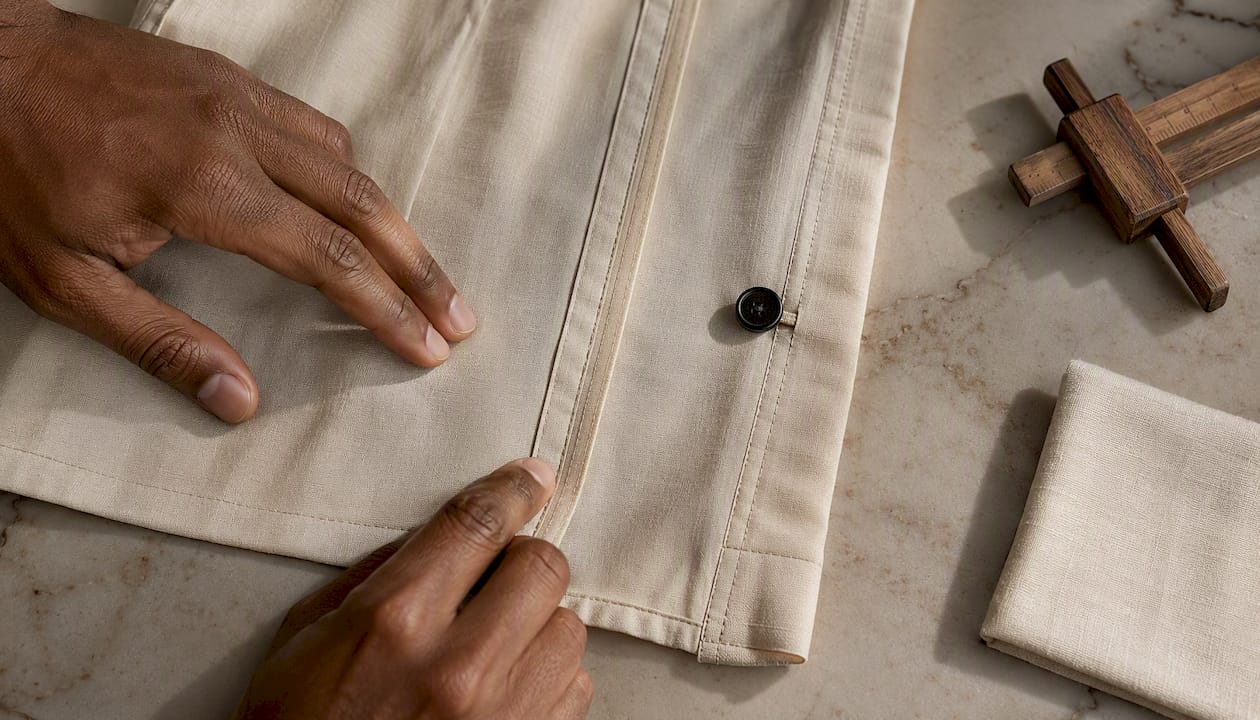
Pro Tip: Screenshot the size chart alongside your own four measurements before you buy. Retailers change chart formatting often, and having your numbers saved makes comparing across brands and returns much faster.
A quick five-point checklist for any product page:
- Confirm shoulder-to-shoulder measurement against your own.
- Check sleeve length reaches the wrist bone, not mid-forearm.
- Look for pre-shrunk or sanforized labeling.
- Scan for French or flat-felled seam construction in the description.
- Add 3 cm mentally to the listed length for post-wash settling.
Fabric and Construction: What Determines Comfort and Drape
Fabric choice decides whether a kaftan feels like a garment or a costume. Cotton-linen blends breathe well and drape naturally, making them the default for daily wear, though they wrinkle fast and need more ironing than most men expect. Tencel holds a cooler hand and resists wrinkling, which is why hybrid styles increasingly lean on it. Japanese denim adds structure and a longer lifespan but sacrifices some breathability. Bazin Riche, also called Guinea brocade, delivers the stiff shine and visual weight expected at weddings and formal ceremonies. Silk sits at the top end for pure ceremonial statement pieces, but it demands careful hand-washing and is the least forgiving fabric for everyday rotation.
Weight matters as much as fiber. Aim for a fabric weight suitable for daily wear that balances structure with breathability, and a higher weight for ceremonial or cold-weather pieces where drape and warmth take priority over airflow. Lighter fabrics below that range risk transparency under bright light and often show more shrinkage after a first wash.
- 200 to 260 gsm: office and casual wear, breathable, softer drape.
- 280 gsm and above: weddings, ceremonies, cooler climates, sturdier hand.
- Below 200 gsm: risk of see-through fabric and higher shrinkage.
On embroidery, concentrating detail at the collar, placket, and chest pocket preserves the garment's natural movement far better than covering the whole body in stitching, which stiffens the fabric and weighs down the drape. It also tends to read as more deliberate and modern rather than purely decorative.
Building the Outfit: Shoes, Trousers, and Accessories
The right shoes change a kaftan's entire register. Leather loafers or babouche slippers push the look formal enough for weddings and religious ceremonies. Clean minimalist sneakers pull the same garment into casual or festival territory without looking mismatched. Save sandals for backyard or beach settings only, since anything more formal exposes the gap between a dressy top and undressed feet.
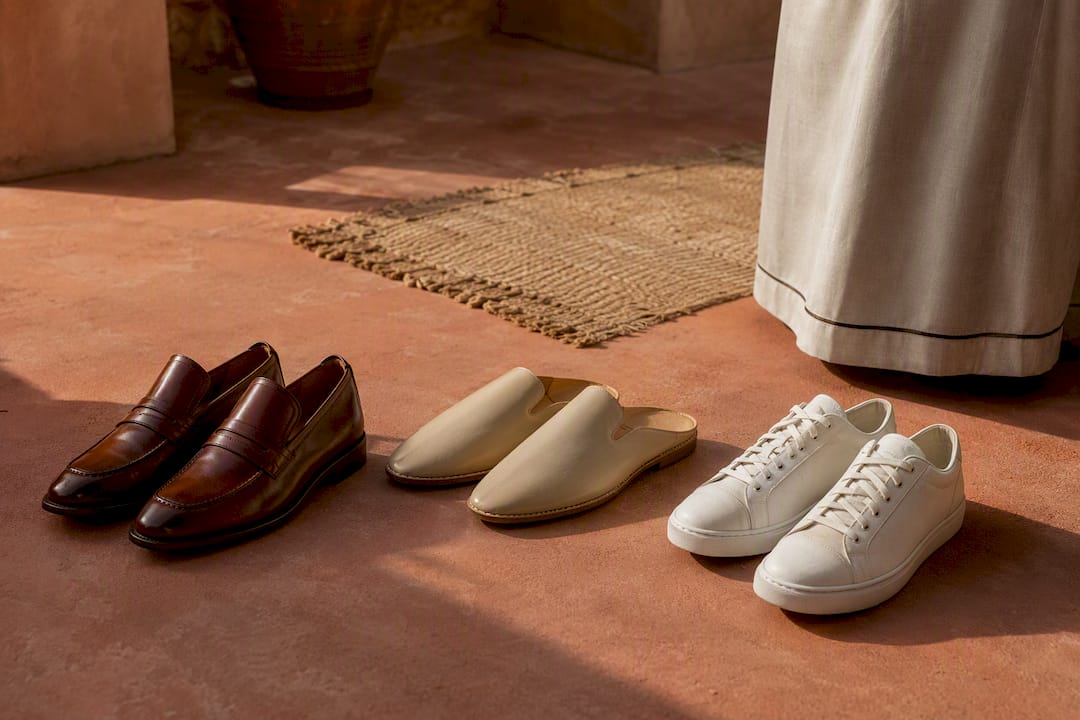
Trousers matter more than most men realize. Slim, tapered trousers underneath a kaftan create a silhouette instead of a shapeless block of fabric. On color, tonal harmony beats an exact color match almost every time in real-world settings. A rust kaftan over deep brown trousers reads more intentional than forcing an identical shade top to bottom, which can look flat under artificial light.
Accessories should stay minimal on a modern silhouette: a single signet ring, a leather strap watch, maybe a woven bracelet. Anything more competes with the garment rather than complementing it. For layering, a lightweight blazer over a senator-style kaftan works surprisingly well in office settings, a strategy covered in more depth in this professional styling guide. In colder months, a wool overcoat in a neutral tone extends a long/traditional piece into fall and winter without burying the design underneath it.
- Formal: leather loafers, slim trousers in a tonal shade, minimal jewelry.
- Casual/festival: clean sneakers, relaxed trousers, one statement accessory.
- Office layering: lightweight blazer, senator collar, structured shoes.
Pro Tip: If you're unsure whether two shades count as "tonal," hold the fabrics next to each other in daylight rather than indoor lighting. Warm bulbs flatten color differences that daylight reveals immediately.
Care, Alterations, and Keeping a Kaftan Looking New
Washing decisions should follow the fabric label, not habit. Cotton-linen blends generally tolerate a gentle machine cycle in cold water, while silk and Bazin Riche need hand-washing or professional cleaning to protect their sheen and structure. Before the first wash on any fabric, check whether the label says pre-shrunk or sanforized. If it doesn't, treat the first wash as a test: cold water, no dryer heat, and air-dry flat to catch shrinkage before it affects fit permanently.
Three alterations come up most often. Hemming shortens length without touching the rest of the garment and is the cheapest, fastest fix. Sleeve tapering narrows a boxy sleeve for a cleaner line under a blazer. Shoulder shifting corrects a seam sitting too far down the arm, though it's the most involved alteration and worth doing only on a piece you plan to wear repeatedly.
- Check the care label before the first wash, not after.
- Air-dry flat rather than using heat for anything above 260 gsm.
- Reinforce button stitching once a year on pieces worn often.
- Store folded, not on a hanger, to prevent shoulder stretching over time.
Where to Buy: What to Check on Any Product Page
Before adding to cart, scan the listing for five things: fabric content, the gsm or fabric weight, seam construction type, a pre-shrink notice, and a size chart with actual model measurements rather than vague small/medium/large labels. Missing any of these is a signal to keep looking.
For sizing, measure a kaftan you already own well, then compare your numbers against the listed model's measurements and the garment ratio shown in photos, adding that 3 cm hem allowance mentioned earlier.
Senanukunu fits directly into this shopping process rather than around it. The brand operates out of Florida and builds its ready-to-wear kaftans and matching sets in limited quantities, with ethical manufacturing behind every piece rather than mass runs. That scale means:
- Fewer units per style, so fit and finish get more attention per garment.
- A production model built around craftsmanship rather than volume.
- Cultural design choices rooted in West African heritage rather than generic print licensing.
Styling for Different Body Types
A boxy senator cut with a straight hem flatters a leaner frame by adding visual width at the shoulder and chest. Men with a broader or heavier build tend to look sharper in a slightly tapered hybrid style, since a fully boxy silhouette on a larger frame can read as shapeless rather than relaxed.
Taller men can handle the full drop of a long/traditional kaftan without it overwhelming their frame, while shorter men often look more proportioned in a senator or hybrid cut that hits mid-thigh rather than ankle-length, since a floor-grazing hem on a shorter frame can shorten the leg line visually.
For a broader midsection, avoid clingy fabrics like thin cotton-linen blends worn without structure underneath. A slightly heavier gsm, in the 240 to 260 range, holds its shape away from the body and skips the cling that thinner fabric creates. Muscular or athletic builds generally do better in senator styles with a defined shoulder seam, since a fitted collar and tailored sleeve show off proportion that a fully loose traditional cut would hide entirely.
The universal fix across every body type comes back to the same fit rule from earlier: get the shoulder seam right first. Everything else, hem length, sleeve taper, trouser pairing, adjusts around that one anchor point.
Pricing and Budget: What You're Actually Paying For
Men's kaftan outfits span a wide price range, and the gap usually comes down to fabric weight, construction detail, and production scale rather than brand markup alone. Basic RTW printed sets in lighter fabric sit at the lower end of the market, aimed at occasional or single-event wear. Mid-range senator and hybrid pieces in cotton-linen or Tencel blends cost more because the fabric and stitching are built for repeated wear, not one outing.
Ceremonial three-piece sets in Bazin Riche or silk command the highest prices, driven by fabric cost, embroidery labor, and heavier construction. Limited-quantity, ethically produced pieces also tend to sit above mass-market pricing, simply because smaller runs cost more per unit to make well.
The smartest budget approach: spend more on the piece you'll wear most often, and treat a single high-quality ceremonial set as a long-term investment rather than a repeat purchase. A well-constructed daily kaftan in the recommended 200 to 260 gsm range will outlast several cheap alternatives, which usually evens out the cost per wear over a year or two.
Regional and Cultural Variations Worth Knowing
Kaftan design shifts noticeably by region, and recognizing those differences helps you shop with intention rather than guesswork. West African kaftans, particularly from Nigeria and Ghana, often favor bold Ankara or Kente prints and structured agbada-style layering for formal occasions. North African and Middle Eastern kaftans tend toward flowing, single-layer silhouettes with minimal embroidery concentrated at the neckline, built for heat and modesty rather than statement-making.
Senegalese and Malian traditions frequently incorporate Bazin Riche with heavier embroidery across the chest and collar, reserved for weddings and major ceremonies. Ghanaian Kente-based sets carry specific color and pattern meanings tied to family, occasion, and status, so a printed set that looks purely decorative to an outsider often carries specific cultural weight.
Understanding these distinctions matters most when buying for a specific ceremony or as a gift, since a design rooted in one regional tradition may not translate the same way in another context. When in doubt, look for product descriptions that name the specific cultural or regional inspiration behind a design rather than a generic "African print" label. That specificity is usually a good sign the maker understands, and respects, what they're selling.
Cultural Respect and Modern Wearability
Getting men's kaftan outfits right means holding two things at once: respect for where the garment comes from, and honesty about how you'll actually wear it day to day. The best pieces don't force a choice between heritage and comfort. A well-fitted senator kaftan in a breathable 240 gsm cotton-linen blend honors the tradition it's built from while still working for a Tuesday commute.
Ethically made, limited-quantity pieces cost more for a reason: someone measured the seam, chose the collar height, and stood behind the fabric weight. That's worth paying for.
— Sena
Shop Men's Kaftan Outfits at Senanukunu
Some retailers offer ready-to-wear kaftans and matching sets with focused embroidery, considered fabric weight, and limited-quantity production instead of mass runs. These pieces may ship from operations committed to ethical manufacturing, ensuring craftsmanship is a real focus.
Run the checklist from this guide directly on any product listing: check the fabric content, compare your own shoulder and sleeve measurements against the size chart, and look for pre-shrink notes before you commit to a size. The Nyame Nti embroidered kaftan is a solid example of collar-and-placket embroidery done the way this article recommends, and the full dress and kaftan shop gives you the full range of styles to compare side by side. Start there, measure first, and buy the piece that fits the occasion you actually have coming up.
Sources
Men Kaftan Designs Guide: How to Choose the Right One Kaftan styles for men: The 2026 guide to fabric, fit & embroidery detail Holiday Party Outfits for Every Dress Code This Season Business casual African wear: A professional style guide
- Men Kaftan Designs Guide: How to Choose the Right One
- Kaftan styles for men: The 2026 guide to fabric, fit & embroidery detail - Famk Apparel